Discovery and Naming
Phobos was first spotted on 18 August 1877 by American astronomer Asaph Hall at the United States Naval Observatory. Using the era’s largest refracting telescope—a 26‑inch "Great Equatorial"—Hall identified Phobos just days after finding Mars’ smaller companion, Deimos. The names were proposed by Henry Madan, a science master at Eton, drawing on Greek mythology: Phobos, the personification of fear and panic, is the twin brother of Deimos and son of Ares, the Greek counterpart of Mars.
Orbit and Speed
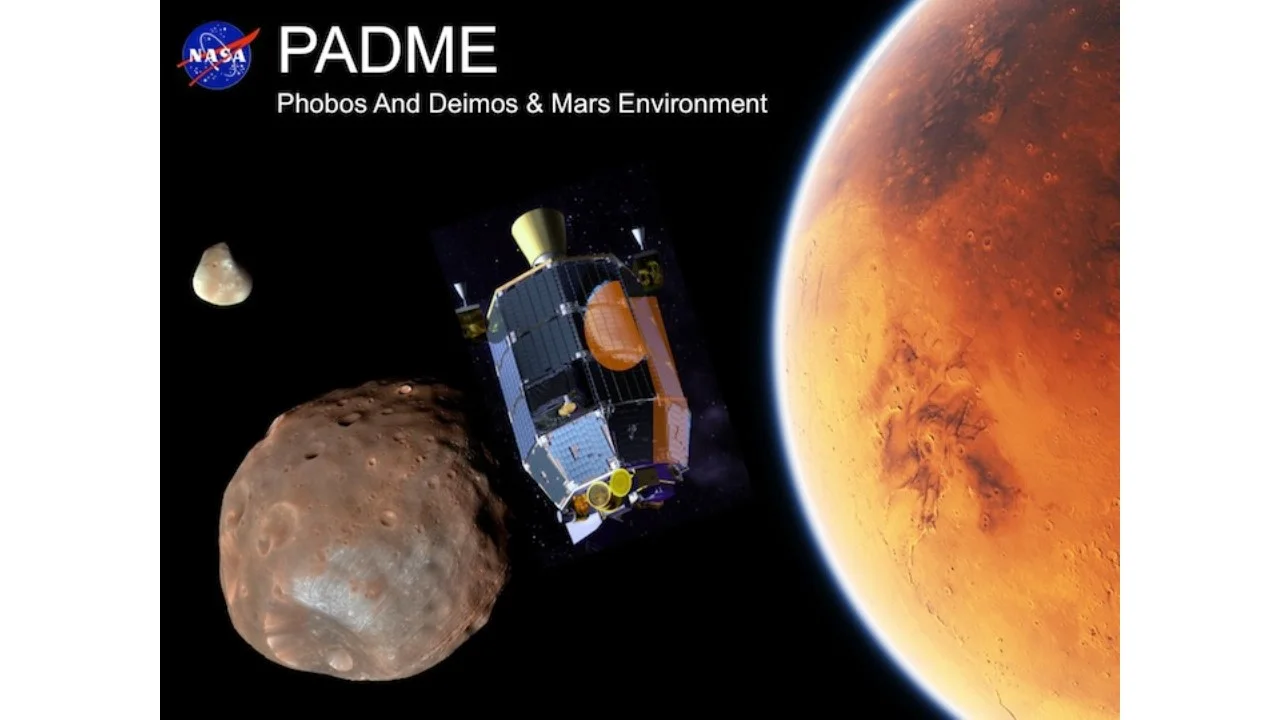
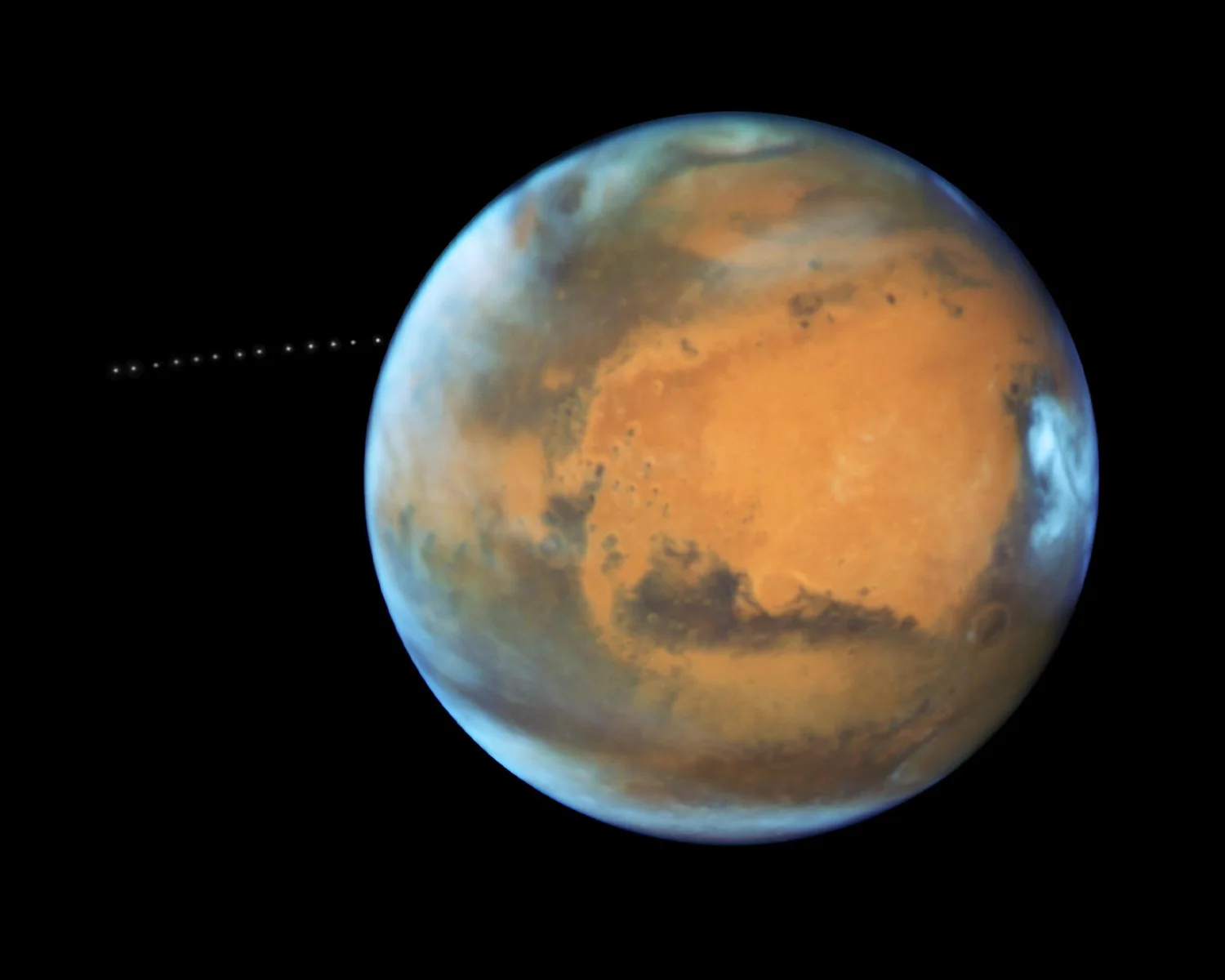
Phobos is the innermost of Mars’ two moons, circling just 6,000 km (≈3,700 mi) above the planet’s surface. This makes it the closest natural satellite to any planet in the Solar System. Its orbital period is only 7 hours 39 minutes, faster than Mars rotates on its axis. Consequently, an observer on Mars would see Phobos rise in the west, sweep across the sky in about 4 hours 15 minutes, and set in the east—twice each Martian day.
Surface Landscape: Stickney Crater and Grooves
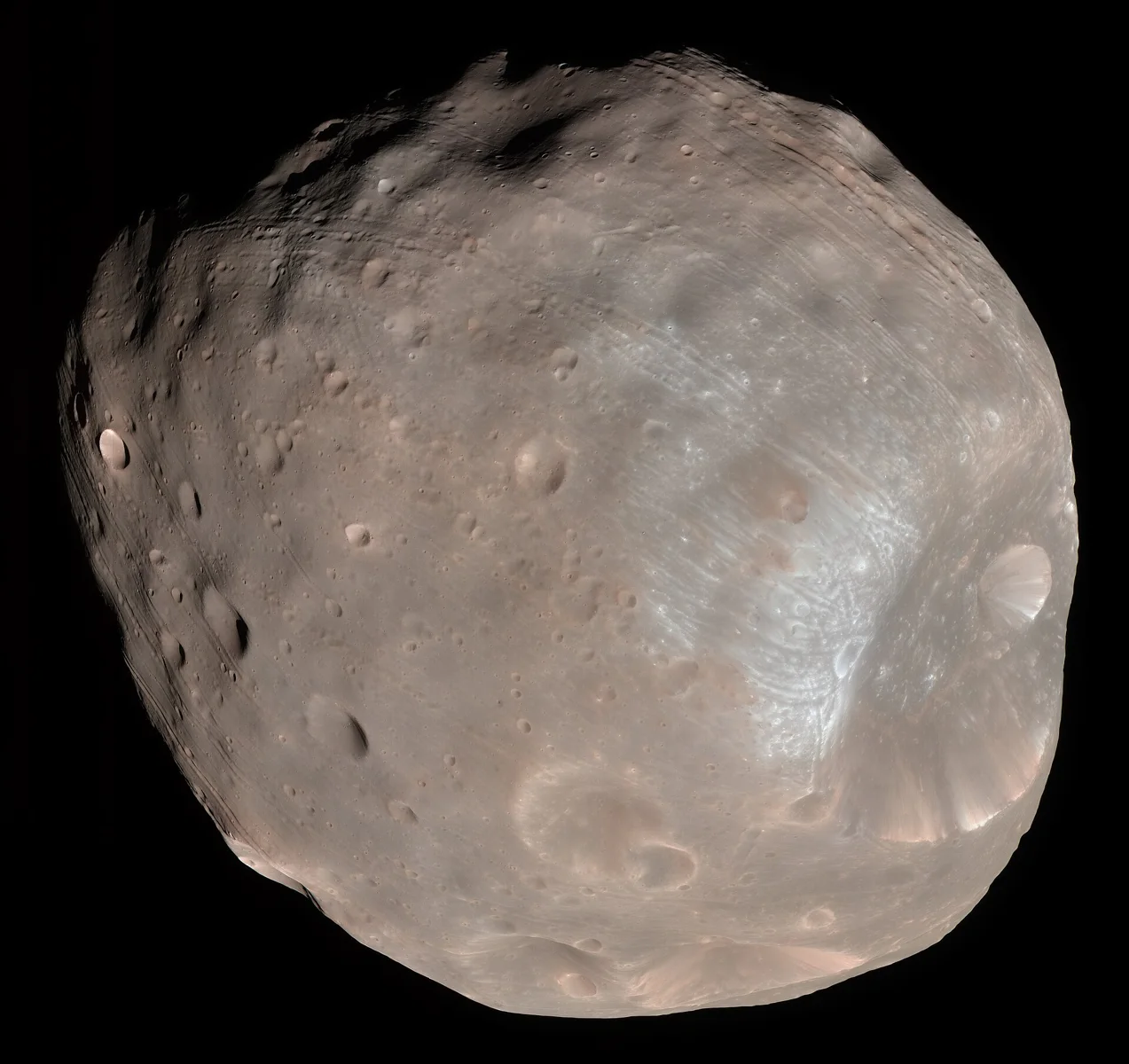
The most striking feature on Phobos is Stickney, a massive impact crater roughly 9 km (5.6 mi) across, dominating a large portion of the moon’s irregular shape. Around the crater, a network of linear grooves runs across the surface. Scientists have proposed several formation mechanisms, including stresses from tidal forces exerted by Mars and the impact that created Stickney itself. These grooves give the moon a textured appearance that is readily visible in spacecraft imagery.
Composition and Physical Traits
Phobos measures about 26 × 23 × 18 km (16 × 14 × 11 mi) and has a mean radius of 11 km (7 mi). Its low albedo—around 0.071—makes it one of the darkest bodies in the Solar System. Infrared spectra reveal carbon‑rich material similar to that found in carbonaceous chondrite meteorites, and its overall composition closely matches Martian surface rocks. Direct density measurements by orbiters place Phobos at 1.887 g cm⁻³, indicating a porous, rubble‑pile structure with roughly 30 % void space. This porosity has led to speculation about subsurface ice, though surface regolith shows no clear hydration signatures.
Temperature Extremes and Environmental Conditions
Because Phobos lacks an atmosphere, its surface temperature swings dramatically. Sun‑lit areas reach about –4 °C (25 °F), while permanently shadowed regions plunge to roughly –112 °C (–170 °F). These extremes, combined with the moon’s weak gravity, prevent any atmosphere from forming and contribute to the continual loss of fine dust particles into space.
Future Evolution: Spiraling Toward Mars
Phobos is gradually inching closer to Mars—about 2 cm (0.8 in) per year—due to tidal interactions that create drag on the moon. Over millions of years, this inward drift will either cause Phobos to break apart, forming a faint ring around Mars, or lead to a direct impact on the planet’s surface. Early speculation in the 1950s, notably Iosif Shklovsky’s “hollow Phobos” hypothesis, suggested an artificial origin, but subsequent precise tracking disproved those claims and confirmed the natural, porous nature of the moon.
Phobos continues to captivate scientists as a dynamic, fast‑moving companion to the Red Planet, offering clues about planetary formation and the future of Martian moons.
Sources
This article was prepared with AI assistance from the sources listed above and approved by the Mushroom 2 Mars team before publication.