What Martian gullies look like
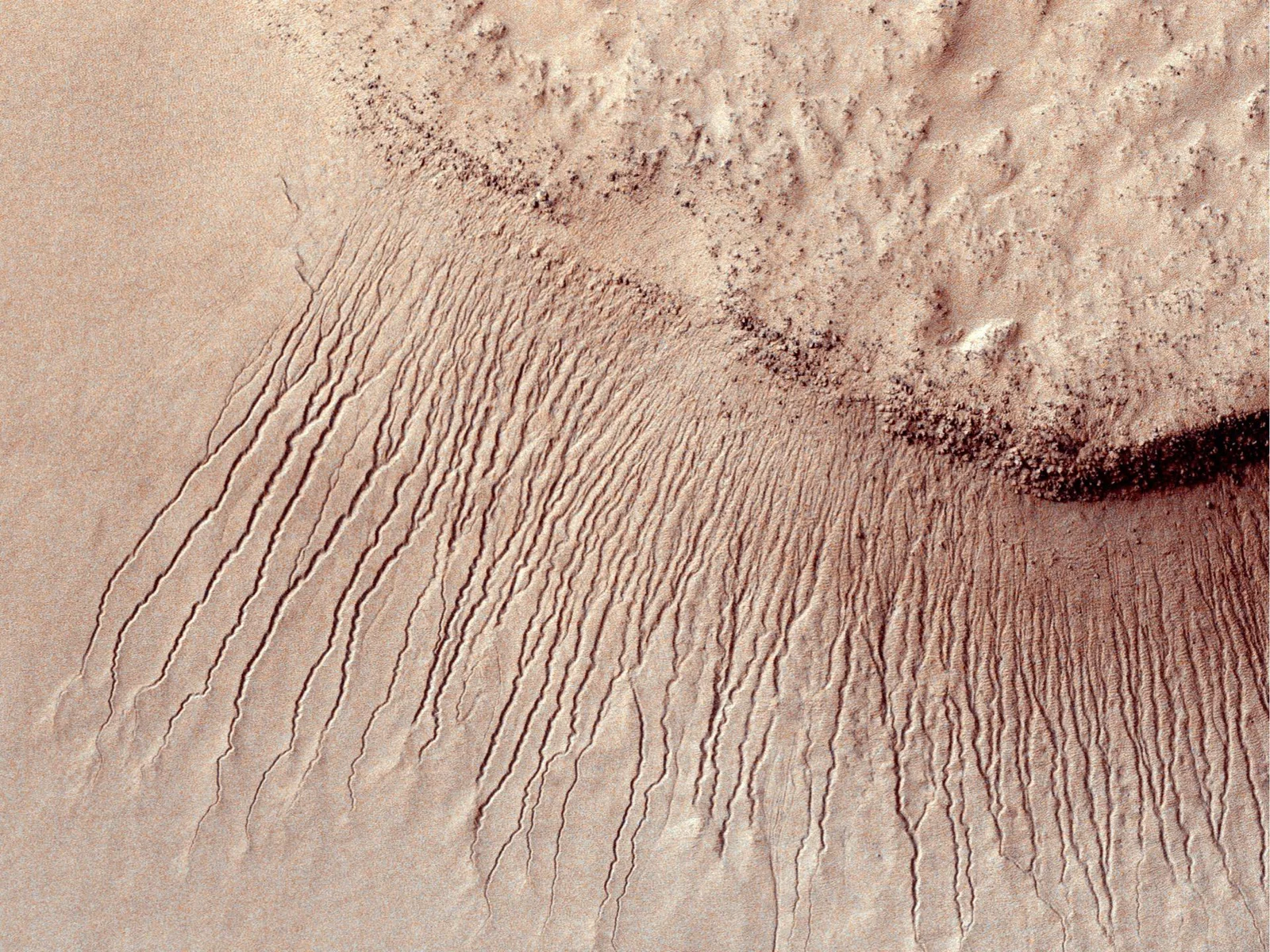
Martian gullies are narrow, branching channels that cut into steep slopes, most often the walls of impact craters. Each feature typically has three parts: a head‑shaped alcove, a single incised channel that winds downslope, and a fan‑shaped apron of debris at the base. The overall hour‑glass shape makes them easy to spot in orbital images, and the lack of impact craters on their surfaces suggests they are geologically young.
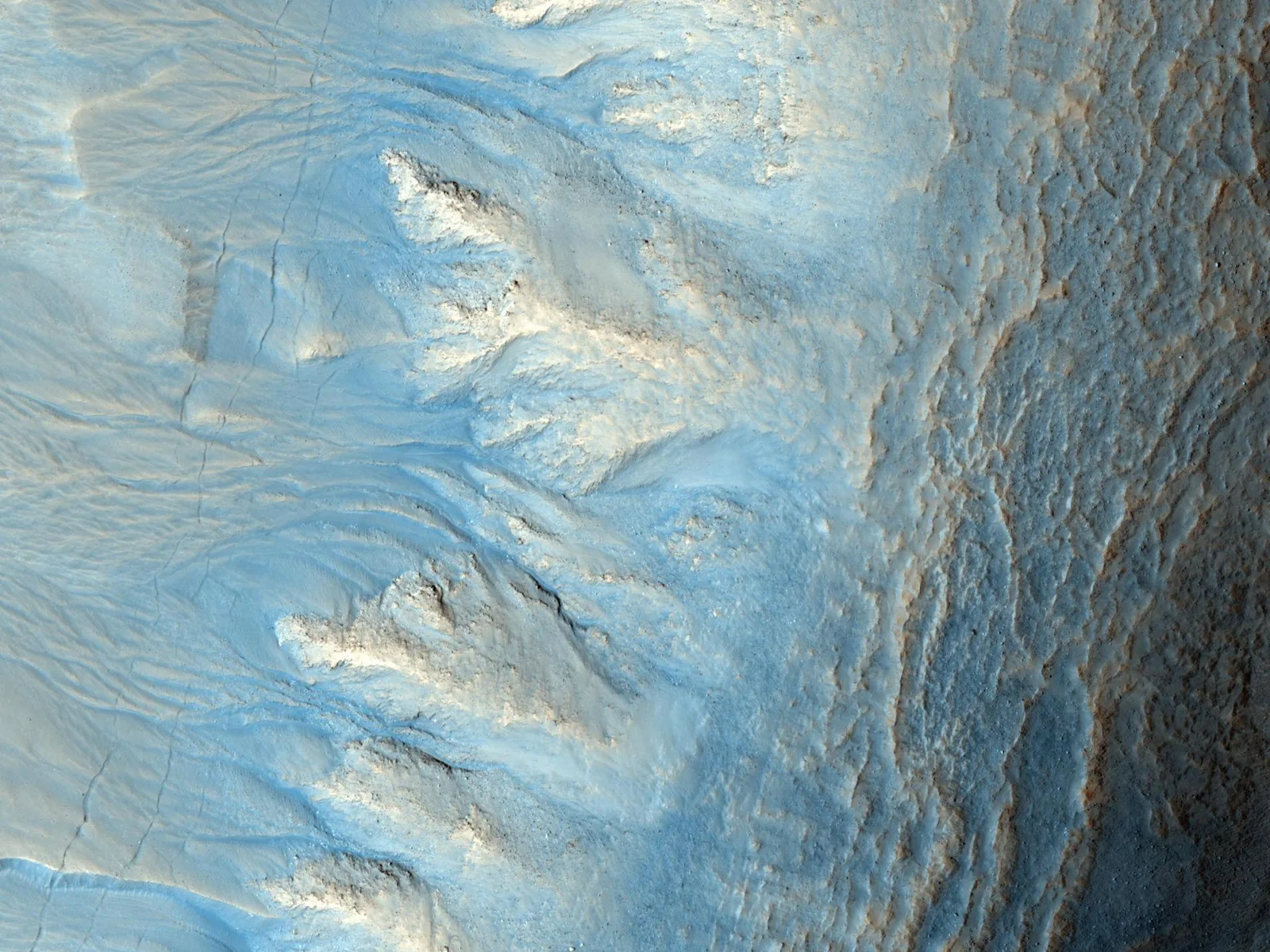
Where gullies appear on the Red Planet
Gullies are not spread evenly across Mars. They cluster about 30°–45° from the equator in both hemispheres, with a higher concentration in the southern mid‑latitudes. In the north they have been mapped in regions such as Arcadia Planitia, Tempe Terra, Acidalia Planitia and Utopia Planitia. In the south, dense populations line the northern edge of the Argyre basin, northern Noachis Terra, and the walls of the Hellas outflow channels. A recent survey of over 54,000 Context Camera (CTX) images—covering roughly 85 % of the planet—identified 4,861 distinct gullied landforms, amounting to tens of thousands of individual gullies.
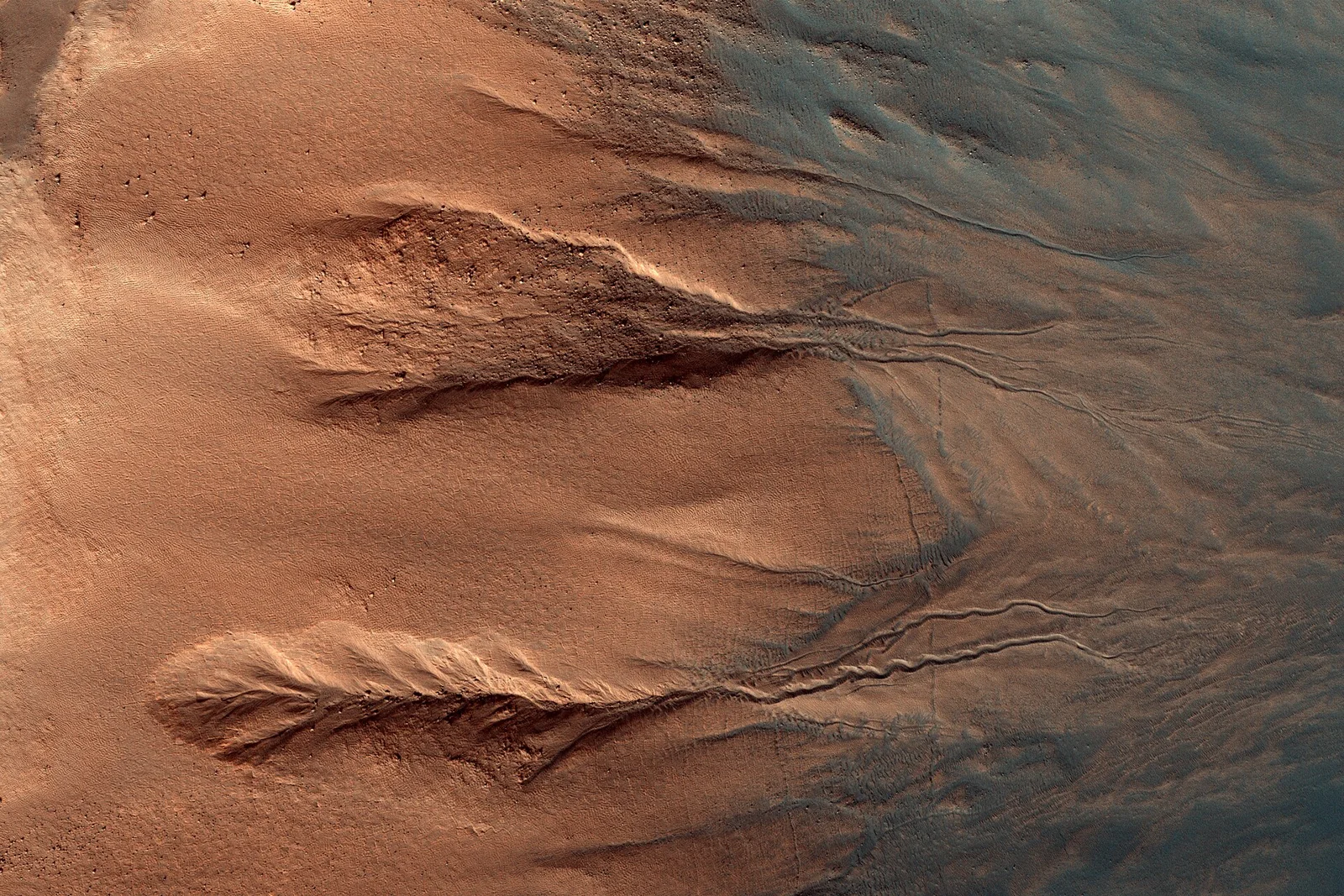
Early ideas: liquid water and debris flows
When gullies were first seen in Mars Global Surveyor photos, their resemblance to terrestrial water‑carved channels sparked excitement. Researchers proposed several water‑related mechanisms: sudden releases from subsurface aquifers, melting of buried ice or snowpacks, and even meltwater generated by localized volcanic heating. Some gullies cut into bedrock over distances of 40 m, a scale that seemed to require sustained liquid flow, and many displayed teardrop‑shaped islands—features on Earth that often form in water‑laden streams.
Shifting focus: the role of carbon‑dioxide frost
Further observations complicated the water‑only picture. Many gullies sit on slopes too gentle for the rapid debris flows that liquid CO₂ would produce, and the thin Martian atmosphere makes liquid CO₂ unstable. High‑resolution HiRISE images revealed that gullies often form repeatedly, with newer channels intersecting older ones, hinting at a seasonal process rather than a single catastrophic event.
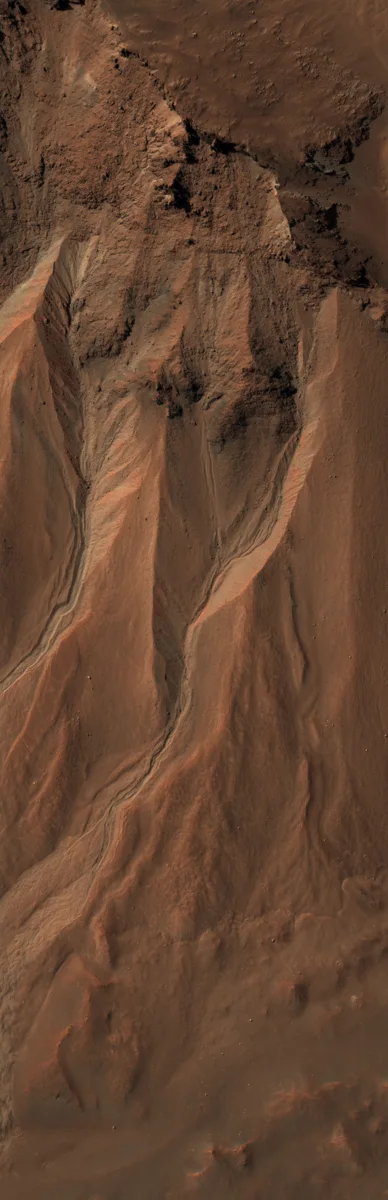
In 2014 NASA announced that the majority of active gullies are generated by the seasonal freezing and sublimation of carbon‑dioxide ice (dry ice). During the cold Martian winter, CO₂ frost builds up on slopes; when spring arrives, the frost sublimates, creating a thin, lubricating gas layer that can mobilize loose material downslope. This mechanism explains the observed repeatability and the lack of large, discontinuous deposits expected from explosive liquid CO₂ flows.
Why water may still matter
Although CO₂ frost now dominates explanations, some gullies—especially those cutting into sand dunes—show characteristics that could involve melting of ground ice. The presence of gullies on poleward‑facing slopes and the similarity of alcove elevations suggest that subsurface water or ice could occasionally contribute, perhaps during brief warm periods or when geothermal heat is present. The debate remains active, and future missions equipped with subsurface radar and climate monitors will be crucial for untangling the relative contributions of CO₂ and water.
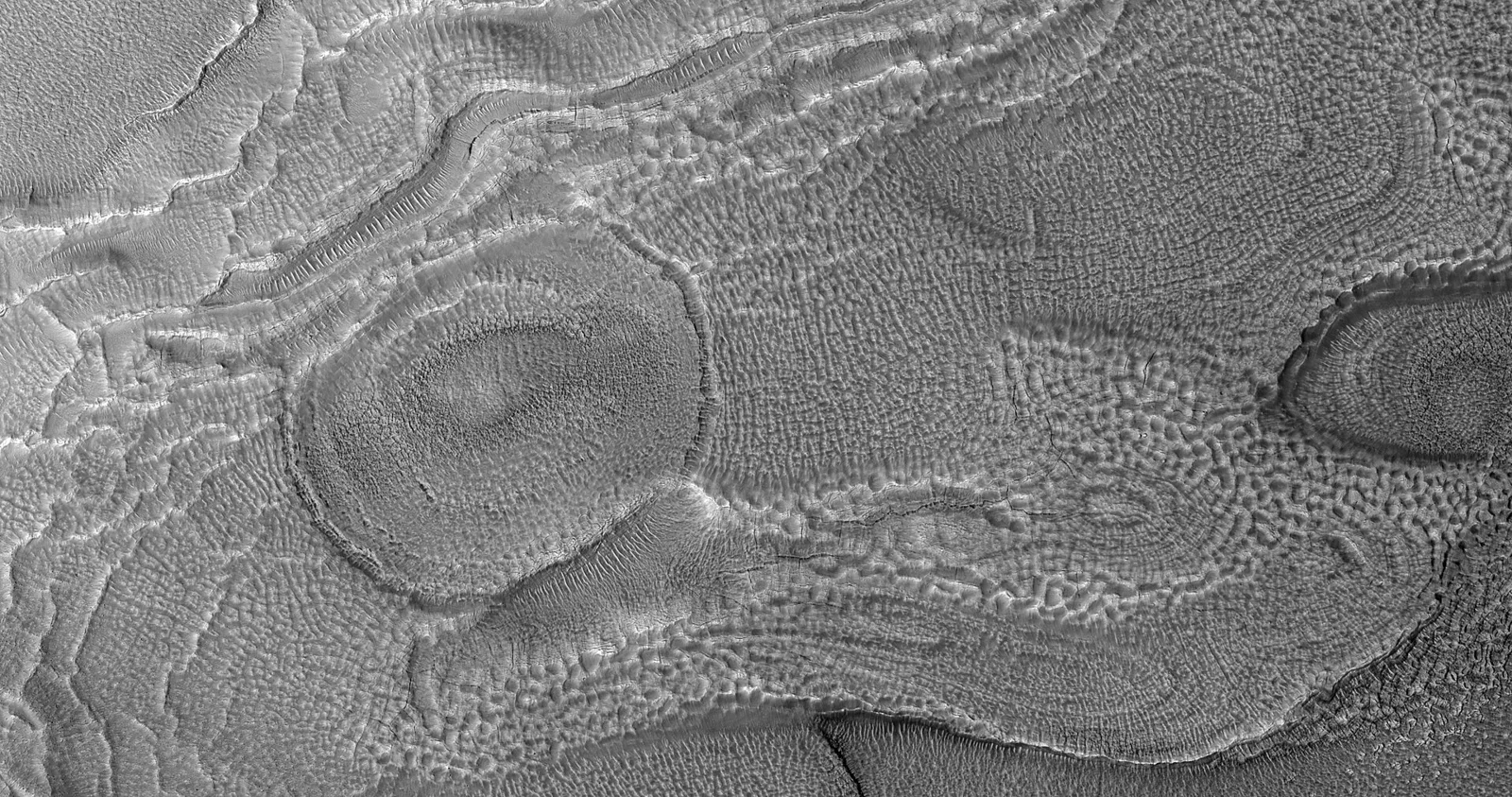
What gullies tell us about Mars today
Because gullies are so fresh—showing few impact craters—they indicate that surface processes are still shaping the planet. If seasonal CO₂ frost can move material today, it demonstrates an active climate cycle. Conversely, any involvement of liquid water, even in small amounts, would have profound implications for present‑day habitability and for the potential to support life‑supporting ecosystems, such as the mushroom farms envisioned by projects like Mushroom 2 Mars.
From the steep crater walls of ancient impacts to the whisper‑thin CO₂ frost of modern spring, Martian gullies remind us that the Red Planet is still a dynamic world, constantly reshaping its surface.
Sources
This article was prepared with AI assistance from the sources listed above and approved by the Mushroom 2 Mars team before publication.