A Black Hole in Our Cosmic Backyard
Sagittarius A* (Sgr A*) sits at the heart of the Milky Way, a supermassive black hole about four million times the mass of the Sun. Unlike the blazing cores of active galaxies, Sgr A* is relatively quiet, accreting only a thin stream of material. Its proximity—just 26,000 light‑years away—makes it the best laboratory for studying how such giants interact with their surroundings.
Peering Into the Minispiral with JWST
A team led by PhD student Nicole Ford used the James Webb Space Telescope’s MIRI Medium‑Resolution Spectrograph to dissect the infrared glow of the Galactic Center Minispiral. This structure, a trio of filamentary arms (the Northern Arm, Eastern Arm, and Western Arc), threads through the circumnuclear disk (CND) and connects cold molecular clouds to the hot plasma of the Nuclear Star Cluster. By separating ionized gas components, the researchers could measure the chemical makeup of three distinct features: the Bar, the Northern Arm, and fast‑moving blue‑shifted compact parcels.
Metals in Space: What the Numbers Mean
In astronomical terms, “metals” are any elements heavier than hydrogen and helium—elements forged in the cores of stars and released by supernova explosions. The JWST data indicate that the Minispiral gas contains about 1.8 × the solar abundance of these metals. This enrichment is modest compared with the most metal‑rich regions of the galaxy, but it is significant enough to affect the gas’s cooling behavior and dynamics.
Supernovae as Cosmic Enrichers
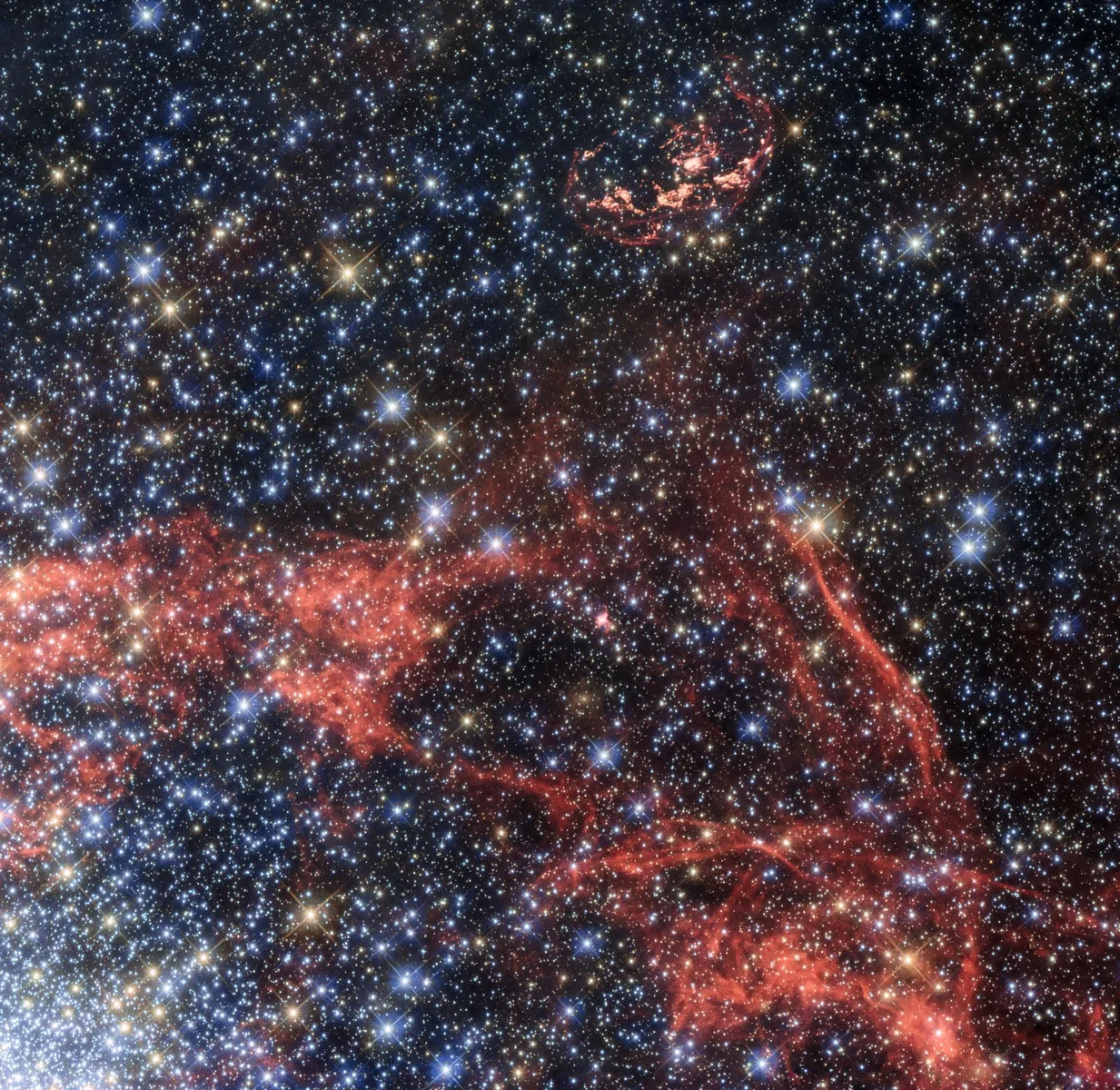
The elevated metal content is most plausibly linked to past supernova events. The supernova remnant Sgr A East sits in the same sky region as the black hole and has been shown to inject both heat and heavy elements into the surrounding medium. Over its roughly 10⁴‑year lifetime, Sgr A East has acted as a major energy source, stirring turbulence and keeping the circumnuclear gas hot. This heating counteracts the cooling that metals would otherwise promote, helping explain why Sgr A* receives only a trickle of material despite the presence of enriched gas.
How Metallicity Influences Black‑Hole Feeding
Metal‑rich gas radiates energy more efficiently, allowing it to cool, compress, and flow inward. However, the measured enrichment of ~1.8 × solar is insufficient to trigger rapid cooling that would dramatically increase the accretion rate. Instead, the combination of modest metallicity and ongoing heating from Sgr A East creates a balanced environment where gas remains warm and turbulent, limiting the amount that can settle into the black hole’s accretion ring.
Why This Matters for Galactic Evolution
Understanding the composition and temperature of gas near Sgr A* helps astronomers piece together the life cycle of matter in galactic nuclei. The interplay between supernova enrichment, gas cooling, and black‑hole feeding influences star formation, chemical evolution, and the overall energy budget of the Milky Way’s core. As JWST continues to map other galactic centers, comparisons will reveal whether our quiet black hole is typical or an outlier.
A Cosmic Parallel for Martian Mushroom Farming
Just as supernovae seed the Galactic Center with nutrients that shape the black hole’s diet, future growers on Mars will rely on carefully enriched substrates to nurture mushroom farms—turning stellar chemistry into sustainable food on another world.
Sources
This article was prepared with AI assistance from the sources listed above and approved by the Mushroom 2 Mars team before publication.