Discovery of Mars’ Distant Companion
On August 12 1877, American astronomer Asaph Hall announced the discovery of a second moon orbiting Mars. Working at the United States Naval Observatory, Hall had been deliberately scanning the sky for Martian satellites after spotting the larger moon Phobos earlier that month. The new object, later named Deimos, was first recorded at about 07:48 UTC. The name comes from Greek mythology: Deimos personifies dread, a counterpart to Phobos (fear). The suggestion was made by academic Henry Madan, who drew the pair from Book XV of the Iliad, where Ares (the Greek Mars) summons both Dread and Fear.
Size, Shape, and Surface
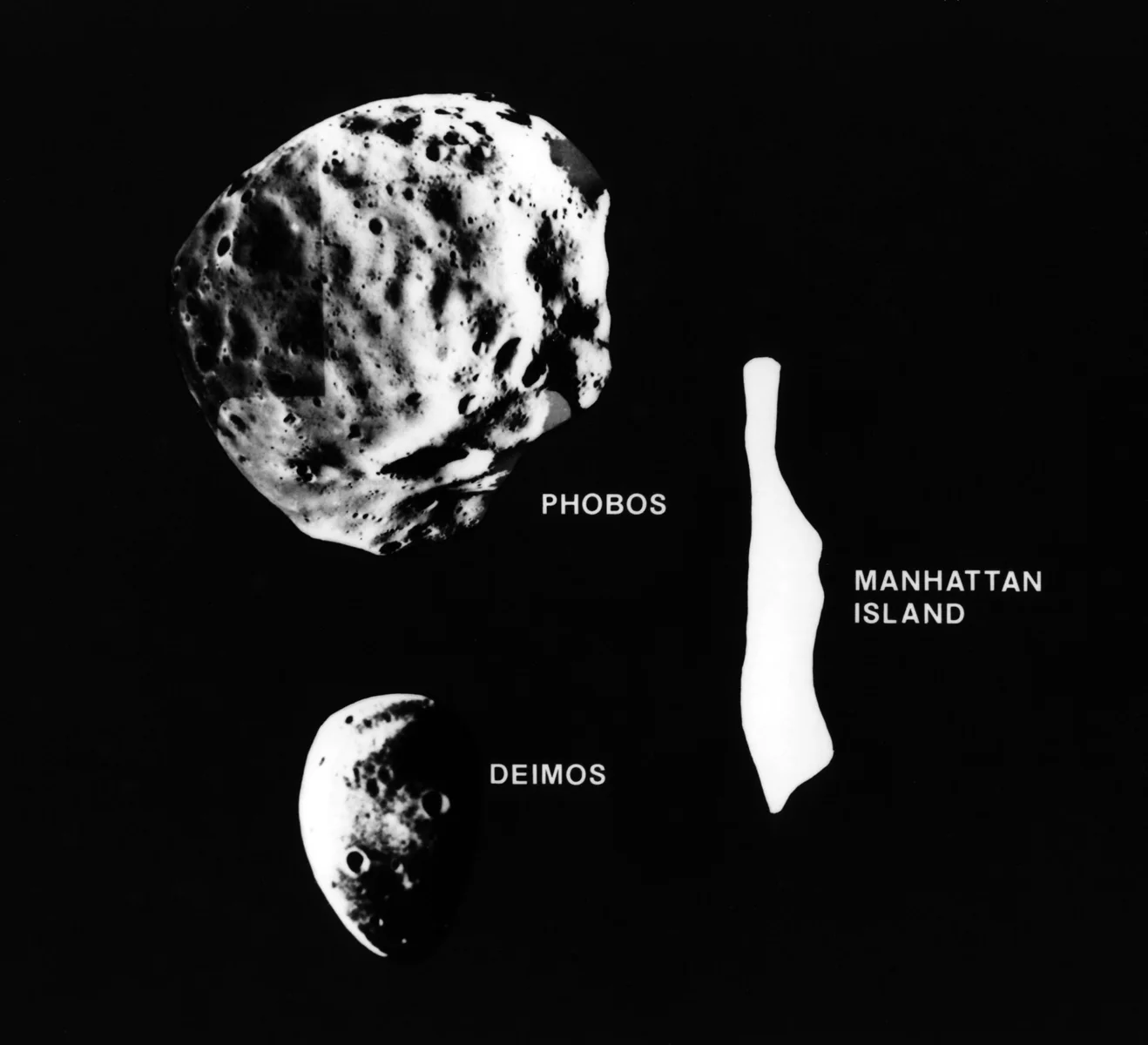
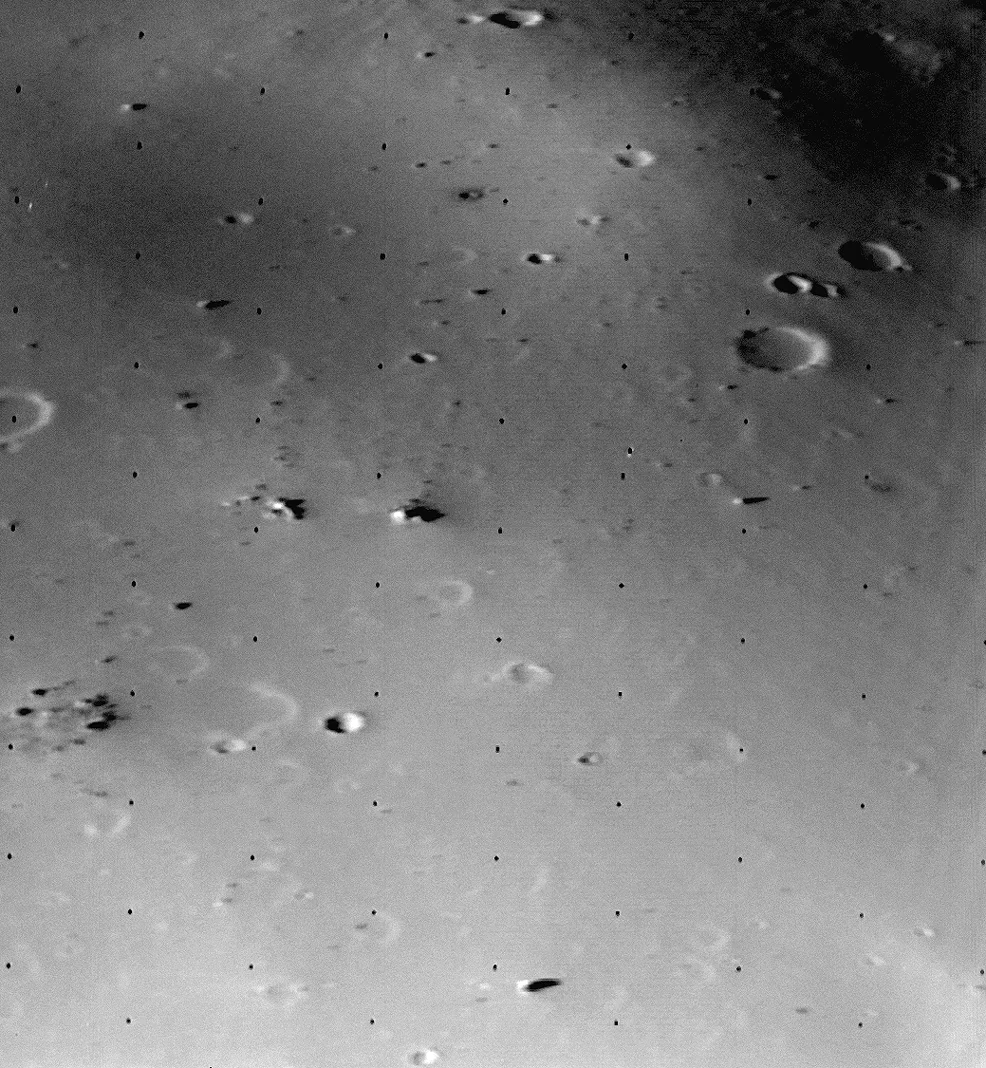
Deimos is a diminutive, irregularly shaped body measuring roughly 16 × 12 × 10 km, giving it a mean diameter of about 12.5 km—just over half the size of its sibling Phobos. Its gray hue and composition resemble carbon‑rich C‑type asteroids and carbonaceous chondrite meteorites. The moon’s surface is heavily cratered, yet smoother than Phobos because many craters have been partially filled with a porous regolith whose radar‑derived density is only 1.47 g cm⁻³. Two named craters—Swift and Voltaire—honor writers who speculated about Martian moons before they were observed.
Orbit Around the Red Planet
Deimos circles Mars at a distance of about 23,458 km, far beyond Phobos’ tighter orbit. Its path is nearly circular and lies almost exactly in Mars’ equatorial plane, completing a revolution every 30.3 hours. Because the orbit is only slightly longer than a Martian sol (≈24.7 hours), the moon rises in the east and sets in the west, moving more slowly than the planet’s rotation. From the Martian surface, Deimos appears star‑like, with an angular diameter of roughly 2.5 arc minutes—about one‑twelfth the apparent width of Earth’s Moon. At “full moon” it shines with a brightness comparable to Venus as seen from Earth, and its phases can be tracked with a modest telescope over a synodic period of 1.26 days.
Competing Theories of Origin
Scientists have long debated how Deimos (and Phobos) arrived in Martian orbit. Two main families of hypotheses dominate the discussion:
- Capture Scenario – Some researchers argue the moons are captured asteroids, perhaps originally C‑ or D‑type bodies from the main belt. Capture would require a loss of orbital energy, possibly through atmospheric drag or tidal interactions. Because today’s Martian atmosphere is too thin to halt a Phobos‑sized object, proponents suggest an earlier, denser atmosphere or a binary‑asteroid system that split under tidal forces, allowing one fragment to be captured.
- In‑situ Accretion – An alternative view posits that Deimos formed from debris orbiting Mars after a massive impact. In this picture, a swarm of moon‑sized fragments coalesced near their current locations. A 2021 study by Bagheri, Khan, Efroimsky and colleagues, using seismic data from the InSight mission, proposed that a single parent body shattered 1–2.7 billion years ago, creating both moons simultaneously.
Both models must explain how Deimos acquired its near‑circular, low‑inclination orbit—a challenge for any capture hypothesis, which would initially produce a highly eccentric trajectory.
Physical Environment and Future Fate
The moon’s weak gravity (escape velocity ≈ 5.6 m s⁻¹) and porous surface mean that any material placed on Deimos would barely stay attached. Its apparent magnitude of 12.45 makes it invisible to the naked eye from Earth, requiring telescopic aid. Over long timescales, tidal forces are causing Deimos’ orbit to slowly expand; eventually the moon may drift far enough to escape Mars’ gravity entirely.
Observing Deimos from Mars (and Earth)
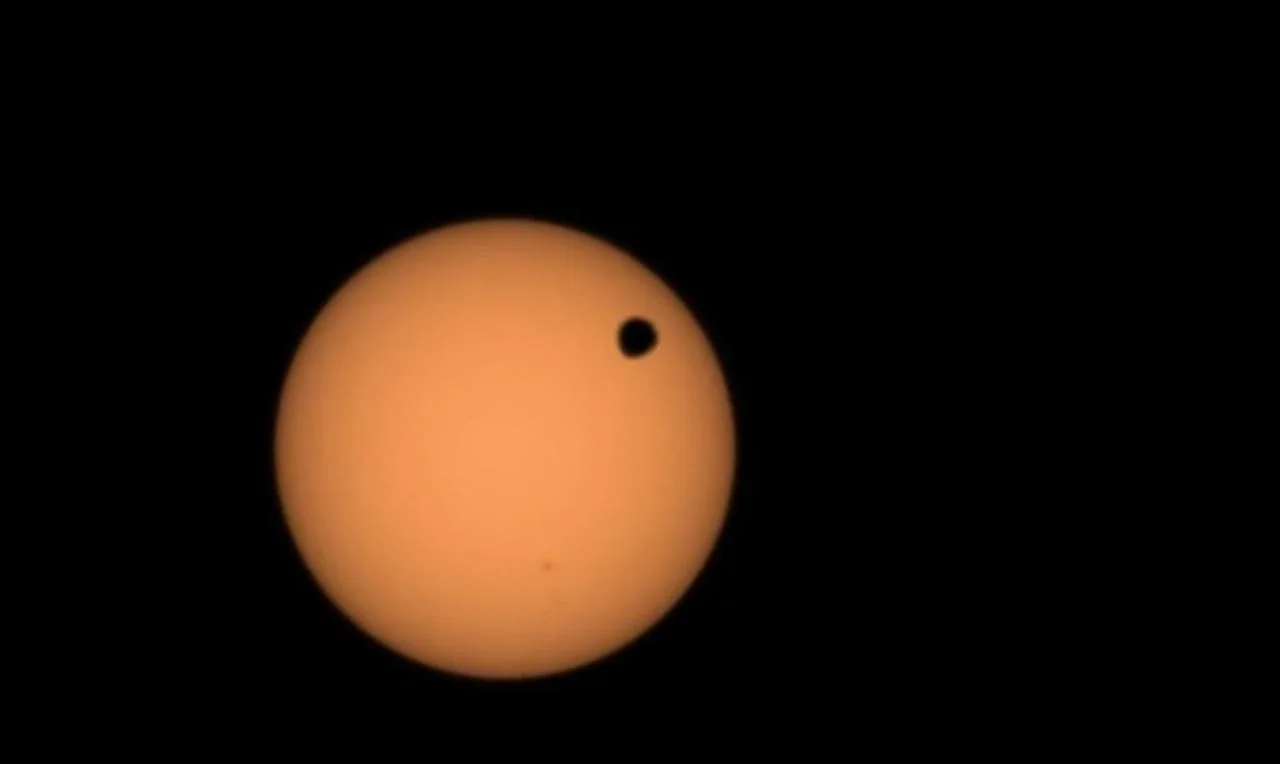
For future explorers on the Red Planet, Deimos will be a subtle yet reliable celestial marker. Because it rises and sets more slowly than Phobos, its transit across the Sun produces a tiny, partial eclipse—essentially a dark speck moving across the solar disk. While the effect is modest, it offers a useful timing cue for surface operations. From Earth, amateur astronomers can capture Deimos with moderate‑aperture telescopes, though its faintness and proximity to Mars demand careful planning.
Why Deimos Matters to Mushroom 2 Mars
Understanding Deimos helps us appreciate the broader Martian system that Mushroom 2 Mars will inhabit. While our mushroom farms will thrive on the planet’s surface, the tiny moon reminds us that Mars is part of a dynamic, multi‑body environment—one that may one day host orbital platforms for scientific experiments or even off‑world agriculture.
All facts are drawn from the Wikipedia entry on Deimos (moon) and related scientific literature.
Sources
This article was prepared with AI assistance from the sources listed above and approved by the Mushroom 2 Mars team before publication.