The Basics of Martian Geology
Mars is a rocky planet whose surface, crust, and interior are studied much like Earth’s geology. In planetary science the term embraces geophysics, geochemistry, mineralogy, and even cartography, offering a holistic view of the solid parts of the planet. Researchers often use the playful neologism areology—derived from the Greek Arēs—to refer specifically to Mars’ geological investigations.
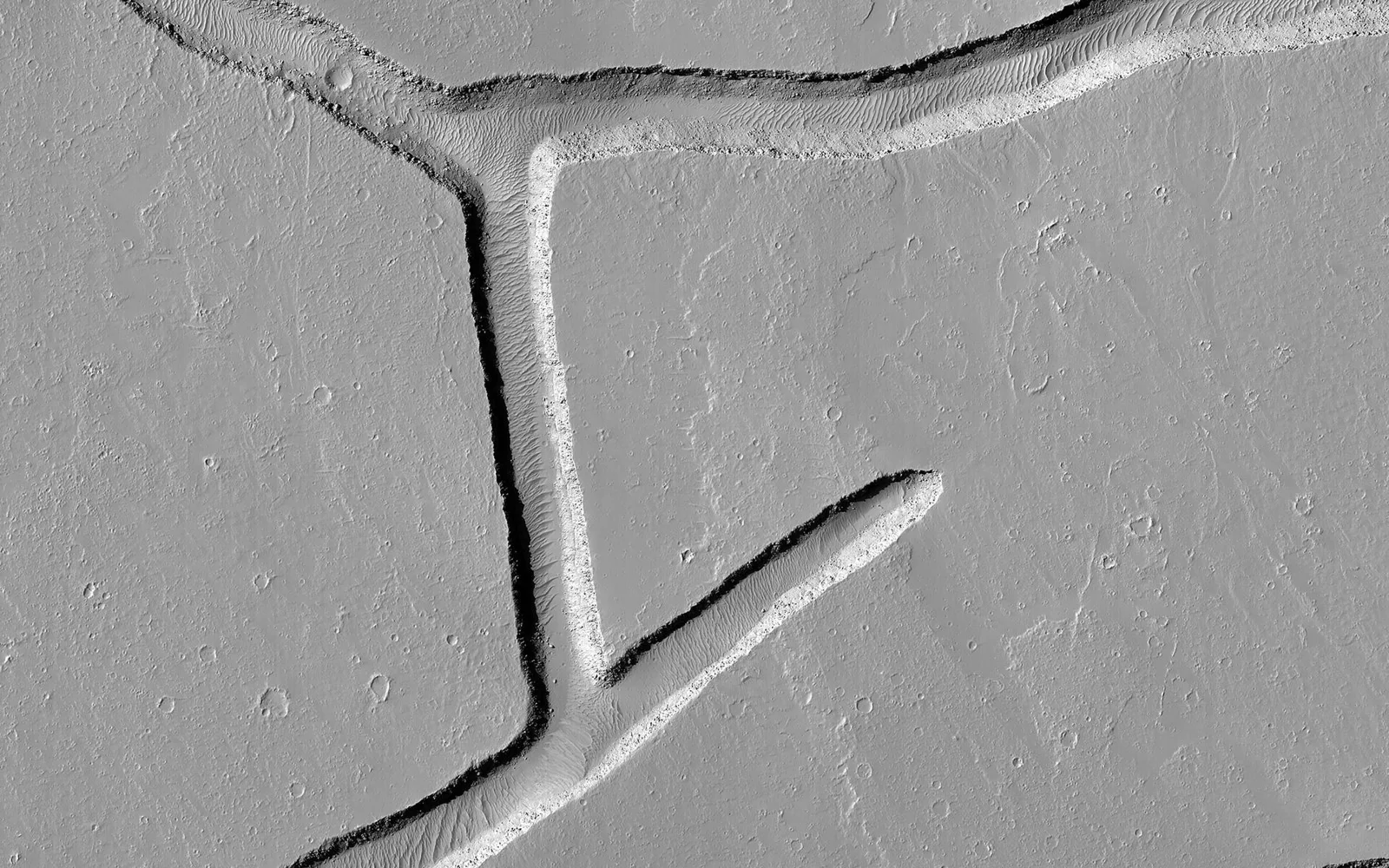
A Planet Split in Two: The Hemispheric Dichotomy
One of the most striking features of Mars is the contrast between its northern lowlands and southern highlands. The northern hemisphere sits 3–6 km lower than the southern half, creating a relief comparable to Earth’s ocean basins versus continents. This hemispheric dichotomy also shows up in crater density (the south is heavily cratered) and crustal thickness (about 58 km in the south versus 32 km in the north). Two broad families of explanations exist:
- Exogenic – a massive impact or series of impacts early in Mars’ history could have stripped away crust in the north.
- Endogenic – internal processes such as mantle convection or an early episode of plate tectonics might have thinned the northern crust.
Current research leans toward the impact hypothesis, especially after laser altimeter and radar data revealed many large, buried basins that likely date to the Late Heavy Bombardment. Regardless of the cause, the dichotomy is ancient, providing a key constraint on Mars’ early evolution.
Tharsis and Elysium: Mars’ Volcanic Powerhouses
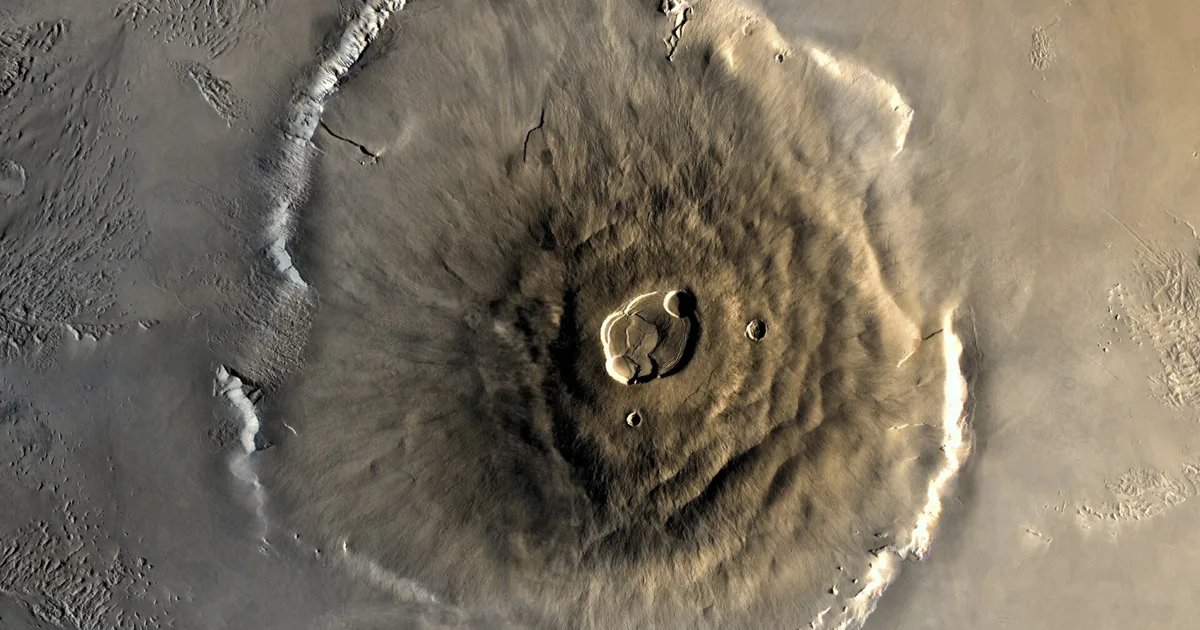
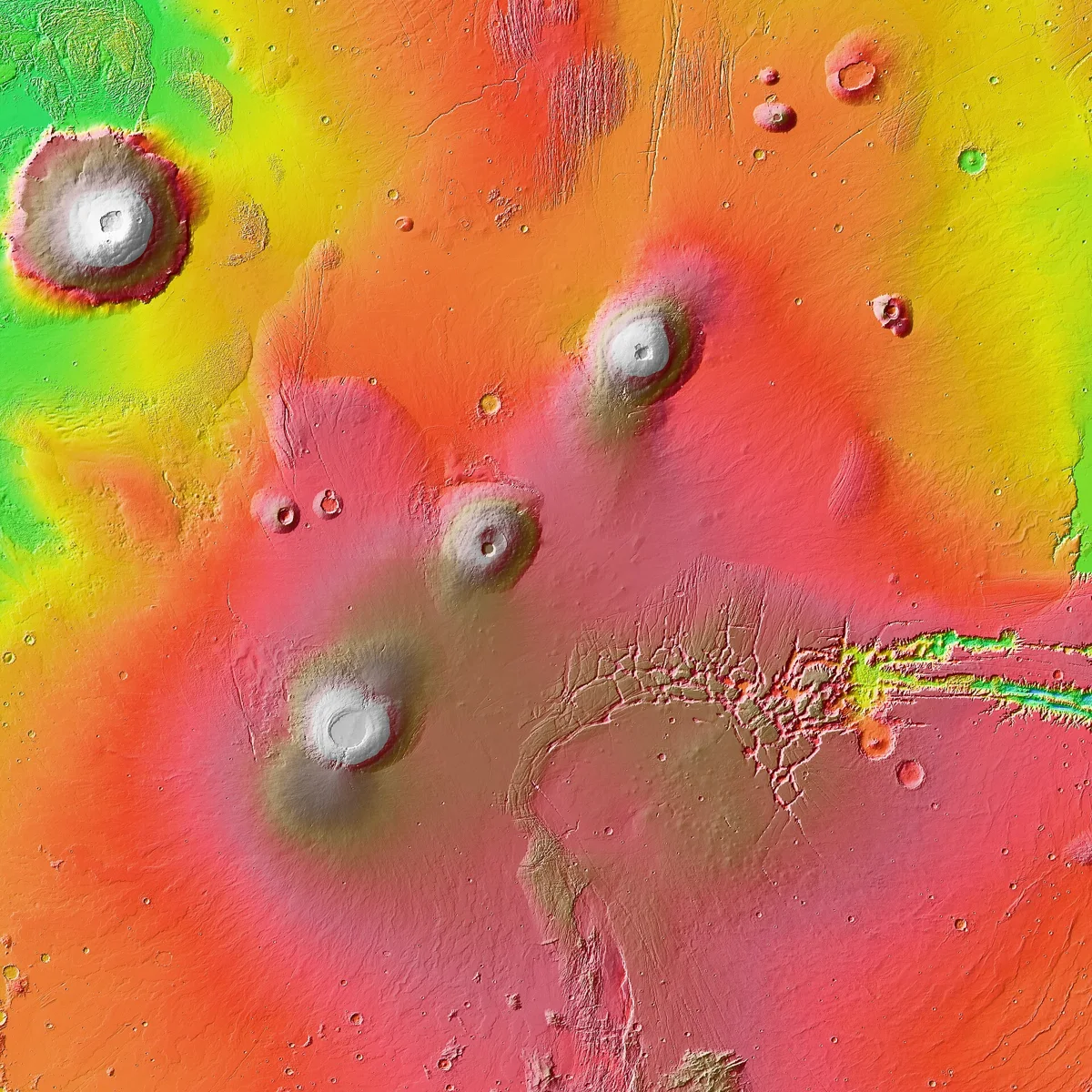
Straddling the dichotomy boundary, the Tharsis region dominates the western hemisphere. Spanning up to 25 % of the planet’s surface and rising 7–10 km above the mean elevation, Tharsis hosts the Solar System’s largest volcanoes. The three Tharsis Montes—Ascraeus Mons, Pavonis Mons, and Arsia Mons—form a neat northeast‑southwest line, while the sprawling shield volcano Alba Mons occupies the northern part of the bulge. Slightly farther west lies Olympus Mons, the tallest known volcano on any planet.
The sheer mass of Tharsis flexes the Martian lithosphere, generating extensive grabens and rift valleys that radiate outward, some reaching halfway around the globe. A smaller but still significant volcanic complex, Elysium, sits several thousand kilometers west of Tharsis, adding to the planet’s diverse volcanic landscape.
Peering Inside: The Deep Interior and a Hidden Magma Ocean
While surface features tell a dramatic story, the interior holds its own mysteries. NASA’s InSight lander, which touched down on 26 November 2018, deployed a highly sensitive seismometer to listen for marsquakes and probe the planet’s interior. By October 2023, scientists combining InSight data with orbital observations announced evidence for a radioactive magma ocean lingering beneath the crust. This molten layer, enriched in heat‑producing elements, could influence mantle convection and surface volcanism, offering a fresh perspective on why features like Tharsis are so massive.
Water, Ice, and Erosion: Shaping the Martian Landscape
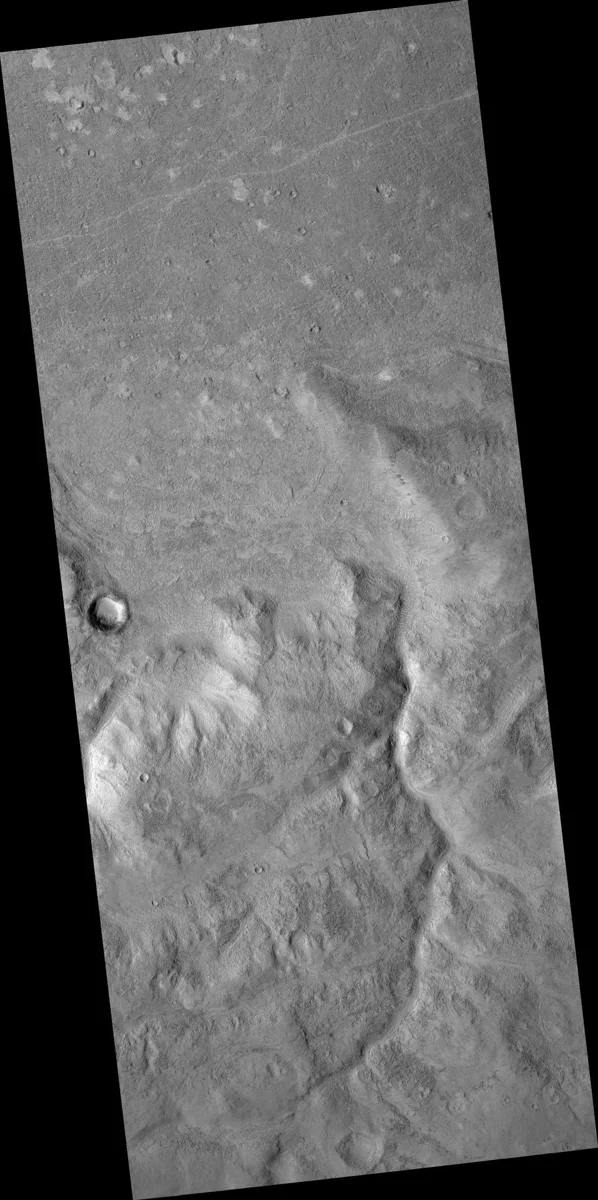
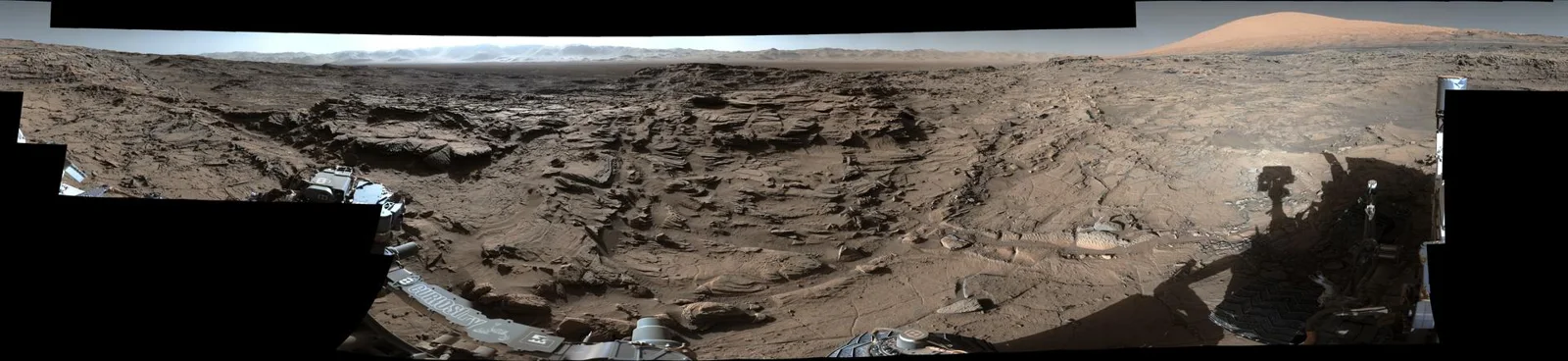
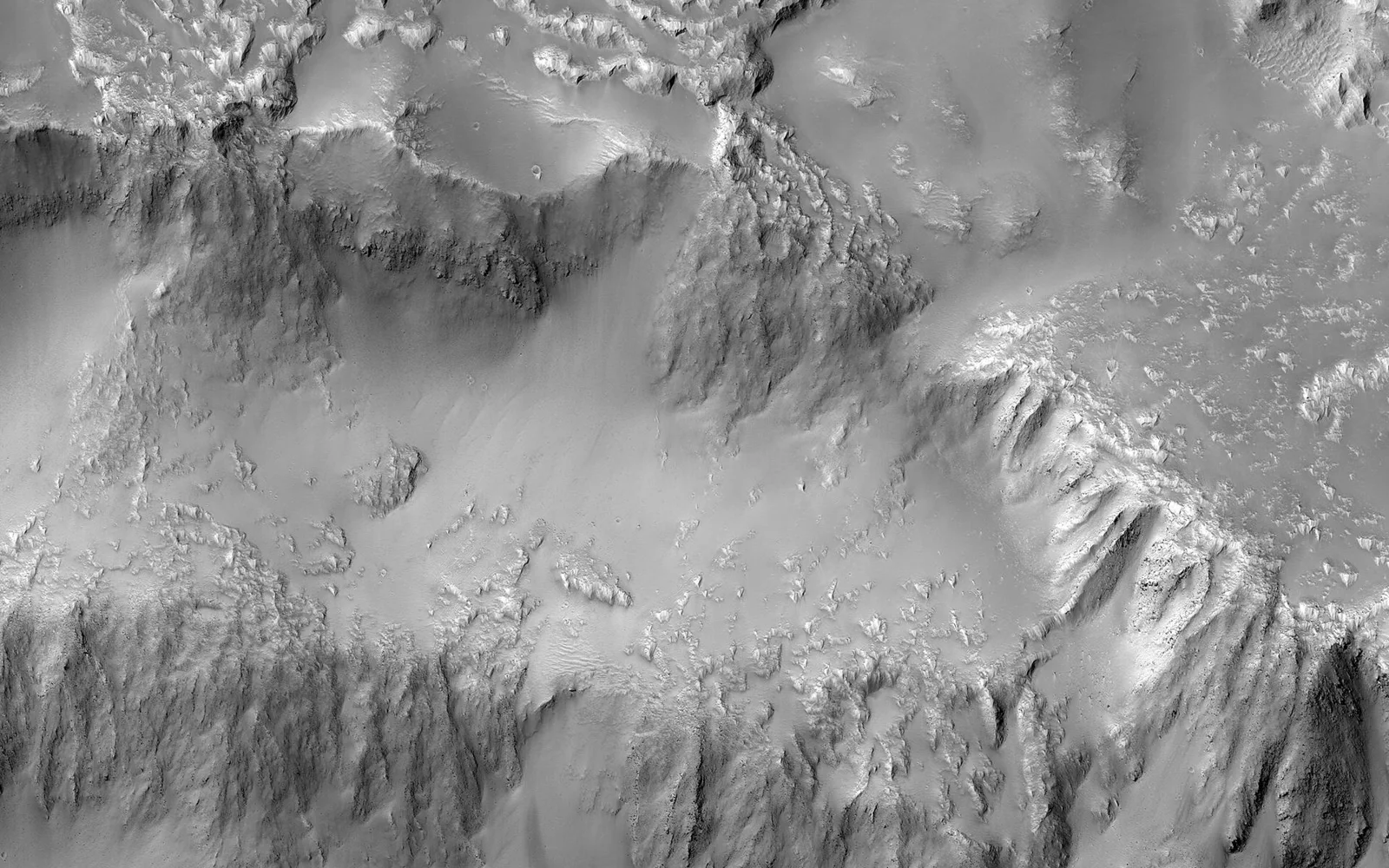
Volcanism and impacts are not the only forces sculpting Mars. Evidence of ancient river valleys, lakebeds, and layered sedimentary deposits points to a time when liquid water was more abundant. In the polar regions, thick ice caps and subsurface permafrost continue to drive erosion, creating gullies and patterned ground. These processes, combined with wind‑driven dust storms, constantly remodel the planet’s surface, leaving a patchwork of cliffs, dunes, and mineral deposits that scientists decode to reconstruct Mars’ climatic history.
Mapping the Red Planet: From Early Sketches to High‑Resolution Charts
Modern Martian cartography blends data from laser altimeters, radar sounders, and high‑resolution cameras aboard orbiters like Mars Reconnaissance Orbiter and MAVEN. The 2014 geological map of Mars integrated these datasets, revealing the distribution of volcanic provinces, impact basins, and ancient terrains. Such maps are essential for mission planning—whether selecting a safe landing site for rovers or identifying promising locations for future habitats.
Why It Matters for the Future of Space Farming
Understanding Mars’ geology isn’t just an academic pursuit. The composition and stability of the crust influence where we might grow crops—like the mushroom strains cultivated by the Mushroom 2 Mars community. Volcanic soils rich in minerals, combined with subsurface ice, could provide the nutrients and water needed for sustainable food production on the Red Planet. As we map and study these resources, each geological insight brings us a step closer to turning science fiction into reality.
Ready to explore more? Dive into the latest InSight findings, watch volcanic formation simulations, and imagine the next frontier of mushroom cultivation on Martian soil.
Sources
This article was prepared with AI assistance from the sources listed above and approved by the Mushroom 2 Mars team before publication.