Ancient Lake and Sediment Deposits
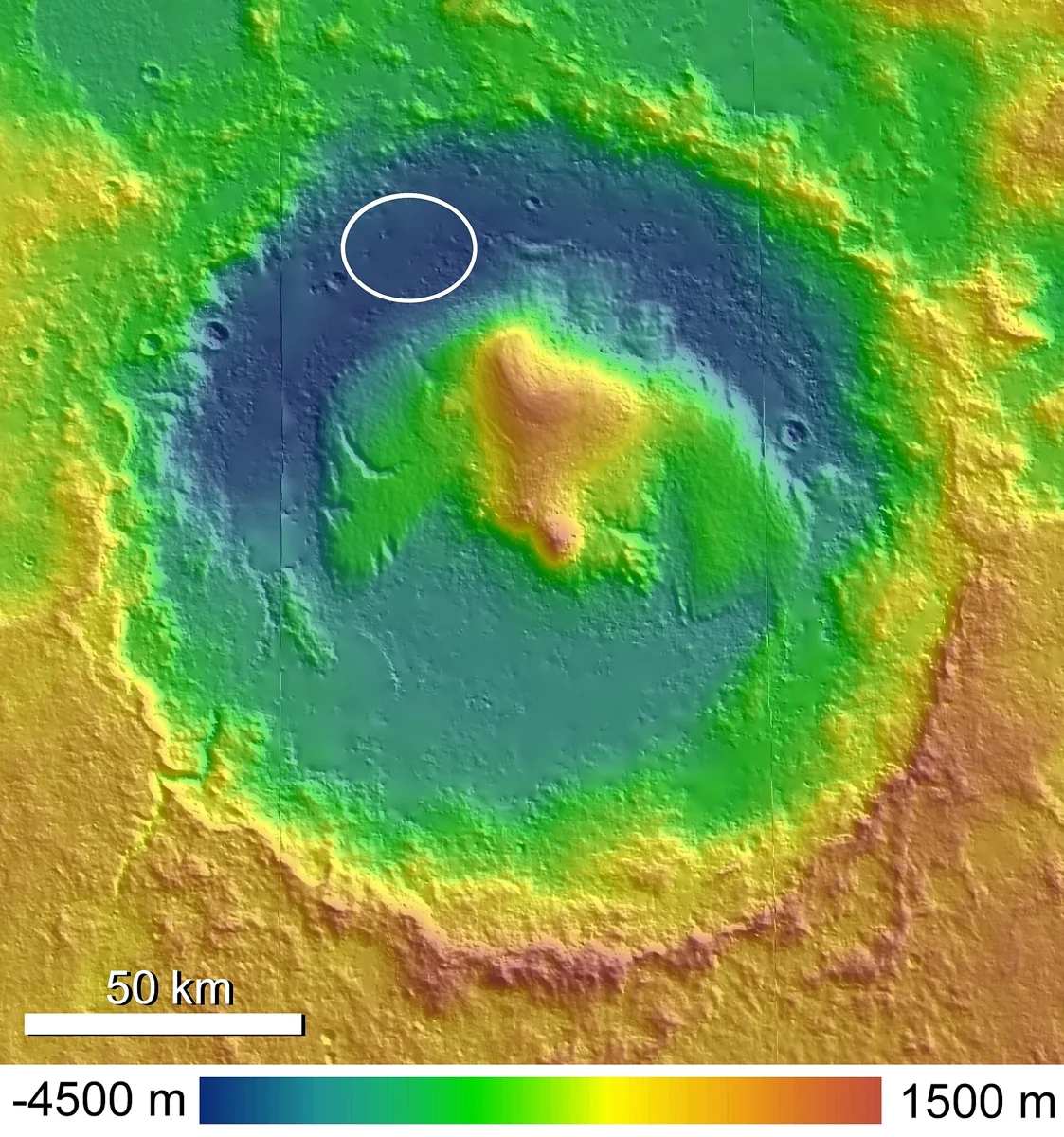
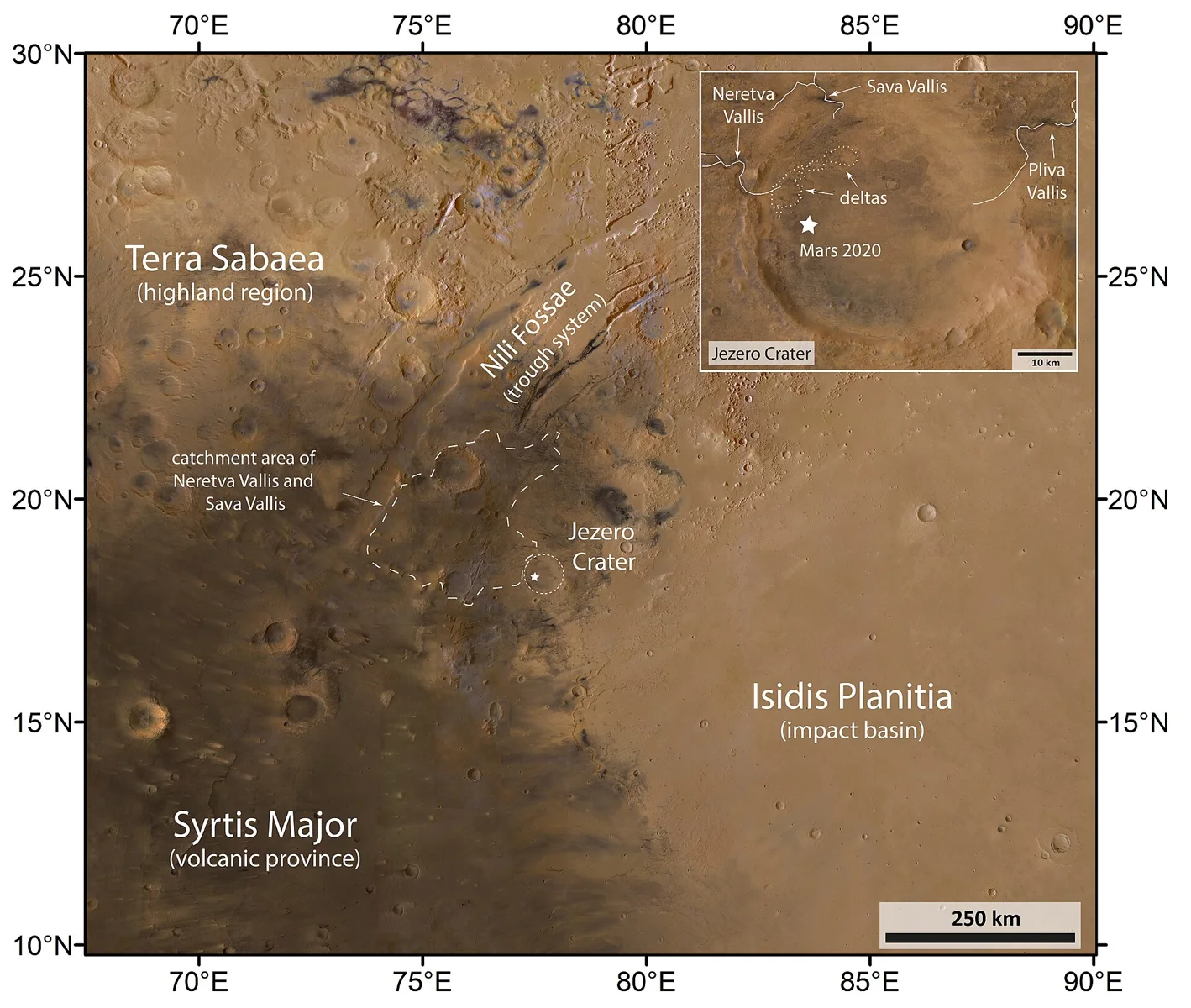
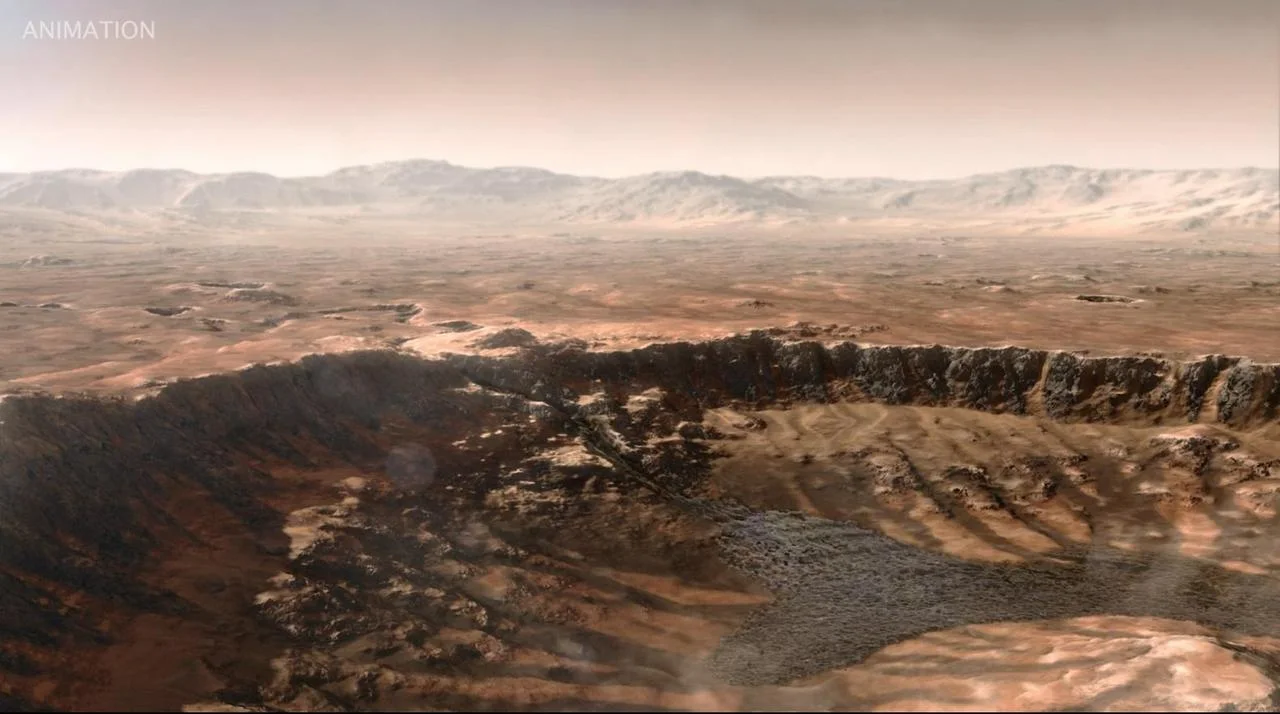
Jezero Crater, about 45 km across in Mars’s Syrtis Major quadrangle, shows clear signs of having once held a lake. A fan‑delta deposit rich in smectite clays lines the crater floor, and point‑bars and inverted channels indicate water‑carried sediments. Researchers estimate up to one kilometre of sediment accumulated, likely delivered by two inflow channels on the crater’s north‑ and west‑sides. The delta’s size suggests a long‑lived lake that may have persisted for one to ten million years, providing ample time for chemical alteration of rocks and the formation of polygonal cracking patterns as clays dried.
Naming and Cultural Roots
The crater was named in 2007 after the Bosnian town of Jezero—“jezero” means “lake” in several Slavic languages. The name reflects the feature’s most striking characteristic: the ancient lake that once filled the basin. This linguistic link underscores how planetary nomenclature often honors Earth locations that echo a planet’s surface features.
Key Geological Units: Séítah and Dacono
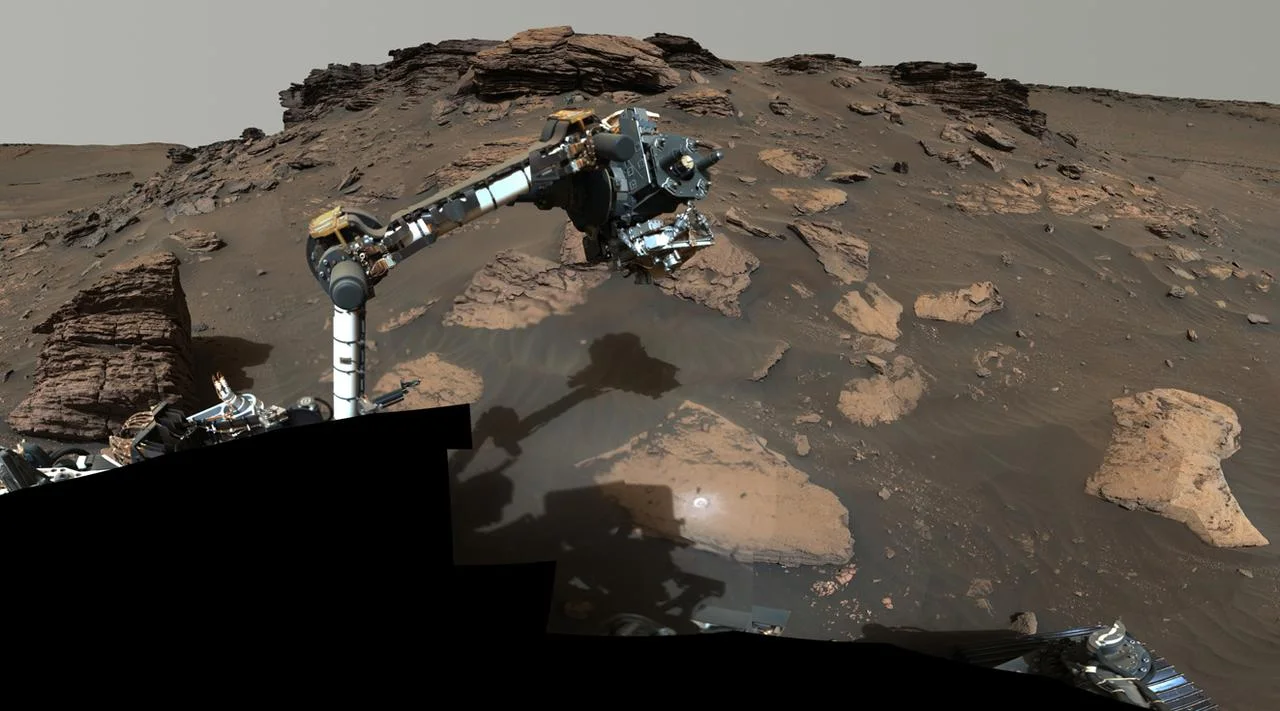
Within Jezero, the area known as Séítah (Navajo for “amidst the sand”) hosts some of the oldest exposed rocks. Perseverance began its first science campaign here, drilling core samples from outcrops that include igneous cumulate textures—olivine surrounded by pyroxene—signalling thick magma bodies. PIXL analysis also detected carbonates and sulfates, minerals that form when water alters rock. A smaller crater, Dacono, sits about 2 km across on the crater floor and displays fresh boulder falls that offer clues about recent erosional processes.
Perseverance Landing and Exploration
In November 2018 NASA announced Jezero as the landing site for the Mars 2020 rover Perseverance. The rover touched down on 18 February 2021, selecting a smooth, circular area roughly 19 km wide to ensure a safe descent. The nearby Ingenuity helicopter performed the first powered flight on another planet on 19 April 2021, taking off from Jezero’s surface and sending back high‑resolution images of the delta and surrounding terrain.
Sample‑Return Roadmap
The ultimate goal of the Mars 2020 mission is to retrieve rock and soil samples for return to Earth. An ESA–NASA concept envisions a three‑launch architecture: Perseverance caches material, a solid‑fuel ascent stage rockets the payload into Mars orbit, and an orbiter captures it for Earth return. A streamlined version could launch in July 2026, land near Perseverance at a site nicknamed “Three Forks” in August 2028, and launch the sealed canister back to orbit in spring 2029. This plan builds on proven landing technologies and may incorporate a radioisotope thermoelectric generator to keep systems warm during the long mission timeline.
Why Jezero Matters for Future Martian Life Searches
Because Jezero’s lake was long‑lasting and its sediments contain water‑altered minerals, scientists view it as a prime target for biosignature detection. Clay‑rich layers can preserve organic molecules, and the diverse geological contexts—from ancient igneous rocks to recent boulder falls—provide a rich archive of Mars’s environmental history. As sample‑return missions progress, Jezero could become the first Martian site where Earth‑based laboratories directly test for traces of past life.
From ancient lakes to modern rovers, Jezero Crater shows how a simple basin can become a launchpad for humanity’s quest to grow mushrooms on Martian soil.
Sources
This article was prepared with AI assistance from the sources listed above and approved by the Mushroom 2 Mars team before publication.