What HP3 Set Out to Measure
The Heat Flow and Physical Properties Package (HP3) was a key science payload on NASA’s InSight lander. Its primary goal was to quantify how much heat escapes from Mars’s interior. By measuring the temperature gradient and heat flux, researchers hoped to compare Mars’s thermal evolution with Earth’s, assess the thickness of the crust, and infer the composition of the mantle. Together with the lander’s seismometer, HP3 data would also help constrain the size and state (liquid or solid) of the Martian core.
The “Mole” Penetrometer: A Self‑Hammering Nail
At the heart of HP3 was a compact burrowing probe nicknamed the “mole.” Roughly 35 cm long and 3.5 cm in diameter, the mole resembled a smooth nail that could hammer itself into the regolith while dragging a tether loaded with temperature sensors. The tether contained 14 platinum resistance temperature detectors (RTDs) spaced every 10 cm, plus a heater that could deliver controlled heat pulses. By monitoring how quickly a heat pulse dissipated, scientists could calculate the thermal conductivity of the surrounding soil.
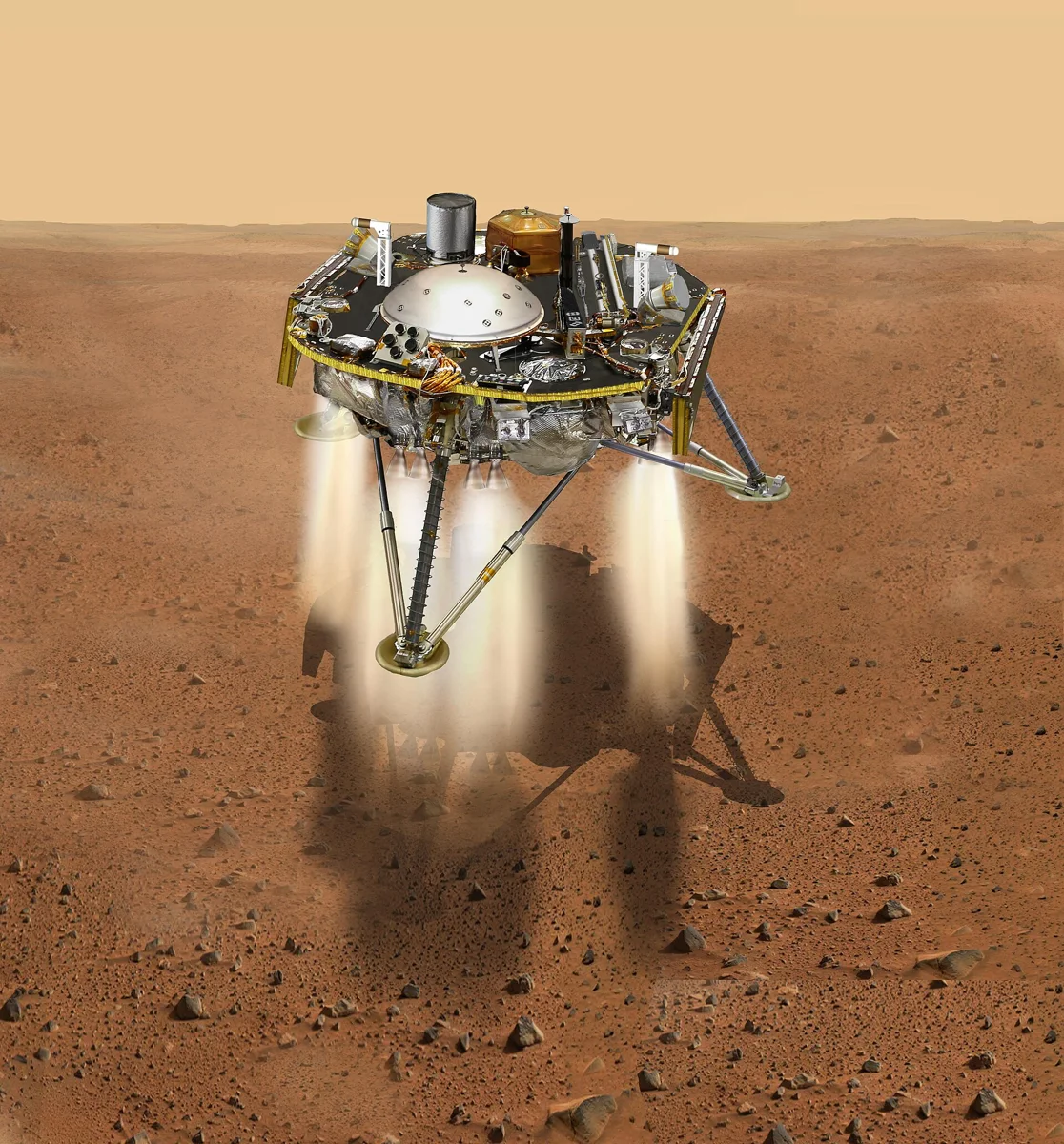
The mole’s hammering mechanism was a collaborative effort: the Polish company Astronika and the Space Research Centre of the Polish Academy of Sciences designed the internal hammer, while the German Aerospace Center (DLR) provided the overall HP3 system. Power consumption was modest—no more than 2 W during operation—and the entire package weighed about 3 kg.
The Planned Journey to 5 Meters
Engineers expected the mole to reach a depth of 5 m (≈16 ft) in roughly 40 days, delivering a continuous temperature profile from the surface down to the subsurface. Each 50 cm of travel would be accompanied by a heat‑pulse experiment lasting 24 hours, followed by a two‑day cooling period. In addition to thermal data, the hammering action generated vibrations that the lander’s Seismic Experiment for Interior Structure (SEIS) could detect, offering a secondary probe of subsurface structure.
The Unexpected Stalling
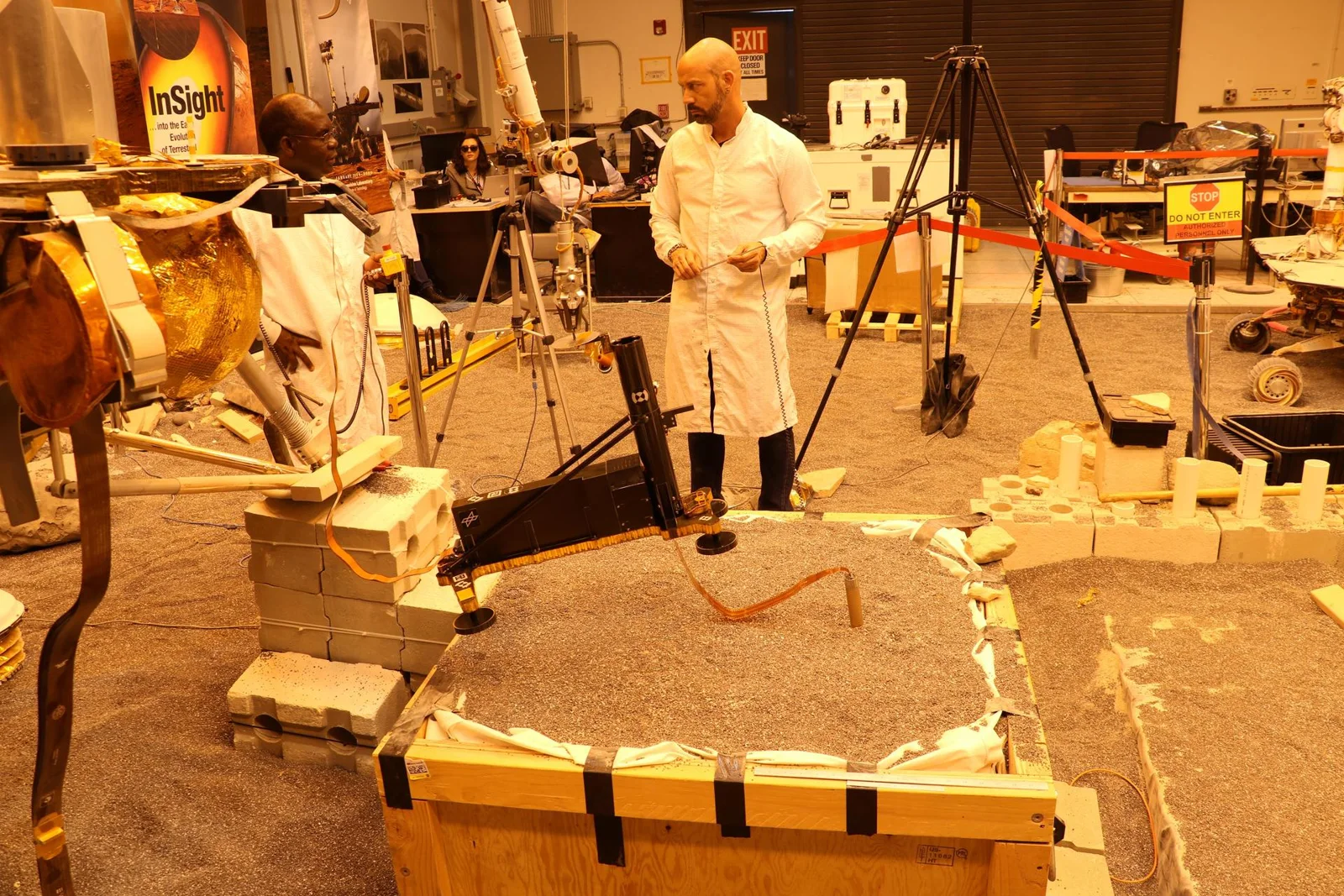
In March 2019 the mole began its descent, but after only a few centimeters it stalled. Initial speculation blamed a buried rock, yet later tests with Earth‑based replicas suggested insufficient friction between the mole’s smooth casing and the compacted Martian soil. By June 2019 the support structure was lifted, revealing a gap around the probe—a sign that the regolith had been displaced rather than gripped.
To remedy the situation, the lander’s robotic arm was used to press on the surrounding soil, attempting to increase friction and push the mole deeper. Despite several months of adjustments, the probe never progressed beyond a few centimeters. The effort highlighted how even well‑engineered hardware can encounter unforeseen planetary conditions.
The Decision to End the Drill
After more than a year of troubleshooting, the mission team announced on 14 January 2021 that further attempts to drive the mole would be halted. While the mole did not achieve its depth target, the HP3 suite still delivered valuable data. The infrared radiometer (HP3‑RAD) measured surface temperature variations, and the tether‑based temperature sensors recorded the thermal environment of the shallow regolith. Combined with seismic observations, these measurements continue to refine models of Mars’s heat flow and interior dynamics.
Legacy and Lessons for Future Mars Exploration
HP3’s challenges underscore the importance of testing instruments under realistic Martian analog conditions. The mole’s self‑hammering design, low power draw, and integrated thermal sensing remain promising concepts for future missions that might need to probe deeper than a few centimeters. Engineers are already considering design tweaks—such as roughened outer surfaces or adjustable anchoring mechanisms—to improve friction in low‑gravity, low‑pressure soils.
The HP3 story also illustrates the value of international collaboration. Contributions from Germany, Poland, and the broader scientific community enabled a sophisticated payload to fly on a relatively small lander, expanding our understanding of planetary interiors.
From Martian Heat to Mushroom Gardens
Even though the mole never reached its intended depth, the thermal insights it gathered help scientists model subsurface temperature regimes—information that could one day guide the cultivation of hardy fungi on Mars, bringing us a step closer to mushroom farms on the Red Planet.
Sources
This article was prepared with AI assistance from the sources listed above and approved by the Mushroom 2 Mars team before publication.