What Is the Latitude‑Dependent Mantle?
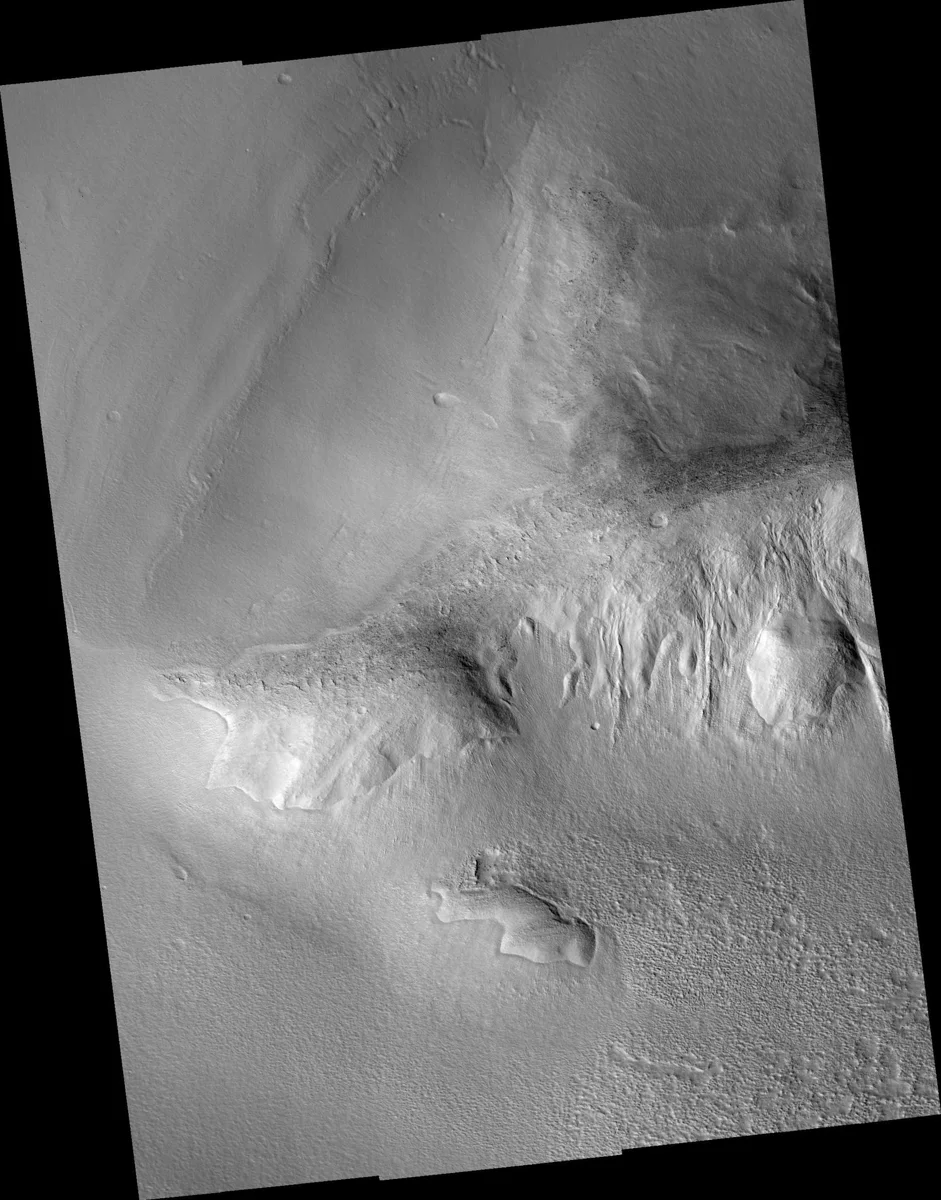
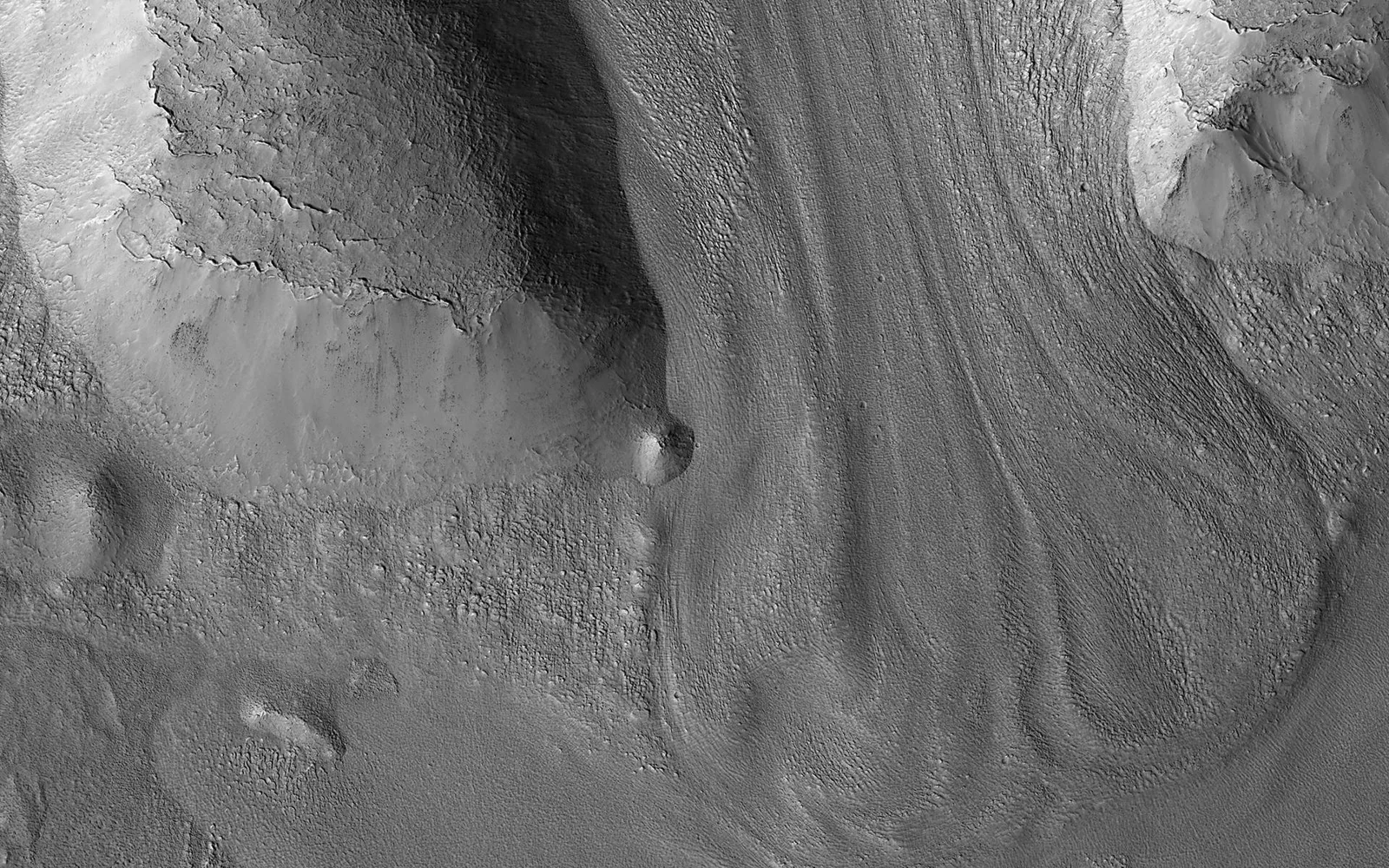
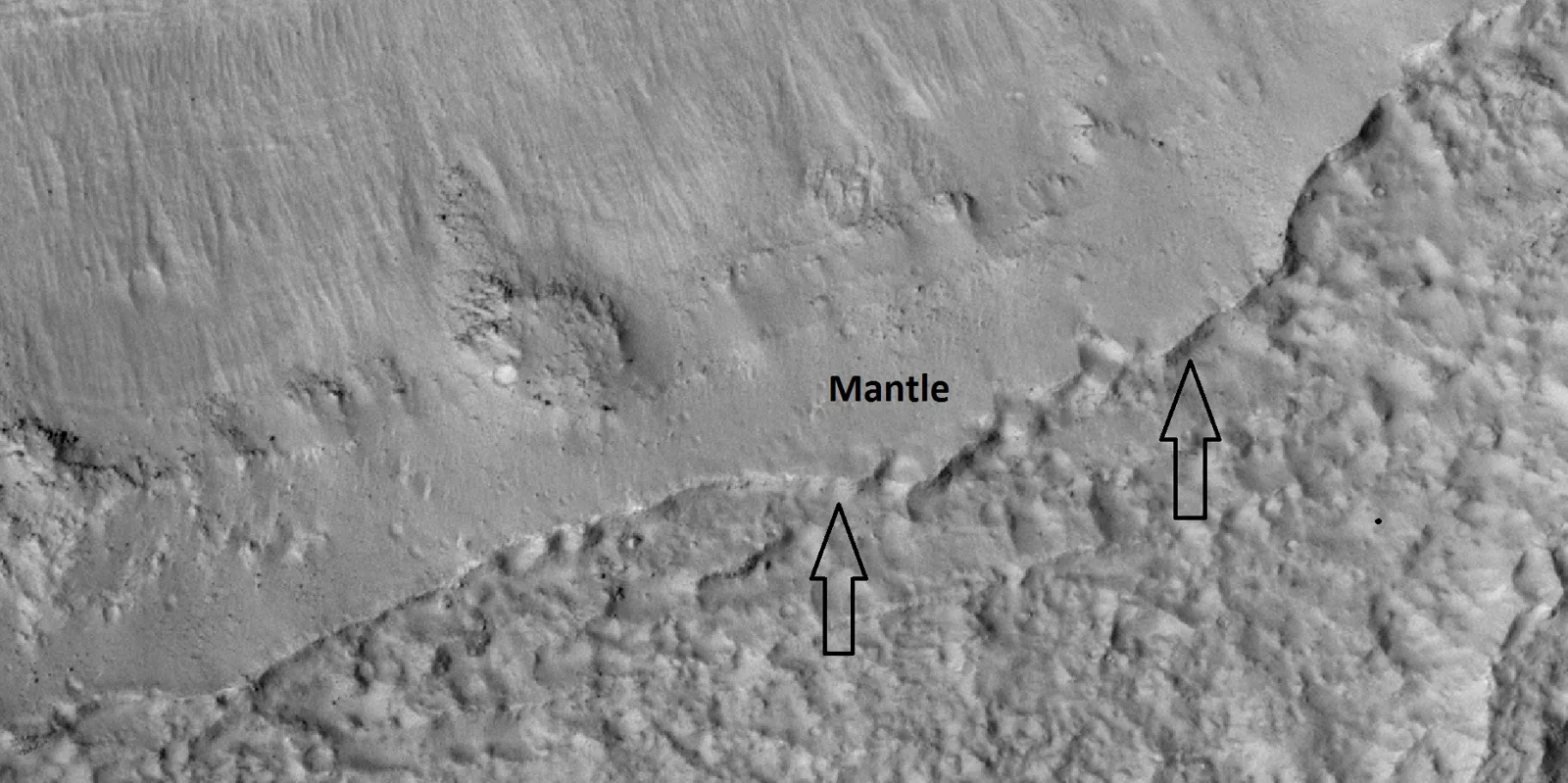
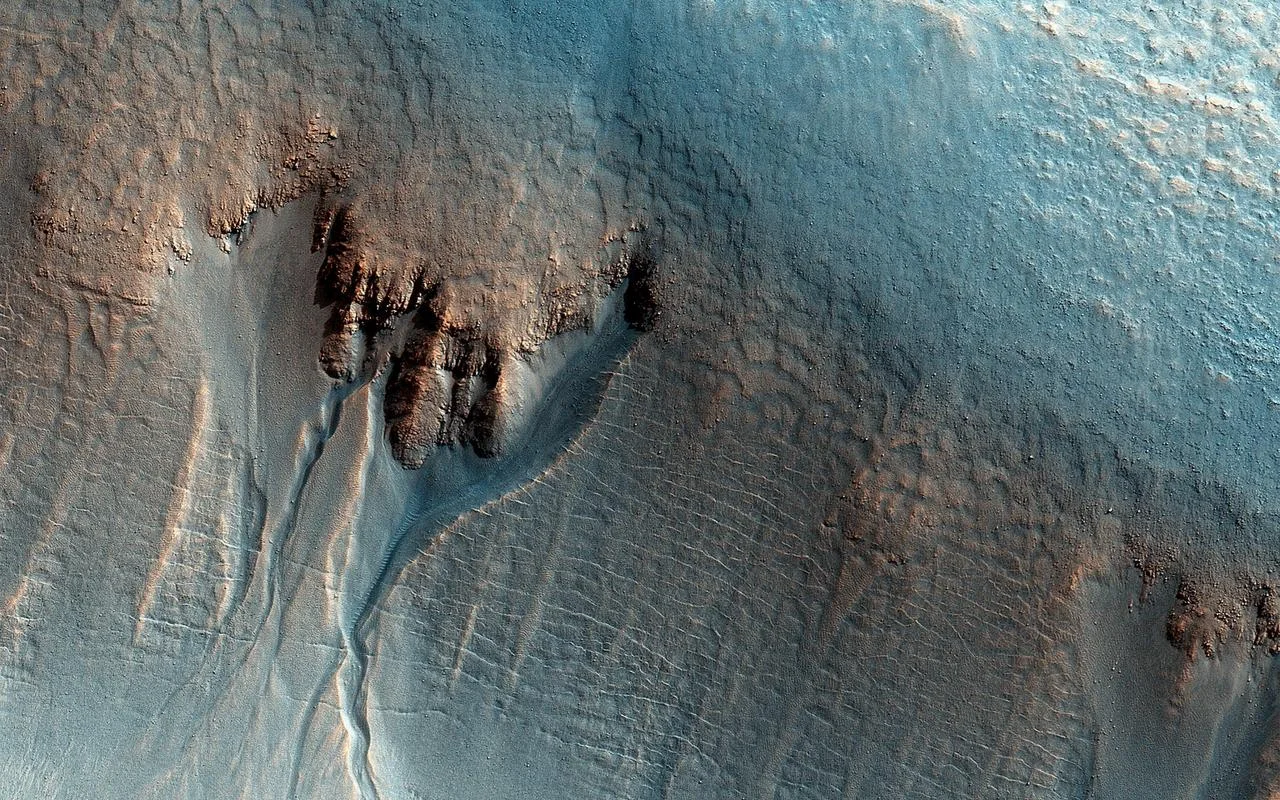
The latitude‑dependent mantle (LDM) is a thick, ice‑rich layer that blankets large portions of the Martian surface. It is called “latitude‑dependent” because it appears most prominently in specific latitude bands, reflecting past climate conditions rather than the planet’s current weather. The mantle consists of snow‑like deposits that mixed with dust, later compacting into a mantle that can be 10–20 meters thick in some regions. Its presence is inferred from surface textures, orbital measurements, and direct observations by landers.
How Scientists Detect Ice in the Mantle
Multiple lines of evidence point to the mantle’s ice content. Orbital instruments such as the Mars Odyssey neutron spectrometer have measured elevated hydrogen levels, which are interpreted as water‑bound hydrogen. Thermal imaging from orbit shows temperature signatures consistent with subsurface ice. The Phoenix lander, which touched down in a polygon‑filled field, directly observed pure ice after its landing rockets cleared the surface, confirming predictions that a thin layer of soil can hide water ice.
Polygonal Ground and “Brain Terrain”
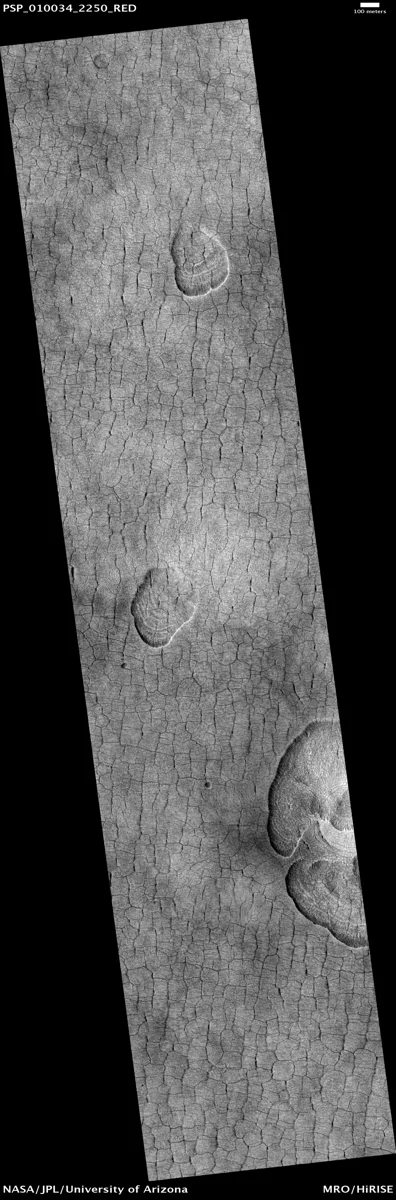
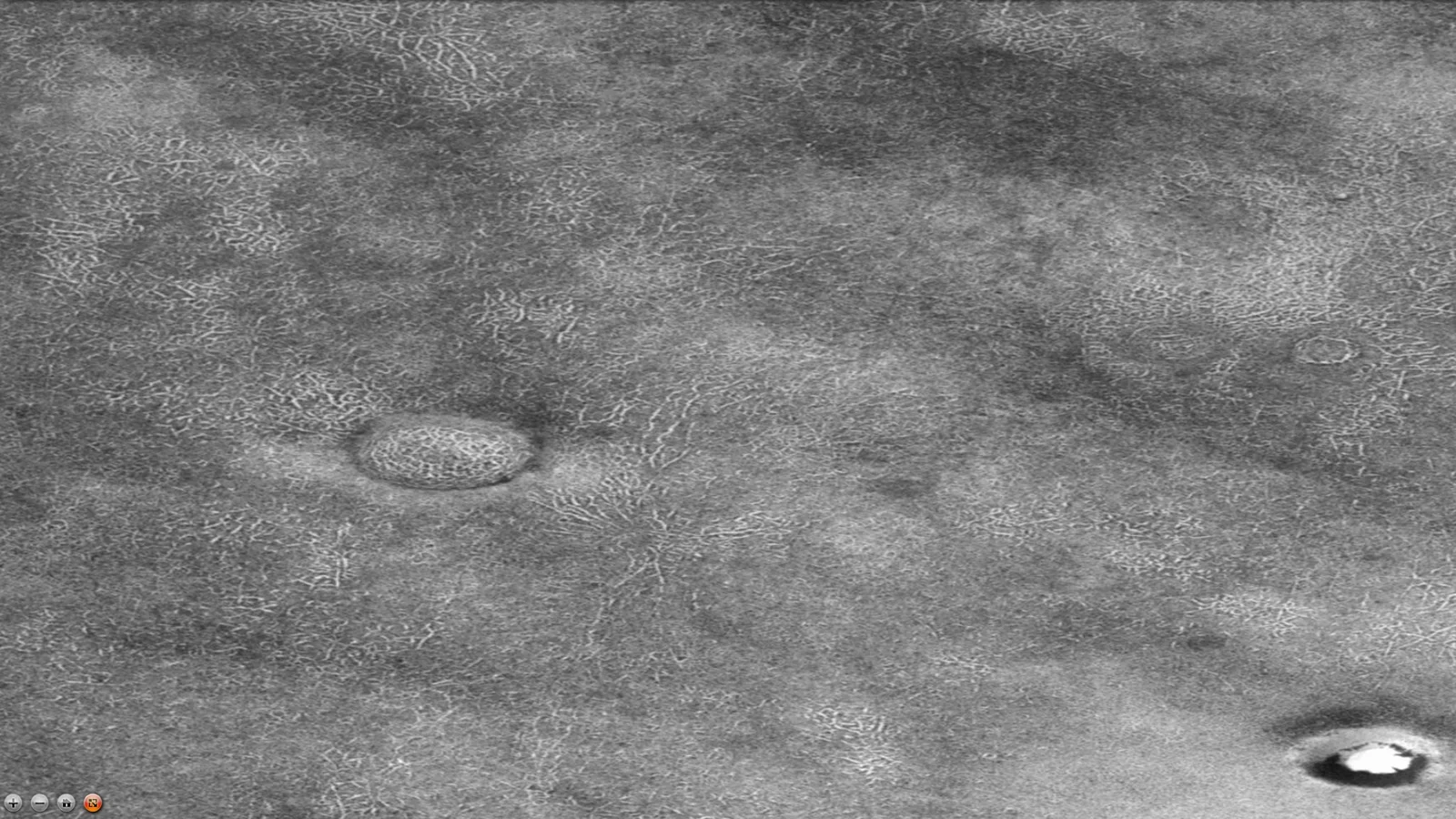
One of the most striking visual clues of the LDM is the network of polygonal cracks that form as the ice‑rich material cools and contracts. These polygons can be seen from orbit and often overlay a more irregular feature known as “brain terrain,” named for its resemblance to the folds of a brain. The smooth polygonal layer is thought to be a 10–20 meter‑thick mantle that smooths out the underlying irregularities. When the ice sublimates, a lag deposit of dust remains on top, preserving the polygonal pattern for long periods.
Water Budget: Mantle vs. Polar Caps
By estimating the area covered by polygonal ground and assuming an average mantle thickness of about 10 meters, researchers have calculated the total water stored in the LDM. This amount is equivalent to a global layer roughly 2.5 meters deep if spread evenly across the planet. By comparison, the combined north‑ and south‑polar ice caps hold water that would form a layer about 30 meters deep globally. Although the mantle holds less water than the caps, it still represents a significant reservoir, especially because it is distributed at mid‑latitudes.
Climate Shifts and Mantle Formation
The LDM is a record of past Martian climate cycles driven by changes in the planet’s axial tilt, or obliquity. Unlike Earth, whose tilt is stabilized by a large moon, Mars’ tiny moons exert little stabilizing influence, allowing its tilt to vary dramatically over millions of years. When the tilt exceeds roughly 40 degrees—far higher than today’s 25 degrees—climate models predict that ice will be deposited in mid‑latitude bands, creating the mantle we observe. These cycles of high obliquity lead to periods when water vapor migrates from the poles to lower latitudes, where it freezes onto the surface as snow‑dust mixtures.
Why the Mantle Matters for Future Exploration
Understanding the distribution and stability of the LDM is crucial for planning future human missions. The ice‑rich mantle could serve as an in‑situ resource for water extraction, supporting life‑support systems and fuel production. Moreover, the protective lag deposit that forms after sublimation may help shield subsurface ice from rapid loss, extending its usefulness. Researchers are also studying how the mantle’s thermal properties affect surface temperature regulation, which has implications for habitat design and thermal management on the Red Planet.
From Martian Mantles to Mushroom Gardens
While the LDM is a purely geological feature, its study highlights how Mars can store water in unexpected places. For mushroom cultivators on Earth, moisture management is equally vital—whether growing oyster mushrooms in controlled environments or planning future fungal farms on Martian habitats. The lessons we learn from Mars’ ice‑rich layers could inform how we protect and sustain moisture for fungal growth beyond our planet.
Sources
This article was prepared with AI assistance from the sources listed above and approved by the Mushroom 2 Mars team before publication.