Part of the guide: Mycology: A Complete Guide to Fungi, Cultivation, and Safety
Shape and Naming
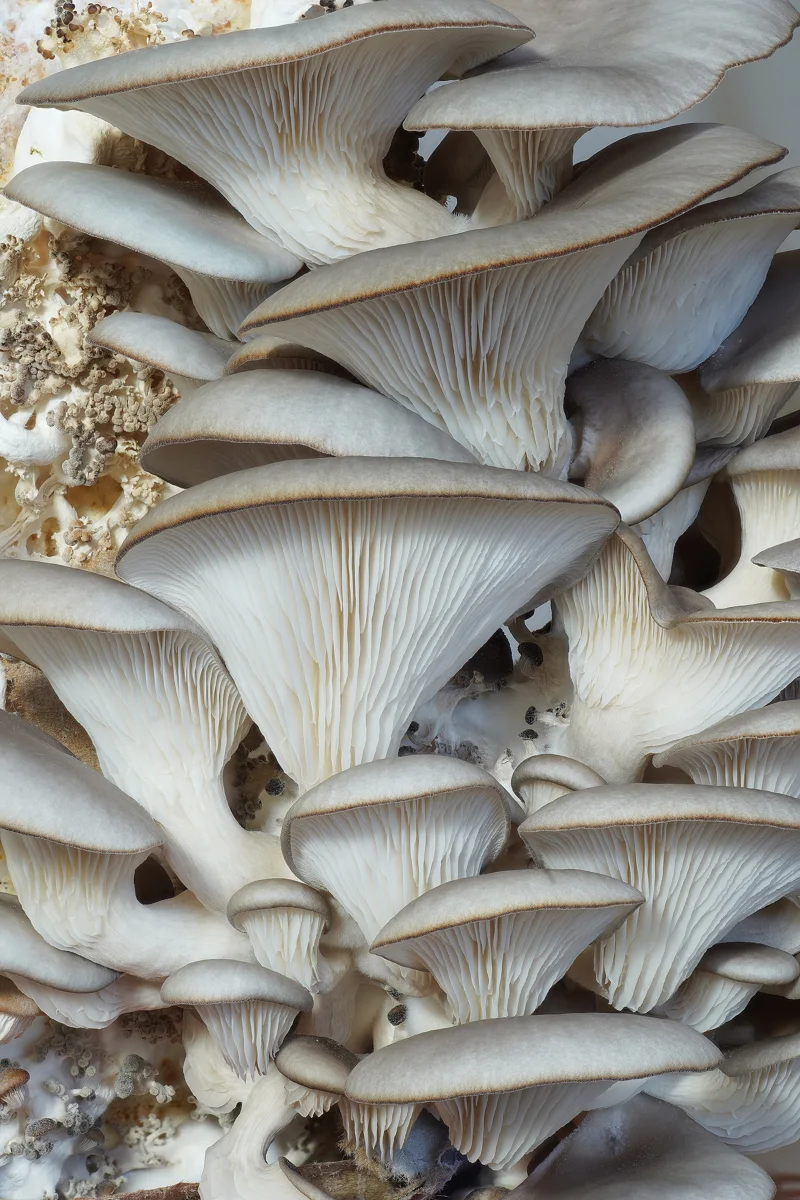
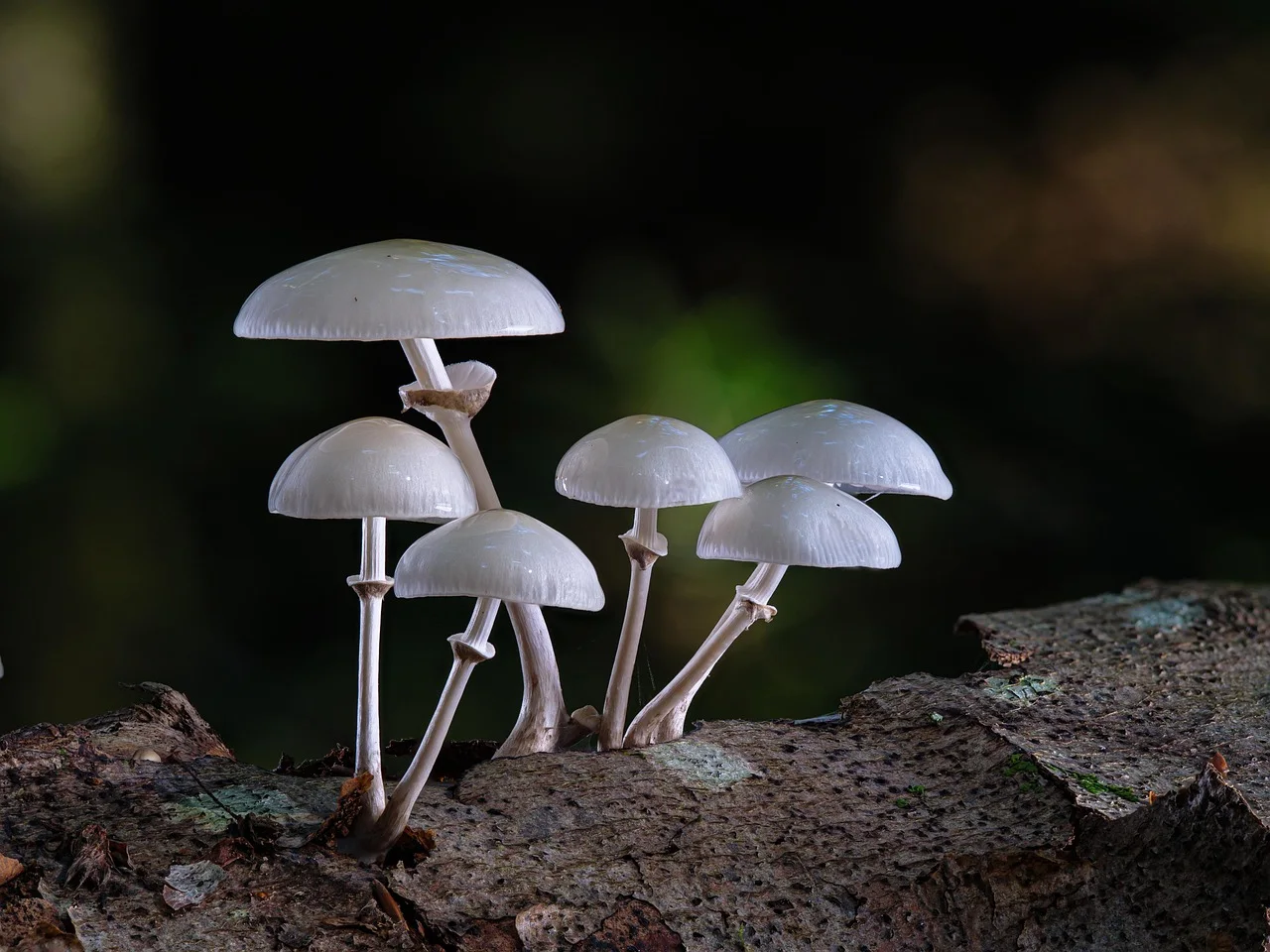
Pleurotus ostreatus gets its common names from the distinctive shape of its fruiting body. The Latin pleurotus means “side‑ear,” describing the lateral attachment of the stem, while ostreatus (and the English “oyster”) refer to the fan‑shaped cap that resembles a bivalve shell. This morphology also gives the mushroom its smooth, sometimes wavy margin and a texture that feels a bit slippery to the touch.
Physical Description
In the wild the cap ranges from 2 cm to 30 cm across and can be white, gray, or brown. Young specimens have an inrolled edge that later opens into a broad, fan‑like surface. The flesh is white and firm, with a thickness that varies depending on whether a short, off‑center stipe is present (up to about 4 cm long). The gills run down the stem (decurrent) and start whitish, sometimes turning yellowish with age. A spore print appears white to lilac‑gray when collected on a dark background. The mushroom emits a bittersweet aroma reminiscent of benzaldehyde, often likened to bitter almonds.
Habitat and Distribution
Oyster mushrooms thrive in temperate and subtropical forests worldwide, favoring dead or dying hardwoods—especially beech. They act as primary decomposers, breaking down lignin and cellulose in a process known as white‑rot decay. Although common in many regions, they are absent from the Pacific Northwest of North America, where closely related species such as P. pulmonarius take their place. The species can appear year‑round in places like the United Kingdom, taking advantage of any suitable woody substrate.
Ecological Role
Although they grow on weakening trees, P. ostreatus is saprophytic rather than parasitic; it colonizes wood that has already begun to die from other causes. By converting dead wood into nutrient‑rich organic matter, the mushroom recycles carbon, nitrogen, and minerals back into the forest ecosystem. Remarkably, the fungus also bioaccumulates lithium, a trait of interest for future biotechnological applications.
The species is carnivorous at the microscopic level. Its mycelium can trap and digest nematodes, providing a supplemental source of nitrogen. This nematophagous behavior places P. ostreatus among more than 700 known mushroom species that prey on tiny worms. Additionally, several pleasing fungus beetles (family Erotylidae) rely on oyster mushrooms for food and development, highlighting the mushroom’s role in supporting insect biodiversity.
Culinary Appeal
Oyster mushrooms are a staple in many culinary traditions. In Central European kitchens they appear in soups, stews, and breaded cutlets, often serving as a meat substitute. Asian cuisines—Japanese, Korean, Chinese, and Indonesian—celebrate the mushroom in stir‑fries, deep‑fried street snacks, and as a base for vegetarian oyster sauce. The flavor is mild, with a subtle anise‑like note, and the texture remains tender when harvested young; older specimens become tougher and develop a faintly acrid taste.
Simple Vegan Stir‑Fry Recipe
Ingredients - 300 g fresh Pleurotus ostreatus, cleaned with a damp cloth and torn into bite‑size pieces - 2 tbsp sesame oil - 3 cloves garlic, minced - 1 inch ginger, grated - 2 tbsp soy sauce (or tamari for gluten‑free) - 1 tbsp rice vinegar - 1 tbsp maple syrup - 1 tsp toasted sesame seeds - Chopped scallions for garnish
Steps 1. Heat the sesame oil in a wok over medium‑high heat. 2. Add garlic and ginger; sauté for 30 seconds until fragrant. 3. Introduce the oyster mushroom pieces, stirring constantly for 4–5 minutes until they turn golden and release moisture. 4. Mix soy sauce, rice vinegar, and maple syrup; pour over the mushrooms and toss to coat. 5. Cook an additional 2 minutes, ensuring the sauce thickens slightly. 6. Remove from heat, sprinkle with sesame seeds and scallions, and serve over rice or noodles.
All ingredients are store‑bought, and the mushrooms are cultivated, not wild‑picked, ensuring safety.
Innovative Non‑Food Uses
Beyond the kitchen, P. ostreatus powers a range of sustainable technologies. Mycelium derived from the species can be molded into bricks, furniture, and leather‑like textiles, offering biodegradable alternatives to conventional building materials. In environmental remediation, the fungus excels at breaking down pollutants: laboratory studies have shown it can convert up to 95 % of diesel‑oil contaminants into non‑toxic compounds. It also degrades certain biodegradable plastics, including oxo‑biodegradable bags and renewable polyethylene, positioning it as a tool for reducing plastic waste.
The mushroom naturally produces lovastatin, a compound known for its cholesterol‑lowering properties, though it is not marketed as a medicinal supplement.
Growing Oyster Mushrooms at Home
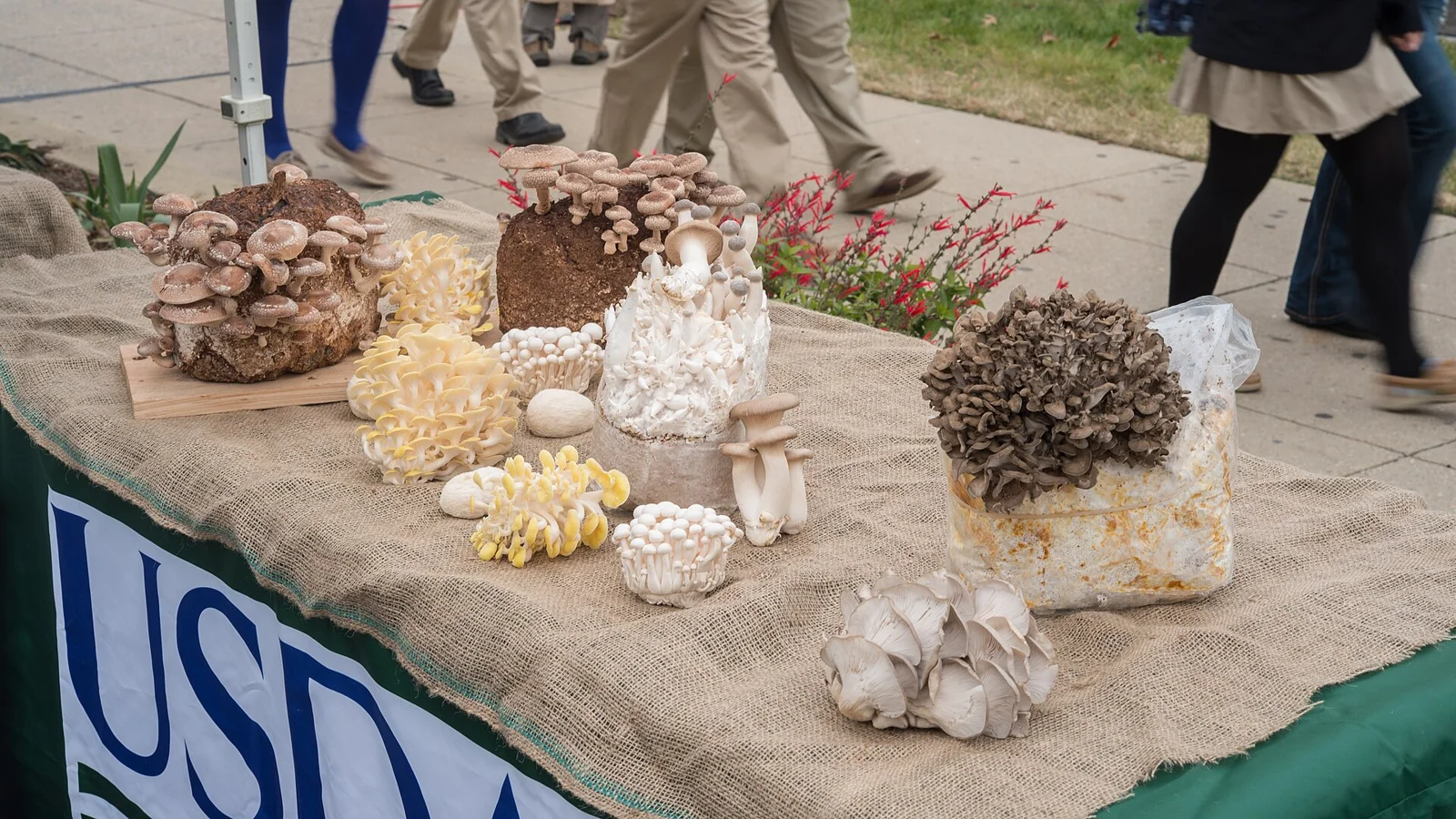
Cultivation of P. ostreatus is beginner‑friendly. The process typically starts with inoculated sawdust or straw spawn, which is mixed into a moist substrate and placed in a container with good airflow. Within a few weeks, white mycelium colonizes the substrate, followed by the emergence of fan‑shaped fruiting bodies. Maintaining a temperature of 15–24 °C and high humidity (80–95 %) encourages rapid growth. Because the mushroom prefers hardwood, using beech or oak chips yields especially vigorous crops.
From Earth to Mars
The adaptability of oyster mushrooms—thriving on minimal nutrients, tolerating a range of temperatures, and even processing waste—makes them a promising candidate for closed‑loop food production on future Martian habitats, aligning with the Mushroom 2 Mars vision of sustainable fungal farming beyond Earth.
Sources
This guide is not a foraging or identification manual. Many edible mushrooms have toxic look-alikes. Never eat a wild mushroom unless an expert has identified it in person.
This article was prepared with AI assistance from the sources listed above and approved by the Mushroom 2 Mars team before publication.