What Is Lineated Valley Fill?
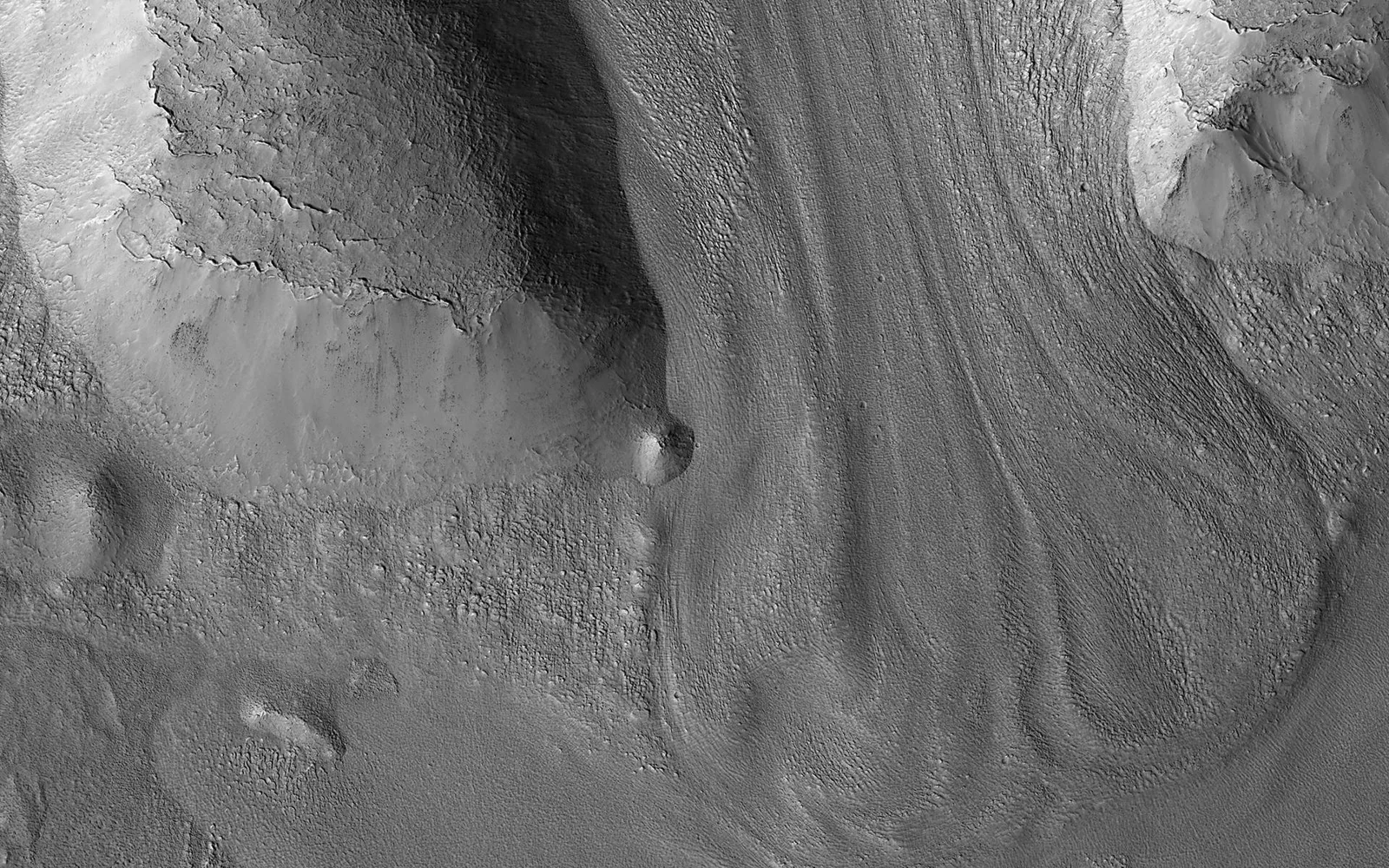
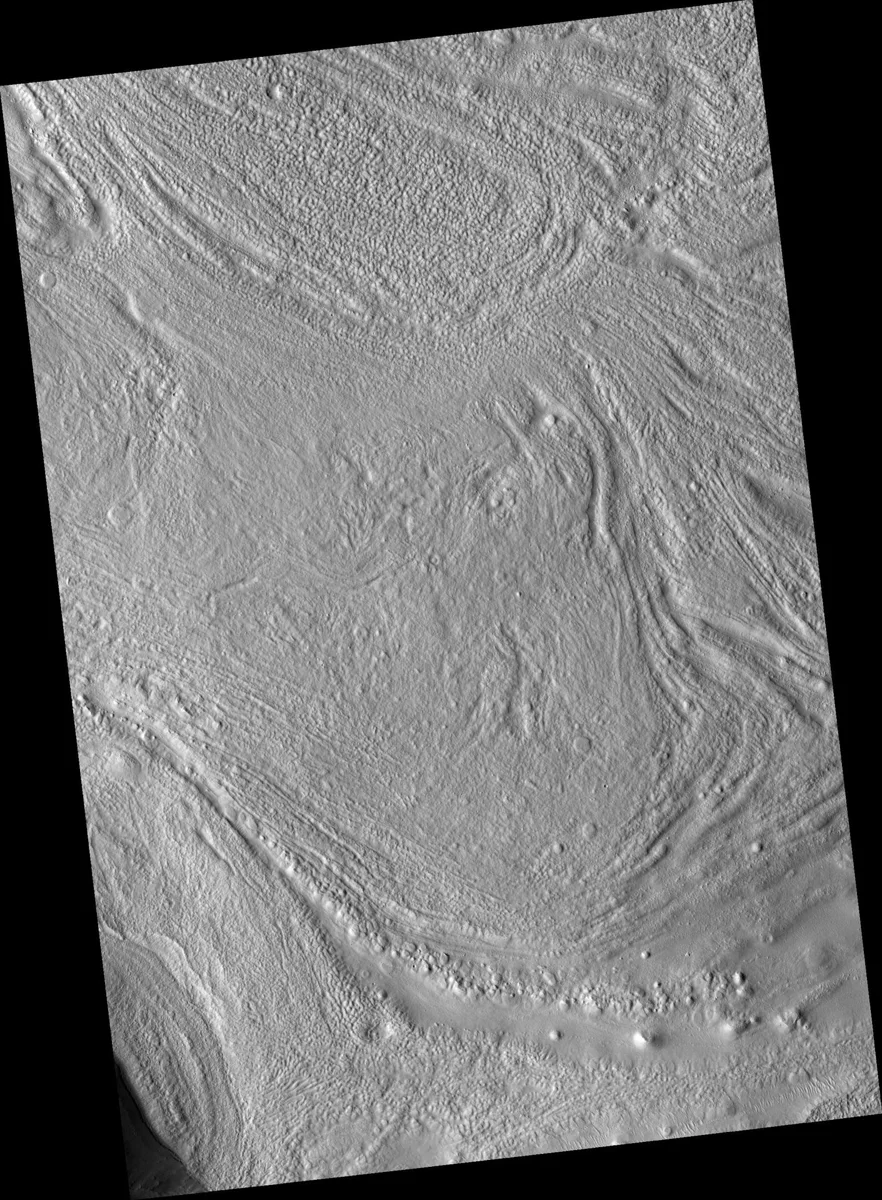
Lineated valley fill (LVF) is a distinctive landform that coats the floors of many Martian valleys. It appears as parallel ridges and grooves that wind around obstacles, sometimes rising several metres above the surrounding surface. The ridges are covered by a thin veneer of wind‑blown dust, rock fragments from valley walls, and lag material left behind as ice sublimates directly into gas.
Ice‑Rich Deposits Beneath the Debris
Remote‑sensing data show that LVF is largely composed of water ice, protected beneath the debris layer. Radar reflections from the Mars Reconnaissance Orbiter’s Shallow Radar indicate strong echoes from both the top and base of similar features, confirming that pure ice makes up the bulk of these formations. In some places the ice may be hundreds of metres thick, insulated by just a few metres of dust and rock.
How LVF Forms: From Lobate Debris Aprons to Straight Ridges
LVF is thought to evolve from lobate debris aprons (LDAs). LDAs originate when material spills out of narrow mountain valleys, spreading into a fan‑shaped apron. Over time, the curved ridges of an LDA straighten as the flow becomes confined within a valley, producing the linear pattern characteristic of LVF. This transition links three related ice‑covered features: LDAs, LVF, and concentric crater fill, all sharing similar “brain‑terrain” textures.
Brain Terrain and Seasonal Stresses
High‑resolution HiRISE images reveal that parts of LVF are mottled with closed‑cell and open‑cell patterns that resemble the folds of a human brain. Scientists attribute these textures to cracks that develop as the ice–dust mixture expands and contracts with daily temperature swings and seasonal heating. Dust and debris fill the cracks, preserving the pattern even as sublimation continues.
Clues to Mars’ Climate History
The distribution and age of LVF provide evidence for multiple glacial episodes on Mars. During periods of high axial tilt, the planet’s thin atmosphere allows sunlight to reach the polar caps more directly, causing sublimation and the deposition of thick snow layers at mid‑latitudes. These snowpacks eventually become buried ice, later reshaped into LVF. Crater counts suggest that at least some LVF formed in the Late Amazonian period, indicating relatively recent climate shifts.
Where LVF Is Found on the Red Planet
LVF is most common in the middle latitudes, especially near the northern dichotomy boundary. Notable regions include Nilosyrtis Mensae, Protonilus Mensae, Deuteronilus Mensae, as well as valleys within the Ismenius Lacus and Hellas quadrangles. Together with LDAs and concentric crater fill, LVF forms part of the broader “fretted terrain” that characterizes Mars’ rugged mid‑latitude landscape.
Why LVF Matters for Future Exploration
Understanding LVF is vital for two reasons. First, the buried ice represents a potential water source for future human habitats, reducing the need to transport large quantities from Earth. Second, occasional melting of shallow ice could create transient liquid water, offering niches where chemical weathering—or even microbial life—might have occurred. Mapping LVF therefore helps scientists pinpoint promising sites for both scientific study and resource utilization.
Just as we nurture mushrooms in protective substrates on Earth, future colonists may harvest water from LVF’s icy layers, turning Mars’ hidden valleys into fertile grounds for life‑supporting agriculture.
Sources
This article was prepared with AI assistance from the sources listed above and approved by the Mushroom 2 Mars team before publication.