Part of the guide: Mycology: A Complete Guide to Fungi, Cultivation, and Safety
Taxonomic twists and naming history
Lactifluus piperatus, once called Lactarius piperatus and originally described by Carl Linnaeus in 1753 as Agaricus piperatus, carries a peppery reputation reflected in its Latin epithet piperatus (“peppery”). For many years the species was the type of the genus Lactarius, but molecular work showed that Lactarius actually contains several distinct lineages. The name was therefore reassigned, making L. piperatus the type species of the newly split genus Lactifluus. This shift highlights how DNA‑based phylogenetics can rewrite centuries‑old classifications.
What the mushroom looks like
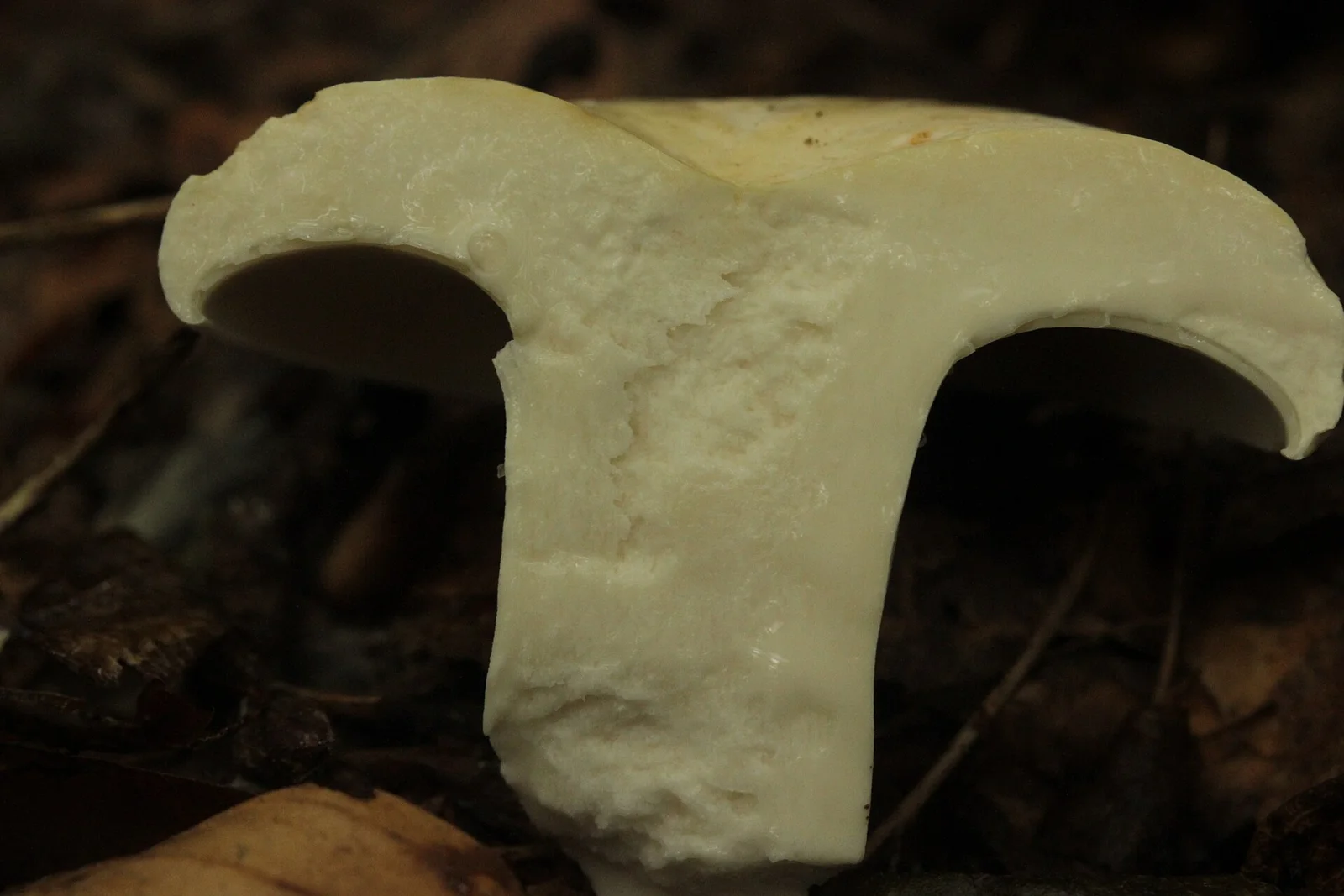
The fruiting body is a creamy‑white, funnel‑shaped cap 6–16 cm wide that becomes slightly depressed with age. The surface is smooth (glabrous) and may crack in dry conditions. Underneath, the gills are unusually crowded, narrow, and decurrent, sharing the cap’s white hue before turning a creamy shade as the mushroom matures. The stipe is white, cylindrical, 2–8 cm long, and sometimes tapers toward the base. When the flesh is cut, a milky latex oozes out; it is white at first and dries to an olive‑green colour. A white spore print and ellipsoid spores (4.5–9.5 µm × 5–8 µm) with tiny warts complete the diagnostic suite.
Habitat, distribution, and symbiosis
Lactifluus piperatus forms mycorrhizal partnerships with deciduous trees, especially beech (Fagus) and hazel. It appears on forest floors across Europe, the Black‑Sea region of Turkey, and eastern North America east of Minnesota. Accidental introductions have placed it in parts of Australia and New Zealand, where it now grows under both native and introduced trees. The mushroom typically fruits from summer through early winter, either alone or in scattered groups, and is often found alongside the blue‑green gilled Russula cyanoxantha.
Role in forest ecosystems
The peppery milk‑cap is an important food source for red squirrels, and several beetle species rely on it at different life stages. The pleasing fungus beetle Tritoma biguttata has been recorded on L. piperatus, though it is not a primary host. By contrast, Tritoma angulata appears to depend heavily on this mushroom for both adult and larval nutrition. A striking ecological interaction involves the parasitic fungus Hypomyces lactifluorum, better known as the “lobster mushroom.” When H. lactifluorum colonises L. piperatus, it alters the host’s chemistry, neutralising many of the peppery compounds that can be off‑putting to humans and thereby improving edibility.
Edibility, traditional uses, and safe preparation
Opinions on the culinary value of L. piperatus vary. While some mycologists label it “inedible” or even “poisonous” because of bitter‑tasting toxins, others treat it as a seasoning mushroom, especially when dried. The raw flesh is difficult to digest and has a hot, acrid milk that can be neutralised by boiling. Traditional practices in Russia and Finland illustrate how local cultures have made the mushroom palatable:
- Russian method – collected during dry periods, the caps were parboiled repeatedly, discarding the water each time, then used as a flavoring agent.
- Finnish approach – mushrooms are boiled several times, the water is replaced, and the softened caps are stored in brine, later pickled or added to salads.
Modern home cooks who wish to experiment can follow these safe steps: 1. Cleaning – brush off soil; avoid rinsing under running water to prevent soggy caps. 2. Parboiling – place caps in a pot of cold water, bring to a gentle boil, and simmer for 5 minutes. Drain and repeat the process 2–3 times, discarding the liquid each round. 3. Drying – spread the boiled caps on a tray and dry in a low‑heat oven (50 °C/120 °F) or a food dehydrator until brittle. 4. Seasoning use – grind the dried caps into a powder and sprinkle sparingly over soups, stews, or roasted vegetables for a subtle peppery note.
Because the raw milk is hot and potentially irritating, it is crucial to never consume the mushroom raw and to always discard the boiling water, which contains the dissolved bitter compounds.
Similar species to watch for
Accurate identification is essential, especially for foragers who may encounter look‑alikes: * Lactifluus vellereus – larger, with a woolly cap and less crowded gills. * Russula delica – similar white cap but possesses adnate gills tinged blue‑green and lacks latex. * Lactifluus deceptivus – has less crowded gills and firmer cap margins. * Lactifluus glaucescens – closely related, but its latex dries green rather than olive‑green. When in doubt, consult a local expert; misidentification can lead to unpleasant gastrointestinal effects.
From forest floor to Mars?
Mushrooms like Lactifluus piperatus illustrate how fungi can thrive in symbiosis with plants and adapt to diverse climates—a quality that may one day inform bioregenerative life‑support systems for future Martian habitats.
Sources
This article is for general information only and is not medical advice. Do not use it to diagnose or treat any condition; talk to a doctor about health questions.
This article was prepared with AI assistance from the sources listed above and approved by the Mushroom 2 Mars team before publication.