Part of the guide: Mycology: A Complete Guide to Fungi, Cultivation, and Safety
A Curious Name and Its Roots
Auricularia auricula‑judae is most often called wood ear, jelly ear, or historically Jew’s ear. The species name combines the Latin auricula (ear) with Judae, referring to the medieval belief that Judas Iscariot hanged himself from an elder tree. Folklore held that the fungus represented the spirit of Judas, a story that gave rise to names such as the French oreille de Judas and the German Judasohr. Modern mycologists prefer the neutral term “jelly ear” to avoid outdated cultural references.
Taxonomic Journey
The fungus was first recorded by Carl Linnaeus in 1753 as Tremella auricula. It was later renamed by Bulliard (Tremella auricula‑judae), transferred to Exidia by Fries, and finally placed in the genus Auricularia by Joseph Schröter in 1888. DNA‑based studies have shown that what was once considered a single worldwide species actually comprises at least seven distinct lineages. The name A. auricula‑judae now applies only to the European form; the Asian “black wood ear” sold in markets is a different species, Auricularia heimuer.
What It Looks Like
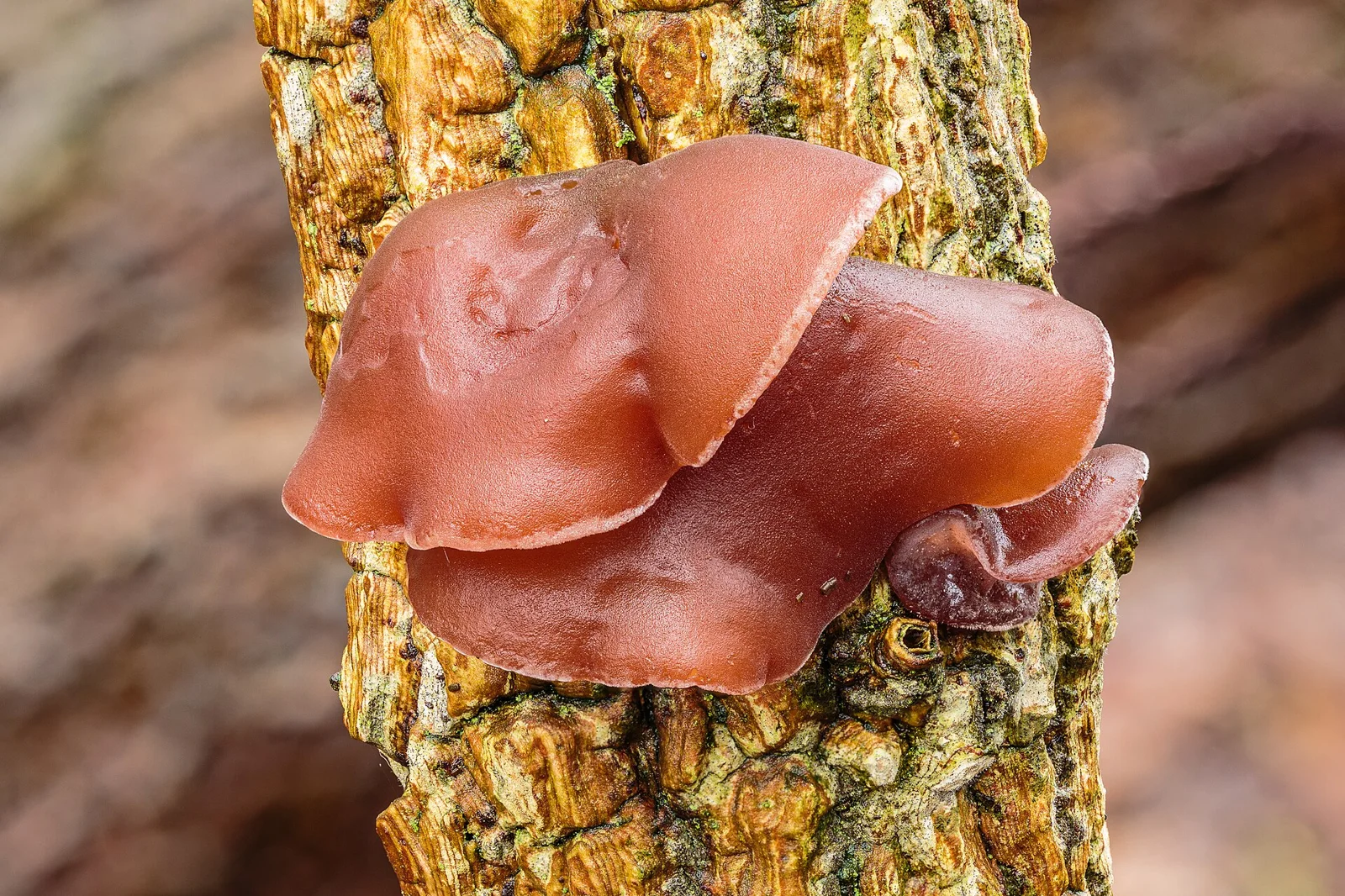
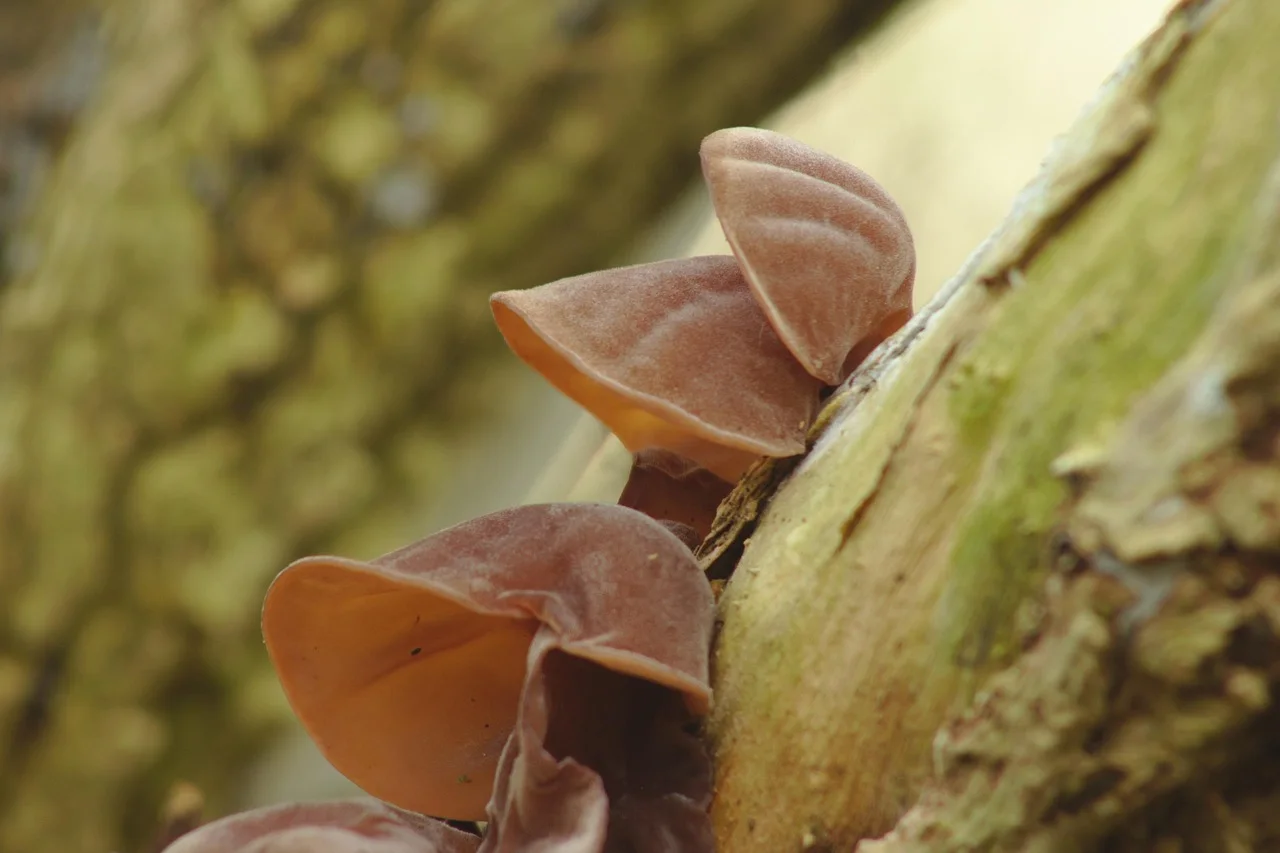
The fruit bodies are gelatinous, ear‑shaped, and typically up to 9 cm across and 3 mm thick. Fresh specimens feel rubbery and elastic, while dried ones become hard and brittle. The upper surface is reddish‑tan to brown with a subtle purplish hue and a fine downy covering, whereas the underside is lighter grey‑brown and may display faint “veins”. Occasionally, entirely white forms appear; these are simply unpigmented variants, not a separate species.
Microscopic Details
Under the microscope the spores are sausage‑shaped (allantoid), measuring about 15–22 µm by 5–7 µm. Basidia are cylindrical and contain three transverse septa. The surface hairs are long (100–150 µm) and thick‑walled, giving the upper surface its characteristic texture.
Edibility and Culinary Use
Wood ear is edible but not a culinary staple in most Western cuisines. In Asian cooking it is prized for its crunchy texture that persists after cooking. When using cultivated wood ear, rinse the pieces under cool water, trim any tough stems, and slice them thinly. They can be added to stir‑fries, soups, or salads. Cook at a gentle simmer for 5–10 minutes; the gelatinous texture will soften without turning mushy. Always purchase from reputable sources—wild‑collected specimens should be identified by an expert before any consumption.
Growing Wood Ear at Home
Because the fungus prefers hardwood, especially elder, it can be cultivated on sterilized sawdust or logs inoculated with spawn. Maintain a humid environment (80–90 % relative humidity) and temperatures around 20–25 °C. Colonization may take several weeks, after which fruit bodies appear in clusters. Home growers appreciate wood ear for its fast turnover and low‑maintenance requirements, making it a good candidate for indoor mycological projects.
From Earth to the Red Planet
Researchers are investigating how resilient fungi like A. auricula‑judae could support life‑support systems on future Mars habitats, using their ability to break down woody material and recycle nutrients. As we look toward cultivating food on other worlds, the humble jelly ear may have a role to play.
Sources
This article is for general information only and is not medical advice. Do not use it to diagnose or treat any condition; talk to a doctor about health questions.
This article was prepared with AI assistance from the sources listed above and approved by the Mushroom 2 Mars team before publication.