Part of the guide: Mycology: A Complete Guide to Fungi, Cultivation, and Safety
What is Ganoderma tsugae?
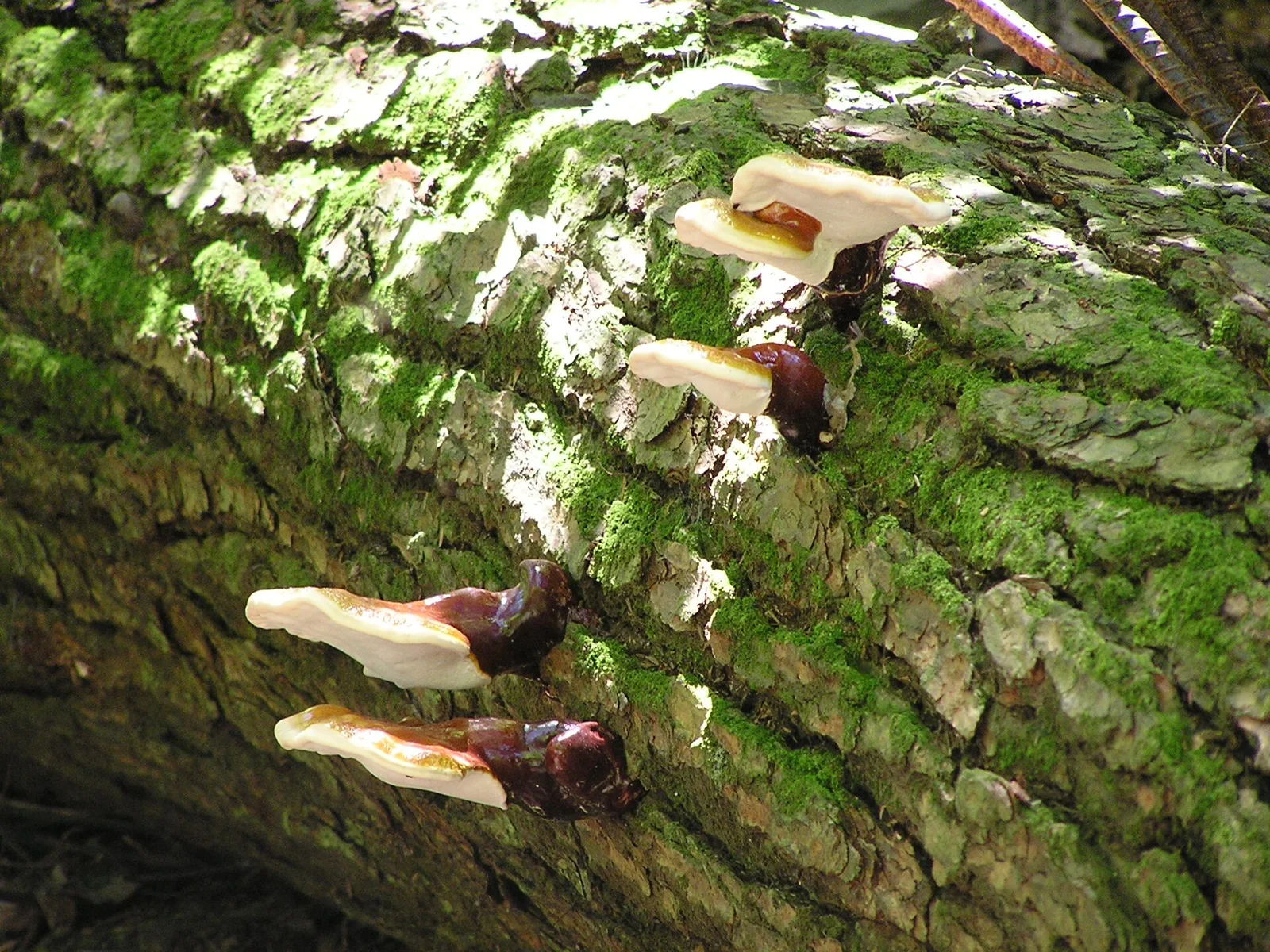
Ganoderma tsugae, commonly called the hemlock varnish shelf, belongs to the Ganoderma genus of polypore fungi. It forms flat, woody brackets that cling to the trunks of coniferous trees, especially hemlocks. While it looks similar to the well‑known reishi (Ganoderma lucidum), G. tsugae prefers different hosts and shows subtle differences in texture and color.
Natural habitat and host preferences
Unlike many Ganoderma species that colonize hardwoods, G. tsugae is strongly associated with conifers. Field observations report it growing on hemlock (Tsuga spp.) and other evergreen trees in temperate forests of North America and parts of Asia. The mushroom typically appears as a thin, varnished shelf that can persist for years, gradually becoming more woody as it ages. Its fruiting bodies emerge in late summer to early autumn, often after periods of moisture that trigger spore release.
Culinary considerations – when and how to use it
Ganoderma tsugae is officially classified as non‑poisonous, but its mature fruiting bodies are very dense and woody, which makes them unsuitable for ordinary cooking. The only stage that can be safely prepared is the very fresh, soft “lip” that forms at the edge of a new growth. In this brief window the tissue is still tender enough to be sautéed briefly, much like other edible mushrooms. Even then, the texture remains chewy, so chefs typically use it in small amounts to add a subtle umami note rather than as a main ingredient.
Simple sauté recipe 1. Harvest only the soft, newly‑emerging lip of the shelf; discard the older, woody portions. 2. Rinse quickly under cold water and pat dry. 3. Heat a tablespoon of oil in a skillet over medium‑high heat. 4. Add the sliced lip, season with a pinch of salt, and cook 2‑3 minutes, stirring constantly, until just tender. 5. Finish with a splash of soy sauce or a dash of lemon juice for brightness.
Because the mushroom is not cultivated for food on a commercial scale, it is rarely found in markets. Foragers should never consume wild‑picked Ganoderma without expert confirmation, as many polypores can be confused with toxic look‑alikes.
Extraction methods and the science behind medicinal claims
Traditional Asian medicine has long used Ganoderma species for teas and tinctures. Researchers have identified two main groups of bioactive compounds in G. tsugae: polysaccharides, which are water‑soluble, and triterpenoids, which dissolve better in alcohol or glycerin. A hot‑water infusion (tea) efficiently extracts polysaccharides, while an alcohol‑based tincture captures more triterpenoids.
Scientific studies on the mushroom are still limited, but a few animal experiments provide insight: - In mouse models, polysaccharide extracts have demonstrated anti‑tumor activity, suggesting a potential role in modulating immune responses. - Separate mouse studies reported accelerated wound closure when topical preparations containing G. tsugae extracts were applied, possibly due to enhanced fibroblast proliferation. - In cultured fibroblast cells, certain triterpenoids increased cell migration, a key step in tissue repair.
These findings are preliminary; the research community emphasizes that results in mice do not directly translate to human health outcomes. Moreover, variations in growing conditions, extraction techniques, and mushroom strain can affect the concentration of active compounds.
Growing Ganoderma tsugae: basics for hobbyists
Although most Ganoderma cultivation focuses on G. lucidum for its commercial value, G. tsugae can be grown on sterilized hardwood or conifer sawdust supplemented with bran. The process mirrors that of other shelf‑forming fungi: 1. Prepare substrate – Mix sawdust with 10‑15 % wheat bran, adjust moisture to 60‑65 %. 2. Sterilize – Autoclave or pressure‑cook the substrate for 90 minutes at 121 °C. 3. Inoculate – Introduce a pure culture of G. tsugae spawn under sterile conditions. 4. Incubate – Keep the bags at 24‑27 °C in darkness for 2‑4 weeks until the mycelium colonizes the substrate. 5. Fruit – Expose colonized blocks to fresh air, lower temperature (18‑22 °C), and indirect light to trigger shelf formation.
Because the species prefers conifer hosts, adding a small proportion of pine or hemlock wood chips can improve yields. Hobby growers should note that the mushrooms will develop the characteristic woody texture as they mature, limiting their culinary use.
From forest floors to Martian farms
Mushroom cultivation is a cornerstone of life‑support strategies for long‑duration space missions. The ability of Ganoderma species to grow on low‑nutrient woody substrates makes them attractive candidates for closed‑loop bioreactors on spacecraft or future Martian habitats. While G. tsugae is not a primary food source, its robust mycelial network could contribute to bioremediation, substrate recycling, and the production of bio‑active extracts for crew health monitoring. Ongoing research at space agencies explores how polypore fungi can thrive under reduced gravity and elevated CO₂—conditions that echo the mushroom’s natural preference for humid, shaded environments.
Ganoderma tsugae may one day help turn Martian regolith‑based compost into a living, health‑supporting component of off‑world colonies.
Sources
This article is for general information only and is not medical advice. Do not use it to diagnose or treat any condition; talk to a doctor about health questions.
This article was prepared with AI assistance from the sources listed above and approved by the Mushroom 2 Mars team before publication.