A Frozen Ring Beyond Neptune
The Kuiper Belt stretches from the orbit of Neptune at about 30 AU out to roughly 50 AU from the Sun. It forms a broad, disc‑shaped region that is far larger than the familiar asteroid belt—about twenty times wider and up to two hundred times more massive. While the asteroid belt is dominated by rocky and metallic fragments, objects in the Kuiper Belt are chiefly made of volatile ices such as water, methane, and ammonia, giving the region its frosty character.
From Hypothesis to Confirmation
Early 20th‑century astronomers wondered whether Pluto was an isolated world. In 1930, Frederick Leonard and Armin Leuschner suggested that Pluto might belong to a larger collection of distant bodies. Later, Kenneth Edgeworth proposed that beyond Neptune the primordial solar nebula was too sparse for planet formation, leaving behind countless small icy remnants. Gerard Kuiper, after whom the belt is now named, expanded on this idea in the early 1950s, envisioning a disc of condensates that could supply comets.
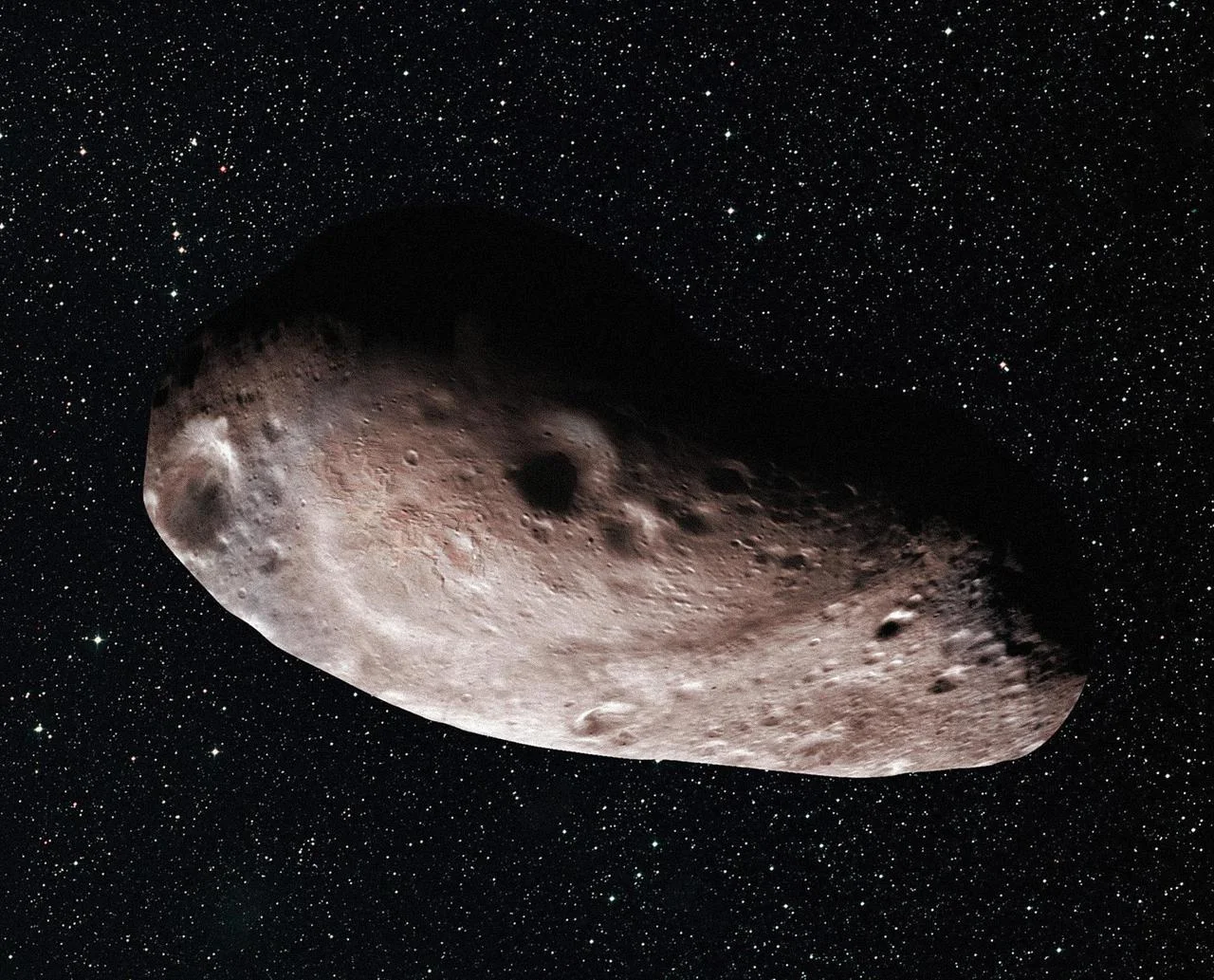
The first direct detection came in 1992 when the minor planet 15760 Albion was identified as a Kuiper‑belt object (KBO). Since then, surveys have catalogued thousands of KBOs, and astronomers estimate that more than 100 000 objects larger than 100 km exist in the belt.
Dwarf Planets and Their Neighbors
Several dwarf planets call the Kuiper Belt home, including Pluto, Orcus, Haumea, Quaoar, and Makemake. Pluto, the most massive of these, shares a 2:3 orbital resonance with Neptune—a pattern that defines a class of objects known as “plutinos.” The belt also likely supplied the material for moons such as Neptune’s Triton and Saturn’s Phoebe, which may have originated there before being captured.
The Belt’s Dynamic Relationship with Comets
Initially, scientists thought the Kuiper Belt was the primary source of short‑period comets (those with orbital periods under 200 years). Research from the mid‑1990s onward revealed that many of these comets actually arise from the scattered disc, a more dynamically active region created when Neptune migrated outward about 4.5 billion years ago. Objects like Eris, with highly elongated orbits reaching beyond 100 AU, exemplify this scattered‑disc population.
Kuiper Belt vs. Oort Cloud: A Quick Comparison
The Kuiper Belt is a relatively flat, disc‑like structure extending to about 50 AU, whereas the hypothesized Oort Cloud is a vast, roughly spherical shell that may begin thousands of AU from the Sun. Together with scattered‑disc bodies, Kuiper‑belt objects are classified as trans‑Neptunian objects (TNOs). While the Kuiper Belt marks the outer edge of the planetary region we can readily explore, the heliopause and the Sun’s gravitational sphere of influence lie far beyond, extending tens of thousands of AU.
Why the Kuiper Belt Matters for Future Exploration
Understanding the Kuiper Belt helps scientists trace the early history of our Solar System and the processes that delivered water and organics to the inner planets. As we look toward long‑duration space habitats—whether on the Moon, Mars, or even in deep‑space stations—knowledge of distant icy reservoirs could inform resource‑utilization strategies. Imagine a future where the same principles that let us grow mushrooms on Martian regolith also guide the harvesting of volatiles from distant icy bodies.
Sources
This article was prepared with AI assistance from the sources listed above and approved by the Mushroom 2 Mars team before publication.