What a Black Hole Really Is
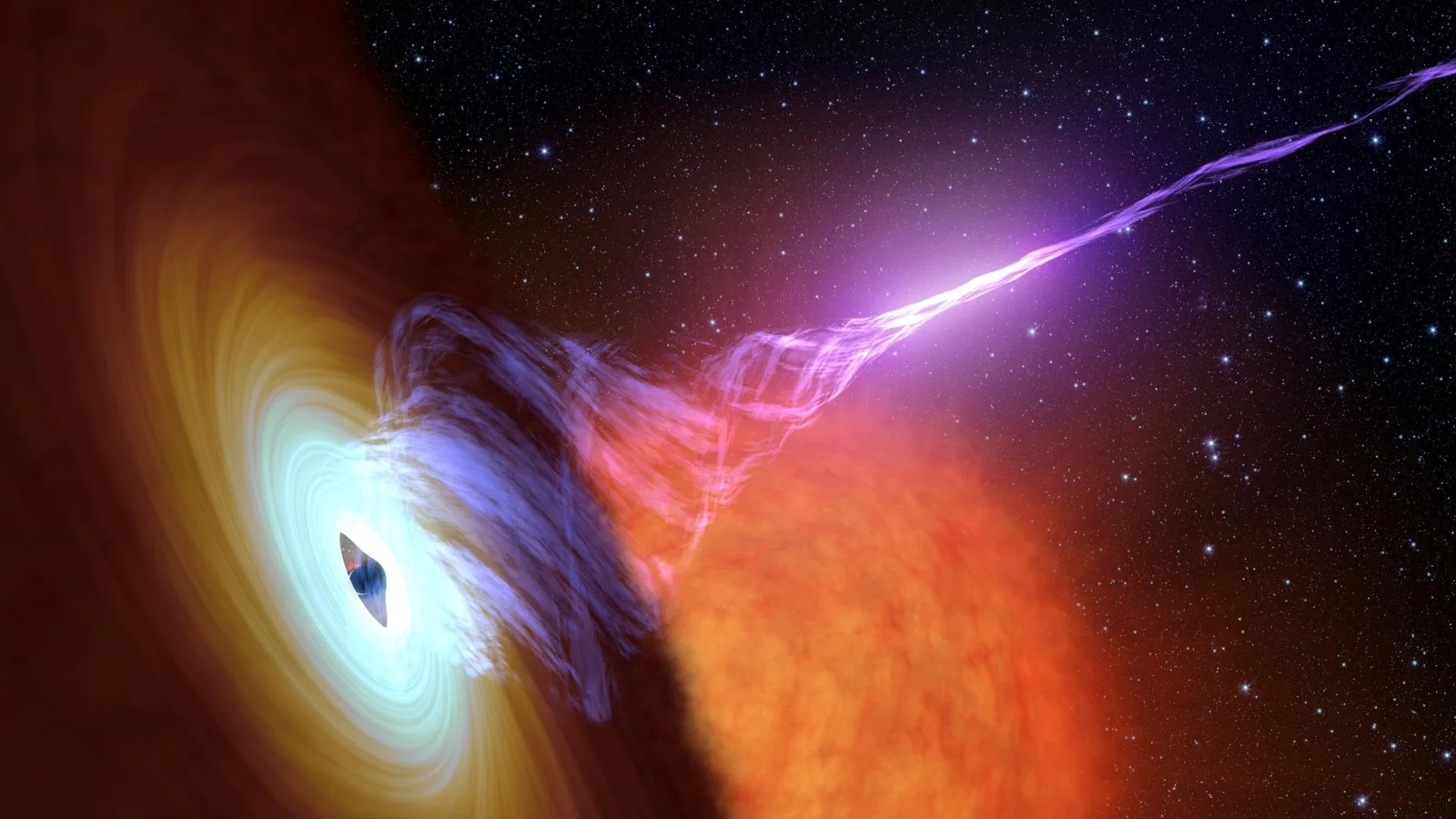
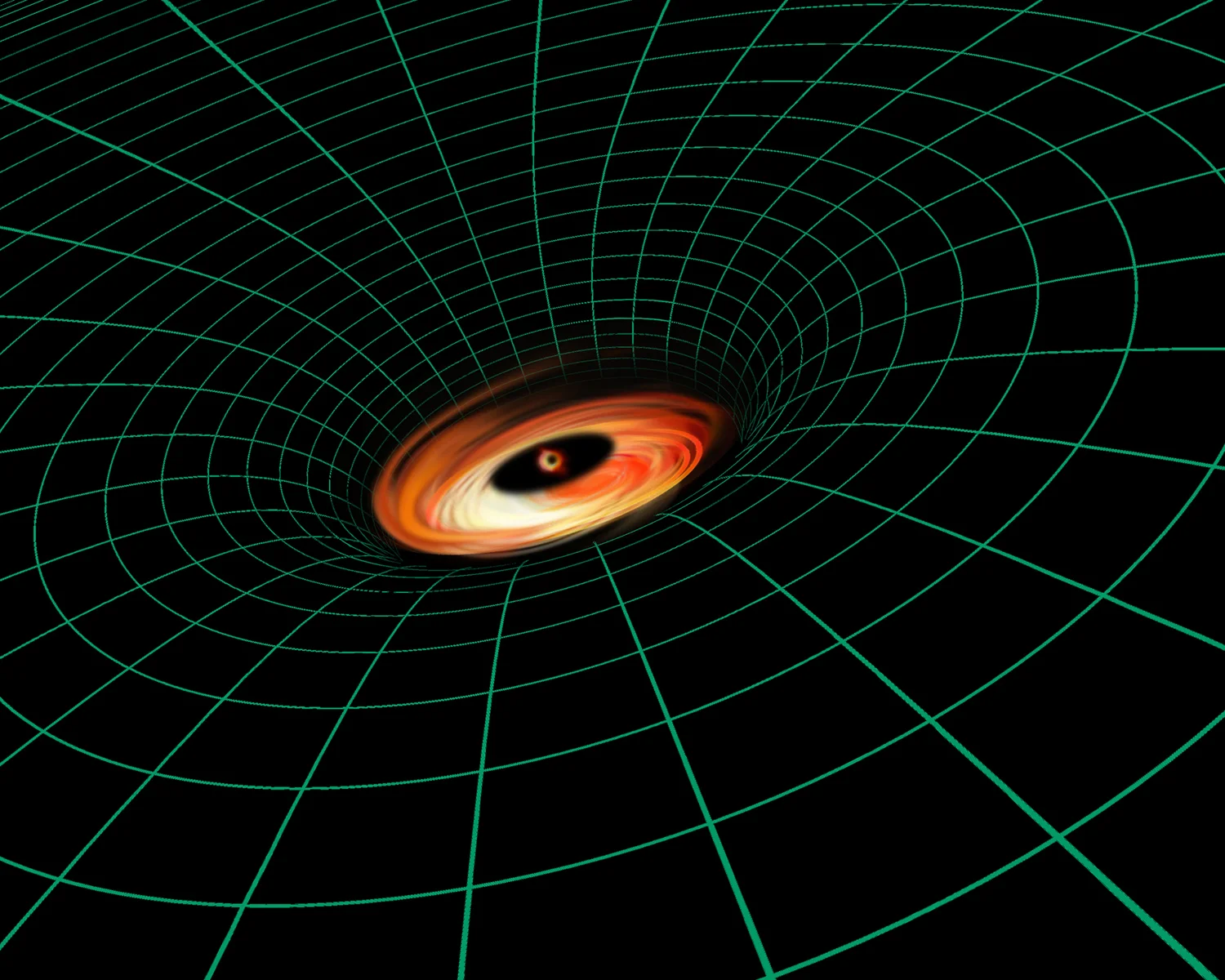
A black hole is an object whose gravity is so intense that nothing—not even light—can escape once it passes a certain boundary called the event horizon. Einstein’s general relativity describes gravity as the warping of spacetime, and the theory predicts that if enough mass is squeezed into a small enough volume, a black hole will result. Inside the horizon, the curvature becomes extreme and, according to the equations, a singular point of infinite density is expected at the centre.
Early Ideas and the Birth of a Concept
The notion of an invisible massive body dates back to the late 1700s. English astronomer John Michell calculated that a star 500 times larger than the Sun, with the same density, would have an escape speed exceeding light’s speed, making it invisible. French scientist Pierre‑Simon Laplace reached a similar conclusion a decade later, suggesting that sufficiently large stars could hide from view. These early speculations were purely theoretical; the term “black hole” would not appear for another century.
Relativity Gives the Theory Teeth
Einstein’s 1915 field equations opened the door to real predictions. Shortly after, Karl Schwarzschild solved the equations for a non‑rotating, perfectly spherical mass, uncovering a radius—now called the Schwarzschild radius—where the solution becomes singular. At that radius the escape velocity equals the speed of light, defining the event horizon. For decades the idea was treated as a mathematical curiosity, but by the 1960s physicists recognized black holes as inevitable outcomes of general relativity.
How Black Holes Form
Most black holes originate from the deaths of massive stars. When such a star exhausts its nuclear fuel, its core collapses under gravity, and if the remaining mass exceeds about three solar masses, no known force can halt the collapse, producing a stellar‑mass black hole. Over time, these objects can grow by pulling in gas, dust, or even whole stars. In the centers of galaxies, far larger black holes—millions to billions of times the Sun’s mass—reside. They may arise from repeated mergers of smaller black holes, the steady accretion of gas, or the direct collapse of massive gas clouds in the early universe.
Spotting the Unseen: Detection Techniques
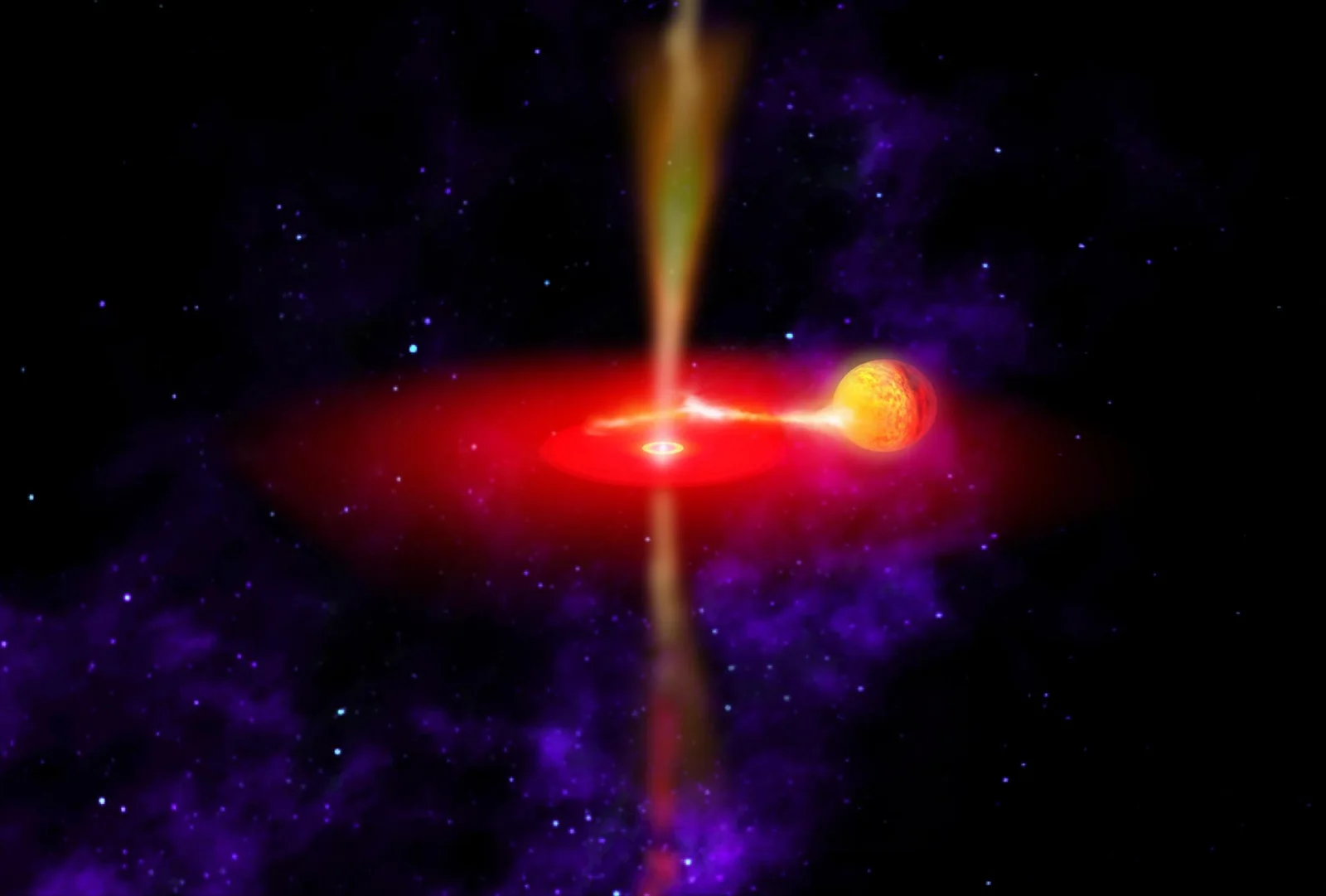
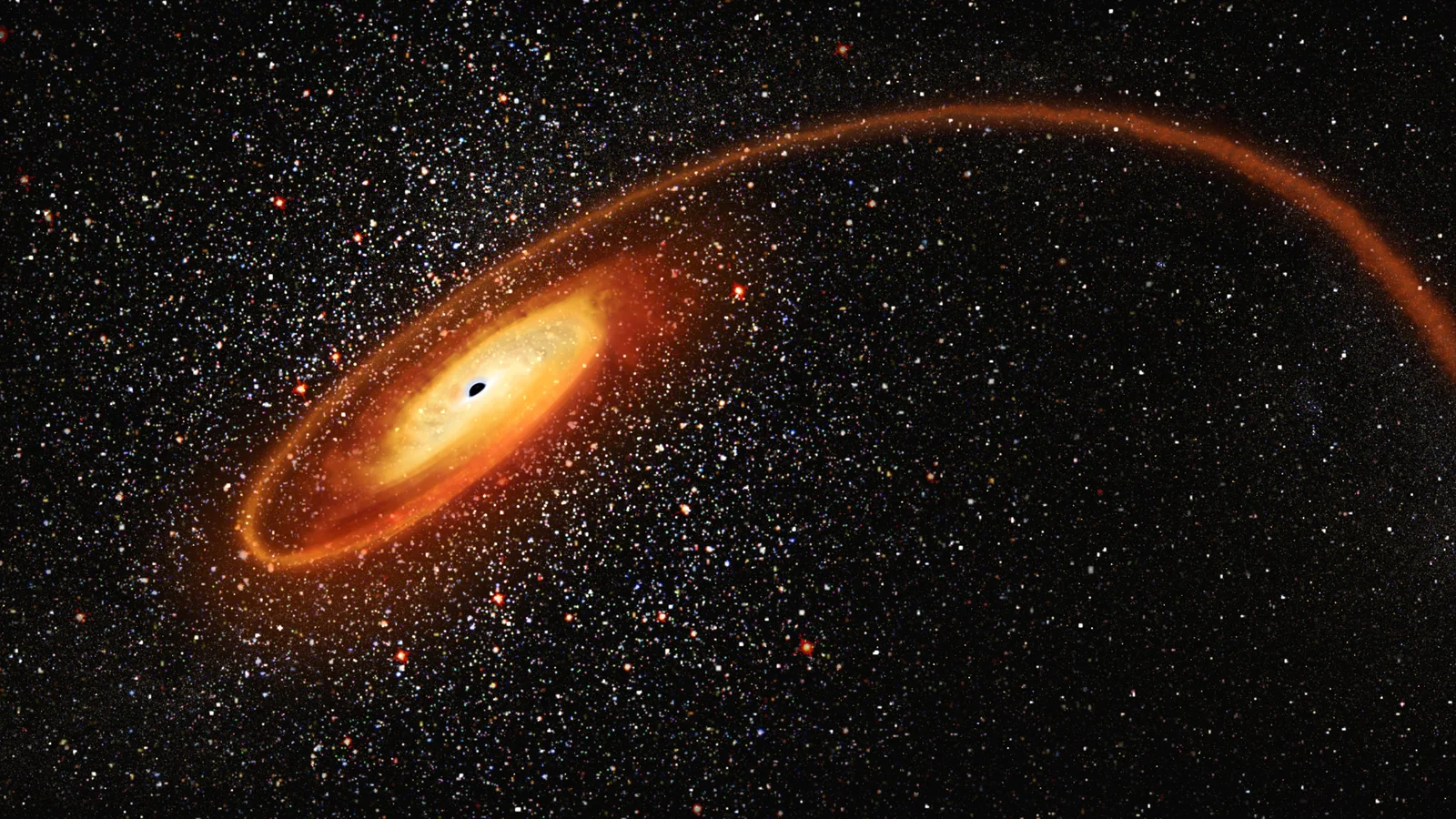
Because light cannot escape, astronomers rely on indirect clues. Gas spiraling toward a black hole forms a hot, glowing accretion disk that emits X‑rays and visible light. In extreme cases, the disk powers quasars, some of the brightest objects known. Binary systems where a normal star orbits an invisible companion reveal the hidden mass through the star’s motion. Gravitational‑wave observatories such as LIGO have also recorded ripples in spacetime produced when two black holes merge, providing a brand‑new way to count them. The supermassive black hole at the Milky Way’s centre, Sagittarius A*, was confirmed through the rapid orbits of nearby stars.
Do Black Holes Really Evaporate?
Quantum theory adds another twist. When spacetime is curved near an event horizon, particle‑antiparticle pairs can appear, allowing one to escape as Hawking radiation while the other falls in. This process makes the black hole lose mass very slowly; the smaller the black hole, the faster the radiation. For the stellar‑mass black holes we observe, the loss is negligible compared with the mass they gain from surrounding matter and the cosmic microwave background.
Why Black Holes Matter for the Future
Beyond their intrinsic fascination, black holes serve as natural laboratories for testing physics under extreme conditions. They challenge our understanding of gravity, quantum mechanics, and the ultimate fate of information. Moreover, the study of accretion disks and relativistic jets informs models of galaxy evolution and star formation. As we continue to map the cosmos, black holes will remain key signposts of how matter and energy shape the universe.
And as we dream of growing mushrooms on Martian soil, the same gravitational mysteries that trap light around black holes inspire us to push the boundaries of life beyond Earth.
Sources
This article was prepared with AI assistance from the sources listed above and approved by the Mushroom 2 Mars team before publication.