A Celestial Clockwork
Halley's Comet is unique among comets because it returns to the inner Solar System on a timescale that humans can actually witness. Its orbit brings it close enough to be seen without a telescope roughly every 74 to 79 years. The most recent apparition was in 1986, and the next will occur in mid‑2061, giving us a rare opportunity to compare modern observations with records that stretch back more than two millennia.

Ancient Sightings and the Birth of Periodicity
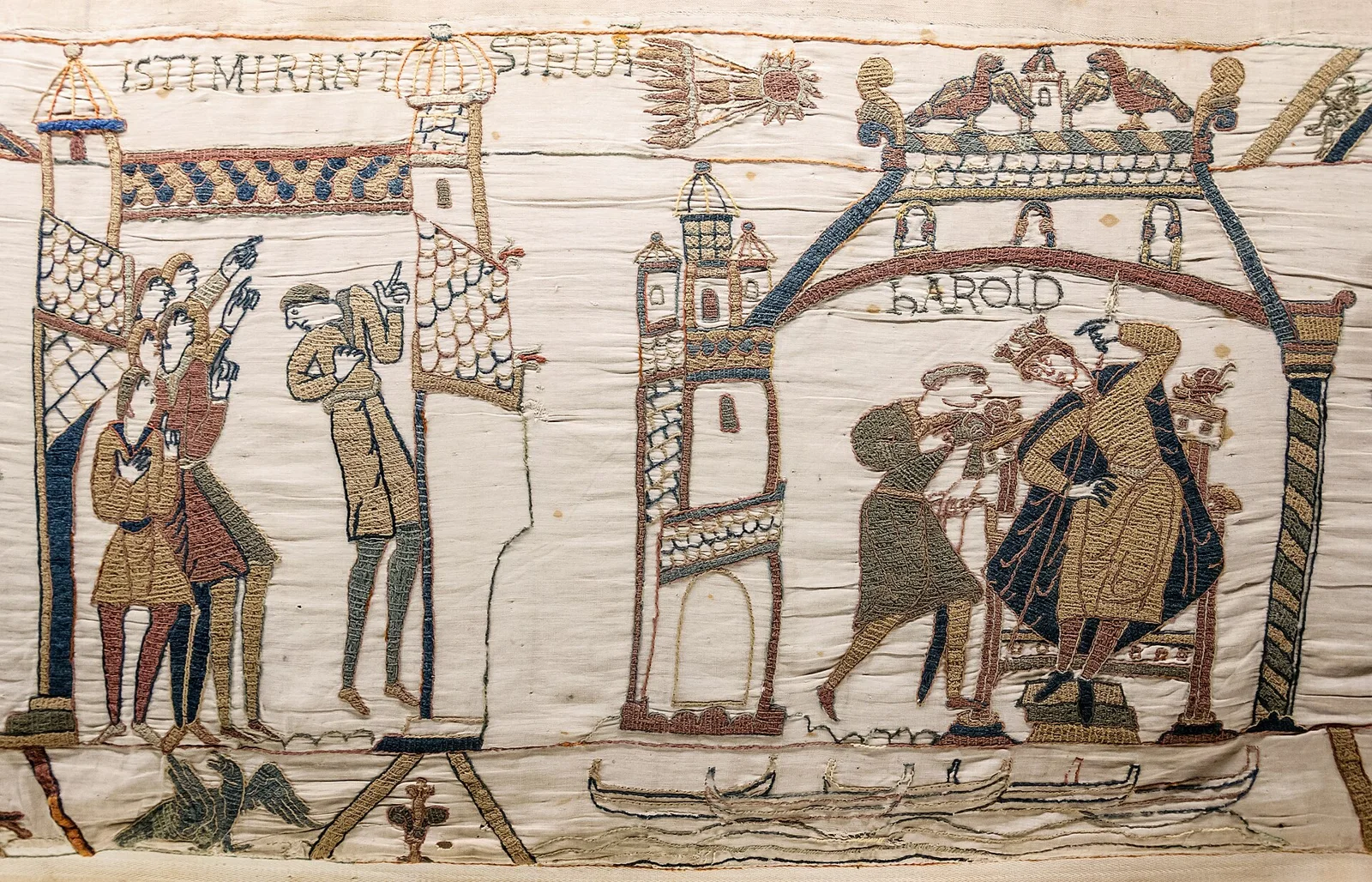
Records from Chinese, Babylonian, and European observers document a bright, moving object in the sky as early as 240 BC. For centuries these appearances were treated as unrelated omens. It was not until the early 18th century that English astronomer Edmond Halley applied Newton’s laws to a series of comet sightings (1531, 1607, 1682) and recognized that they were the same body looping around the Sun. His 1705 paper correctly predicted a return around 1758, a forecast later confirmed by the German farmer‑astronomer Johann Georg Palitzsch on 25 December 1758.
Newtonian Mechanics Put to the Test
Halley’s successful prediction marked the first time a non‑planetary object was shown to obey the same gravitational rules as the planets. The calculation required accounting for the tug of massive planets, especially Jupiter and Saturn, which shift the comet’s path enough to delay its perihelion by months. French mathematicians Alexis Clairaut, Joseph Lalande, and Nicole‑Reine Lepaute refined the estimate and nailed the return date within a month—a striking validation of Newtonian physics.
Spacecraft Encounters: Giotto and Vega
The 1986 apparition was the first chance for a spacecraft to study a comet up close. The European Space Agency’s Giotto probe flew past the nucleus at about 6 km s⁻¹, capturing the first high‑resolution images of a comet’s icy core and its surrounding coma. These data supported Fred Whipple’s “dirty snowball” concept, showing a mix of volatile ices (water, carbon‑dioxide, ammonia) and dust. Later, the Soviet Vega 1 and Vega 2 probes approached within 9,000 km, measuring temperature, shape, and surface composition. Together the missions revealed that Halley’s surface is largely covered in non‑volatile dust, with only limited exposed ice.
Why Halley Still Captivates Scientists
Beyond its spectacular tail, Halley serves as a natural laboratory for studying the early Solar System. The comet’s composition preserves clues about the primordial mixture of gases and solids that formed planets. Ongoing observations of its dust and gas emissions help refine models of how comets evolve as they repeatedly heat and cool during each perihelion passage. The upcoming 2061 return will allow next‑generation telescopes and perhaps new probe concepts to build on the legacy of Giotto and Vega.
From Skywatchers to Mars Dreams
While we watch Halley’s bright arc across the night sky, teams at Mushroom 2 Mars are reminded that even the most distant travelers can inspire bold ideas—like cultivating fungi in space habitats. The comet’s periodic rhythm reminds us that celestial cycles can guide both scientific inquiry and the imagination of future explorers.
Sources
This article was prepared with AI assistance from the sources listed above and approved by the Mushroom 2 Mars team before publication.