A Bright Spot in Orion’s Sword
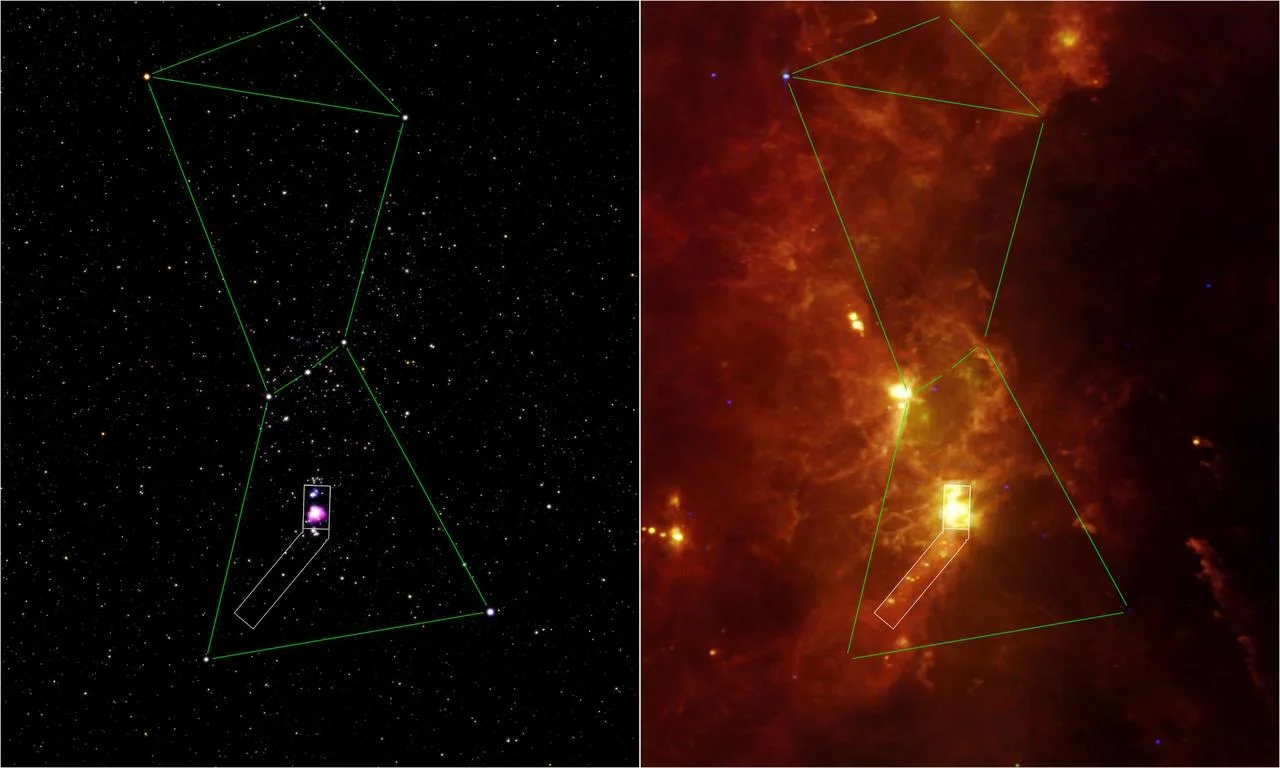
The Orion Nebula, catalogued as M42 or NGC 1976, appears as the fuzzy middle "star" of Orion’s sword, hanging just below the famous Belt. With an apparent magnitude of about 4.0, it is bright enough to be seen with the naked eye even from suburban skies. The nebula’s glow spans roughly one degree across the sky – about twice the width of the Moon – making it a striking feature for casual stargazers and seasoned observers alike.
Distance, Size, and Mass
Current measurements place the nebula at roughly 1,267 light‑years from Earth, with an uncertainty of a few light‑years. It stretches about 25 light‑years in diameter, giving it a truly colossal scale compared with our solar system. In terms of material, the cloud contains roughly 2,000 times the Sun’s mass, a reservoir of gas and dust that fuels ongoing star formation.
The Trapezium Cluster: Young Stars in a Tight Knot
At the heart of the nebula lies the Trapezium Cluster, a compact group of four bright stars that form a distinctive asterism. The cluster’s core spans only about 1.5 light‑years, yet it hosts several massive O‑type stars whose intense radiation sculpts the surrounding gas. High‑resolution telescopes can resolve two of these stars into binary pairs, revealing a total of six luminous members. The Trapezium is part of a larger association of roughly 2,800 stars that occupy a region about 20 light‑years across, illustrating how a single cloud can birth an entire stellar community.
Colors of the Nebula: Red, Blue‑Violet, and a Mysterious Green
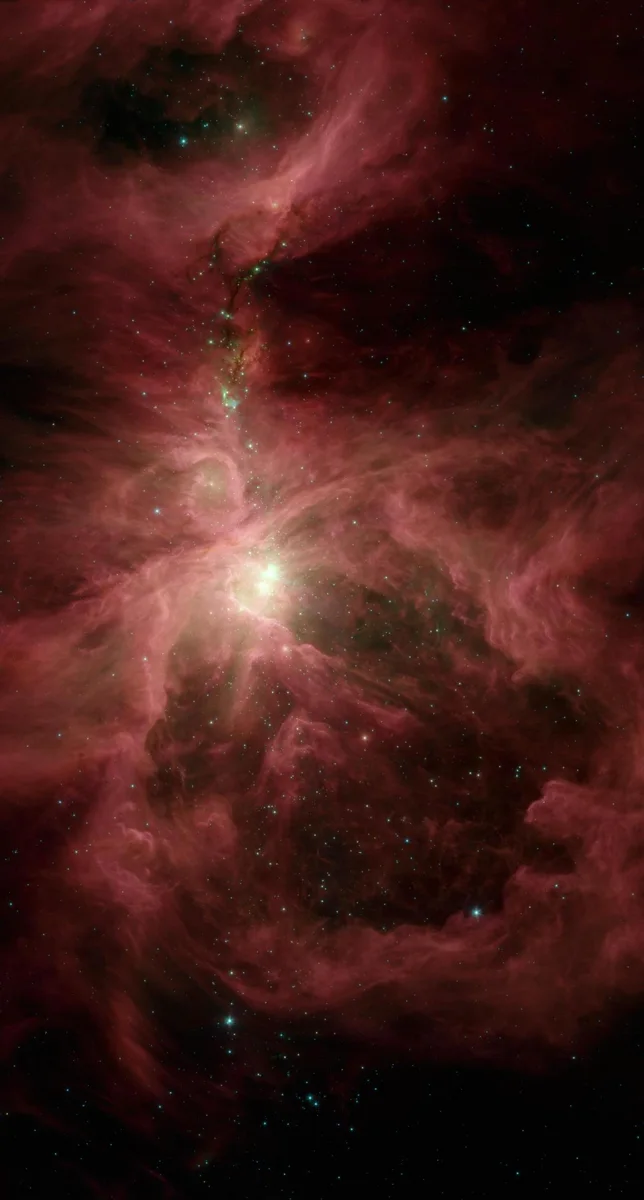
The nebula’s vivid palette is a direct result of the physics of ionised gas. The deep red hue originates from hydrogen atoms recombining and emitting light at a wavelength of 656.3 nm (the H‑alpha line). The surrounding blue‑violet glow is reflected starlight from the hot O‑class stars at the nebula’s core. Early 20th‑century observers also noted a faint green tint, puzzling astronomers until the discovery of a “forbidden” transition in doubly ionised oxygen explained it. This low‑probability electron transition produces the subtle green glow that can only be seen in the vacuum of space, where collisions are rare.
A Window into Star and Planet Formation
Because it is the nearest massive star‑forming region to Earth, the Orion Nebula serves as a natural laboratory for astrophysicists. Within its glowing clouds, astronomers have directly imaged protoplanetary disks—flattened rings of dust that may someday become planetary systems. The nebula also contains brown dwarfs, objects too small to sustain hydrogen fusion, offering clues about the lower mass limits of star formation. Observations of turbulent gas motions and the photo‑ionising influence of nearby massive stars help refine models of how stellar nurseries evolve over time.
Historical Glimpses: From Mayan Lore to Early Telescopes
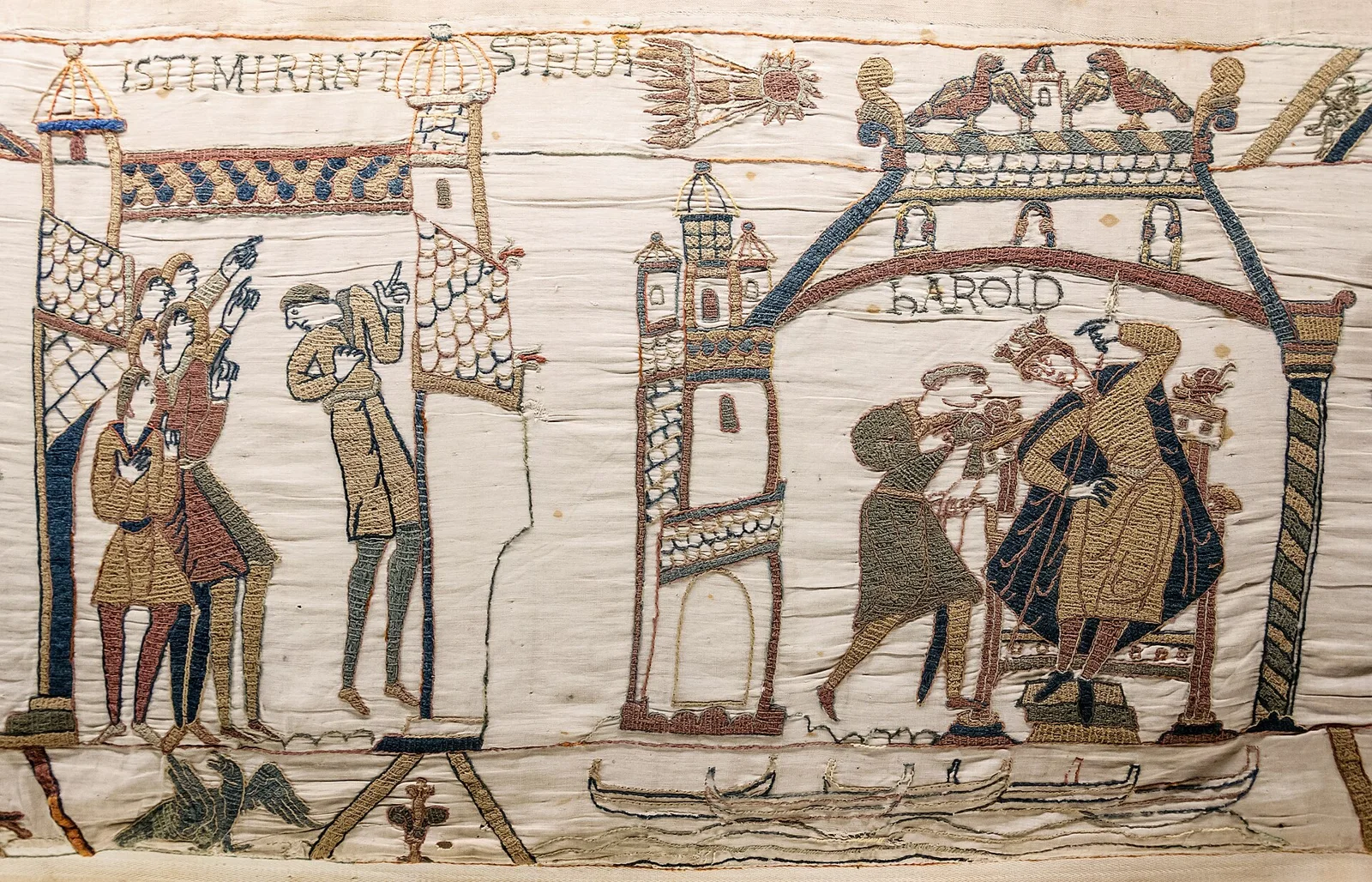
Ancient cultures may have woven the nebula into their myths. Some scholars suggest that the Mayan “Three Hearthstones” legend aligns with the three bright stars at Orion’s base, framing the nebula as a central ember of creation. In European astronomy, the nebula’s diffuse nature was first recorded by French astronomer Nicolas‑Claude Fabri de Peiresc in 1610, using a refracting telescope. A few years later, Jesuit mathematician Johann Baptist Cysat published a description that likely referenced the Trapezium Cluster, predating Galileo’s own observations of three of its stars in 1617.
Looking Ahead: From Nebulae to Martian Gardens
Studying the Orion Nebula deepens our understanding of how stars and planetary systems emerge from clouds of gas and dust. That knowledge feeds into ambitious projects on Earth and beyond, including efforts to grow mushrooms in controlled habitats for future Mars missions. By learning how nature assembles complex structures in space, we take another step toward cultivating life on the Red Planet.
Sources
This article was prepared with AI assistance from the sources listed above and approved by the Mushroom 2 Mars team before publication.