A Cosmic Neighbor in the Night Sky
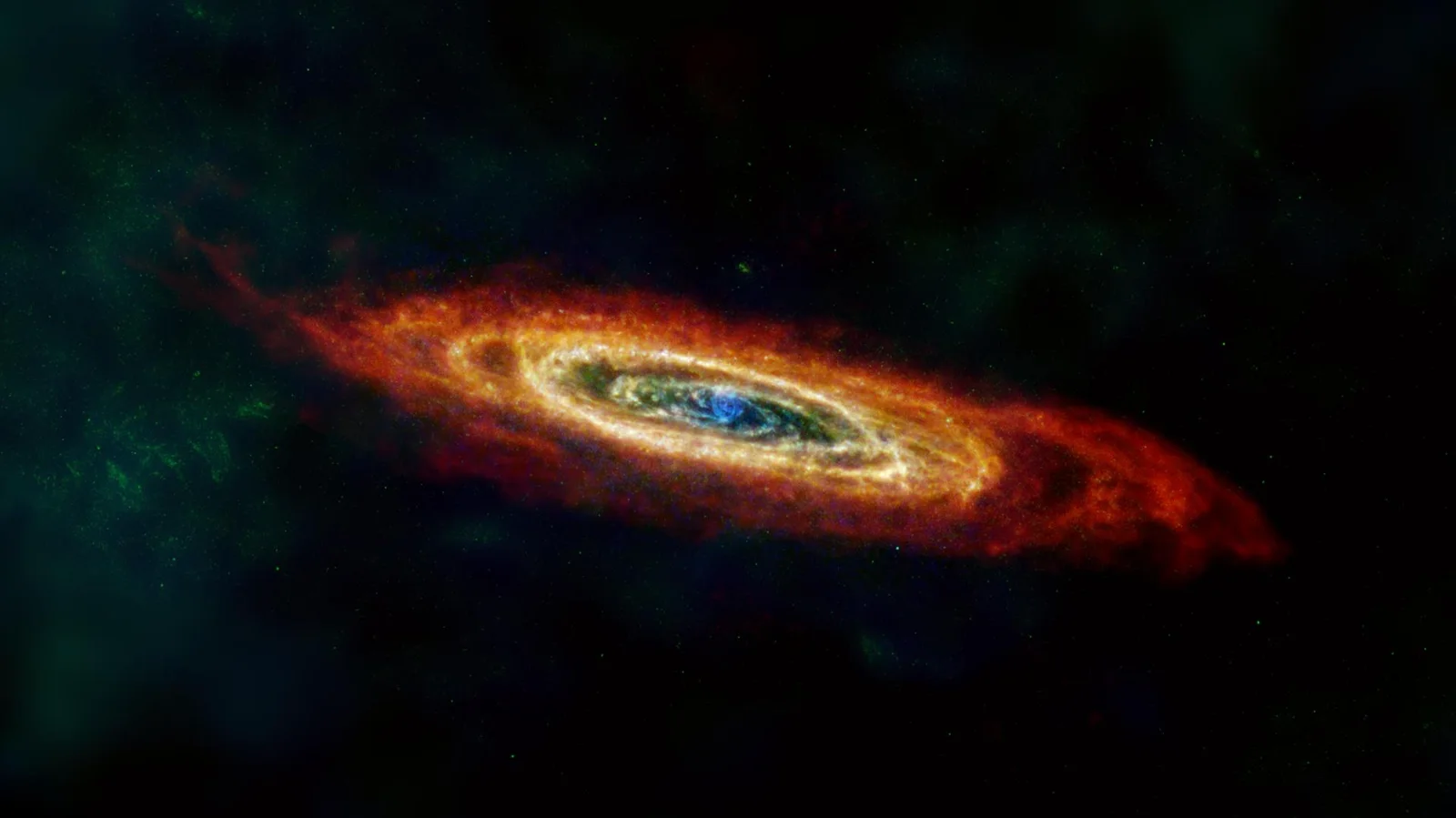
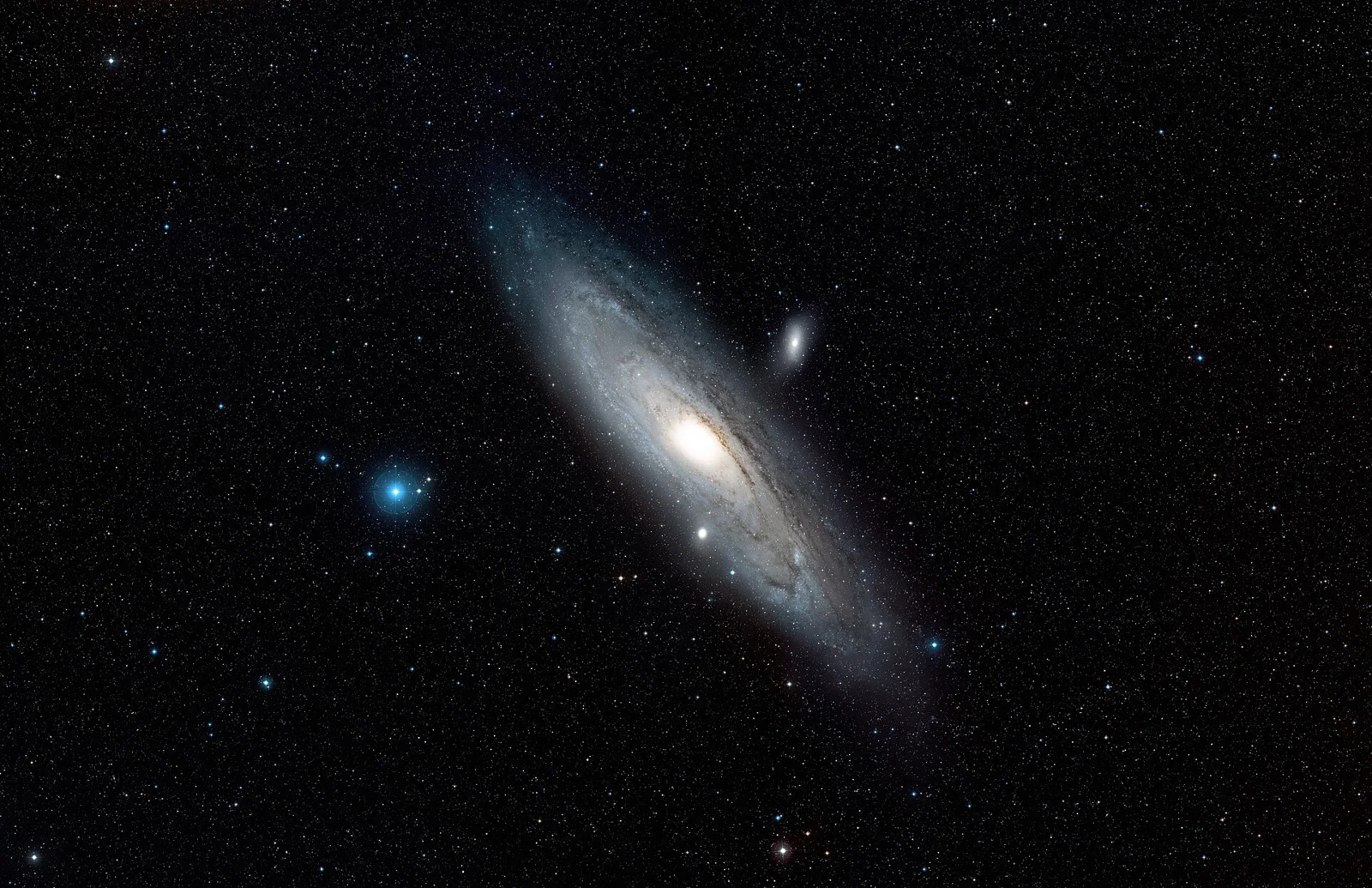
The Andromeda Galaxy, cataloged as M31 or NGC 224, is a barred spiral galaxy that shines at an apparent magnitude of 3.44. That makes it one of the brightest Messier objects and visible to the naked eye on clear, dark nights, even when there is moderate light pollution. Its name comes from the constellation Andromeda, itself named after the mythic princess who married Perseus.
Size and Mass Compared to the Milky Way
Andromeda stretches about 152,000 light‑years across (46.56 kiloparsecs) – roughly twice the diameter of our own Milky Way. Its virial mass is on the order of one trillion solar masses (≈2 × 10^42 kg), a figure comparable to estimates for the Milky Way. Early 21st‑century studies have refined these numbers, suggesting the two galaxies may be more similar in mass than previously thought, with earlier claims of Andromeda being 25‑50 % more massive now under debate.
A Long‑Term Collision Course
Current models give a roughly 50 % chance that the Milky Way and Andromeda will collide within the next 10 billion years. If the encounter occurs, the two spirals are expected to merge into a single, larger elliptical or lenticular galaxy—sometimes nicknamed “Milkomeda.” The gravitational dance will unfold over billions of years, gradually reshaping the stellar populations of both galaxies.
From Ancient Observations to Modern Science
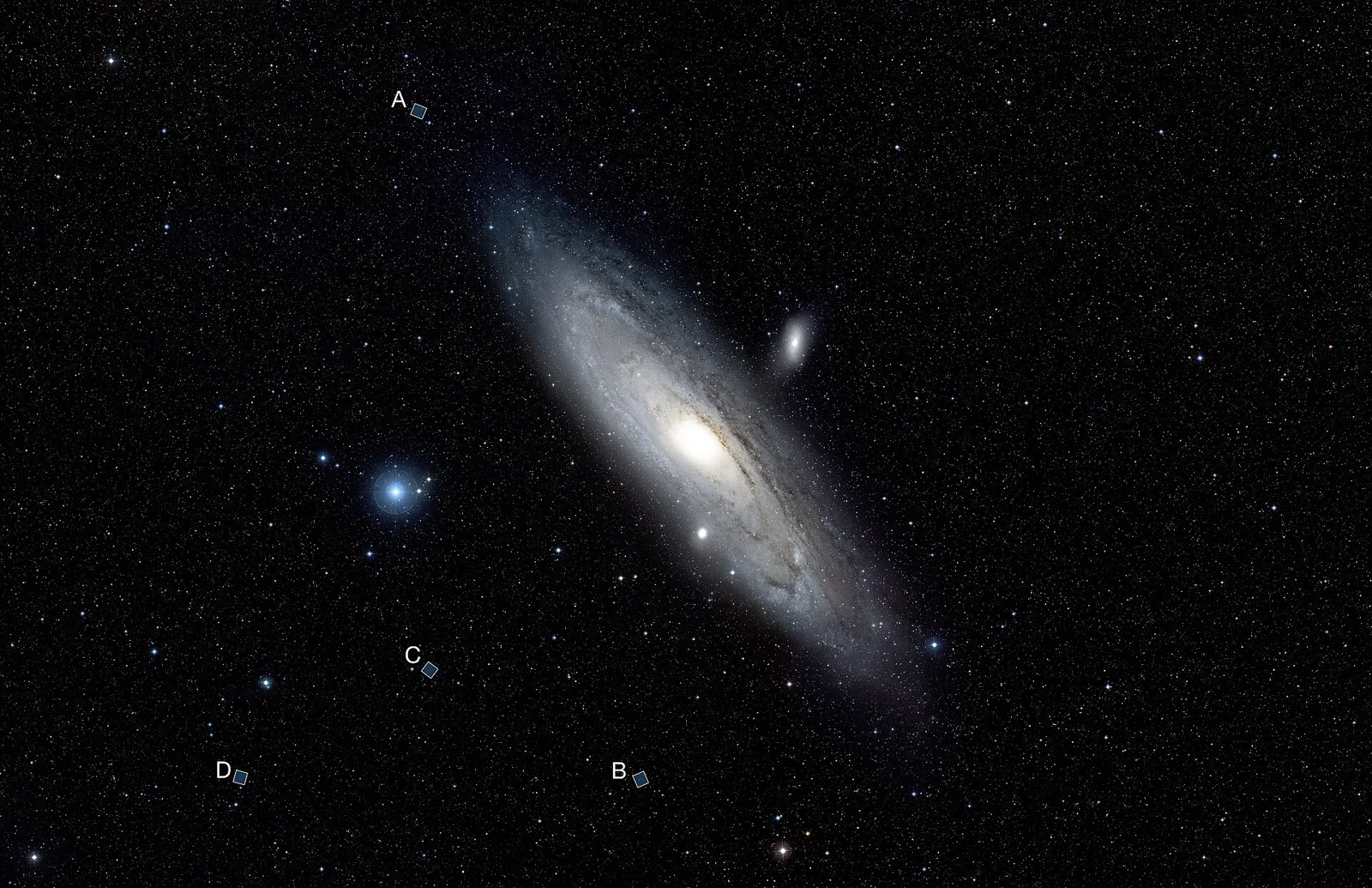
The first recorded description of Andromeda dates to 964 CE, when Persian astronomer Abd al‑Rahman al‑Sufi called it a “nebulous smear.” Over the centuries, astronomers such as Simon Marius (1612), William Herschel (1785), and William Parsons (1850) added sketches and notes, gradually revealing its spiral nature. In 1864, William Huggins identified a stellar spectrum for Andromeda, proving it was made of stars rather than gas. The first photographic image was taken by Isaac Roberts in 1888, still before the galaxy’s true extragalactic status was widely accepted.
The “Island Universes” Debate
Philosopher Immanuel Kant suggested in 1755 that the Milky Way was just one of many “island universes.” The idea gained traction after Vesto Slipher measured Andromeda’s radial velocity at about 300 km s⁻¹ in 1912, indicating a massive, distant object. In 1920, the famous Great Debate between Harlow Shapley and Heber Curtis centered on whether spiral nebulae like Andromeda were separate galaxies. Curtis’s observations of faint novae in Andromeda helped estimate its distance at roughly 500,000 light‑years—a crude but pioneering figure that paved the way for modern distance measurements placing it at about 2.5 million light‑years.
Observing Andromeda Today
Because Andromeda is bright and large, it offers a rewarding target for both casual stargazers and seasoned amateurs. With binoculars, the galaxy appears as a faint, oval glow. Small telescopes reveal a bright core and hints of the spiral arms. Long‑exposure astrophotography can capture its sprawling disk and the dark dust lanes that trace interstellar material. For the best view, aim for a night with a new moon and minimal light pollution; the galaxy’s faint outer halo becomes visible under truly dark skies.
Why Andromeda Matters for Future Space Exploration
Studying Andromeda helps astronomers understand how large spiral galaxies form, evolve, and eventually merge. The eventual Milky Way–Andromeda collision will be a natural laboratory for galaxy‑scale dynamics—knowledge that could inform long‑term planning for humanity’s ventures beyond Earth, perhaps even as we imagine cultivating life on distant worlds like Mars.
Sources
This article was prepared with AI assistance from the sources listed above and approved by the Mushroom 2 Mars team before publication.