A Cosmic Collision in the Dawn of the Solar System
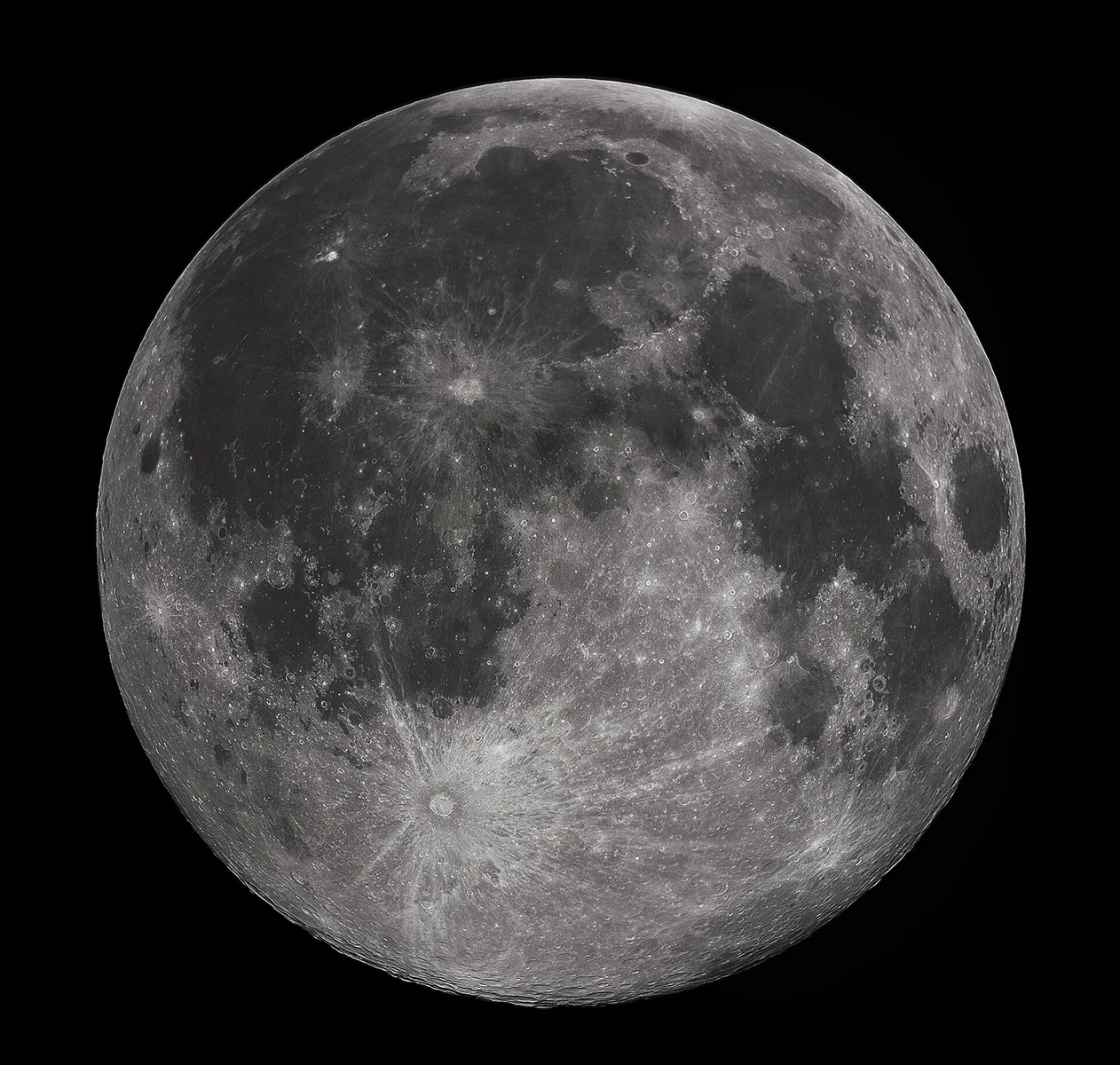
The most widely accepted explanation for the Moon’s origin is the giant‑impact hypothesis. It proposes that, within the first 100 million years after the Sun formed, Earth was struck by a Mars‑sized protoplanet dubbed Theia. The collision ejected vast amounts of mantle material into orbit, which later coalesced into the Moon over a period that could have been as short as a few hours.
Early Ideas and the Rise of Theia
The concept of an impact‑generated Moon dates back to 1946, when geologist Reginald Aldworth Daly suggested that a massive collision might explain the satellite’s existence. In the 1970s, William Hartmann and Donald Davis refined the idea with computer models of large‑body collisions. By the mid‑1980s, the hypothesis had become the leading theory, solidified at a 1984 conference in Kona, Hawaii.
Isotopic Clues Linking Earth and Moon
One of the strongest arguments for a shared origin comes from stable‑isotope ratios. Analyses of lunar rocks returned by Apollo missions show that oxygen, titanium, and tungsten isotopes match those of Earth’s mantle almost exactly. This similarity indicates that the Moon’s material was derived largely from Earth’s outer layers rather than from a completely separate body.
Angular Momentum and the Small Iron Core
The Earth‑Moon system possesses unusually high angular momentum compared with other rocky planet‑moon pairs. A giant impact can naturally impart such spin. Moreover, the Moon’s low density and tiny iron core fit the impact picture: Theia’s metallic core would have merged with Earth, leaving mostly silicate mantle material to form the satellite.
Volatiles and the Early Magma Ocean
Lunar samples are depleted in volatile elements—substances that vaporize easily—suggesting they were lost during a high‑energy event. The impact would have heated the ejected debris to extreme temperatures, vaporizing volatiles and leaving a dry, basalt‑rich Moon. Evidence of an ancient magma ocean on the Moon’s surface further supports a molten, rapidly forming body.
New Simulations Highlight Temperature Effects
Recent work by Adeene Denton (Southwest Research Institute) and colleagues at the University of Arizona used advanced simulations to explore how the thermal state of the colliding bodies influences the outcome. Their models show that a hotter, more pliable Theia could produce a debris disk that collapses into a Moon within roughly five hours, whereas a cooler, stronger impactor might yield a different debris configuration. These findings add nuance to the classic scenario without overturning its core premise.
Ongoing Debates: When Did the Moon Form?
Despite the wealth of supporting evidence, the exact timing of the Moon’s birth remains contested. Radiometric dating of lunar rocks places the event anywhere between 40 and 120 million years after the Solar System’s formation. This range matters because a younger Earth would have been hotter, potentially altering Theia’s behavior during impact, while a later collision would involve a cooler, more rigid protoplanet.
Looking Ahead: From Moon to Mars
Understanding the Moon’s violent origin helps scientists model planetary formation elsewhere, including the early history of Mars—where future Mushroom 2 Mars farms might one day grow fungi under low‑gravity conditions, echoing the ancient chaos that gave us our own night‑light.
Sources
This article was prepared with AI assistance from the sources listed above and approved by the Mushroom 2 Mars team before publication.