A Hidden Nursery Comes to Light
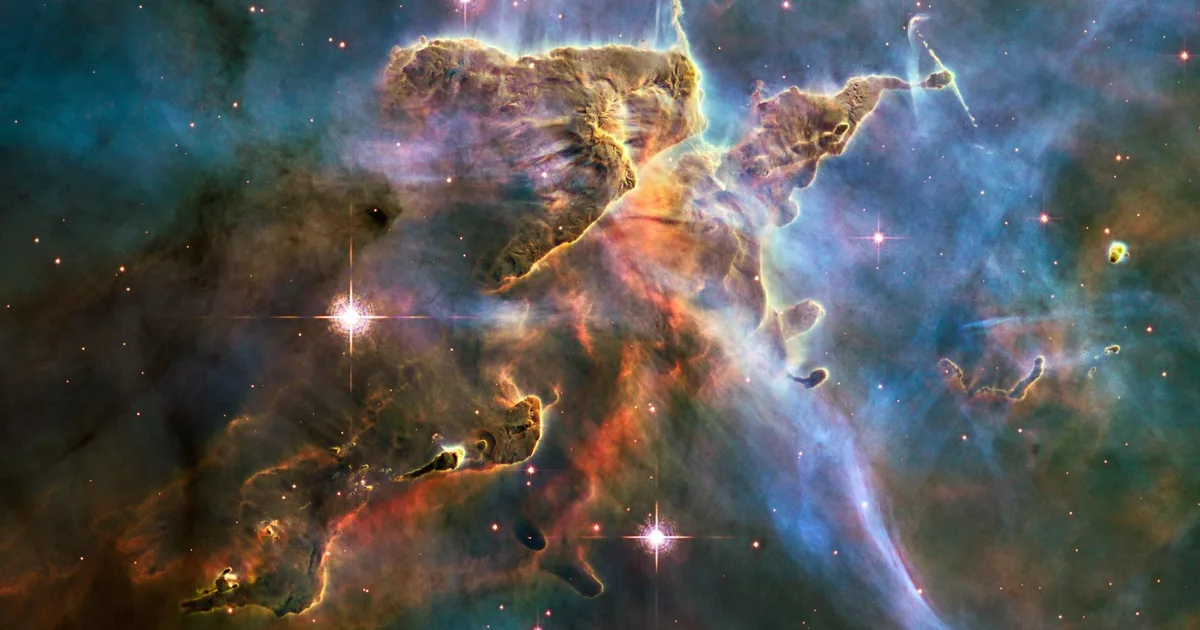
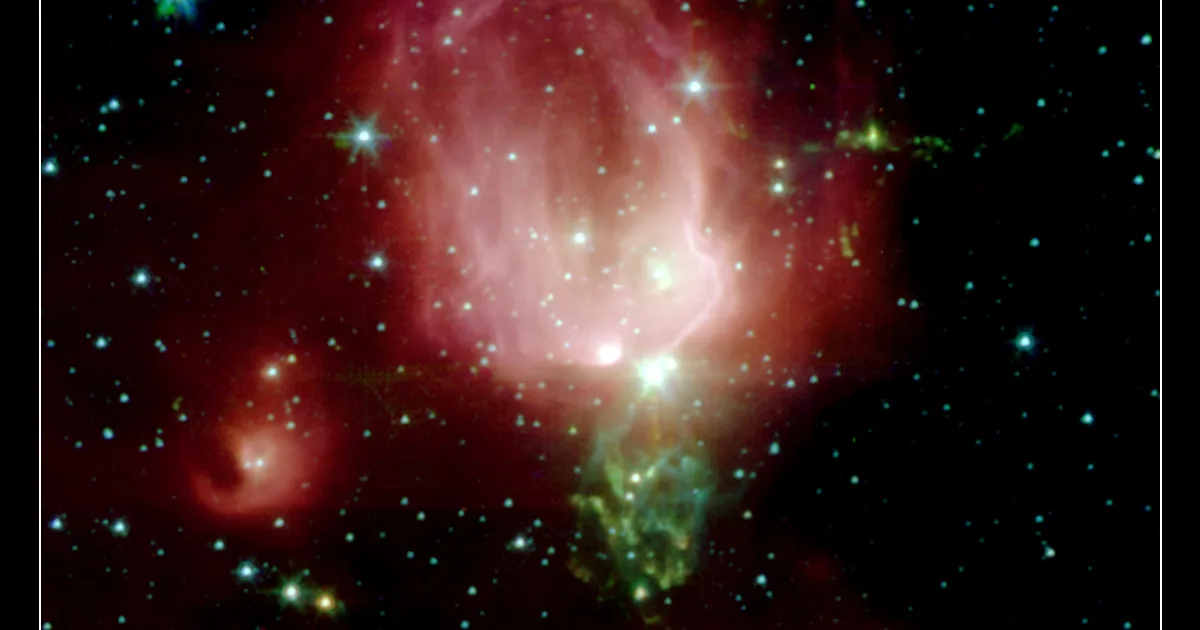
The James Webb Space Telescope (JWST) can see through thick clouds of interstellar dust by capturing infrared light. In the stellar nursery NGC 7129, about 3,300 light‑years away, Webb’s view pierces the veil and reveals dozens of stars at different stages of formation. The image showcases the complex interplay between young stars and the surrounding gas and dust, offering a vivid snapshot of how stars shape their environment.
The Dominant Star: LkHα 234
At the heart of the nebula glows a bright yellow star, identified as LkHα 234. This massive, pre‑main‑sequence object is roughly five to eight times the mass of our Sun. It has largely finished gathering material and is now contracting under gravity, a process that raises its core temperature. Eventually it will settle onto the main sequence and begin fusing hydrogen like the Sun does today.
A Golden Cavity Sculpted by Stellar Winds
To the left of LkHα 234, Webb captures a striking golden cavity extending about 3.5 light‑years. The cavity is carved by outflows—high‑speed streams of gas—launched during an earlier phase of the star’s life. These outflows, together with intense radiation, energize the surrounding hydrogen, causing it to glow. While much of the gas is blown away, some of it is compressed, creating pockets where new stars can later form.
Bow Shocks and Mini‑Cavities
Embedded within the golden region are several younger pre‑main‑sequence stars. Their own stellar winds slam into the energized gas, forming curved bow shocks—bright arcs that mark the boundary where wind pressure meets the ambient medium. These bow shocks generate smaller cavities and add to the intricate, layered appearance of the nebula.
The Photodissociation Frontier
The combined heat and radiation from the central star and its companions create a photodissociation region (PDR) at the interface between hot, ionized gas and the colder, denser molecular cloud. In a PDR, molecules such as H₂ are broken apart into individual atoms. Studying this boundary helps astronomers understand how molecular clouds erode over millions of years, eventually dispersing the raw material from which stars are born.
Red Plumes and Protostellar Outflows
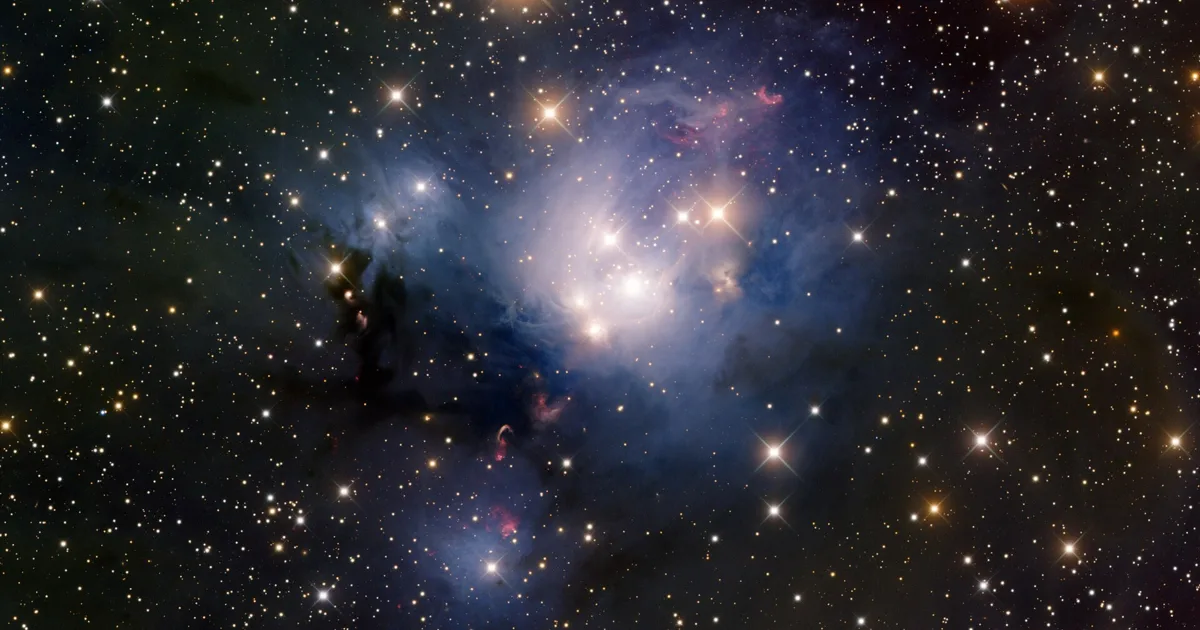
On the opposite side of LkHα 234, a chaotic plume of red‑colored dust and gas stretches outward. This area hosts the youngest objects in the region: protostars. Still in the earliest stage of stellar evolution, protostars are actively accreting material and simultaneously ejecting powerful jets of super‑heated gas. When these jets collide with the surrounding dense material, they generate shocks that light up the plume in red, giving it a flame‑like texture.
Overlapping Flows Create a Turbulent Canvas
From our viewpoint, outflows from multiple stars overlap, producing a tangled web of shocks and glowing filaments. The combined effect is a dynamic, ever‑changing landscape where new stars are being forged while older ones continue to reshape their birth cloud. Background galaxies pepper the image, reminding us that this bustling region is just one of countless stellar nurseries across the universe.
Why It Matters for Future Exploration
Understanding how massive stars like LkHα 234 influence their surroundings informs models of galaxy evolution and star formation rates. Moreover, the processes observed here—radiation‑driven erosion, shock heating, and triggered star formation—parallel the kinds of environments that future space habitats might need to contend with, whether on the Moon, Mars, or beyond.
In the spirit of our Mushroom 2 Mars project, the way stellar jets sculpt raw material into new structures mirrors how we hope to cultivate mushrooms in the thin Martian atmosphere.
Sources
This article was prepared with AI assistance from the sources listed above and approved by the Mushroom 2 Mars team before publication.