From Concept to Launch
The Interior Exploration using Seismic Investigations, Geodesy and Heat Transport (InSight) began life as the Geophysical Monitoring Station (GEMS). After a 2012 name change, the mission entered NASA’s Discovery Program, winning a $3 million concept award in 2011 and later securing full development funding. Lockheed Martin built the lander starting in May 2014, re‑using the proven landing system of the 2008 Phoenix mission to keep costs down. A stubborn vacuum leak in the French‑supplied SEIS seismometer forced a delay; the original 2016 launch window slipped to May 5 2018, pushing the total cost from about $675 million to $830 million.
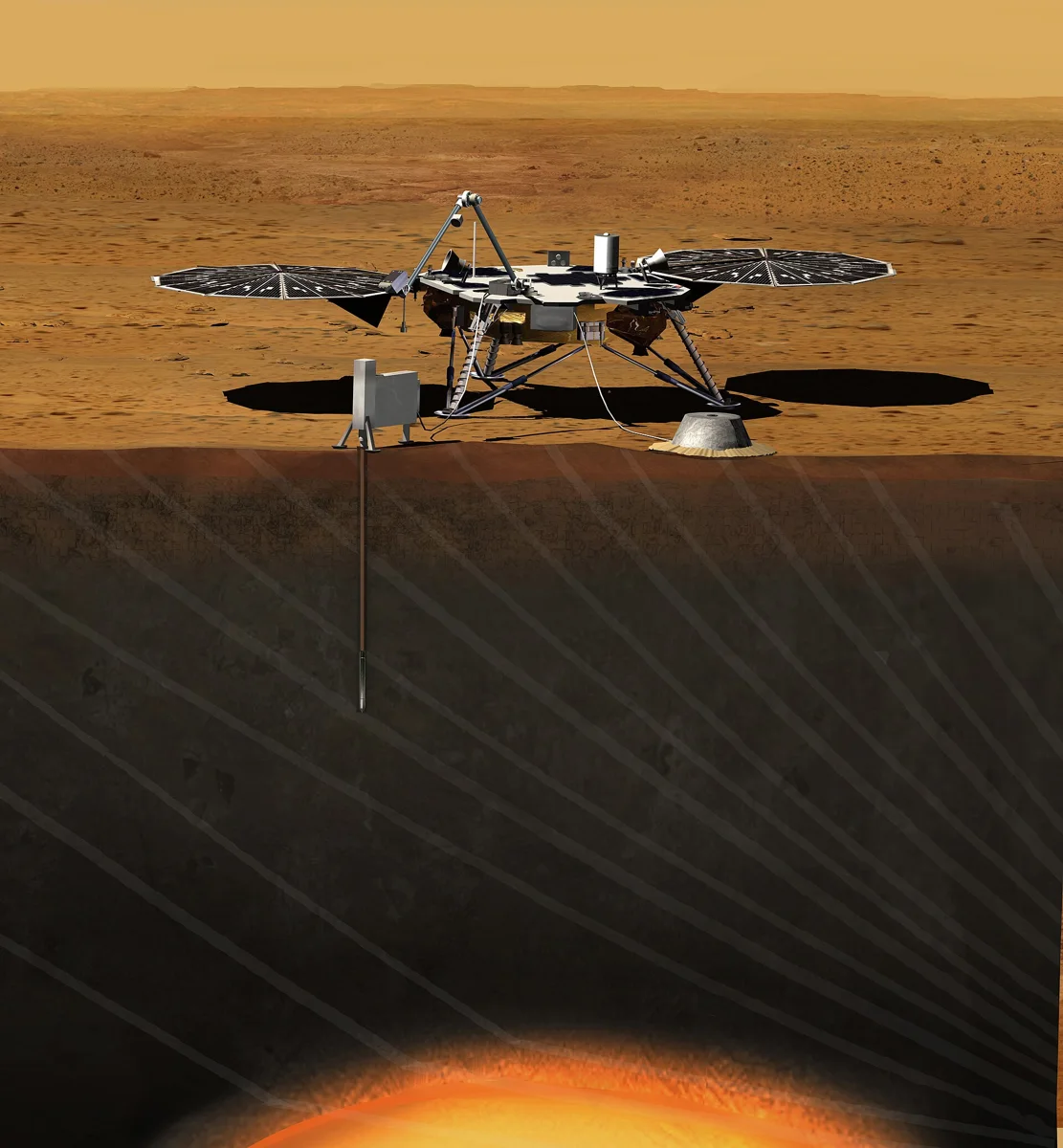
Touchdown on Elysium Planitia
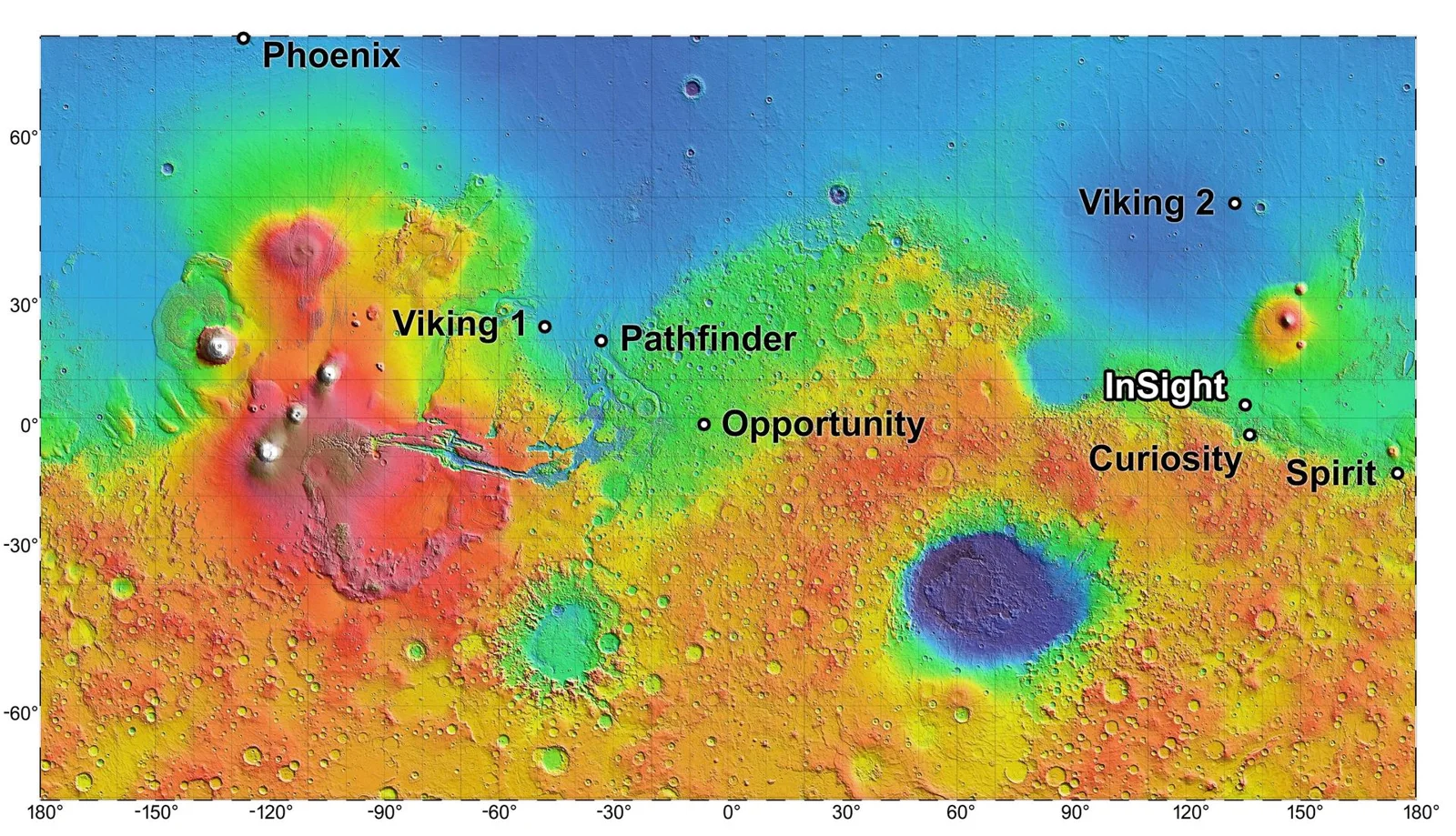
On 26 November 2018, InSight touched down at the flat expanse of Elysium Planitia, landing at 19:52 UTC after a six‑month cruise aboard an Atlas V‑401 rocket. The lander’s three‑axis robotic arm unfurled a suite of instruments, most notably the Seismic Experiment for Interior Structure (SEIS) and the Heat Flow and Physical Properties Probe (HP³). The mission was slated for 1440 sols (about 1480 Earth days), a record‑long surface stay for a Mars lander.
Probing the Planet’s Heartbeat
SEIS, a ultra‑sensitive broadband seismometer, was placed directly on the Martian surface to detect vibrations caused by marsquakes, meteorite impacts, and even wind‑induced noise. Within weeks, the instrument recorded the first confirmed marsquakes, proving that Mars remains seismically active. By triangulating these events, scientists began constructing three‑dimensional models of the planet’s crust, mantle, and core—information crucial for comparing Earth, Venus, Mercury, and the Moon.
HP³, nicknamed “the mole,” attempted to drill a few meters beneath the regolith to measure heat flowing out of the interior. Although the mole struggled to penetrate the compacted soil, the attempt yielded valuable data on the mechanical properties of Martian soil and highlighted the challenges of autonomous drilling on another world.
Dust, Power, and the Long Decline
InSight relied on solar panels for energy, supplemented by batteries during night and winter. Unlike earlier landers, it counted on occasional “cleaning events” – wind gusts that blow dust off the panels. Elysium Planitia, however, experiences fewer of these events, leading to a gradual buildup of dust. By February 2021, the panels were delivering only about 27 % of their original power, prompting NASA to place the lander in a hibernation‑like mode to conserve energy.
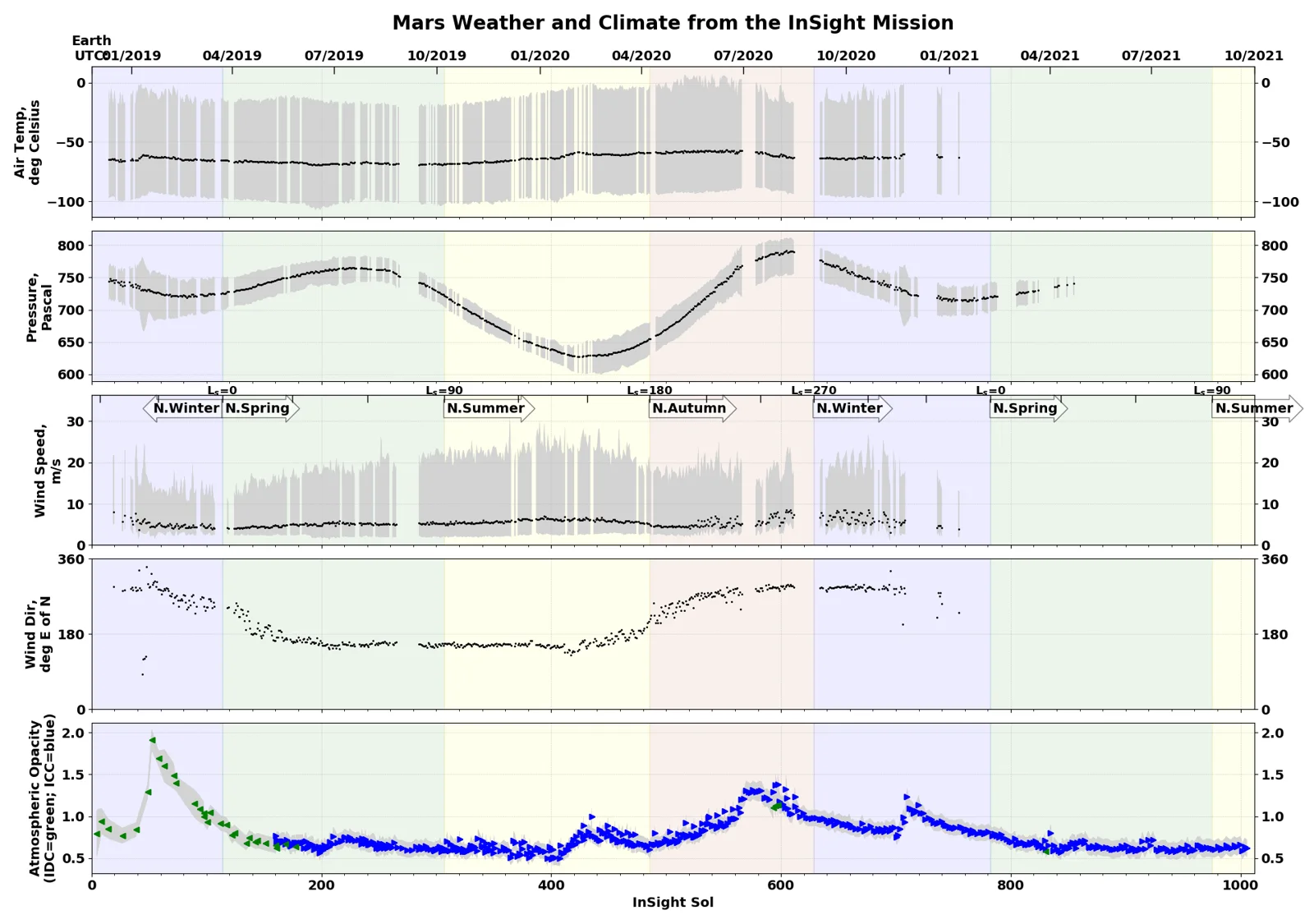
Ingenious workarounds, such as using the robotic arm to stir sand onto the panels for a self‑cleaning effect, briefly restored power in May 2021. Yet the dust problem persisted; by May 2022 the lander was generating just a tenth of its initial power. NASA switched InSight to a low‑power seismic‑only mode in July 2022, hoping to capture any remaining marsquakes before the inevitable shutdown.
The End of a Pioneering Mission
Communication attempts failed in mid‑December 2022, and NASA officially declared the mission over on 21 December 2022. Over its four‑year lifespan, InSight delivered more than 1 million seismic recordings, confirming that Mars experiences quakes roughly every day and providing the first direct measurements of the planet’s interior temperature gradient. These findings reshape our understanding of how terrestrial planets form and evolve, offering a comparative baseline for future exploration.
Legacy and the Road Ahead
InSight’s success paved the way for more ambitious interior‑focused missions, such as the upcoming ESA‑NASA collaboration that will place a network of seismometers across the Martian surface. The data also inform models of planetary habitability—knowledge that will be essential when we eventually consider growing life‑supporting organisms, like the hardy fungi championed by projects such as Mushroom 2 Mars, on the Red Planet.
InSight taught us that even a quiet world like Mars has a restless heart, a reminder that the quest to cultivate mushrooms on another planet will rest on the same fundamental understanding of planetary interiors.
Sources
This article was prepared with AI assistance from the sources listed above and approved by the Mushroom 2 Mars team before publication.