A Cosmic Portrait from the Large Magellanic Cloud
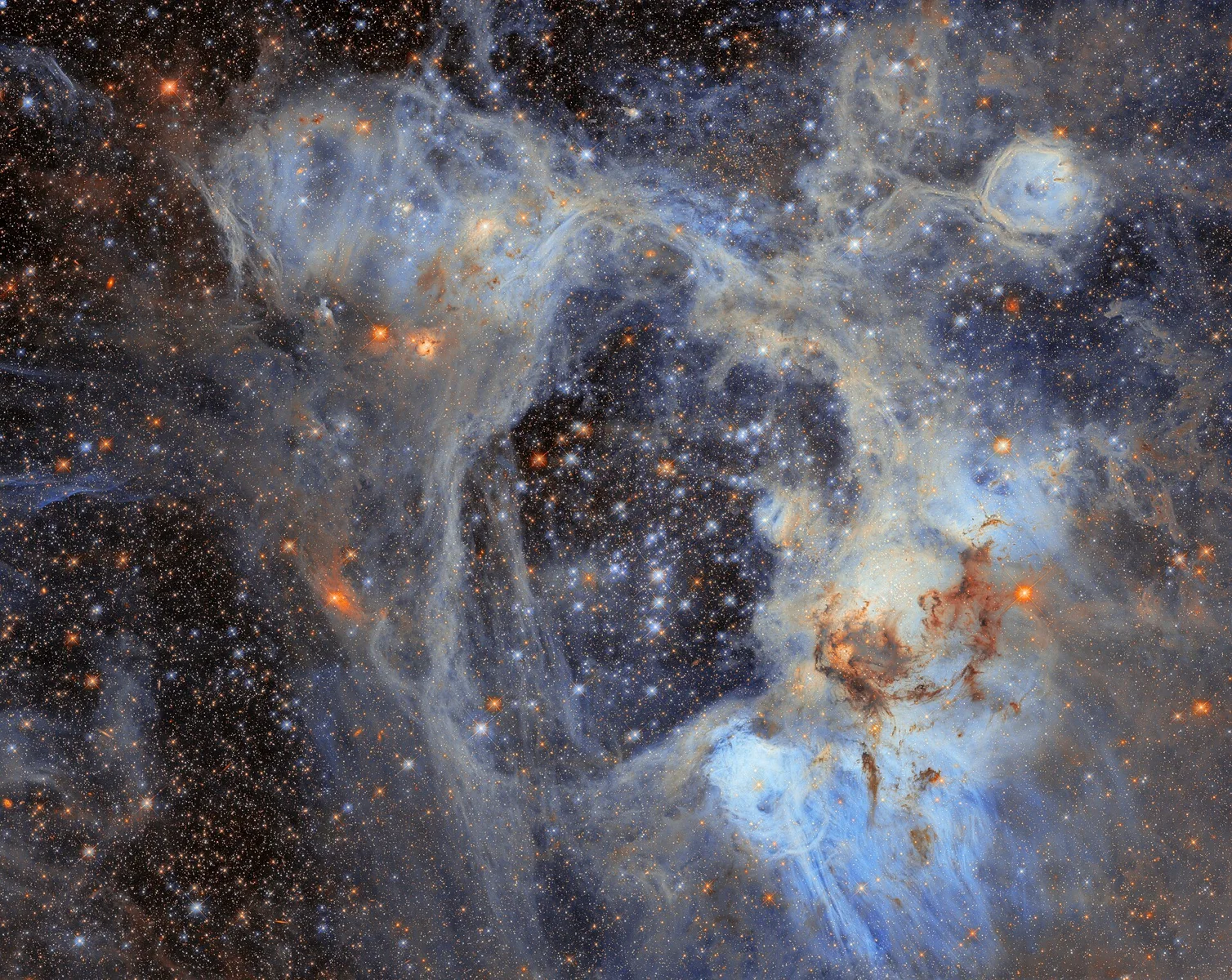
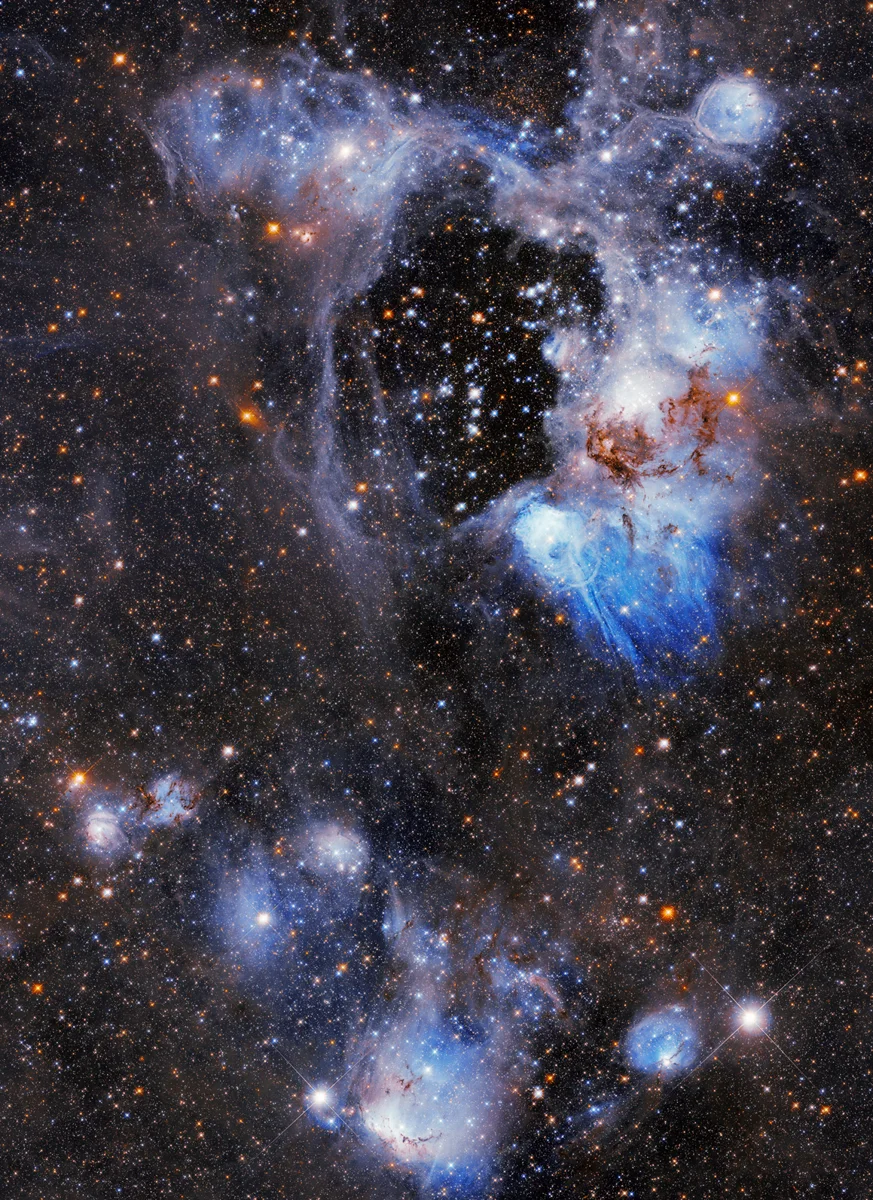
The Hubble Space Telescope’s latest picture‑of‑the‑month showcases a dramatic region of the Large Magellanic Cloud (LMC), a satellite galaxy that orbits the Milky Way at roughly 160 000 light‑years. The image centers on the nebula LHA 120‑N44, commonly called N44, located in the constellation Dorado. This stellar nursery is a laboratory for astronomers because it contains a huge, empty cavity—known as a superbubble—surrounded by a bright shell of dust and gas.
What Creates a Superbubble?
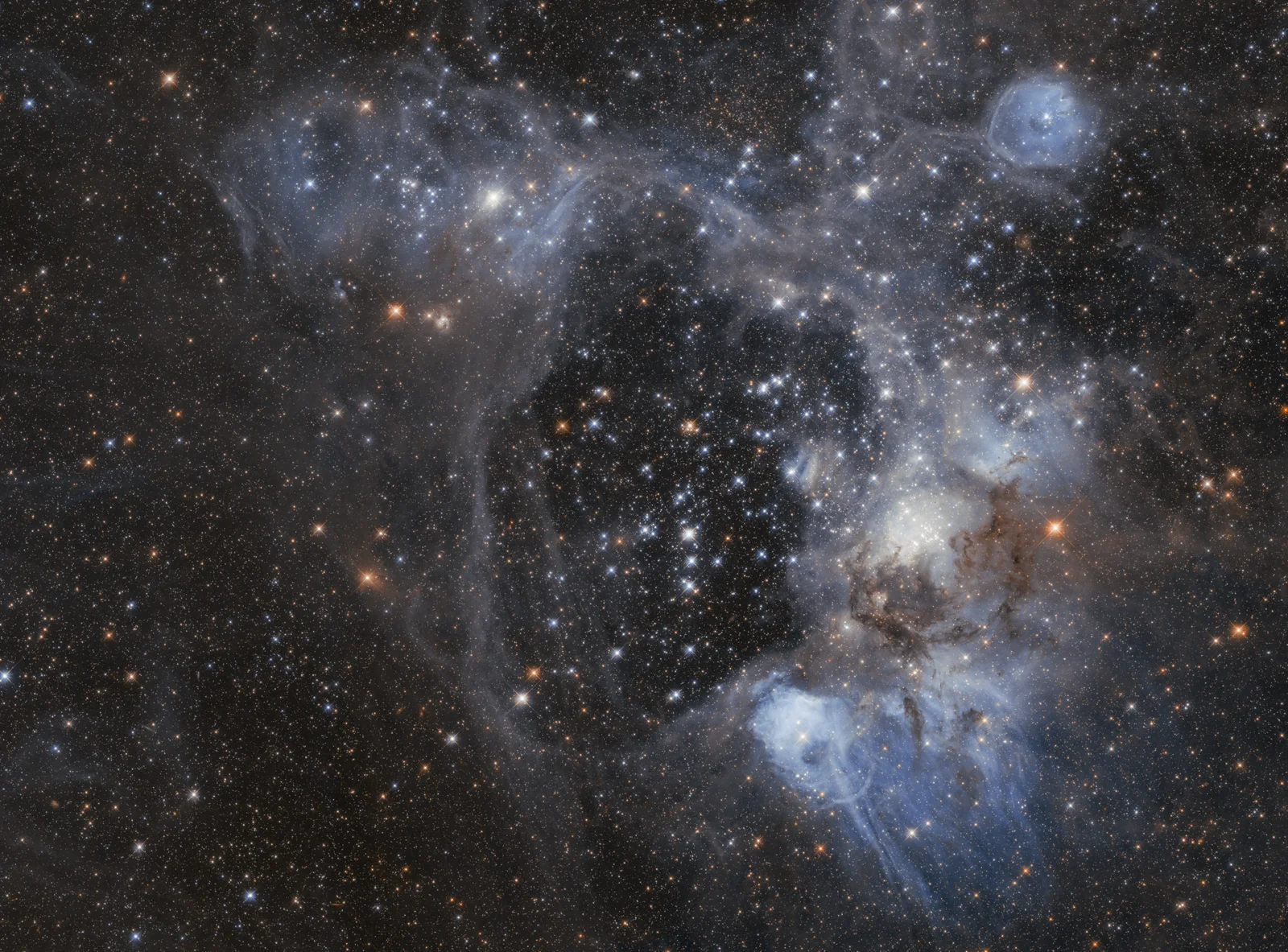
At the heart of N44 lies a cluster of massive, young stars. Their fierce stellar winds and occasional supernova explosions have blasted away the surrounding material, carving out a void about 210 × 140 light‑years across. The expelled gas did not disappear; instead it piled up into a dense, glowing shell that outlines the bubble. This process is a textbook example of feedback: the energy from massive stars reshapes the interstellar medium, influencing where the next generation of stars can form.
A Shell That Sparks New Stars
The compressed gas shell is bathed in intense ultraviolet radiation from the same hot stars that created the bubble. The radiation ionises the gas, causing it to emit a soft blue‑grey glow visible in Hubble’s image. Within this shell, gravity has begun to pull clumps of gas together, igniting the earliest stages of star formation. Astronomers refer to these nascent objects as pre‑main‑sequence stars—about 30 000 of them have been identified in N44 alone. Their presence lets scientists watch the full timeline from cold cloud collapse to nuclear fusion ignition.
Mapping Half a Million Stars
The Hubble program that produced this picture (programme #14689, PI Gouliermis) performed a deep census of the region. Using the telescope’s high‑resolution cameras, researchers catalogued nearly 500 000 stars, including background interlopers that happen to lie along the line of sight. The ability to resolve faint objects in such a crowded field is a hallmark of Hubble’s capabilities and provides a statistical foundation for studying how star‑formation efficiency varies with environment.
Smaller Bubbles Within the Giant
While the central superbubble dominates the scene, the image also highlights a secondary structure labeled N44F. This smaller bubble sits near the upper‑right corner and is blown by the wind of a single massive star. Its edges are sculpted into pillar‑like formations of dust, reminiscent of the famous “Pillars of Creation” in the Eagle Nebula. Such features illustrate how individual stars can carve their own niches even within a larger feedback‑driven cavity.
Why Low‑Metallicity Matters
The LMC, like many dwarf galaxies and the early Universe, is relatively poor in elements heavier than helium—a property astronomers call low metallicity. Hubble’s detection of low‑mass, pre‑main‑sequence stars in this environment opens a new window onto star formation under conditions that differ from those in our own Milky Way. Understanding these differences helps refine models of how the first generations of stars formed after the Big Bang.
From Observation to Insight
By counting stars of different masses and evolutionary stages, researchers can estimate how long it takes a cold gas cloud to collapse, fragment, and ignite nuclear fusion. The N44 data set is particularly valuable because it captures the process “from start to finish” in a single region. Future observations, especially with the James Webb Space Telescope, will complement Hubble’s optical view with infrared data that can peer through dust and reveal even younger protostars.
A Glimpse of Tomorrow’s Martian Gardens
While the superbubble itself is far beyond any human reach, the lessons learned about star‑driven feedback and gas recycling echo the challenges of growing life on other worlds. Just as massive stars reshape their surroundings, future Martian habitats will need to manage energy, waste, and nutrients to nurture crops—perhaps even mushroom farms that one day travel from Earth to Mars.
Sources
This article was prepared with AI assistance from the sources listed above and approved by the Mushroom 2 Mars team before publication.