Part of the guide: Mycology: A Complete Guide to Fungi, Cultivation, and Safety
What Is Ergot?
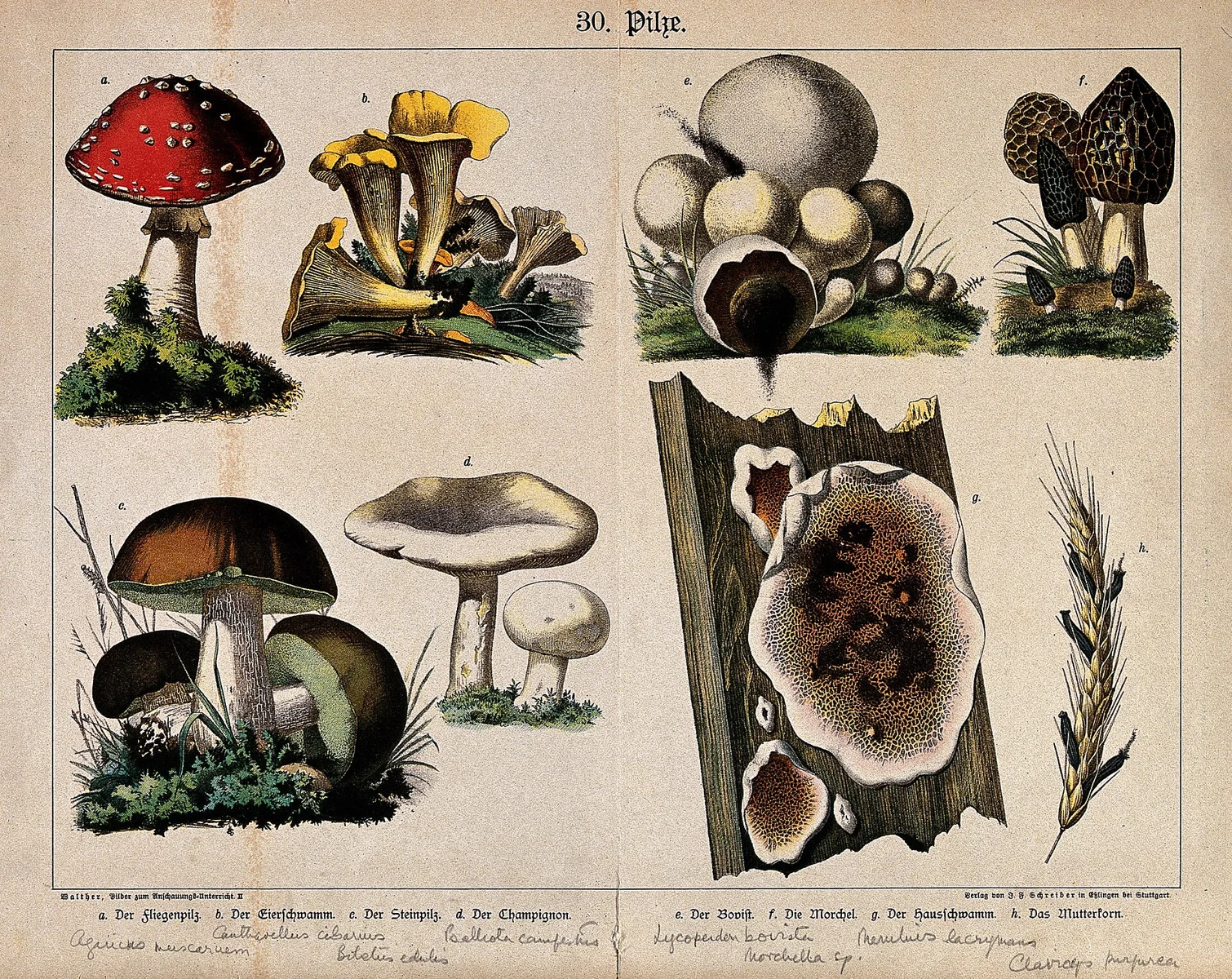
Ergot refers to a group of fungi in the genus Claviceps. The most well‑known species, Claviceps purpurea, infects rye and related grasses, forming dark, hard structures called sclerotia (often called “ergot kernels”). These sclerotia contain a suite of alkaloids that can cause ergotism when consumed in contaminated grain.
The Life Cycle of Claviceps
When a fungal spore lands on the stigma of an open grass flower, it germinates much like a pollen grain. The mycelium quickly invades the ovary, diverting nutrients that would normally feed the seed. Early infection produces a white, sugary coating called sphacelia that exudes honey‑dew packed with millions of asexual spores (conidia). Insects such as flies and moths spread these spores to other florets. As the infection matures, the sphacelia harden into sclerotia, where alkaloids and lipids accumulate. In the spring, the sclerotia germinate, sending up tiny mushroom‑like fruiting bodies that release sexual spores to start the cycle anew.
Diversity and Host Range
Claviceps includes about 50 described species, most of which thrive in tropical and subtropical regions. Economically important members include: - C. purpurea – attacks rye, triticale, wheat, and barley. - C. fusiformis – found on pearl millet and buffel grass. - C. paspali – infects dallis grass. - C. africana – parasitizes sorghum. - C. lutea – occurs on paspalum grasses. C. purpurea itself has three host‑specific races (G1, G2, G3) that target meadow grasses, forest‑mountain grasses, and salt‑marsh grasses respectively.
Historical Impact: Ergotism and Society
Ergot‑contaminated grain has caused severe outbreaks of ergotism, sometimes called “St. Anthony’s fire,” because the disease can produce burning sensations, convulsions, and gangrene. In medieval Europe, recurring ergotism prompted the formation of the Hospital Brothers of St. Anthony (founded 1095) who specialized in treating victims with herbal balms that soothed circulation and nervous symptoms. These historical episodes illustrate how a microscopic fungus can shape human health, agriculture, and even religious art.
From Poison to Pharmacy
The sclerotia of C. purpurea can contain up to 2 % ergotamine by dry weight. Ergotamine and related alkaloids affect blood vessels and neurotransmission, a property that has been harnessed for medical use. Modern pharmaceuticals derived from ergot alkaloids include treatments for migraine and certain uterine conditions. Research also shows that subtle variations in fungal enzymes (e.g., the “old yellow enzyme” EasA) generate a wide spectrum of ergot alkaloids, some of which have fewer side effects and are valuable in drug development.
Evolutionary Insights
A 2020 amber fossil preserving a grass spikelet and an ergot‑like fungus pushes the origin of Claviceps back to at least the early Cretaceous. The fossil suggests that grasses were early hosts and hints that psychotropic compounds may have been present in fungi for millions of years. Ongoing studies of enzyme evolution within the Clavicipitaceae family reveal how the diversity of ergot alkaloids arose through changes in substrate specificity and product formation.
Why Ergot Matters to Mushroom 2 Mars
Understanding the complex life cycle and biochemical arsenal of ergot fungi informs broader efforts to manage plant‑pathogen interactions in closed‑loop agriculture—an essential consideration for any future mushroom‑cultivation system on Mars.
Sources
This article is for general information only and is not medical advice. Do not use it to diagnose or treat any condition; talk to a doctor about health questions.
This article was prepared with AI assistance from the sources listed above and approved by the Mushroom 2 Mars team before publication.