Part of the guide: Mycology: A Complete Guide to Fungi, Cultivation, and Safety
Appearance and Key Features
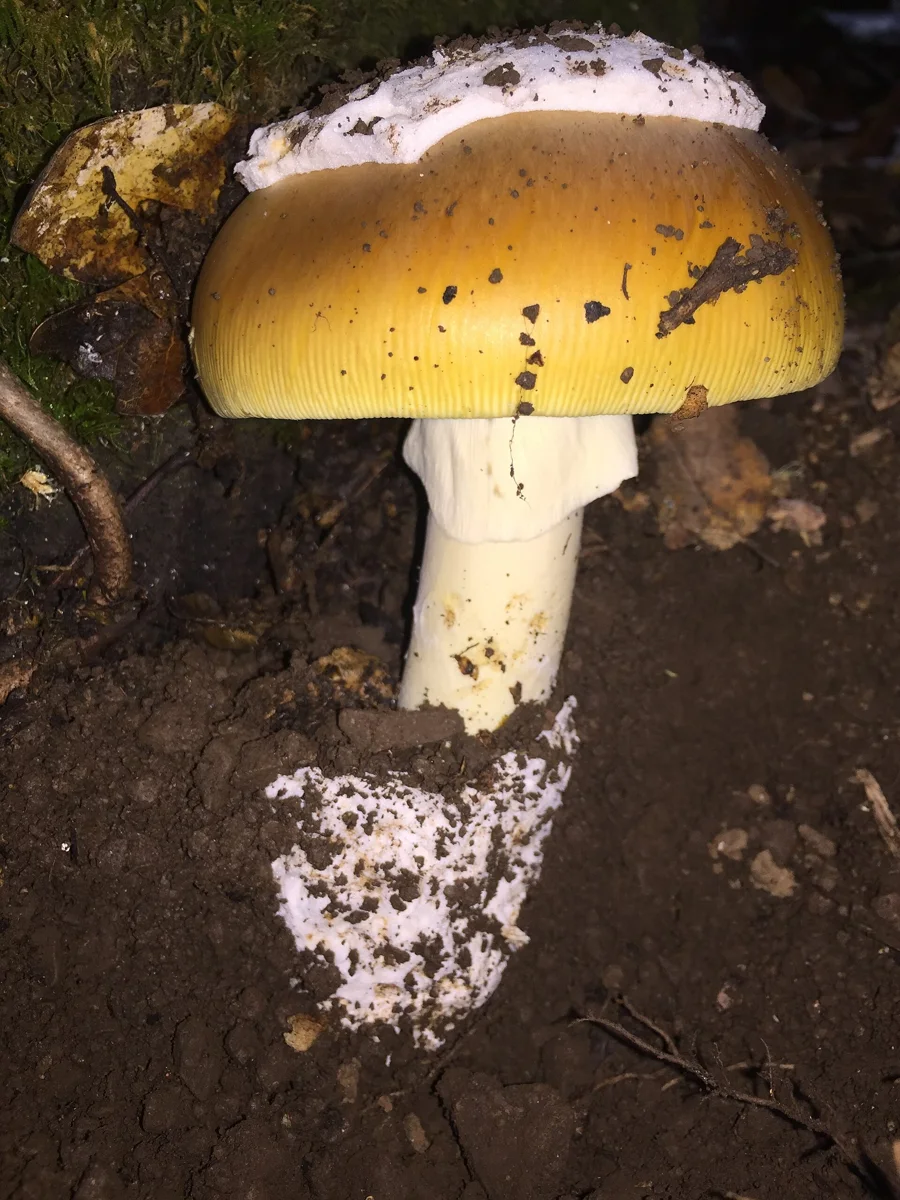
The Pacific amanita, scientifically known as Amanita calyptroderma, sports a cap that can range from 10 to 25 cm across. The surface is typically a warm orange‑brown, though occasional white specimens occur. A thick, white patch of the universal veil often drapes part of the cap, giving it a distinctive look. Beneath the cap lie close‑spaced white gills, and the stalk is cream‑colored, standing 10–20 cm tall and 2–4 cm wide. A partial veil leaves a skirt‑like annulus around the stem, and the base features a large, sack‑shaped volva. Inside the stem runs a stringy, white pith, making the stem partially hollow.
Spore Characteristics
Microscopically, the spores are white and do not react to Melzer’s reagent, a property termed inamyloid. This trait, together with the skirt‑like ring and lack of a bulbous base, places the species in the Caesareae section of the genus.
Habitat and Mycorrhizal Partners
- A. calyptroderma* thrives in coniferous forests of the western United States, fruiting from fall through spring. In the southern part of its range—central California up to Washington—it forms a mycorrhizal partnership with madrone (Arbutus menziesii). Further north, from Washington into southern Canada, it prefers Douglas‑fir (Pseudotsuga menziesii) as its host tree. These relationships help the fungus exchange nutrients with the trees, supporting forest health.
Similar Species and Safety
While seasoned foragers consider the Pacific amanita a worthwhile edible, it shares visual cues with several dangerous relatives. The notorious death cap (A. phalloides) can look similar, especially when the cap color is muted. Another edible look‑alike, A. vernicoccora, bears a yellow cap and appears in similar habitats. Because the Amanita genus includes some of the world’s most lethal mushrooms, precise identification is essential. Experts recommend confirming the presence of the sack‑like volva, the white, non‑amyloid spores, and the absence of a bulb at the stem base before considering consumption.
Culinary Use and Preparation
When correctly identified, A. calyptroderma is regarded as a good edible mushroom. Its firm flesh holds up well to sautéing, roasting, or inclusion in soups. A simple preparation involves cleaning the caps and stems with a damp cloth, slicing them, and cooking in butter or oil over medium heat until golden, then seasoning with salt, pepper, and fresh herbs. As with all wild mushrooms, it is vital to cook them thoroughly—reaching at least 74 °C (165 °F)—to break down any heat‑sensitive compounds.
Conservation and Sustainable Harvesting
The Pacific amanita relies on healthy forest ecosystems and specific tree partners. Overharvesting or habitat disturbance can reduce local populations. Ethical foragers should take only a few specimens per find, leave the mycelium undisturbed, and avoid collecting from areas showing signs of ecological stress.
From Forest Floors to Martian Soil
Understanding the biology of A. calyptroderma—its mycorrhizal ties and growth cycles—offers valuable clues for future mushroom cultivation in closed‑loop habitats, such as the experimental farms envisioned for Mars colonies.
Sources
This guide is not a foraging or identification manual. Many edible mushrooms have toxic look-alikes. Never eat a wild mushroom unless an expert has identified it in person.
This article was prepared with AI assistance from the sources listed above and approved by the Mushroom 2 Mars team before publication.