Part of the guide: Mycology: A Complete Guide to Fungi, Cultivation, and Safety
A Brief Taxonomic Journey
Alloclavaria purpurea was originally described under the name Clavaria purpurea. Recent molecular studies revealed enough genetic differences to place it in its own genus, Alloclavaria. This re‑classification reflects how DNA analysis continues to refine our understanding of fungal relationships, a process that has reshaped many groups within the kingdom Fungi.
What the Purple Fairy Club Looks Like
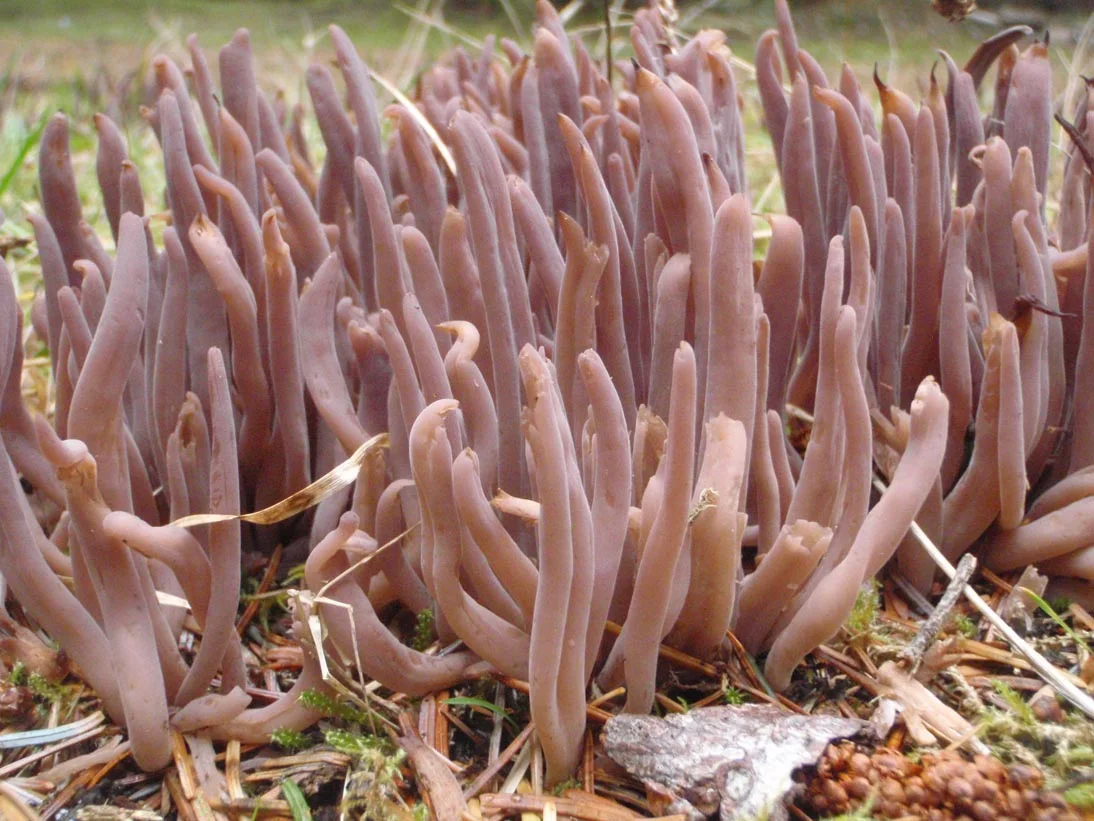
The fruiting body of Alloclavaria purpurea resembles a delicate coral. It consists of many slender, cylindrical spindles that can reach up to 12 cm (about five inches) tall, each spindle measuring 2–6 mm in thickness. Young specimens display a vivid purple or lavender hue, which gradually fades to a tan as the fungus ages. At the base, a white mycelial mat anchors the club to the forest floor, and a white spore print can be obtained by placing a mature specimen on a dark surface.
Where It Grows: Habitat and Seasonality
Alloclavaria purpurea favors spruce‑fir forests, thriving in the moist, shaded understory typical of these coniferous stands. On the West Coast of North America, fruit bodies appear from October through December, while further inland they are most common between July and October. This seasonal pattern aligns with cooler, damp conditions that support fungal growth.
Similar Species and Identification Tips
When foraging, it is important to distinguish Alloclavaria purpurea from look‑alikes such as Clavaria fumosa and Clavaria zollingeri. Key differences include: - Color: A. purpurea starts purple, whereas C. fumosa is generally gray‑brown. - Habitat: C. zollingeri often appears in hardwood forests, while A. purpurea prefers coniferous settings. - Spindle Thickness: The spindles of A. purpurea are relatively uniform and slender compared to the sometimes broader branches of its relatives.
Because many coral‑type fungi can be difficult to identify, consulting an expert or reliable field guide before handling is advisable.
Edibility: A Curious but Insignificant Treat
The purple fairy club is listed as edible, though it is considered "insubstantial" due to its delicate texture and modest size. Culinary use is rare; the fungus does not provide significant flavor or body to dishes. If one wishes to experiment, it can be lightly sautéed with butter or added to a mushroom broth for visual appeal. Important safety note: Only consume specimens that have been positively identified by a qualified mycologist, and never eat wild‑collected mushrooms without confirmation.
From Forest Floors to Future Habitats
While Alloclavaria purpurea currently inhabits Earth’s temperate forests, its modest growth requirements—cool, moist environments and a symbiotic relationship with conifer roots—make it an interesting candidate for experimental cultivation in controlled habitats. Projects like Mushroom 2 Mars explore how diverse fungi might be grown in closed ecosystems, contributing to life‑support systems for long‑duration space missions. The purple fairy club’s low biomass and simple substrate needs could inform future designs for fungal bioreactors on other planets.
Alloclavaria purpurea may not be a culinary star, but its striking color and ecological niche make it a favorite among mycologists and a potential inspiration for the next generation of space‑based mushroom cultivation.
Sources
This guide is not a foraging or identification manual. Many edible mushrooms have toxic look-alikes. Never eat a wild mushroom unless an expert has identified it in person.
This article was prepared with AI assistance from the sources listed above and approved by the Mushroom 2 Mars team before publication.