Part of the guide: Mycology: A Complete Guide to Fungi, Cultivation, and Safety
A Brush‑Like Beginning
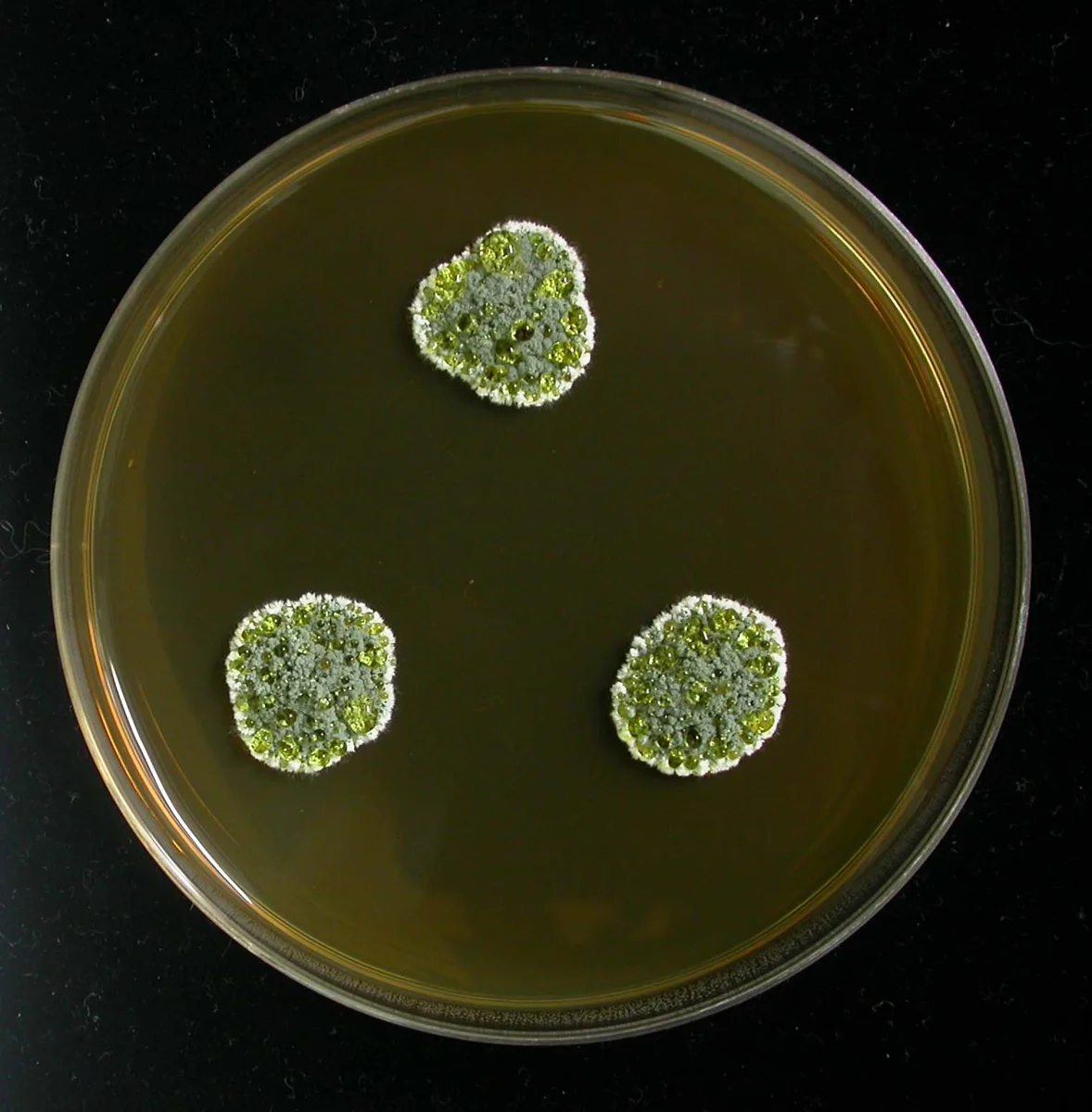
The name Penicillium comes from the Latin word for “painter’s brush,” a nod to the brush‑shaped chains of spores that crown its reproductive structures. First recorded by Johann Link in 1809, the genus was defined by three species that displayed these distinctive, tufted conidiophores. Today, scientists recognize more than 300 species, ranging from harmless saprophytes to potent producers of bioactive compounds.
How Penicillium Grows
Penicillium colonies consist of a network of colourless, multinucleate hyphae that spread through soil, decaying wood, or stored food. At the tips of many branches, specialized stalks (conidiophores) bear spherical spores called conidia. These spores are lightweight and easily carried by air currents, allowing the fungus to colonise new substrates quickly. Although the asexual cycle dominates, some species also undergo sexual reproduction, forming eight‑spored asci inside fruiting bodies.
Friends and Foes in the Kitchen
Several Penicillium species have become culinary allies. P. camemberti and its synonym P. candidum are essential for the soft‑rinded cheeses Camembert and Brie, creating the characteristic white bloom and buttery aroma. P. roqueforti and P. glaucum give blue cheeses their veins of green‑blue mold and sharp flavour, while P. chrysogenum (formerly P. notatum) is celebrated for its role in penicillin production rather than food.
Conversely, other members are notorious spoilage agents. P. expansum attacks apples and pears, generating the mycotoxin patulin, and P. verrucosum contaminates grains with ochratoxin A. In indoor environments, Penicillium spores are among the most common airborne particles, often thriving on damp building materials even at relatively low humidity.
Penicillin: A Serendipitous Breakthrough
The most famous contribution of Penicillium to humanity is the antibiotic penicillin. Discovered in 1928 by Alexander Fleming from a contaminating P. chrysogenum culture, the drug revolutionised modern medicine by targeting a broad range of bacterial infections. Research later showed that only a few strains produce clinically useful quantities, prompting the development of high‑yield industrial strains through mutagenesis and fermentation.
Modern Applications Beyond Medicine
Today, Penicillium finds roles in agriculture, biotechnology, and even space research. Certain strains are applied as biocontrol agents to protect crops from fungal pathogens, while others produce enzymes useful in food processing. In the context of extraterrestrial habitats, the genus’s ability to grow on low‑nutrient substrates and tolerate low humidity makes it a candidate for closed‑loop life‑support systems, where fungal biomass could recycle waste and generate valuable metabolites.
Looking Forward: Penicillium on the Red Planet
As the Mushroom 2 Mars project explores sustainable mushroom farming for future Martian colonies, Penicillium offers a model of resilience and utility. Its rapid growth, capacity to transform organic waste, and production of bioactive compounds could complement fungal food systems on Mars, helping to close the loop between waste and nourishment.
Sources
This article is for general information only and is not medical advice. Do not use it to diagnose or treat any condition; talk to a doctor about health questions.
This article was prepared with AI assistance from the sources listed above and approved by the Mushroom 2 Mars team before publication.