Part of the guide: Mycology: A Complete Guide to Fungi, Cultivation, and Safety
Life Cycle on the Tibetan Plateau
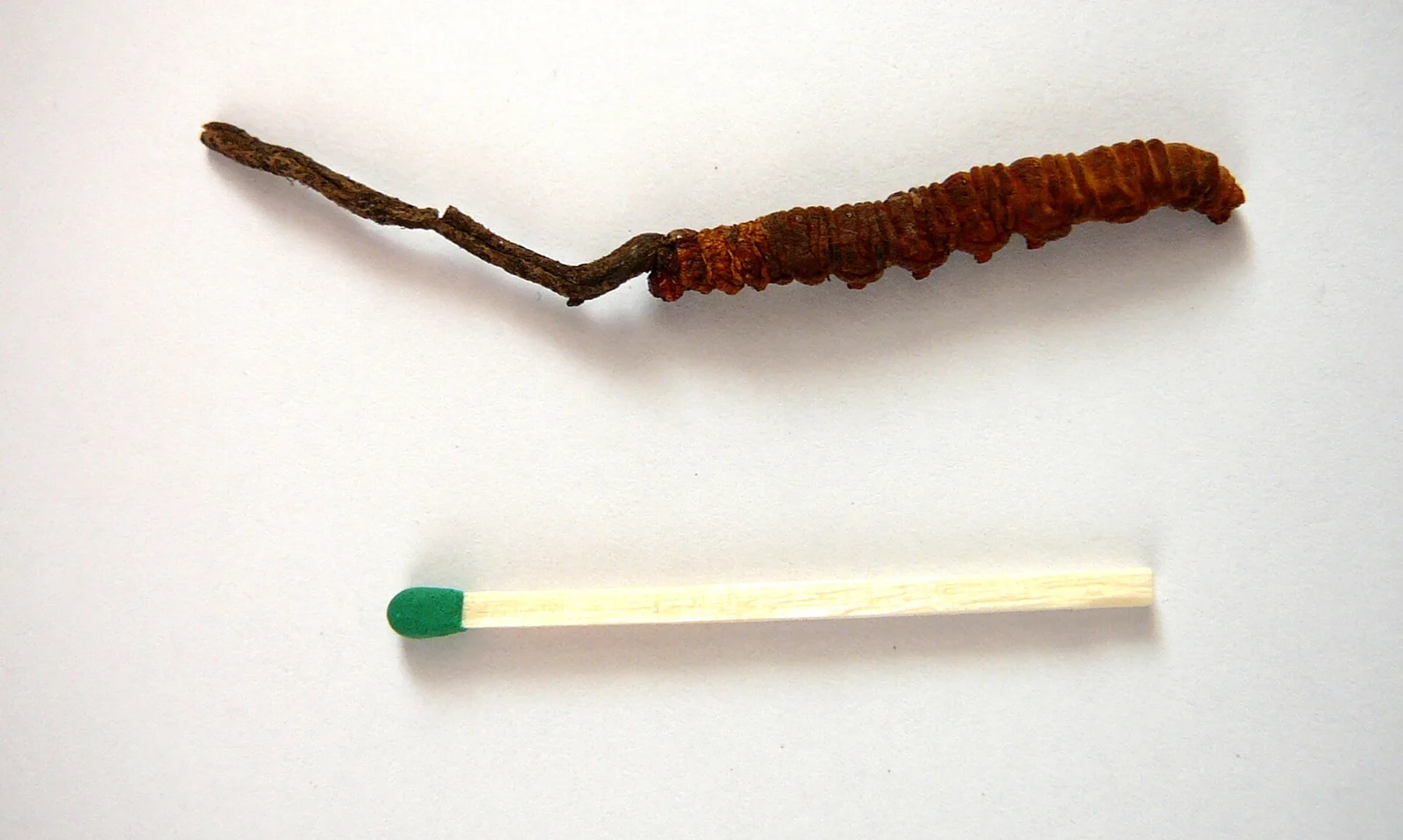
Ophiocordyceps sinensis is an insect‑pathogenic fungus that lives at 3,000–5,000 m on the Tibetan Plateau and in the Himalayas. The fungus infects the larvae of ghost moths (family Hepialidae). After the spores land on a living caterpillar, the mycelium penetrates the host, eventually killing and mummifying it. A dark‑brown to black stalk (the stroma) then erupts from the larval head, reaching 4–10 cm in length. The fruiting body consists of a slender, ridged stipe and a granular head packed with perithecia that release long, multiseptate ascospores (5–12 µm). This distinctive morphology—especially the fused endosclerotium inside the caterpillar and the tough, dark stroma—helps separate O. sinensis from other Cordyceps species, which often have brightly colored, fleshy stromata and produce part‑spores.
Traditional Names and Cultural Significance
The fungus is best known by its Tibetan name yartsa‑gunbu ("summer grass, winter worm"), a phrase first recorded in the 15th century. In Chinese it is called dōng chóng xià cǎo ("winter worm, summer grass"), and in Nepali it appears as yarsagumba. These names reflect the striking seasonal contrast: the host insect lives underground in winter, while the fungal stalk emerges in the summer. Historically, the intact fungus‑caterpillar complex has been prized in Tibetan and Chinese medicine as a status symbol and an aphrodisiac, though scientific evidence for such effects is limited.
Harvest, Safety, and Regulation
Wild harvesters collect the whole fungus‑caterpillar body by hand, often in remote mountain villages. Because the fungus accumulates heavy metals from its environment, many natural specimens contain elevated arsenic and other toxins. Recognizing the health risk, China’s State Administration for Market Regulation has required strict licensing for sales since 2016. Consumers should look for reputable suppliers that test for contaminants; unregulated products may pose toxicity concerns.
Cultivation Challenges and Research
Unlike many edible fungi, O. sinensis cannot yet be fruiting‑body cultivated at commercial scale. Scientists can grow the mycelial phase in liquid culture, which is used for research and some nutraceutical products, but the complex interaction with the moth larva that triggers stalk formation remains elusive. Ongoing studies aim to decipher the genetic and environmental cues needed for full development, a step that could reduce pressure on wild populations.
Conservation Status
Overharvesting, habitat loss, and climate change have driven O. sinensis toward endangerment in China. The species is listed as threatened, prompting calls for sustainable harvest practices and habitat protection. Conservationists stress the importance of monitoring wild stocks, supporting community‑based management, and investing in mycelial research to eventually produce cultivated fruiting bodies.
From Earth to Mars: Why It Matters for Mushroom Farming
Understanding the extreme‑altitude ecology of O. sinensis offers clues for growing fungi in low‑gravity, low‑nutrient environments—knowledge that could help future mushroom farms on Mars, where resources are scarce and resilience is key.
Sources
This article is for general information only and is not medical advice. Do not use it to diagnose or treat any condition; talk to a doctor about health questions.
This article was prepared with AI assistance from the sources listed above and approved by the Mushroom 2 Mars team before publication.