A 9‑century‑old “guest star" in Cassiopeia
In the summer of 1181 CE, Chinese and Japanese sky‑watchers recorded a bright, transient object in the constellation Cassiopeia. Contemporary chronicles describe a “guest star” that lingered for about six months, outshining most stars before fading away. At the time the observers had no concept of supernovae; they simply noted an unusual point of light. Modern astronomers now link those records to a single stellar explosion whose remnants we can still study today.
Identifying the culprit: Pa 30
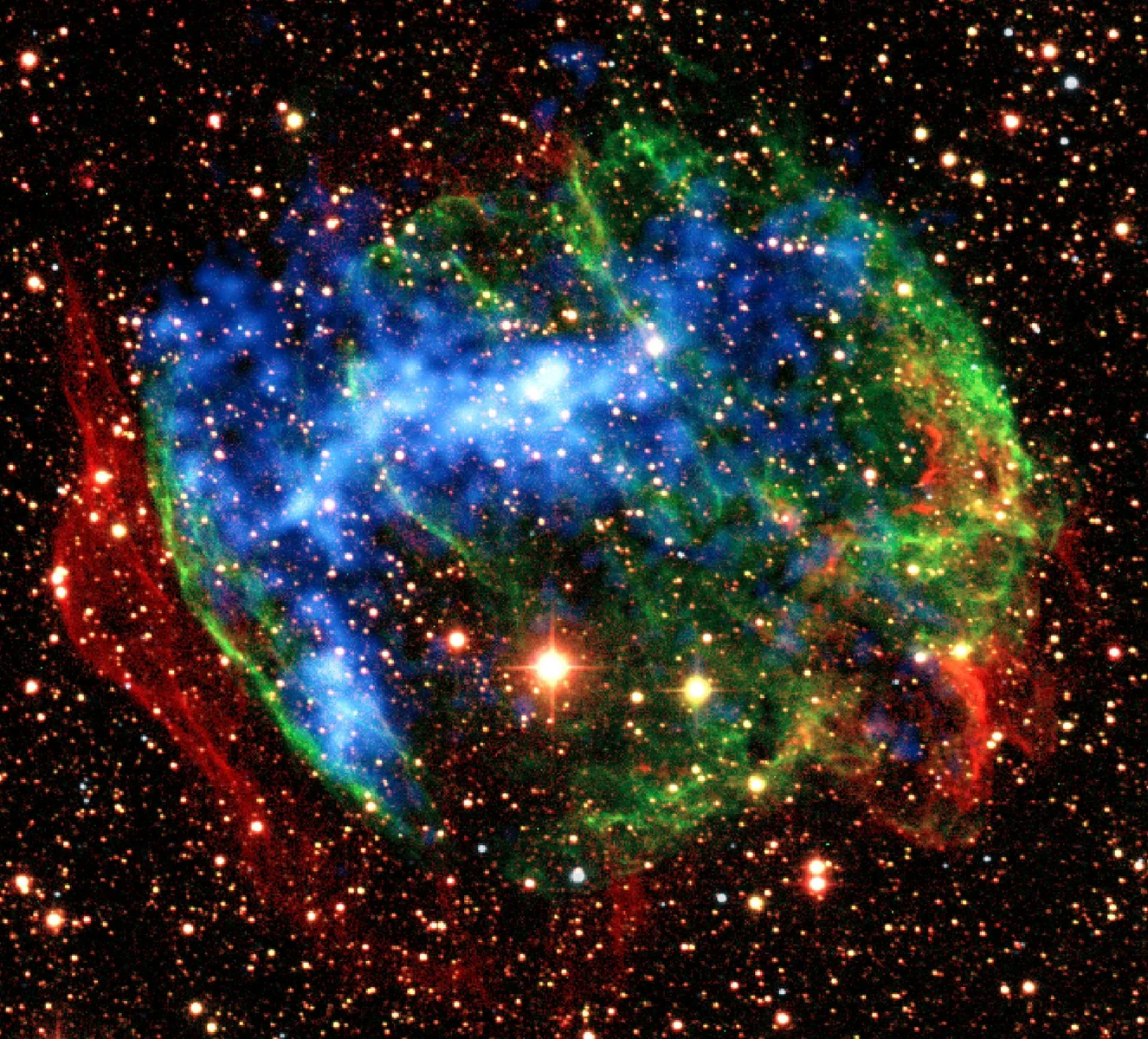
The object left behind by the 1181 event is known as Pa 30 (also catalogued as IRAS 00500+6713). Detailed analyses suggest the explosion was not a classic core‑collapse supernova from a massive star, but rather a Type Iax event—likely the violent merger of two white dwarfs. Such mergers can produce a “failed detonation” that leaves a surviving white dwarf at the heart of the nebula, a scenario that matches Pa 30’s observed properties.
Gemini North’s breakthrough: knots in the filaments
A team led by Tim Cunningham (University of Warwick) used the Gemini North telescope on Maunakea, equipped with the Gemini Multi‑Object Spectrograph (GMOS), to obtain deep, narrow‑band images of Pa 30. By isolating the light from singly‑ionized sulfur ([S II] emission), the observers revealed an order of magnitude more filamentary structure than previous images that relied on doubly‑ionized oxygen ([O III]).
The new pictures show that the filaments are not smooth, radial streaks. Instead, they consist of cascading knots—compact clumps of gas that trace variations in density and temperature within the surrounding circumstellar medium. As the supernova blast wave slammed into this uneven material, it sculpted the ejecta into the intricate web now visible.
Why the knots matter
The knotty morphology provides a direct probe of the environment into which the explosion expanded. Differences in density cause shock fronts to slow or speed up, creating the observed clumps. By measuring the brightness and spectral signatures of individual knots, astronomers can infer the chemical composition of the ejected material and the physical conditions (temperature, ionization state) in the nebula.
These details also help constrain theoretical models of Type Iax supernovae. Simulations must now reproduce not only the overall size and expansion speed of Pa 30, but also the fine‑scale knot distribution revealed by the [S II] images. In turn, this improves our understanding of how white‑dwarf mergers contribute to the chemical enrichment of the Milky Way.
An unusual central star
One of Pa 30’s most striking features is the presence of a hot, massive white dwarf at the nebula’s exact center. Spectroscopy indicates a temperature around 200,000 °C and a mass estimated near 1.5 M☉—slightly above the canonical Chandrasekhar limit of 1.4 M☉. Moreover, the star drives ultra‑fast stellar winds reaching roughly 16,000 km s⁻¹, the highest velocities recorded for a white dwarf.
In many supernova remnants, the surviving compact object receives a “kick” that displaces it from the nebular centre. Pa 30’s central star, however, sits precisely at the nebula’s midpoint, suggesting either a very modest recoil or a fortuitous alignment. This rarity offers a valuable test case for explosion models that predict asymmetric detonations and resulting stellar motions.
Looking ahead: future observations
Cunningham and collaborators note that even higher‑resolution imaging—particularly with the Hubble Space Telescope—could sharpen the view of individual knots and possibly uncover even finer structure. Complementary data from X‑ray observatories would also help map the hot plasma interior, while radio measurements could trace the interaction of the fast wind with surrounding gas.
The team emphasizes that Pa 30 may not be unique. Historical records from other cultures hint at additional ancient supernovae, and many could still be hidden in the dusty regions of our galaxy. As survey capabilities improve, astronomers hope to uncover more Type Iax remnants, expanding the sample size needed to test merger‑driven explosion theories.
Connecting the dots to Mars
Understanding how stellar debris mixes into the interstellar medium informs models of how organic‑rich material—like the fungi we cultivate on Earth—might be distributed across the galaxy, eventually reaching future habitats on Mars.
Sources
This article was prepared with AI assistance from the sources listed above and approved by the Mushroom 2 Mars team before publication.