A Calm Spiral with a Hidden Twist
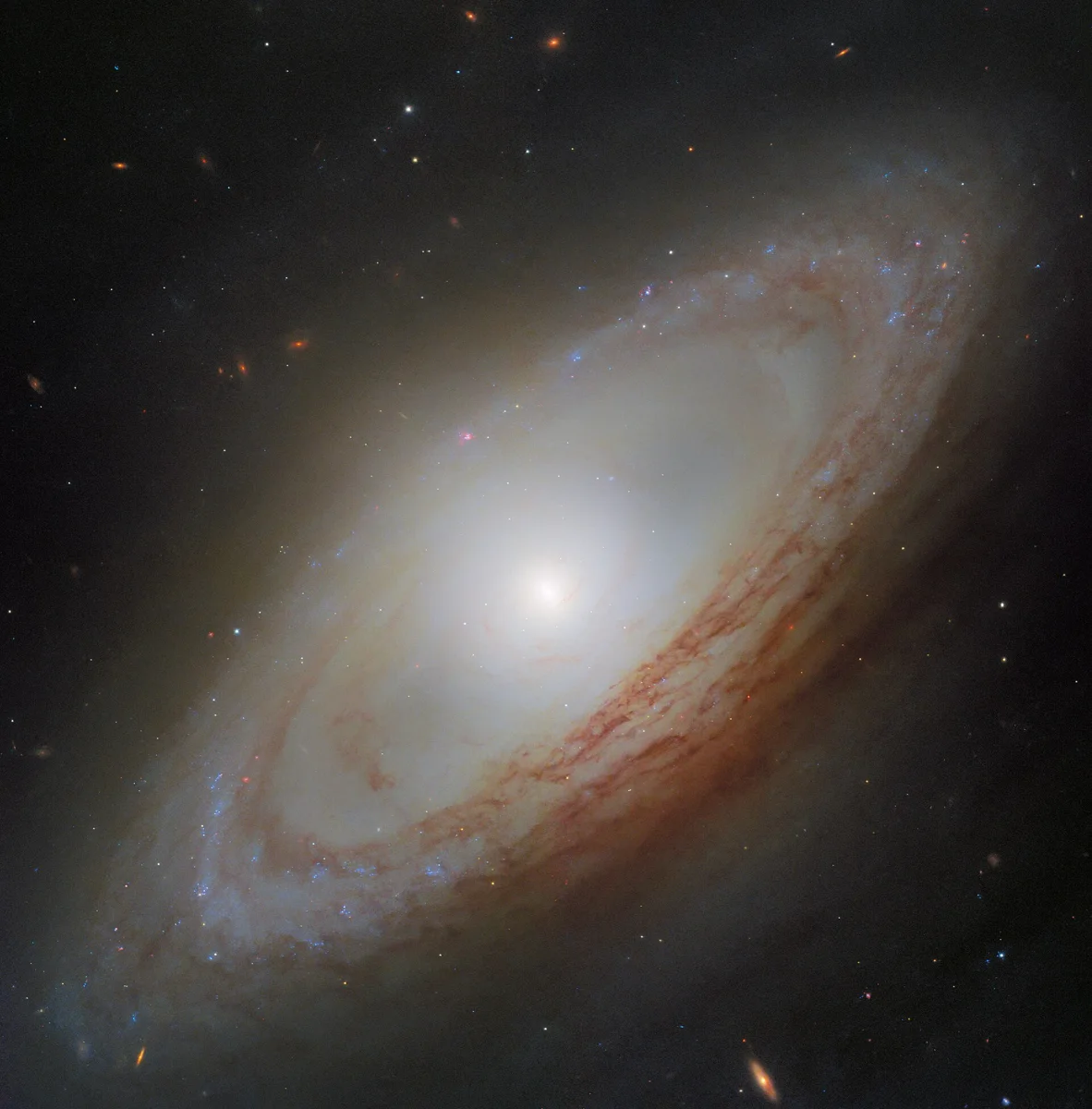
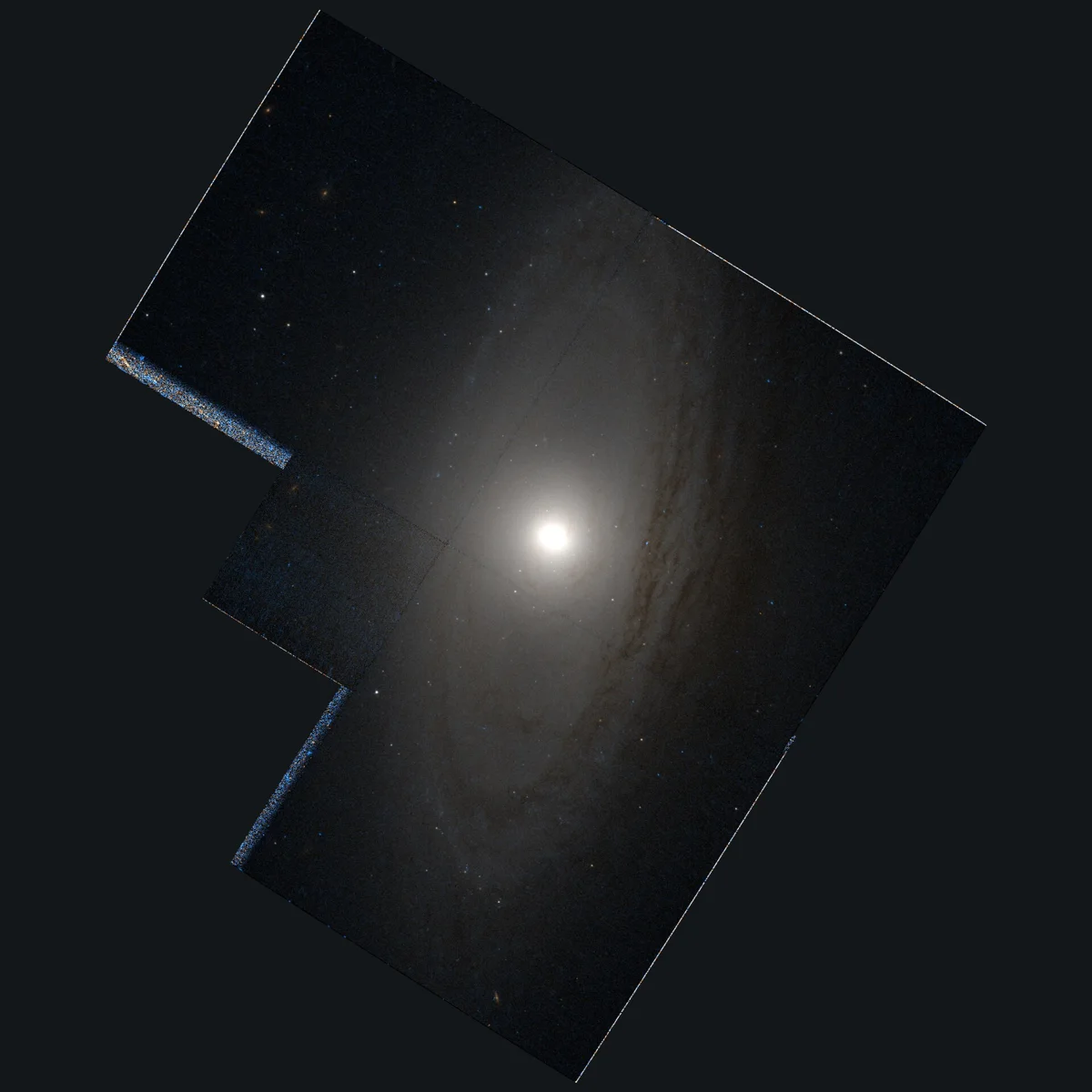
The Hubble image of NGC 4698 looks like a textbook spiral galaxy – a thin, star‑filled disc wrapped around a glowing central bulge. It sits about 55 million light‑years away in the constellation Virgo, a member of the nearby Virgo Cluster that contains over a thousand galaxies bound by gravity.
The Classic Spiral Structure
Like our Milky Way, NGC 4698 has bright blue star‑forming regions along its arms and a thin disc of gas and dust. The diffuse, off‑white glow of the bulge comes from older, cooler stars that crowd the galaxy’s centre. These stars orbit a supermassive black hole millions of times more massive than the Sun, which appears to be actively accreting gas.
The Perpendicular Bulge: What Makes It Odd
What sets NGC 4698 apart is the orientation of its bulge. Instead of aligning with the disc, the bulge extends above and below the plane at roughly a right angle. In the Hubble picture, a faint glow of the bulge can be seen peeking out of the dusty disc. Even more striking, the stars and gas closest to the centre rotate perpendicular to the outer disc—a clear sign that the galaxy is “out of sync.”
How an External Gas Inflow Can Tilt a Galaxy
Astronomers think the misalignment originates from material that fell into the galaxy from outside. If a stream of gas entered at an angle, it could settle into a new, tilted disc around the central black hole. Over time, stars forming from that gas would inherit the off‑plane rotation, creating the observed perpendicular bulge.
Evidence of a Minor Merger
Further clues point to a past minor merger. Radio observations reveal a short tail of hydrogen gas streaming from one side of NGC 4698, a typical signature of a small galaxy being stripped as it merges. Such an event would deliver fresh gas at an odd angle, providing the raw material for the tilted inner disc.
Why This Matters for Galaxy Evolution
NGC 4698 joins a very small group of spirals with orthogonal bulges, making it a valuable laboratory for testing models of galaxy growth. Studying how external gas accretion and minor mergers reshape a galaxy’s rotation helps astronomers understand the diverse structures seen across the universe.
Looking Ahead: From Spirals to Martian Greenhouses
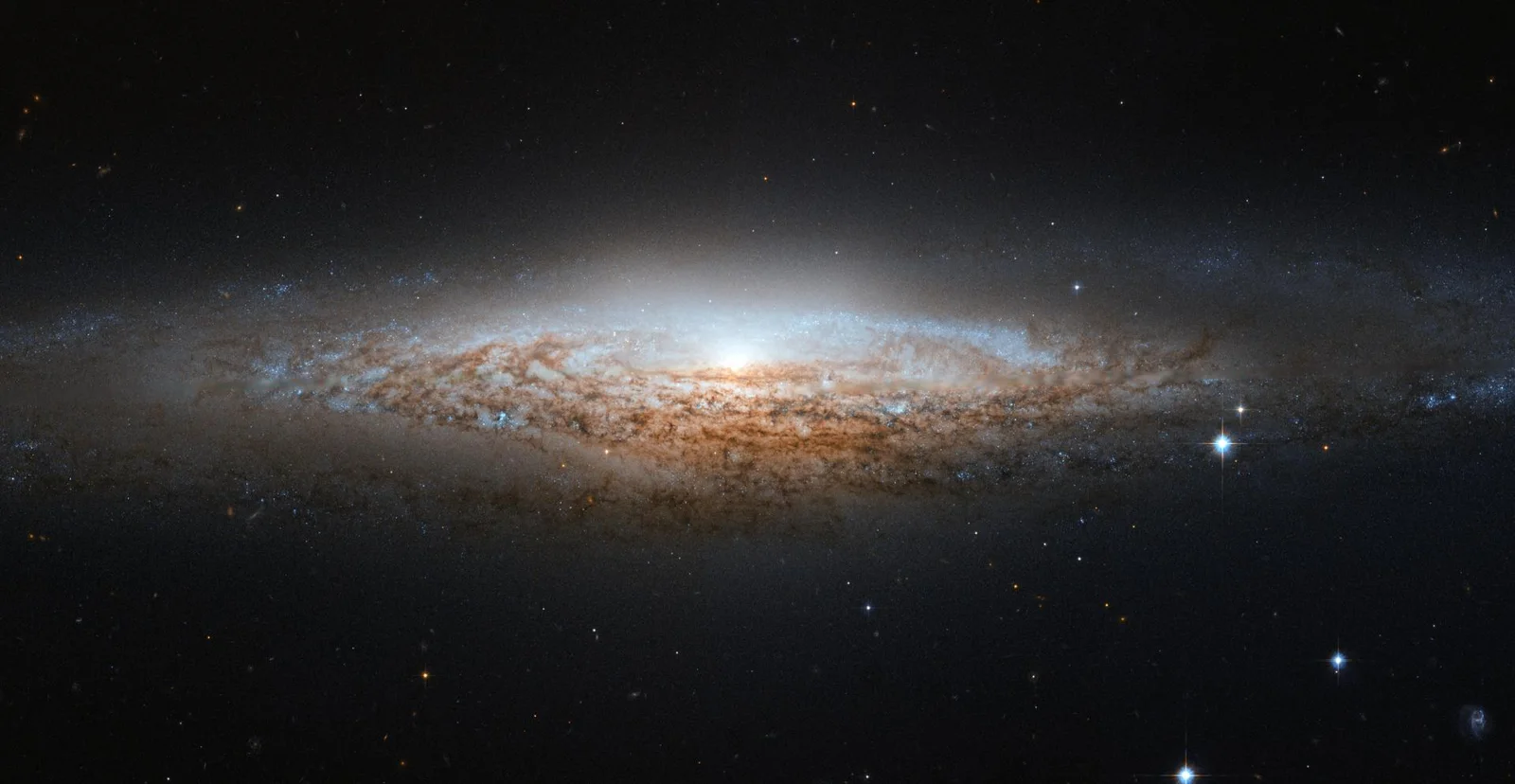
Understanding how galaxies reorganize their material may seem far from mushroom farming, but the same principles of resource acquisition and adaptation apply when we design self‑sustaining habitats on Mars. The next time we send spores to the Red Planet, we’ll be borrowing a lesson from a galaxy that learned to grow in a new direction.
Sources
This article was prepared with AI assistance from the sources listed above and approved by the Mushroom 2 Mars team before publication.