A Cosmic Hall of Mirrors
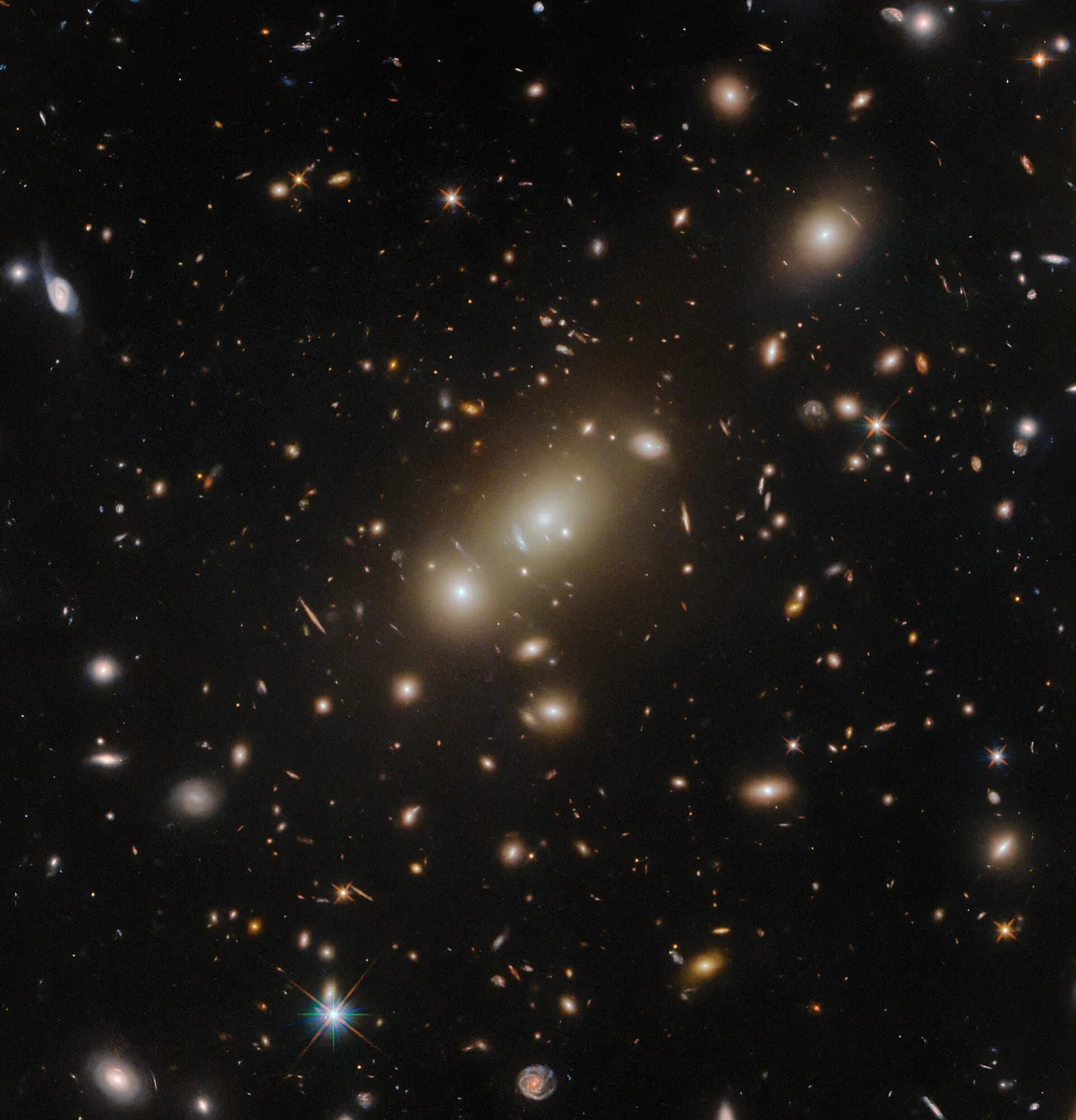
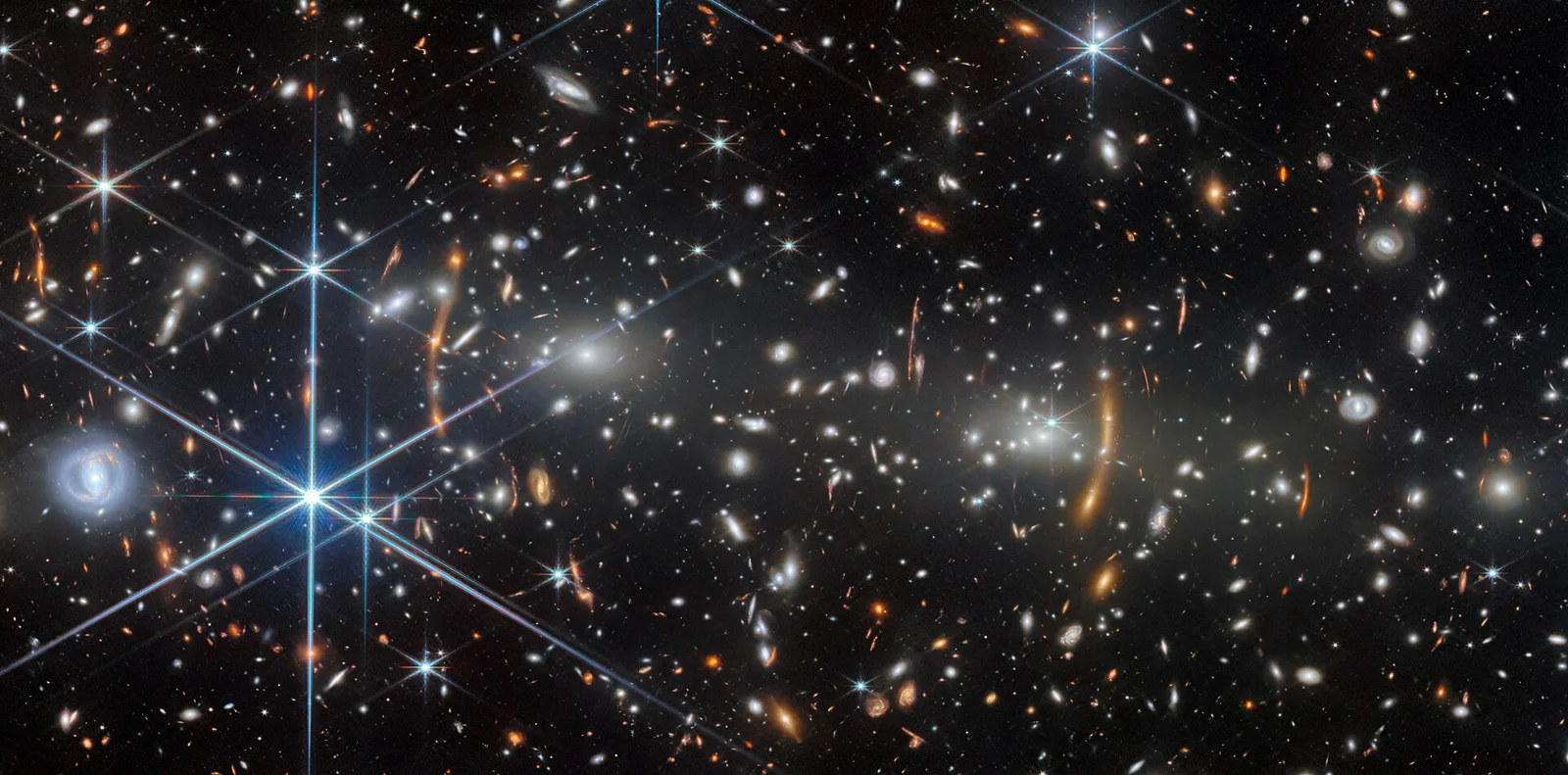
The James Webb Space Telescope’s latest picture‑of‑the‑month shows a galaxy cluster that acts like a giant mirror, stretching and duplicating the light of far‑away galaxies. The cluster, named MACS J0454.1‑0300, sits so far away that the photons we see left it when the Universe was roughly eight billion years old. Its massive gravity bends the paths of background light, creating the spectacular, distorted arcs that dominate the image.
Gravitational Lensing Explained
When a massive object such as a galaxy cluster sits between us and a more distant source, its gravity warps spacetime and bends the light that passes nearby. This phenomenon, called gravitational lensing, works like a natural telescope: it magnifies and splits the background object into multiple images. In the Webb picture, the orange‑tinted arcs are not part of the cluster at all; they are distant galaxies whose light has been stretched into bright, smeared shapes by the cluster’s gravity.
Peering Back to the First Billion Years
The lensed background includes several remarkable objects: - A group of galaxies that existed about 2 billion years after the Big Bang. Their images appear as a tangled set of arcs, indicating a merger that sparked a burst of star formation. - A single galaxy seen when the Universe was only 800 million years old. Even at this extreme distance, Webb’s sensitivity to red light reveals its faint glow. These snapshots let astronomers study the conditions of the early cosmos—something that would be impossible without the natural magnification provided by MACS J0454.1‑0300.
Tiny Star‑Forming Knots Amplified
Within the stretched arcs, Webb resolves bright “knots” as small as 5 light‑years across. Because the lensing magnifies them by factors exceeding 300×, astronomers can examine star‑forming regions that would otherwise be invisible. Such detail helps researchers measure the rate of early star birth and the composition of primordial gas clouds.
From Hubble to Webb: A Leap in Sensitivity
A Hubble Space Telescope image of the same cluster, released in 2014, captured the massive elliptical galaxies but missed the multitude of faint, red‑shifted objects now visible. Webb’s infrared instruments are far more adept at detecting the stretched, reddened light of distant galaxies, unveiling hundreds of previously hidden sources. Comparing the two images underscores how advances in detector technology expand our view of the Universe.
Why This Matters for Future Exploration
Studying gravitational lenses does more than satisfy curiosity about ancient galaxies. The technique refines our understanding of dark matter distribution within clusters, informs models of cosmic expansion, and guides the search for the most distant objects—potentially even the first luminous structures that seeded galaxy formation. As we continue to map these natural telescopes, we sharpen the tools needed for future missions that may one day travel to the outskirts of our own solar system and beyond.
And just as Webb uses cosmic mirrors to see farther, our own mushroom farms on Mars will rely on clever tricks—like reflective habitats—to grow food in a tiny, distant world.
Sources
This article was prepared with AI assistance from the sources listed above and approved by the Mushroom 2 Mars team before publication.