From Seed to Spaceflight
The first biological payloads launched into space were seeds. In July 1946, a U.S. V‑2 rocket carried specially bred seed strains to an altitude of 134 km, though those samples were never recovered. Later that month, maize seeds were successfully retrieved after a sub‑orbital flight, followed by rye and cotton. These early experiments, led by Harvard and the Naval Research Laboratory, focused on how radiation affected living tissue rather than on cultivation itself. By the mid‑1960s, Soviet missions such as Kosmos 110 included moisturized lettuce, cabbage, and bean seeds that germinated after returning to Earth, showing that plants could survive the launch and brief exposure to micro‑gravity.
The First Space Gardens
The 1970s brought a symbolic gesture: 500 tree seeds of species like loblolly pine and Douglas fir flew around the Moon on Apollo 14 and were later planted on Earth as “Moon trees.” While the trees showed no genetic changes, the mission sparked public imagination about forests in space. The real technical work began on space stations. In 1982, Soviet scientists grew the model plant Arabidopsis thaliana aboard Salyut 7 using a compact micro‑greenhouse. This marked the transition from short‑term germination tests to sustained growth cycles in a controlled, pressurized environment.
Experiments on the International Space Station
By 2010, the International Space Station (ISS) had hosted more than 20 plant‑growth experiments. NASA’s “Veggie” system and ESA’s European Modular Cultivation System (EMCS) turned portions of the station into miniature greenhouses. Researchers investigated how micro‑gravity influences root development, nutrient uptake, and phototropism. Notably, the Gravi‑1 (2008) and Gravi‑2 (2014) studies placed hundreds of lentil seedlings in a centrifuge that simulated varying gravity levels. The results revealed that even low gravity triggers calcium‑based signaling pathways that guide roots toward the perceived direction of pull.
Overcoming the Absence of Gravity
Gravity on Earth directs roots downward and shoots upward, a process called gravitropism. In space, the lack of this cue complicates water distribution, soil anchoring, and nutrient flow. Scientists address these issues by using porous growth media, capillary‑based watering systems, and LED lighting that mimics sunlight while providing precise spectra. Experiments with Chinese cabbage (Brassica rapa) in 2017 demonstrated that astronauts could harvest and eat fresh greens, confirming that edible crops can be produced safely on orbit.
Why Plants Matter for Long‑Duration Missions
Beyond nutrition, plants offer psychological comfort, air revitalization, and humidity control. They absorb carbon dioxide and release oxygen, helping maintain cabin atmosphere. A 2024 review by NASA highlighted that a crew of four on a three‑year Mars mission would need roughly 10–11 tonnes of food, making on‑board cultivation far more economical than resupplying from Earth, where each kilogram costs tens of thousands of dollars to launch. Moreover, tending to living organisms can reduce stress and improve crew morale during the isolation of deep‑space travel.
Looking Ahead: From ISS Gardens to Martian Farms
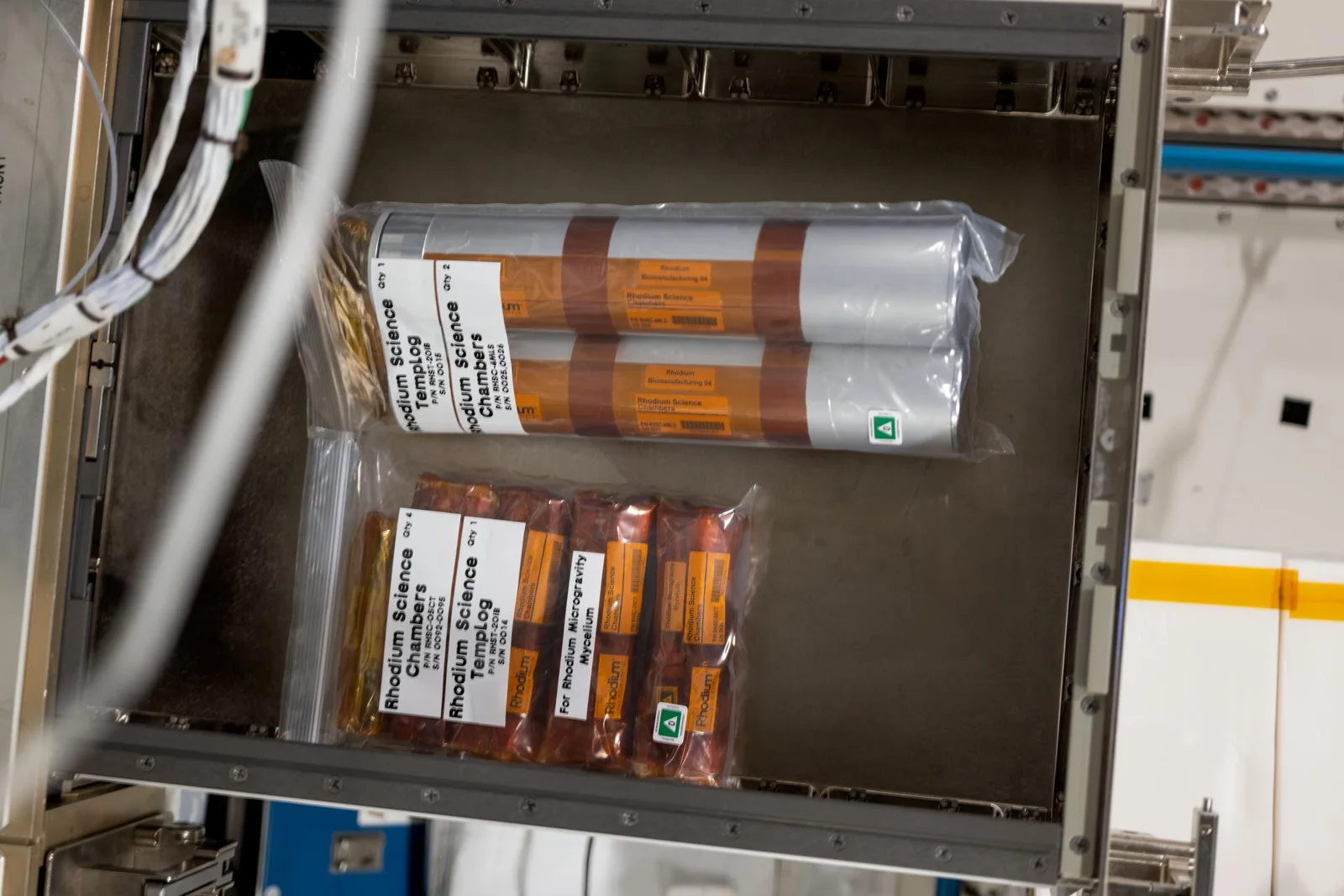
Future habitats on the Moon or Mars will need to close the loop on water, nutrients, and waste. Researchers are testing closed‑loop bioregenerative systems that combine plant growth with microbial composting, aiming for self‑sustaining ecosystems. While mushrooms are not covered in this article, the same principles of controlled environment agriculture apply, and many teams envision mixed‑crop modules that include both leafy greens and fungi to maximize nutritional diversity for the journey to the Red Planet.
The dream of growing plants beyond Earth continues to turn science fiction into laboratory reality, bringing us one step closer to a thriving off‑world garden.
Sources
This article was prepared with AI assistance from the sources listed above and approved by the Mushroom 2 Mars team before publication.