Part of the guide: Mushrooms: A Complete Guide to Identification, Cooking, and Cultivation
A recent addition to science
In 2014 mycologists formally introduced Boletus rubriceps as a new species, despite earlier field guides lumping it with the well‑known porcini (Boletus edulis) or the pine‑associated B. pinophilus. DNA sequencing revealed enough genetic divergence to merit its own name, separating it from look‑alikes that share a similar stout stem and sponge‑like pore surface.
Where it grows
This bolete thrives in the high‑elevation forests of the southwestern United States and the southern Rockies. It forms mycorrhizal partnerships primarily with spruce, pine, and occasionally fir trees, exchanging nutrients for photosynthates. The fruiting season typically peaks in late summer through early autumn, when moist summer monsoons provide the right conditions for the caps to swell.
What it looks like
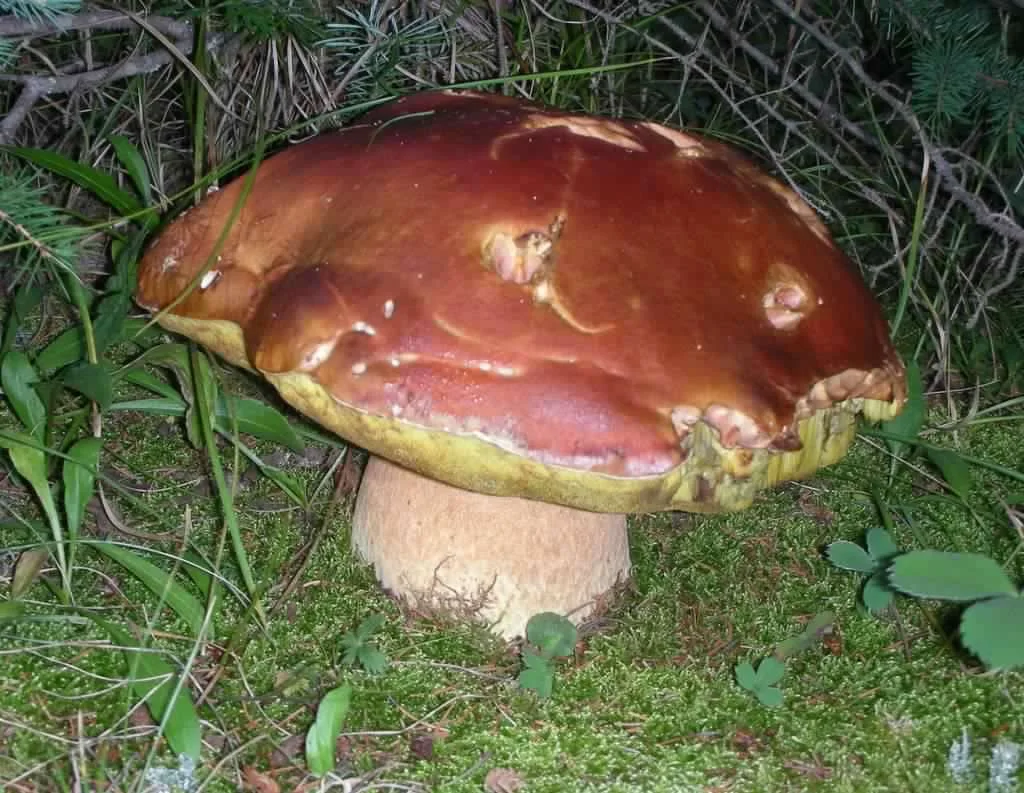
The most eye‑catching feature is the cap, which ranges from deep ruby to a lighter reddish‑brown, giving the species its Latin epithet—rubriceps meaning “red head.” The cap surface is smooth and often slightly viscid when damp. Underneath, the pores start pale and turn a richer orange‑brown as the mushroom matures. The stipe is thick, white to cream, and may show a faint reticulation near the top. A firm, dense flesh that does not change color when cut is another reliable field clue.
Edibility and culinary uses
Foragers and chefs prize the ruby‑capped king bolete for its nutty, slightly sweet flavor and meaty texture. Markets in Arizona, New Mexico, and Colorado regularly stock fresh specimens, and several upscale restaurants feature them in sauces, risottos, and sautéed dishes. When cooking, it is best to clean the caps with a damp brush, slice them evenly, and sauté in butter or oil until golden, then finish with herbs or a splash of wine. The pores should be kept intact during the first high‑heat step to preserve the mushroom’s natural juices.
Note: While B. rubriceps is considered safe to eat, always rely on expert identification before consuming any wild mushroom. Mistaking it for a toxic look‑alike can have serious consequences.
Potential for cultivation
Although most bolete species are difficult to grow commercially because they depend on a tree partner, recent advances in controlled mycorrhizal inoculation are promising. Researchers are experimenting with inoculating spruce seedlings with B. rubriceps spores, aiming to produce a sustainable harvest that could reduce pressure on wild populations. Successful cultivation would also open doors for integrating this prized mushroom into closed‑loop agricultural systems—an idea that aligns with the Mushroom 2 Mars vision of growing fungi in extraterrestrial habitats.
Conservation considerations
Because B. rubriceps prefers mature conifer forests, habitat loss from logging, wildfire, and climate shifts threatens its long‑term abundance. Ethical foraging practices—such as taking only a portion of a local find and leaving the mycelial network intact—help maintain healthy populations. Supporting forest stewardship programs in the Rockies also contributes to preserving the ecological niche this bolete occupies.
From the Rockies to the Red Planet
The striking red cap of Boletus rubriceps not only makes it a culinary star on Earth but also a symbolic candidate for future Martian farms. Its ability to form symbiotic relationships with trees suggests it could thrive in bio‑regenerative life‑support systems that combine plant growth with fungal nutrition, a concept central to the Mushroom 2 Mars project.
All facts are drawn from the Wikipedia entry on Boletus rubriceps and related mycological literature.
Sources
This guide is not a foraging or identification manual. Many edible mushrooms have toxic look-alikes. Never eat a wild mushroom unless an expert has identified it in person.
This article was prepared with AI assistance from the sources listed above and approved by the Mushroom 2 Mars team before publication.