Part of the guide: Mushrooms: A Complete Guide to Identification, Cooking, and Cultivation
A Brief Taxonomic Journey
The pine bolete, Boletus pinophilus, earned its current scientific name in 1973 after a series of re‑classifications. Italian naturalist Carlo Vittadini first noted it as a variety of the common porcini in 1835, and later mycologists elevated it to species rank. Modern DNA work confirms that it is genetically distinct from its close relative Boletus edulis, though they share a common ancestor about ten million years ago. In North America, populations once thought to be B. pinophilus have been split into separate species such as B. rex‑veris and B. pseudopinophilus.
What It Looks Like in the Forest
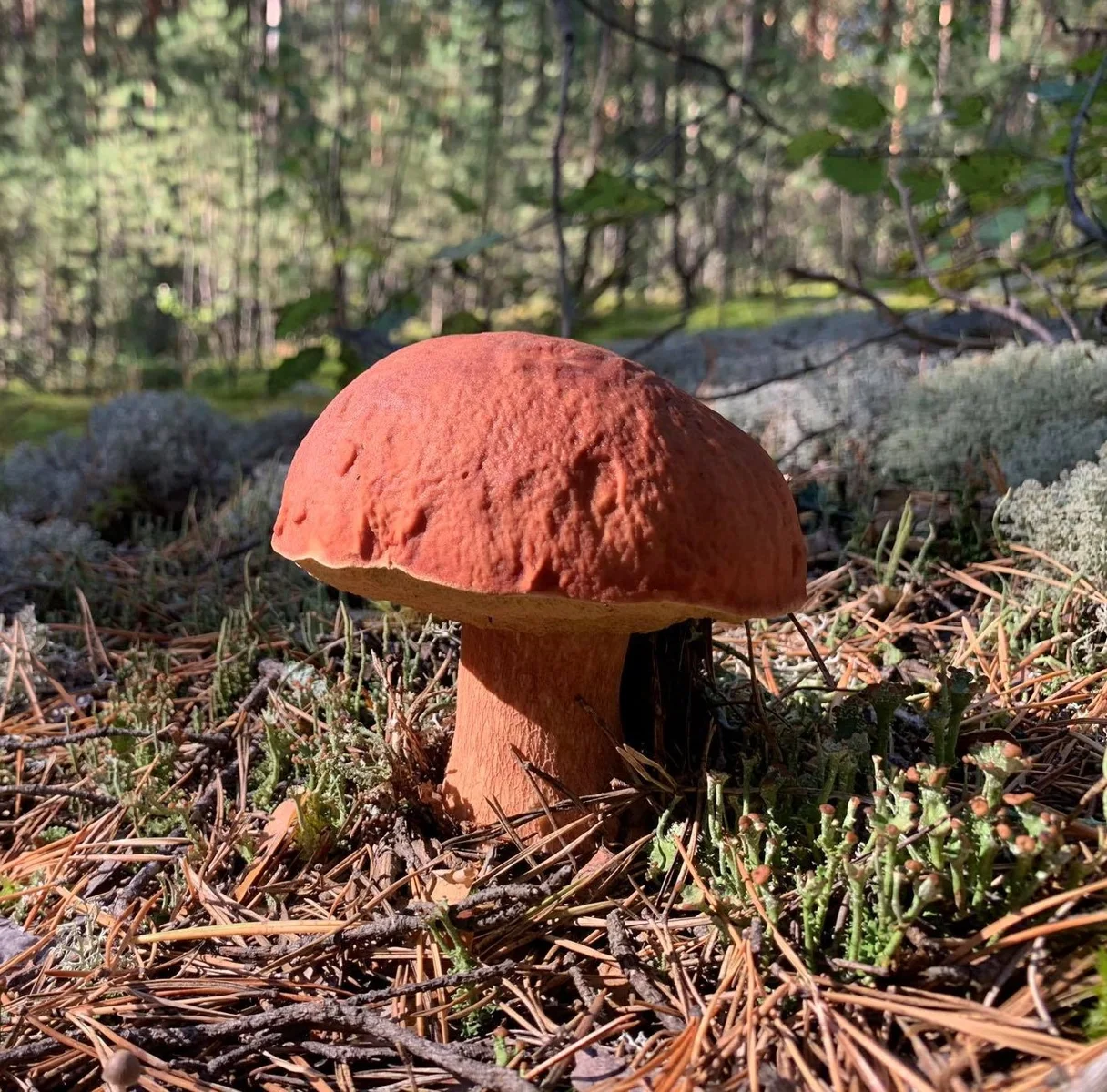
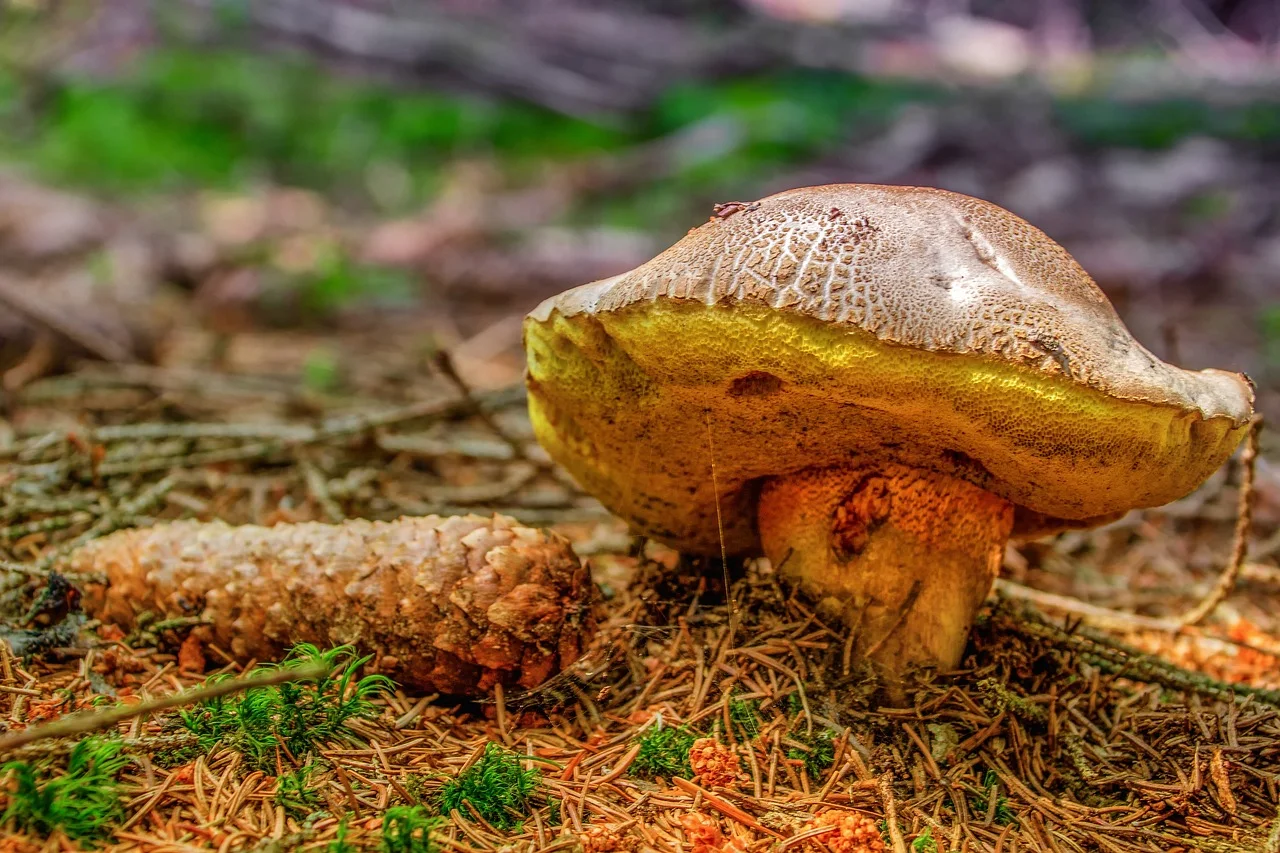
B. pinophilus produces a large, convex cap that can reach up to 40 cm in diameter. The dry, matte surface ranges from maroon to chocolate‑brown with a reddish hue, sometimes showing a pale pink flush when young. The stout, bulbous stipe is notable for its coarse orange‑red reticulation – a net‑like pattern that is finer in many other boletes. Under the cap lie tiny pores that start white, turn yellow, and finally become olive‑brown as the mushroom matures. A spore print is olive‑brown, and microscopic spores are smooth, cylindric‑ellipsoid, measuring about 15.5–20 µm by 4.5–5.5 µm.
Where It Grows: Habitat and Range
The pine bolete forms ectomycorrhizal partnerships with a variety of conifers, especially pines such as Scots pine (Pinus sylvestris), stone pine, and Monterey pine. It also associates with European silver fir and spruce, thriving on acidic, sandy soils typical of coniferous forests. Geographically, it spans temperate Europe and western Asia, appearing in Britain (more common in Scotland), France, parts of Russia, and extending into Asia Minor. Isolated reports exist from pine plantations in North America, Chile, South Africa, and New Zealand, though many of these likely represent distinct but related species.
Edibility and Culinary Tips
B. pinophilus is considered a good edible mushroom. Its firm flesh holds up well to sautéing, roasting, or simmering in soups. When preparing, trim the stipe’s lower portion if it is overly fibrous, and brush away any soil. Slice the caps uniformly to ensure even cooking. A simple preparation: 1. Heat a skillet with a splash of oil or butter over medium heat. 2. Add sliced bolete, season lightly with salt, and cook 5‑7 minutes until golden. 3. Finish with fresh herbs such as thyme or parsley and a splash of white wine or vegetable broth. The mushroom’s nutty, slightly sweet flavor pairs nicely with pasta, risotto, or grain bowls. As with all wild fungi, only consume specimens that have been positively identified by an expert; never eat mushrooms collected without reliable confirmation.
Safe Identification in the Field
Identifying B. pinophilus relies on several key features: - Cap colour: maroon to chocolate‑brown with possible pinkish tones when young. - Stipe reticulation: coarse orange‑red netting, more pronounced than in typical porcini. - Pore colour change: white → yellow → olive‑brown with age. - Habitat: under pine or related conifers on sandy, acidic soil. Because several boletes look similar, it is wise to compare with a trusted field guide and, when possible, confirm with a local mycological society. Never rely on a single characteristic; a combination of cap, stipe, pore, and ecological clues provides the most reliable identification.
From Forest to Future: Growing Boletes on Mars
The symbiotic nature of B. pinophilus—binding its mycelium to tree roots—offers a model for closed‑loop life‑support systems. Researchers envision using mycorrhizal fungi to help recycle nutrients and support plant growth in extraterrestrial habitats. While the pine bolete itself needs pine hosts, its underlying biology helps inform how fungal partners could be engineered for sustainable food production on Mars.
Sources
This guide is not a foraging or identification manual. Many edible mushrooms have toxic look-alikes. Never eat a wild mushroom unless an expert has identified it in person.
This article was prepared with AI assistance from the sources listed above and approved by the Mushroom 2 Mars team before publication.