Part of the guide: Mushrooms: A Complete Guide to Identification, Cooking, and Cultivation
The Tiny Battle: Fungi vs. Nematodes
Nematodes, often called roundworms, are among the most abundant animals on Earth, living in soils, fresh water, and even extreme habitats. Their tiny size (usually under 1 mm) makes them both prey and partners for many soil microbes. Fungi, in particular, have evolved two contrasting strategies: some develop lethal traps to capture and digest nematodes, while others provide safe niches that support nematode life cycles. Understanding these interactions helps us appreciate soil health, pest management, and even the design of closed‑loop life‑support systems for future Mars habitats.
Predatory Fungi: Traps that Turn Nematodes into Nutrients
Several lineages of fungi have become adept hunters. The most studied groups belong to the order Orthaliales (e.g., Arthrobotrys spp.) and the family Trichoderma. These fungi produce specialized hyphal structures that act like tiny snares:
- Constricting rings – The hypha forms a circular loop that snaps shut when a nematode touches it, immobilizing the worm within milliseconds.
- Adhesive knobs and nets – Sticky secretions coat hyphal branches, causing nematodes to become stuck as they crawl over them.
Once trapped, the fungus penetrates the nematode’s cuticle with enzymatic secretions (proteases, chitinases) and absorbs the released nutrients. Laboratory studies have shown that predatory fungi can reduce nematode populations by up to 80 % in controlled soil microcosms, offering a natural biocontrol alternative to chemical nematicides (source: Frontiers in Microbiology, 2022). The energy gained from nematodes supplements the fungus’s nitrogen budget, which is especially valuable in nitrogen‑poor soils.
Mutualistic Fungi: Safe Havens for Nematodes
Not all fungal‑nematode relationships end in death. Some fungi, particularly certain mycorrhizal and saprotrophic species, create micro‑habitats that benefit nematodes. For example, the ectomycorrhizal fungus Laccaria bicolor forms a dense hyphal mantle around plant roots. Within this mantle, tiny chambers and water‑filled pores develop, providing moisture and shelter for free‑living nematodes.
These nematodes, in turn, can assist the fungus by:
- Stimulating hyphal growth – Nematode movement and excretions trigger fungal branching, expanding the mycelial network.
- Recycling organic matter – As nematodes feed on bacteria and other microbes, they release waste that becomes a readily available nitrogen source for the fungus.
Research in temperate forests has documented higher fungal biomass in soils where nematode densities are moderate, suggesting a balanced, mutually beneficial dynamic (source: Ecology Letters, 2021).
Ecological Implications of Dual Strategies
The coexistence of predatory and mutualistic fungi shapes soil food webs in several ways:
- Population regulation – Predatory fungi keep nematode numbers in check, preventing over‑grazing of microbial communities.
- Nutrient cycling – Mutualistic fungi facilitate the conversion of nematode waste into fungal‑usable nitrogen, enhancing plant‑available nutrients.
- Community diversity – A mosaic of fungal strategies supports a broader range of nematode species, each adapted to different micro‑environments.
These dynamics are especially important in agricultural soils, where nematode pests can damage crops. Integrating predatory fungi into crop rotations has shown promise for reducing root‑knot nematode infestations without harming beneficial nematodes that promote soil health.
From Earth to Mars: Why Fungal‑Nematode Partnerships Matter for Space Farming
Designing sustainable life‑support systems for Mars will require closed‑loop recycling of organic waste, water, and nutrients. Fungi are already being investigated for their ability to convert waste streams into edible protein and to produce structural materials. Incorporating nematodes into these systems could create a miniature, self‑regulating ecosystem:
- Nutrient recycling – Nematodes could break down microbial biofilms, releasing nitrogen that predatory or mutualistic fungi could capture.
- Biocontrol – In a confined habitat, predatory fungi might help manage unwanted nematode blooms that could otherwise stress plant roots.
Early experiments on the International Space Station have demonstrated that simple fungal cultures can grow in microgravity. Adding a controlled nematode component could further close the nutrient loop, mirroring the balanced interactions seen on Earth.
Practical Takeaways for Hobby Mycologists and Gardeners
If you’re interested in observing these interactions in a backyard or classroom setting, consider the following safe approaches:
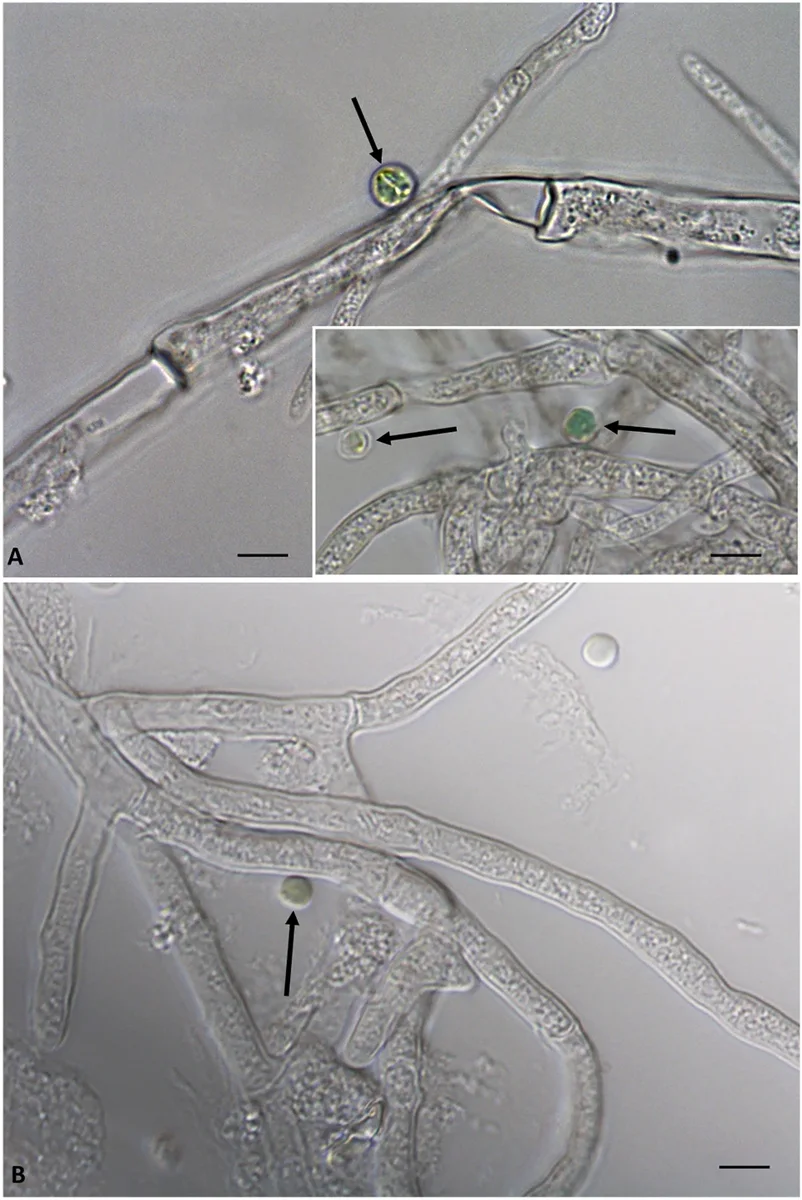
- Cultivate a predatory fungus – Arthrobotrys oligospora is available from specialty culture collections. Grow it on agar plates and introduce a harmless soil nematode (e.g., Caenorhabditis elegans) to watch trap formation under a microscope.
- Encourage mutualistic habitats – Plant trees or shrubs that form ectomycorrhizal associations (e.g., pine, oak). Over time, the mycelial network will develop the moist micro‑environments that support native nematodes.
- Monitor without disturbing – Use a simple soil extraction method (e.g., Baermann funnel) to count nematodes and compare populations in soils with and without the introduced fungi.
These low‑tech experiments reinforce the concept that fungi and nematodes are not merely competitors; they can be partners, predators, or both, depending on the species involved.
Looking Ahead: Research Frontiers
Scientists are still unraveling the molecular cues that signal a fungus to switch between predation and cooperation. Genomic studies suggest that some fungi retain the genetic toolkit for both strategies, turning them on or off based on environmental nitrogen levels. Future work may enable us to engineer fungi that can toggle between feeding on nematodes when nitrogen is scarce and hosting them when excess nitrogen is present—an adaptable tool for both agriculture and space habitats.
The intricate dance between fungi and nematodes reminds us that even the smallest organisms can have outsized impacts on ecosystem health, whether on Earth’s farmlands or in a future Martian greenhouse.
Sources
- Predatory fungi as biological control agents
- Ectomycorrhizal fungi and nematode dynamics in forest soils
This article is for general information only and is not medical advice. Do not use it to diagnose or treat any condition; talk to a doctor about health questions.
This article was prepared with AI assistance from the sources listed above and approved by the Mushroom 2 Mars team before publication.