Part of the guide: Mushrooms: A Complete Guide to Identification, Cooking, and Cultivation
A Recent Taxonomic Upgrade
Boletus nobilissimus was long treated as a regional variety of the celebrated European porcini (Boletus edulis). In the year 2000 mycologists elevated it to full species status, and a 2010 DNA‑based study confirmed its closest relatives are B. atkinsonii, B. quercophilus of Costa Rica, and B. barrowsii of the western United States. This re‑classification highlights how modern molecular tools are reshaping our understanding of bolete diversity.
Distinctive Morphology
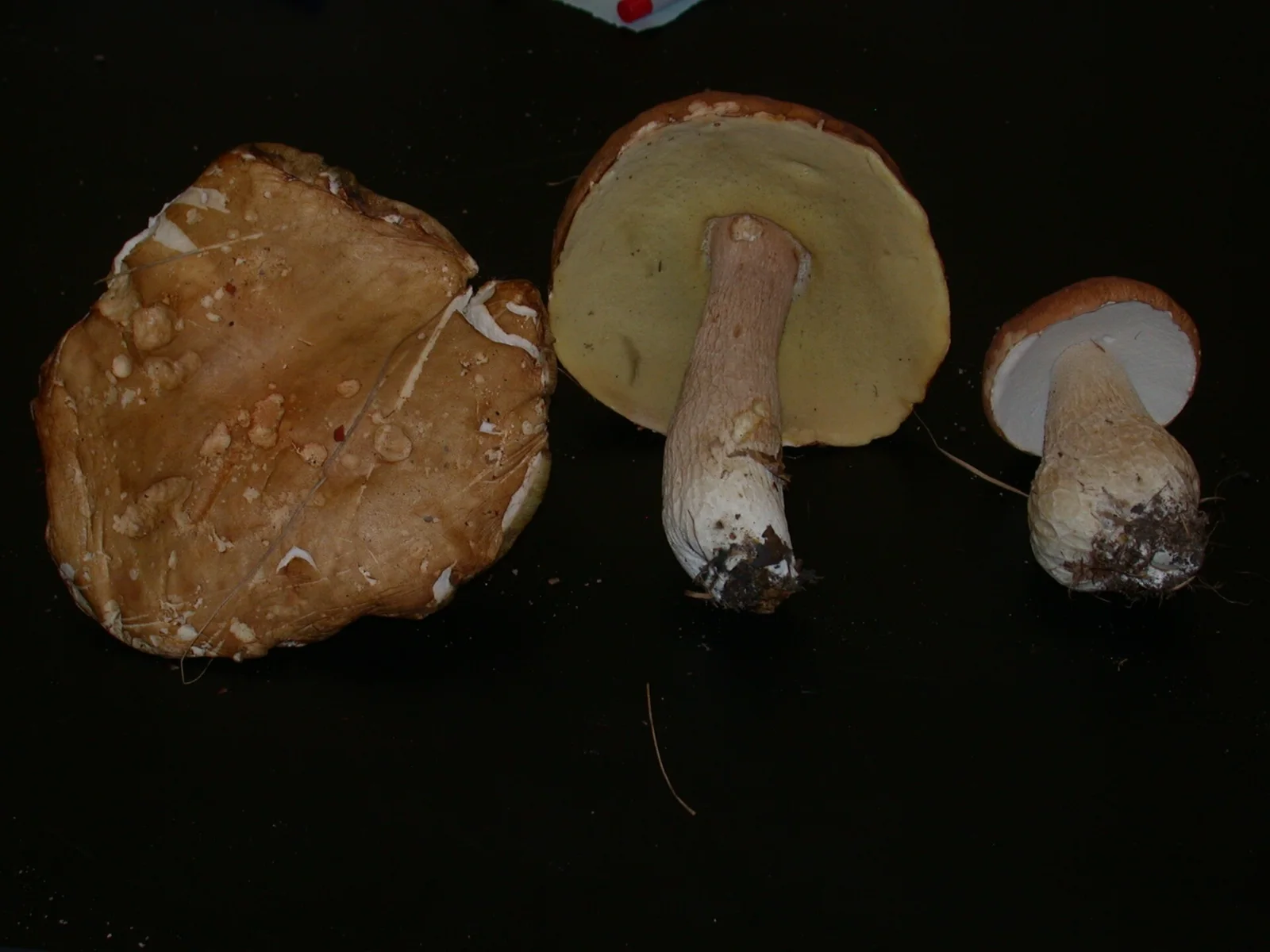
The cap of B. nobilissimus ranges from about 9.5 cm to 15 cm across. Young specimens are convex, gradually flattening to a broad, almost plane shape with age. The surface feels dry, bears fine hairs, and shifts in colour from a yellow‑brown through vinaceous tones to a deep brown in mature caps. Unlike some boletes, the thick white flesh stays white when bruised – it never turns blue.
Beneath the cap, the pore surface starts white, then ages to a yellow‑brown or olive‑green shade. The pores remain unchanged when handled, a useful field clue. The stipe (stem) measures 8–12 cm long and 1–3 cm thick, solid and dry, with a whitish to brownish hue. It is club‑shaped to bulbous and displays a pronounced, raised net‑like reticulation that is especially visible near the apex.
A spore print yields a yellowish‑brown colour. Microscopically, the spores are ellipsoid to sub‑fusiform, smooth, pale yellow, and measure roughly 11.5–13.5 µm by 4–5 µm.
Habitat Preferences and Geographic Range
Boletus nobilissimus forms ectomycorrhizal partnerships primarily with hardwoods—most notably oak and beech—often in the presence of pines. It appears as solitary, scattered, or gregarious fruit bodies during the warm, moist summer and fall months, especially after heavy rains when temperatures exceed 30 °C. The mushroom is reported from New England, New York, and other eastern U.S. locales, though the full extent of its distribution remains uncertain.
Safe Identification in the Field
Because many boletes share similar colours and textures, careful observation is essential. Key field identifiers for B. nobilissimus include: - A cap that stays dry and never develops a sticky or viscid layer. - White flesh that does not bruise blue. - Pores that stay unchanged when pressed. - A stout stipe with a strong, raised reticulation. - A yellowish‑brown spore print.
Even experienced foragers should verify these traits with a reliable guide or consult a local mycological society. Misidentification can lead to consuming toxic look‑alikes, so expert confirmation is always recommended.
Culinary Use and Simple Preparation
When harvested responsibly (only from known, uncontaminated sites), B. nobilissimus offers a firm, nutty flavour prized by chefs. A straightforward sauté highlights its texture: 1. Clean the caps with a damp cloth; avoid soaking to prevent sogginess. 2. Slice the mushrooms ½‑inch thick. 3. Heat a tablespoon of olive oil in a skillet over medium‑high heat. 4. Add the slices, season with salt and fresh cracked pepper, and cook 4‑5 minutes per side until golden. 5. Finish with a splash of dry white wine or vegetable broth, allowing it to reduce for a glossy finish.
The dish pairs well with roasted root vegetables or as a topping for grain bowls. As with all wild mushrooms, always cook B. nobilissimus thoroughly—reaching at least 74 °C internal temperature—to deactivate any heat‑labile compounds.
Potential for Sustainable Cultivation
Although B. nobilissimus naturally forms mycorrhizae with oak and beech, researchers are experimenting with inoculating hardwood seedlings in controlled environments. Success in cultivating this bolete could provide a reliable, forest‑friendly source of edible fungi, reducing pressure on wild populations. Such efforts align with broader goals of sustainable mushroom production, a topic of interest for the Mushroom 2 Mars project as it explores closed‑loop food systems for future habitats.
Boletus nobilissimus reminds us that even familiar forest treasures can hold scientific surprises. Whether you admire it on a nature walk, enjoy it on a plate, or study its genetics, this noble bolete embodies the rich interplay of ecology, culture, and culinary art—an interplay that may one day travel beyond Earth.
Sources
This guide is not a foraging or identification manual. Many edible mushrooms have toxic look-alikes. Never eat a wild mushroom unless an expert has identified it in person.
This article was prepared with AI assistance from the sources listed above and approved by the Mushroom 2 Mars team before publication.