Part of the guide: Mushrooms: A Complete Guide to Identification, Cooking, and Cultivation
A hidden threat in eucalypt forests
Armillaria luteobubalina, often called the Australian honey fungus, is a root‑rot fungus that attacks the woody tissues of trees, especially eucalyptus. First described in 1978 after observations in a plantation near Traralgon, Victoria, it quickly stood out for its aggressive pathogenicity. Unlike the milder Armillaria species previously recorded in Australia, A. luteobubalina can remain hidden for years, with infected trees showing only subtle signs before sudden decline. This lag often leads land managers to underestimate the true extent of the disease.
How the fungus spreads
The fungus employs two complementary dispersal strategies. Mature fruit bodies release spores from gills on the cap’s underside, allowing wind‑borne colonisation of new hosts. More importantly for forest health, the fungus extends dense, rope‑like rhizomorphs through the soil, connecting the roots of neighboring trees. These rhizomorphs contain an internal aerating system that efficiently diffuses oxygen, supporting rapid underground growth. Studies have measured an average radial spread of about 2.5 m (8 ft) per year from an initial infected stump. Logging practices that leave stumps in the ground can therefore create a network of hidden infection sources, amplifying disease spread across eucalypt stands.
Taxonomic roots and ancient origins
Molecular work places A. luteobubalina in a close clade with the South American species A. montagnei, and together they are sister to the Brazilian A. paulensis. Phylogenetic analyses also link the fungus to New Zealand’s A. limonea through similarities in pectic enzyme profiles. The distribution pattern—present across southern Australia and recorded in Argentina and Chile—supports the idea that the species predates the breakup of the supercontinent Gondwana, making it an ancient lineage that survived continental drift.
Recognising the fruit body
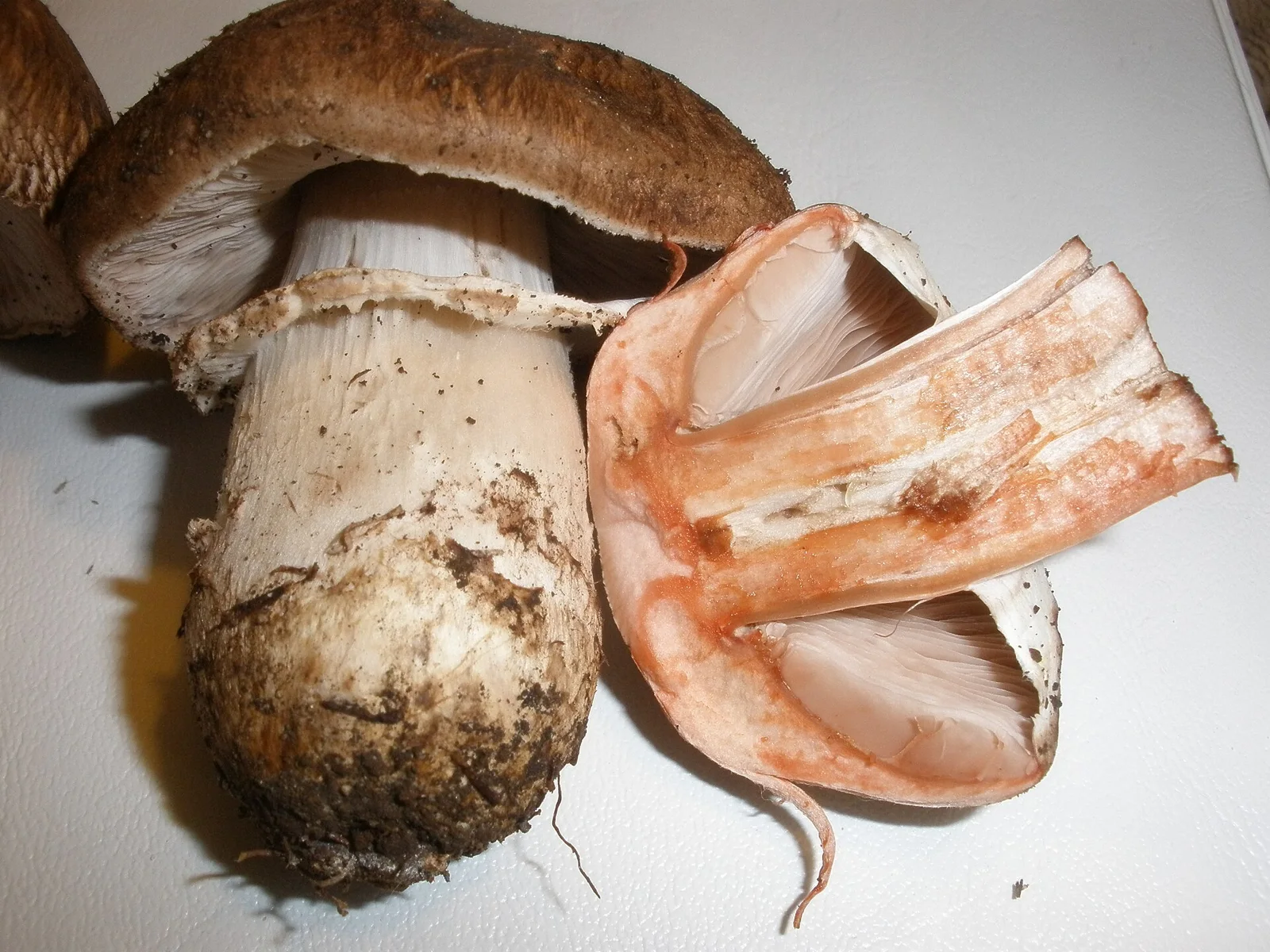
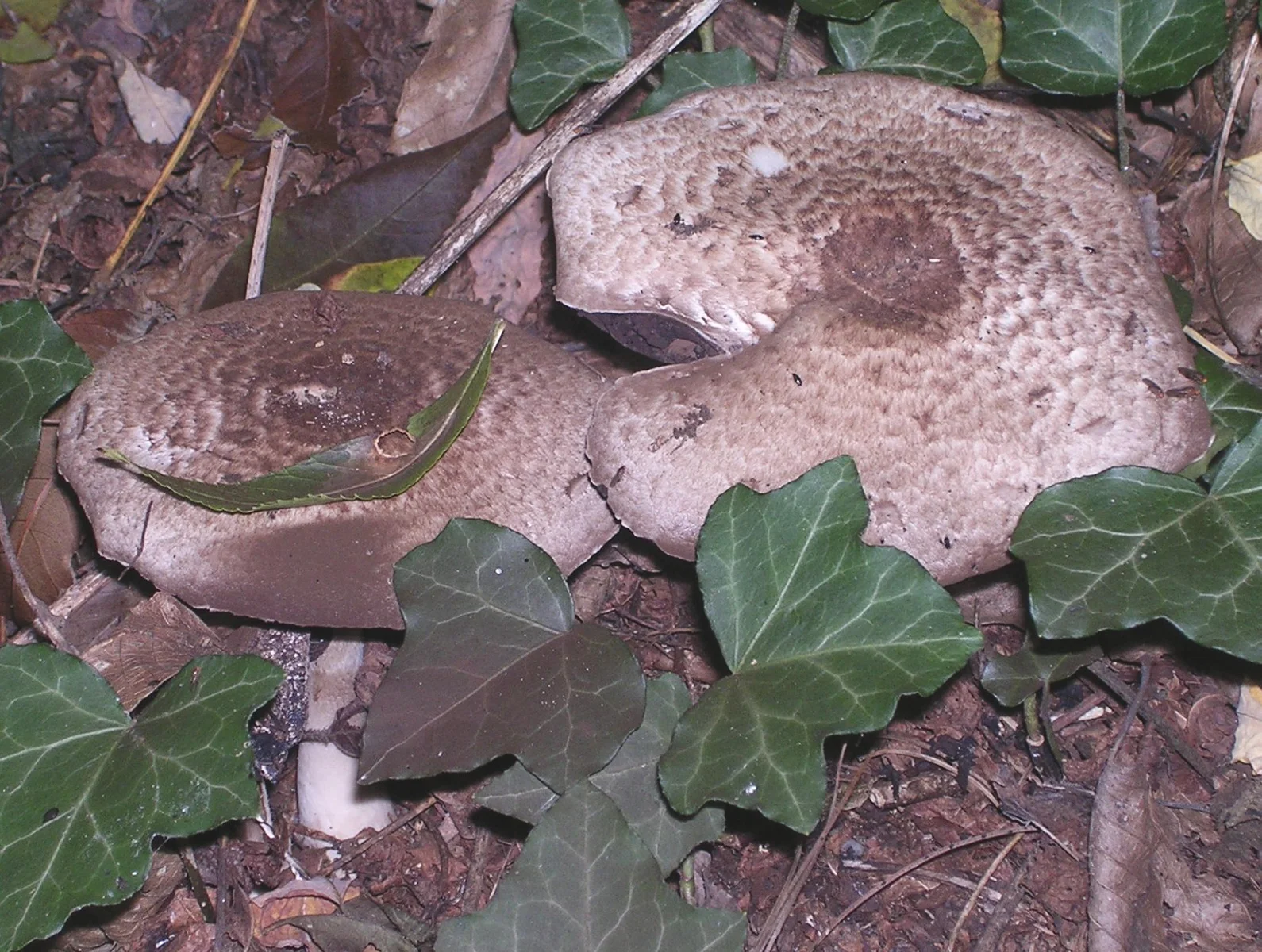
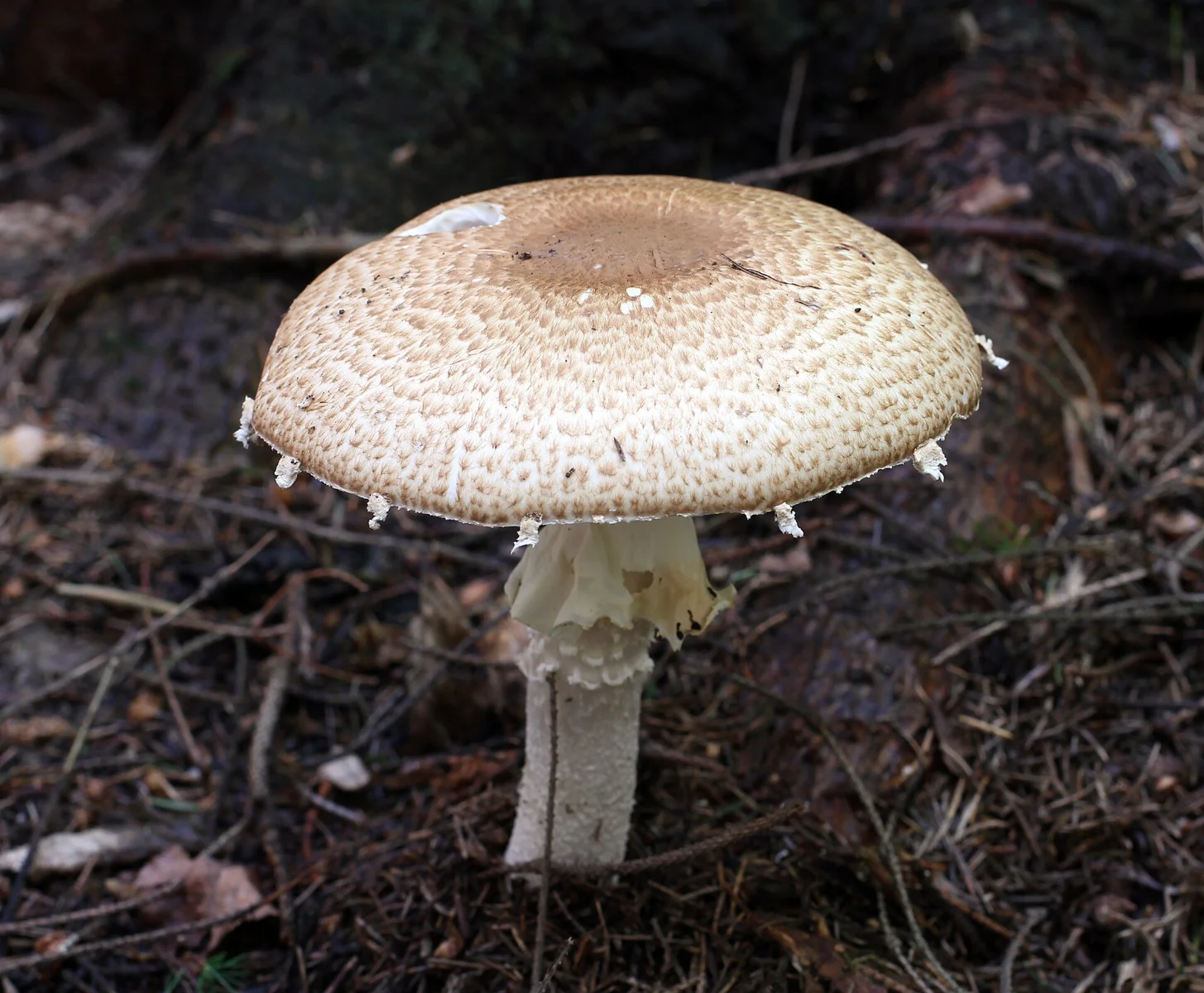
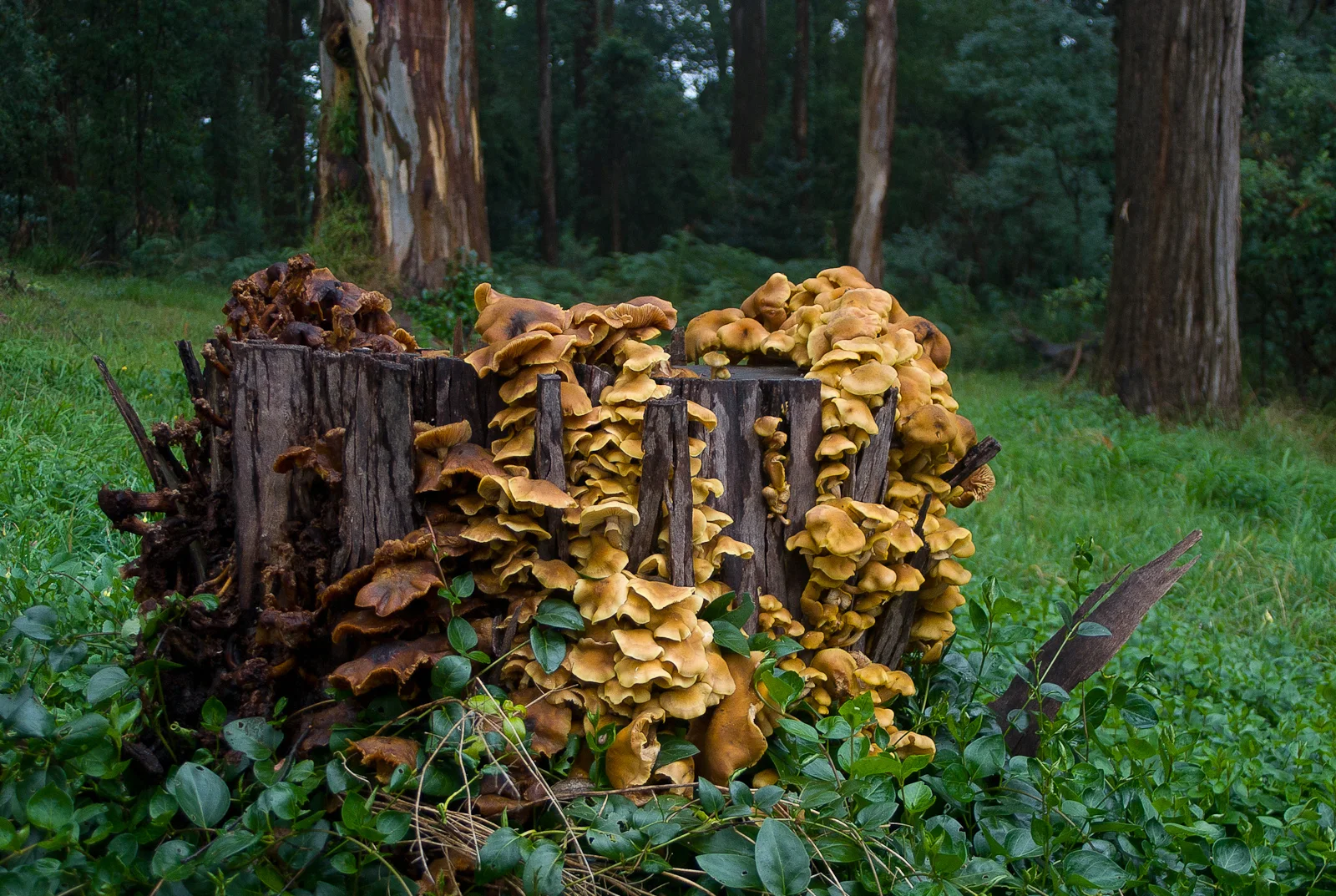
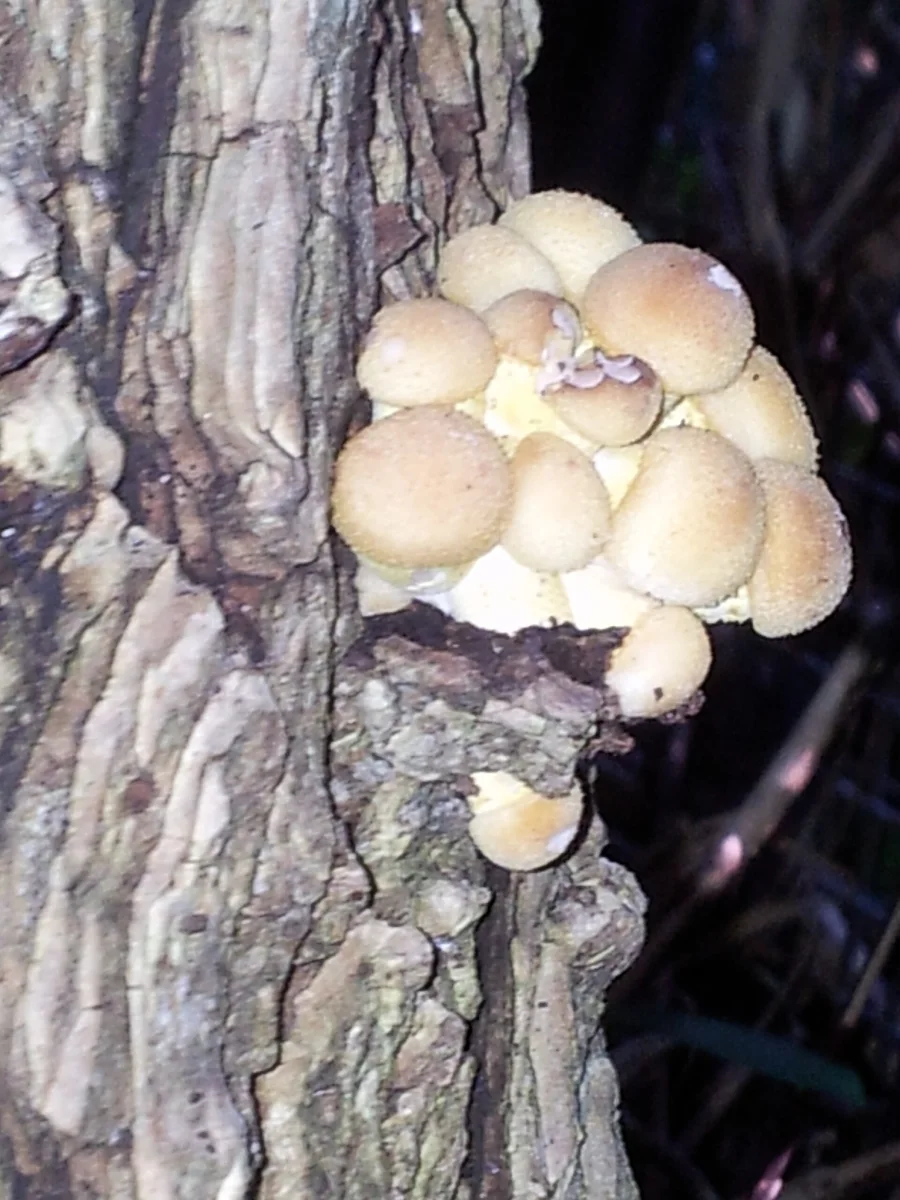
When the fungus fruits in autumn (March–April in the Southern Hemisphere), it produces caps up to 10 cm (4 in) wide. The caps are convex to flattened with a central umbo and display a palette of cream, yellow, and tan tones, often covered in darker, rough scales. The margin rolls inward when young, and the crowded gills shift from white‑cream to brown‑cream or pink‑brown as they mature, sometimes showing yellow or rust‑coloured flecks near the edge. Stems can reach 20 cm (8 in) in length and about 1.5 cm (½ in) in thickness, thickening toward the base. The surface bears vertical fibrils, giving it a slightly shaggy appearance. These visual cues, combined with the habitat of eucalypt bases, help field mycologists differentiate A. luteobubalina from other Armillaria species.
Edibility and culinary notes
The caps are technically edible, but they possess a pronounced bitter taste that most cooks find undesirable. Proper cooking—such as simmering for at least 15 minutes and then discarding the cooking water—can reduce bitterness, though many foragers prefer to avoid this species because it is commonly associated with forest disease. Importantly, never consume wild‑picked mushrooms unless they have been positively identified by an expert; misidentification can have serious health consequences.
Managing a forest pathogen
Control methods for A. luteobubalina remain limited. Chemical treatments are often too costly or environmentally damaging for large forested areas. Mechanical removal of infected stumps can help, but the fungus’s ability to persist in soil via rhizomorphs means eradication is difficult. Ongoing research focuses on silvicultural practices that reduce stump exposure and on breeding eucalypt varieties with increased resistance to root rot. For now, the most effective strategy is preventive: careful monitoring of tree health, prompt removal of dead wood, and limiting the spread of rhizomorph networks during logging operations.
From Earth to Mars
Understanding the biology of resilient fungi like Armillaria luteobubalina informs broader efforts to cultivate mushrooms in closed environments—knowledge that could one day support sustainable food production on Mars.
Sources
This guide is not a foraging or identification manual. Many edible mushrooms have toxic look-alikes. Never eat a wild mushroom unless an expert has identified it in person.
This article was prepared with AI assistance from the sources listed above and approved by the Mushroom 2 Mars team before publication.