Part of the guide: Mushrooms: A Complete Guide to Identification, Cooking, and Cultivation
What the Honey Mushroom Looks Like
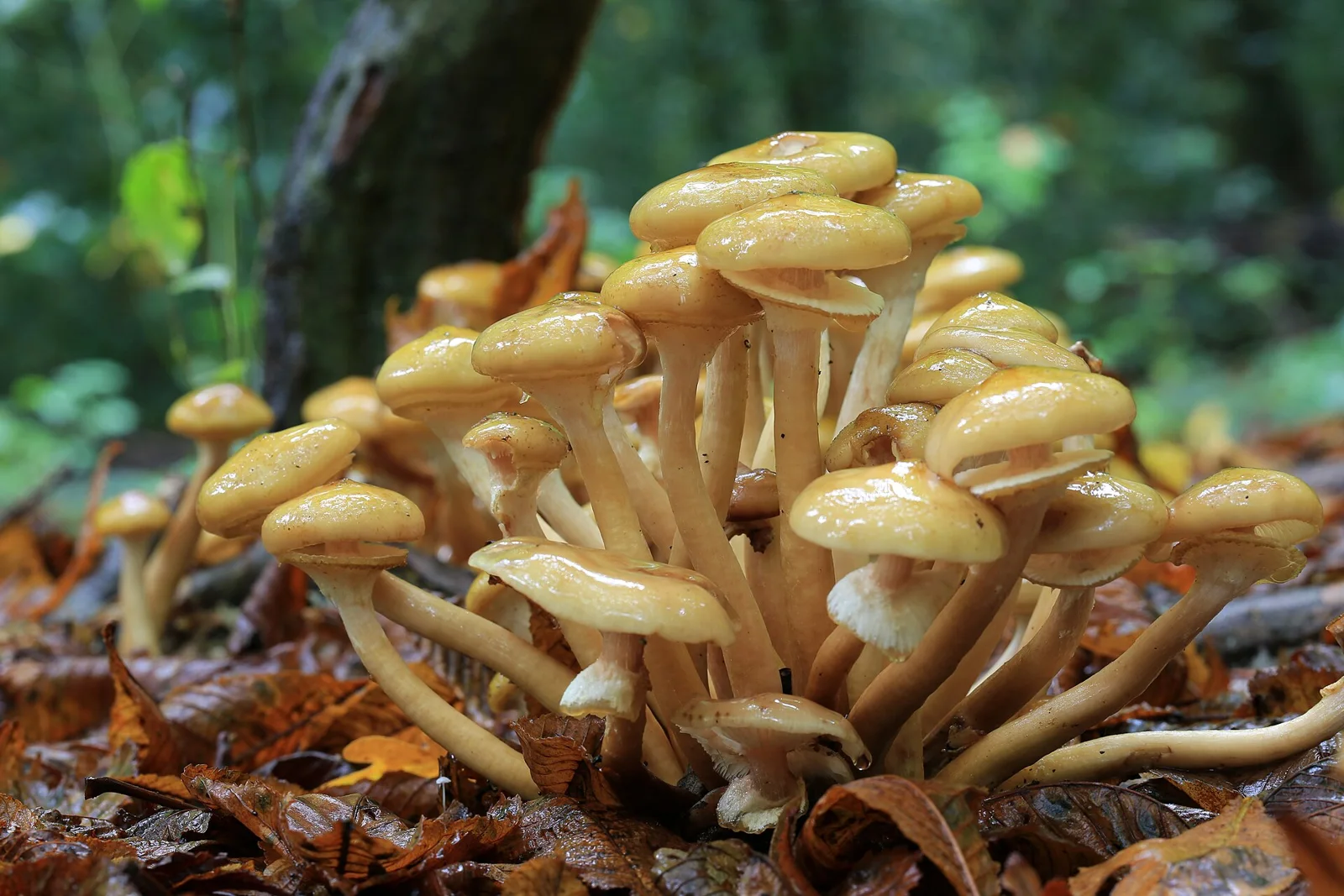
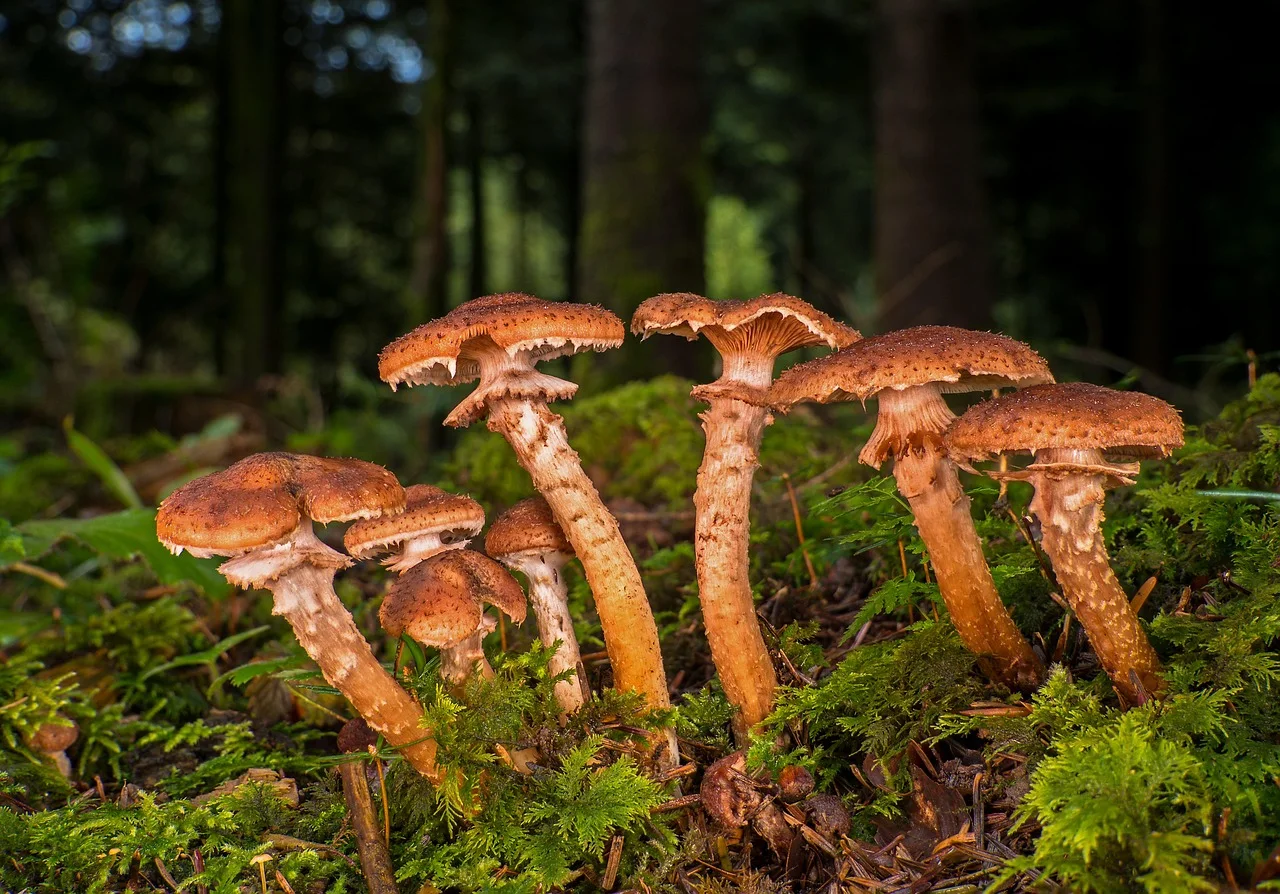
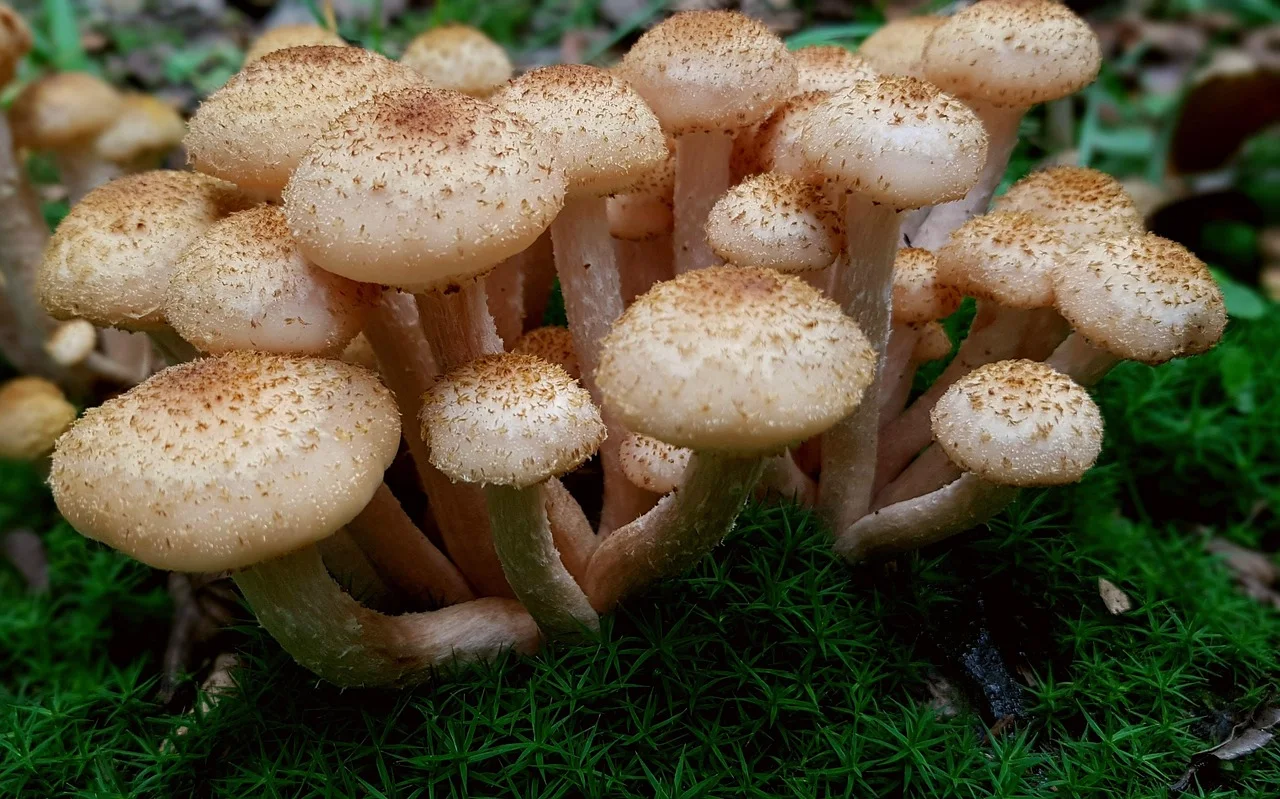
Armillaria mellea produces clusters of smooth‑capped mushrooms that range from 3 cm to 15 cm across. Young caps are convex and become flatter with age, often developing a shallow central bump. The surface feels sticky when wet and is typically honey‑colored, though variations with darker, hair‑like scales can occur. The gills start white, turning pinkish‑yellow as the mushroom matures, and attach to the stem either straight or slightly down‑running.
The stem (stipe) is 5–20 cm long, firm and spongy when young, later becoming hollow. It tapers toward a dark base where several stems may fuse together. A conspicuous, velvety ring sits near the top of the stem, its margin soft and yellow‑fluffed underneath. Under a microscope, the spores are elliptical, 6–9 µm by 5–7 µm, and leave a white spore print.
Hidden Life Below Ground
Most of the fungus lives underground as a network of mycelial threads that can spread over large areas. These threads bundle into thick, black rhizomorphs—often called “shoestrings”—that can extend up to three meters in search of new hosts. While the mushroom fruit bodies are not bioluminescent, the actively growing mycelium does emit a faint glow, a phenomenon linked to the interruption of the biochemical pathway that produces the light‑emitting compound hispidin.
A Plant Pathogen with a Wide Reach
Armillaria mellea is a serious root‑rot pathogen. It infects a broad range of hardwoods and some conifers, entering trees through rhizomorphs that penetrate bark and wood. Early signs are subtle: honey‑colored mushrooms at the base of a tree, white fan‑shaped mycelial growth on the trunk, and black rhizomorphs in the soil. Over time, infected trees show yellowing foliage, reduced growth, branch dieback, and eventually death as the fungus degrades the cambium and root system. The disease is a major concern for forests, orchards, vineyards, and ornamental plantings, leading to notable economic losses.
Where It Grows
The honey fungus thrives in temperate zones of the Northern Hemisphere, favoring moist, cool soils (below about 26 °C). It is common throughout North America, Europe, and northern Asia, and has been introduced to South Africa. You’ll often find it fruiting in dense clusters at the base of stumps, tree trunks, or in open, shaded garden beds where the soil stays damp.
Edible, but with Caution
Armillaria mellea is classified as an edible mushroom, prized in some culinary traditions for its sweet, slightly bitter flavor. However, the species can cause gastrointestinal upset in some people, especially if not cooked thoroughly. To prepare safely, clean the caps and stems, slice them uniformly, and sauté in butter or oil over medium heat for at least 10 minutes until they are firm and the moisture has evaporated. Adding herbs such as thyme or garlic can complement the natural flavor. Never consume wild‑picked specimens unless you are 100 % certain of the identification—many toxic mushrooms resemble honey fungus in appearance.
Growing Armillaria in Controlled Settings
Because the mycelium can survive in soil for years and spread via rhizomorphs, researchers have experimented with cultivating Armillaria on sterilized substrate blocks for study. While not a mainstream commercial crop, the fungus’s ability to decompose woody material makes it of interest for sustainable bioconversion projects—potentially useful for future closed‑loop habitats on Mars, where fungal biomass could help recycle organic waste.
Connecting to the Red Planet
Understanding the biology of Armillaria mellea—its resilience, wood‑degrading capacity, and ability to glow in the dark—offers insights for designing fungal systems that support life‑support and waste‑recycling strategies in Martian habitats.
Sources
This guide is not a foraging or identification manual. Many edible mushrooms have toxic look-alikes. Never eat a wild mushroom unless an expert has identified it in person.
This article was prepared with AI assistance from the sources listed above and approved by the Mushroom 2 Mars team before publication.