Part of the guide: Mushrooms: A Complete Guide to Identification, Cooking, and Cultivation
A Recent Discovery in the Boletus Family
Boletus pinetorum was formally described as a new species in 2009 after Finnish mycologists examined specimens that resembled the well‑known king bolete (Boletus edulis). Using both classic morphology and DNA sequencing of the internal transcribed spacers (ITS1, ITS2) and the intergenic spacer region IGS1, the researchers demonstrated consistent differences in spore shape, stipe cell structure, and cap cuticle that warranted a separate name. The species name, pinetorum, reflects its close association with pine trees.
What the Mushroom Looks Like
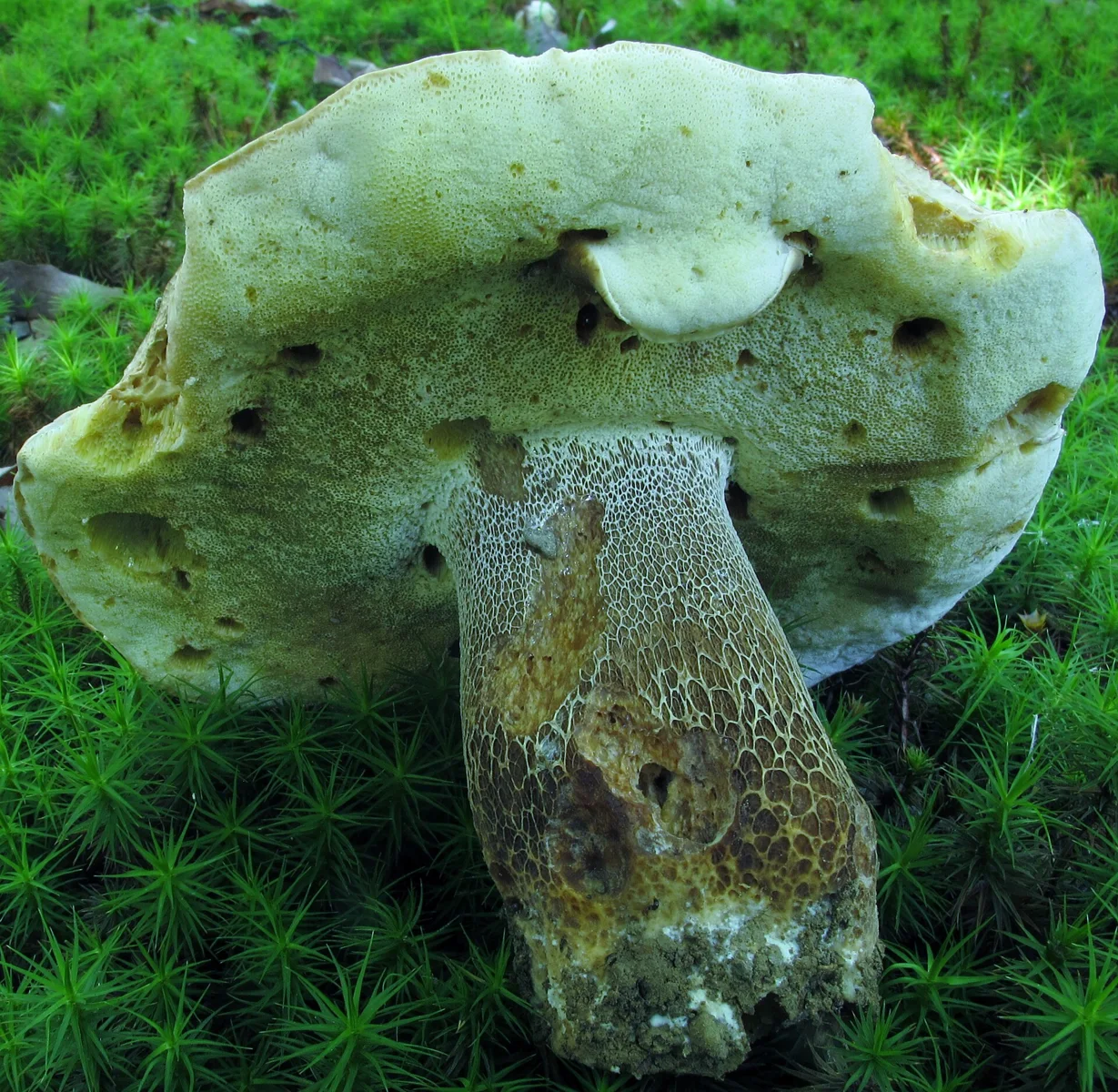
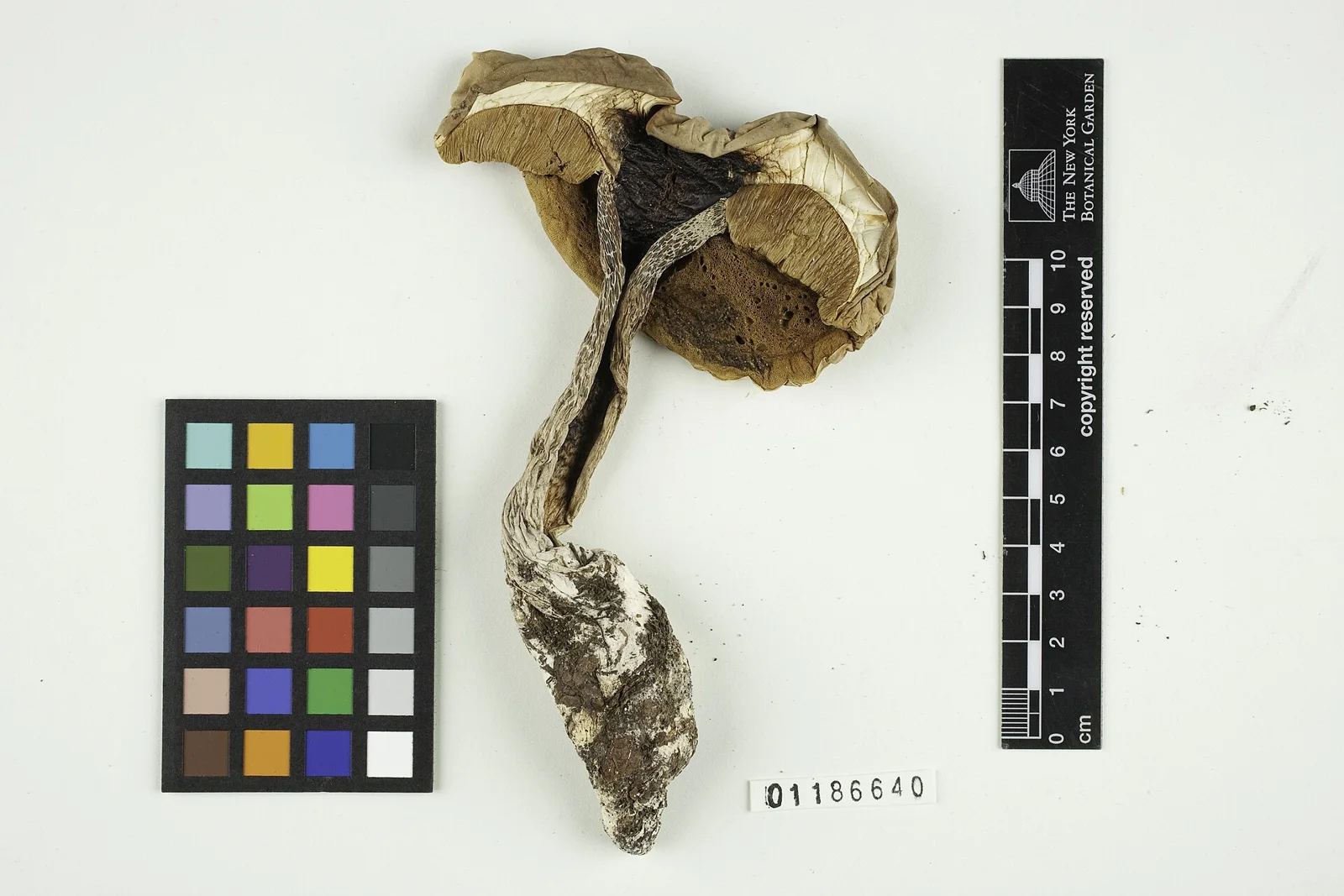
The fruiting body of B. pinetorum is impressive in size. Caps range from 15–35 cm across, occasionally reaching 50 cm, and display a smooth to almost smooth surface that is grey‑brown, sometimes with yellowish or darker brown tones. When wet the cap becomes slightly sticky. Mature caps often show a gently wrinkled margin, a useful field clue.
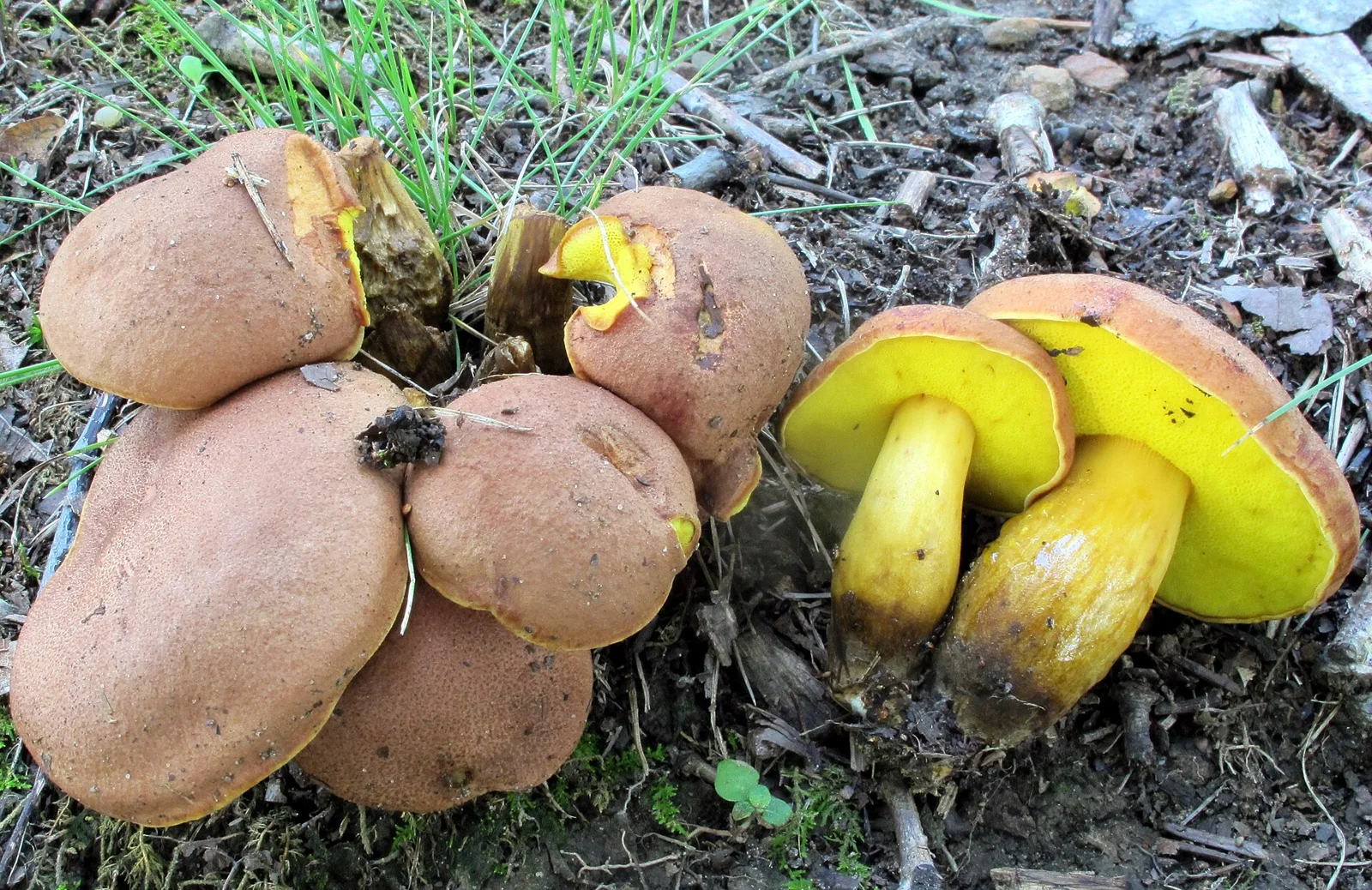
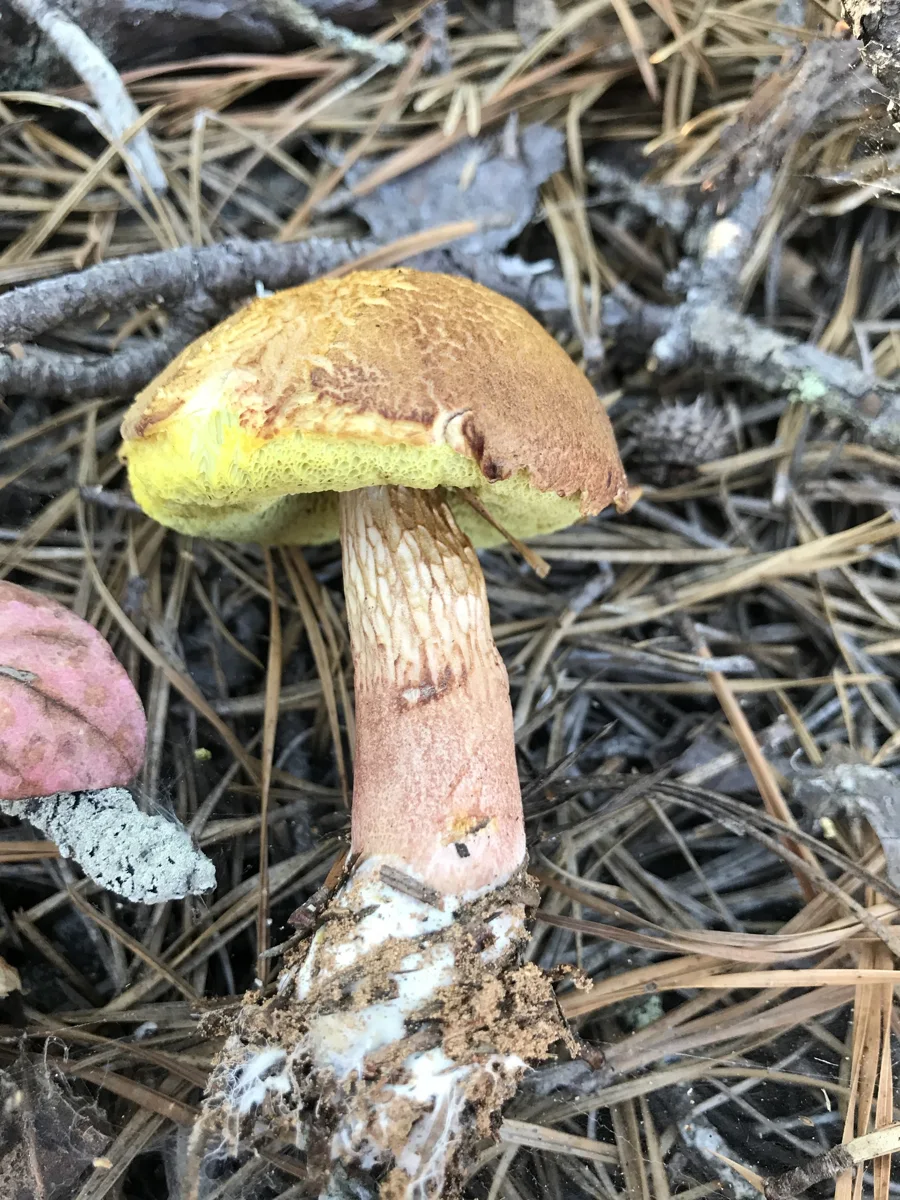
Beneath the cap, the pore surface consists of tubes 2–4 cm deep that start yellow, shift to greenish‑yellow, and finish as a grey‑yellow‑green. The pores themselves are small and round, matching the tube colour. The stipe stands 10–20 cm tall and 3–5 cm wide, whitish‑brown with a striking white reticulation (net‑like pattern) whose mesh size can be up to 10 mm by 2 mm.
The flesh is firm, white to yellow‑brown near the cap surface, and is noted for a pleasant taste and a strong, agreeable aroma—qualities that make it a desirable edible bolete.
Microscopic Details for the Serious Identifier
Under the microscope, the spores are fusiform (spindle‑shaped), smooth, and thick‑walled, measuring about 16.5–19 µm by 5.5–6.5 µm (average 17.5 × 5.8 µm). The caulocystidia—flask‑shaped cells on the stipe—measure 70–160 µm by 13–30 µm and broaden toward the tip. The pileipellis (cap cuticle) consists of long hyphae with terminal cells that are cylindrical to slightly club‑shaped, 30–60 µm by 6–12 µm. These microscopic characters help separate B. pinetorum from look‑alikes such as B. edulis.
Habitat, Season, and Distribution
Boletus pinetorum forms an ectomycorrhizal partnership exclusively with the Scots pine (Pinus sylvestris). It prefers dry, sandy pine heaths and dry to moderately moist coniferous forests. Fruiting typically occurs later in the summer than many other boletes, making it a late‑season find.
To date, verified records come from across Fennoscandia—Finland, Sweden, and Estonia. Its range reflects the distribution of suitable pine habitats in the region.
Safe Identification Tips
Because B. pinetorum looks similar to the popular king bolete, novice foragers should confirm a few key points before considering consumption: - Host tree: Verify that the mushroom is growing under Scots pine, not under birch or hardwood. - Cap texture: Look for the characteristic grey‑brown cap with a gently wrinkled edge. - Reticulation: The white net‑like pattern on the stipe is more pronounced than in many other boletes. - Pore colour change: Observe the progression from yellow to greenish‑yellow to grey‑yellow‑green as the pores age. - Microscopic confirmation: When possible, examine spore shape and caulocystidia dimensions.
Never rely on taste alone for identification, and always consult an experienced mycologist or a reliable field guide. Wild mushrooms should only be eaten when 100 % certain of their identity.
Culinary Uses and Simple Preparation
The firm flesh and pleasant flavor of B. pinetorum make it suitable for a range of dishes. Because the cap can be very large, it works well sliced for sautéing, grilling, or adding to stews.
Basic sautéed bolete recipe 1. Clean the caps with a damp cloth; avoid soaking to prevent waterlogging. 2. Slice the mushroom into 1‑cm pieces. 3. Heat a skillet over medium‑high heat, add a tablespoon of oil or butter. 4. Add the slices, season with salt, pepper, and a splash of fresh lemon juice. 5. Cook, stirring occasionally, until the pieces turn golden brown and release their aroma, about 6‑8 minutes. 6. Finish with chopped fresh herbs such as parsley or thyme.
Cooking to at least 70 °C (158 °F) ensures any heat‑sensitive microbes are destroyed. The dish pairs nicely with roasted potatoes, grain salads, or as a topping for toasted sourdough.
From Pine Forests to Martian Greenhouses
While Boletus pinetorum thrives in the cool, sandy pine soils of northern Europe, its mycorrhizal relationship with pines offers a model for future symbiotic cultivation systems—an idea that aligns with Mushroom 2 Mars’s vision of growing fungi alongside plants in extraterrestrial habitats.
Sources
This guide is not a foraging or identification manual. Many edible mushrooms have toxic look-alikes. Never eat a wild mushroom unless an expert has identified it in person.
This article was prepared with AI assistance from the sources listed above and approved by the Mushroom 2 Mars team before publication.