Part of the guide: Mushrooms: A Complete Guide to Identification, Cooking, and Cultivation
A Bright Introduction to Boletus auripes
Boletus auripes, often called the butter‑foot bolete, belongs to the family Boletaceae. First recorded by American mycologist Charles Horton Peck in 1898 from a specimen collected in Port Jefferson, New York, this mushroom has since been found across eastern North America, eastern Asia, and parts of Central America. Its name—auripes—literally means “golden yellow foot,” a nod to the vivid hue of its stem.
What the Mushroom Looks Like
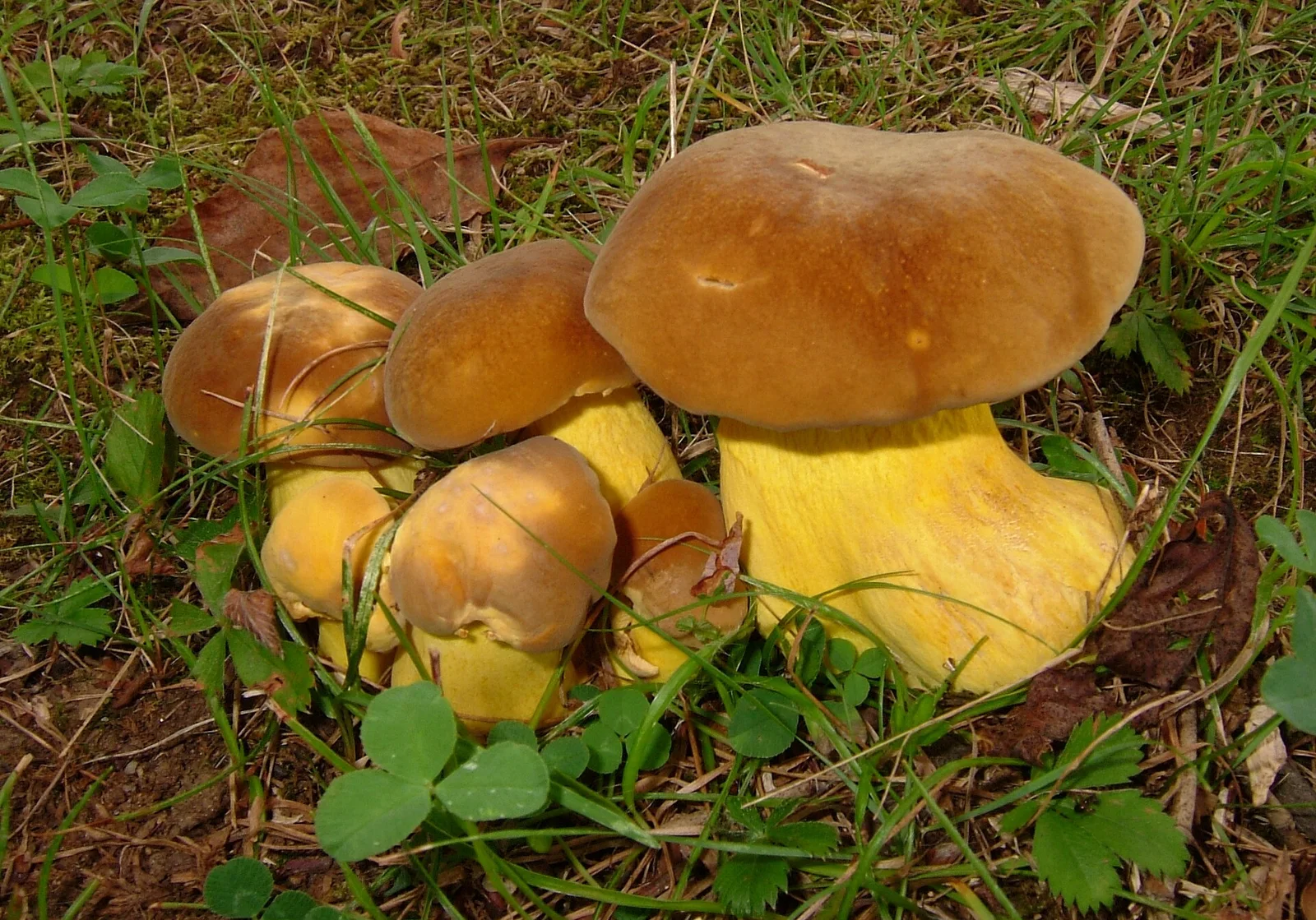
The cap starts convex and flattens with age, reaching 4–13 cm (1.6–5.1 in) in diameter. Its surface is dry and ranges from yellow‑brown to chestnut‑brown, becoming paler as the mushroom matures. The flesh is initially yellow, fading to whitish in older specimens, and unlike many boletes it never turns blue when cut or bruised. Underneath, the pores are tiny (under 1 mm), initially pale yellow then developing an olive tint, and the tubes are 1–2.5 cm deep.
The stem is the most distinctive feature: a solid, dry column 7–10 cm long and 2–3 cm thick, colored a bright golden‑yellow and covered with a net‑like reticulation on the upper half. Young stems are bulbous or club‑shaped, smoothing out as the mushroom grows. A spore print shows a yellow‑brown to olive‑brown hue, and microscopic examination reveals smooth, yellowish spores about 10–14 µm by 3–5 µm.
Where It Grows and How It Lives
Boletus auripes forms a mycorrhizal partnership with oak and beech trees, exchanging nutrients with the roots of these hardwoods. It typically appears in mixed forests during the summer and early fall, favoring well‑drained, acidic soils. Because it relies on living trees, the species is most common in mature woodlands where oaks and beeches dominate the canopy.
Distinguishing It From Look‑Alikes
Identifying butter‑foot bolete safely is crucial, especially for foragers who might encounter similar yellow boletes. Key characters that set B. auripes apart include: - Cap color: yellow‑brown to chestnut‑brown, fading with age, without the bright honey‑yellow of Boletus aureissimus. - Stem reticulation: a prominent net on the upper stem, more extensive than in B. aureissimus but less than the fully reticulated stems of Retiboletus retipes. - Bruising reaction: no blue staining of flesh or pores, unlike many other boletes. - Geographic range: B. auripes spans from Canada to Florida and into eastern Asia, while some look‑alikes have more restricted distributions.
When in doubt, consult an expert mycologist or a reliable field guide; never rely solely on visual similarity, as several species—B. aurantiosplendens, B. hortonii, B. lychnipes—share overlapping colors but differ in microscopic traits or chemical reactions.
Edibility and Simple Cooking
The butter‑foot bolete is listed as edible, with a mild taste and no distinctive odor. As with any wild mushroom, only consume specimens that have been positively identified by an experienced individual. When cooking, treat B. auripes like other non‑staining boletes: 1. Clean: Gently brush off soil with a soft brush or a damp cloth; avoid soaking, which can make the caps soggy. 2. Slice: Cut the caps and stems into uniform pieces, about 1 cm thick. 3. Sauté: Heat a tablespoon of oil or butter in a skillet over medium heat. Add the mushroom slices and cook 5–7 minutes, stirring occasionally, until they release moisture and turn golden. 4. Season: Finish with a pinch of salt, black pepper, and fresh herbs such as thyme or parsley. The mushrooms pair well with pasta, risotto, or as a topping for toasted bread.
Cooking at a moderate temperature ensures the flesh remains firm and the delicate flavor is preserved. Remember, never eat mushrooms harvested from polluted sites or areas treated with pesticides.
Cultivation Possibilities
While Boletus auripes is naturally mycorrhizal, recent research on cultivating mycorrhizal fungi in controlled environments shows promise for species like B. auripes. By inoculating oak or beech seedlings with spores or mycelial cultures, growers can create a symbiotic system that supports fruiting. Such techniques are still experimental but could eventually allow small‑scale production for culinary use or for supplying the Mushroom 2 Mars project’s experimental habitats.
A Tiny Step Toward Mars
Understanding and responsibly using mushrooms like the butter‑foot bolete helps build the knowledge base for future off‑world agriculture, where mycorrhizal partnerships may support plant growth in Martian regolith.
All facts are drawn from the Wikipedia entry on Boletus auripes and related mycological literature.
Sources
This guide is not a foraging or identification manual. Many edible mushrooms have toxic look-alikes. Never eat a wild mushroom unless an expert has identified it in person.
This article was prepared with AI assistance from the sources listed above and approved by the Mushroom 2 Mars team before publication.