Part of the guide: Mushrooms: A Complete Guide to Identification, Cooking, and Cultivation
Why Look at Tea Waste?
Tea is one of the most consumed beverages worldwide, generating millions of tons of dry leaf waste each year. Researchers have begun evaluating this abundant by‑product as a low‑cost, carbon‑rich amendment for mushroom cultivation. Using spent tea leaves can reduce landfill pressure, lower substrate expenses, and recycle nutrients that would otherwise be discarded.
Nutrient Profile of Dried Tea Leaves
Dried tea leaves contain cellulose, hemicellulose, lignin, and modest amounts of nitrogen, potassium, and magnesium – the same macro‑components that make conventional substrates such as straw or sawdust suitable for Pleurotus spp. A 2022 study published in Agricultural Sciences reported that tea waste has a C:N ratio of roughly 30:1, which is within the optimal range (25–35:1) for oyster mushroom fruiting when combined with other carbon sources.
Formulating a Tea‑Based Substrate
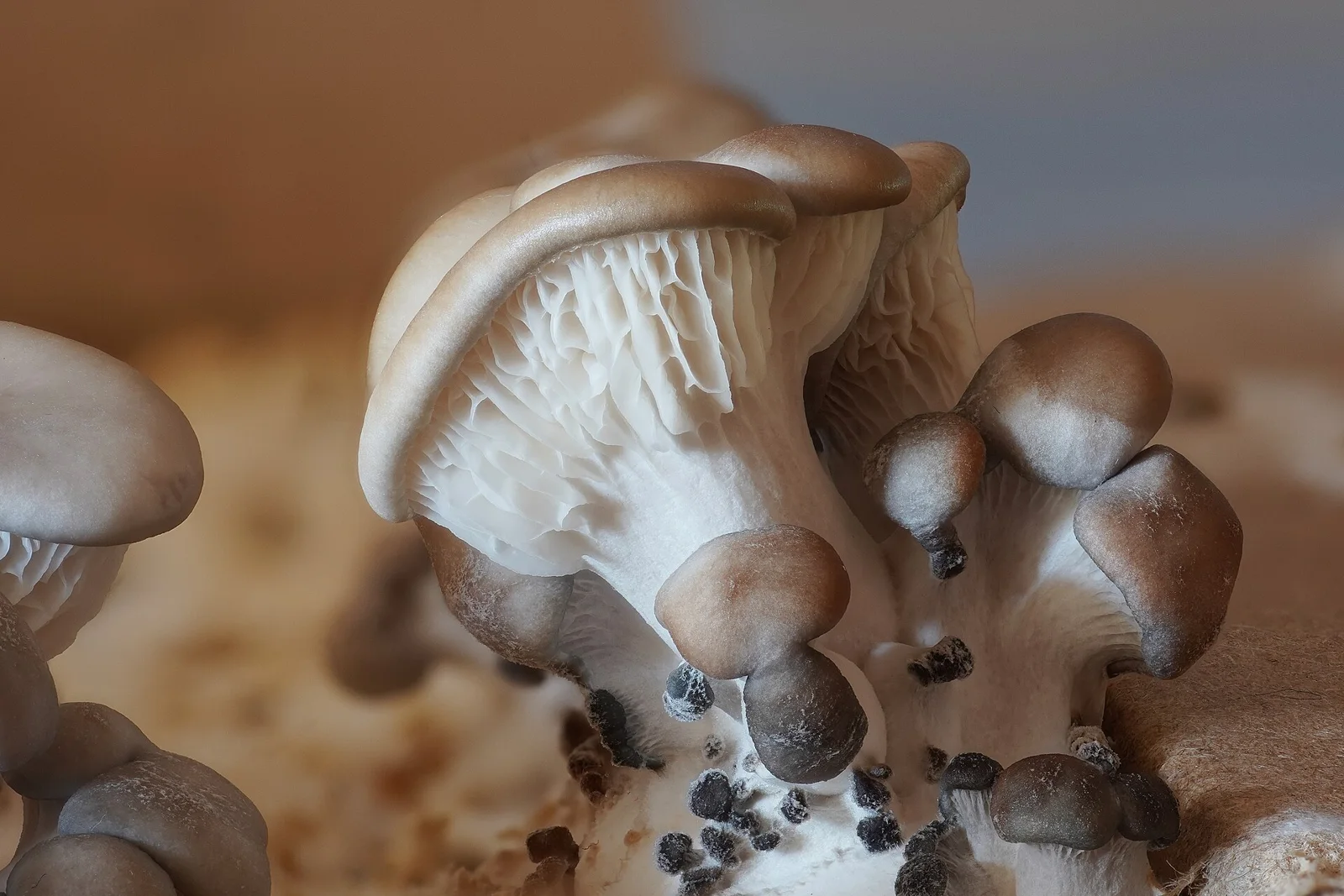
Most trials blend tea waste with a primary fibrous material. A typical recipe from a 2023 experiment at the University of Hunan mixed: - 60 % wheat straw (chopped, 3‑5 cm) - 30 % dried spent tea leaves (ground to 1‑2 cm pieces) - 10 % wheat bran (as a nitrogen boost) The mixture is moistened to 65‑70 % water content, packed into polypropylene bags, and sterilized at 121 °C for 90 minutes. After cooling, the bags are inoculated with Pleurotus ostreatus spawn and incubated at 24‑27 °C for 12‑14 days before fruiting.
Reported Benefits
| Parameter | Findings from recent trials |
|---|---|
| Spawn run speed | Slightly faster colonization (≈ 10 % reduction in time) when tea waste is ≤ 30 % of the mix |
| Yield (kg fruit body per kg dry substrate) | Comparable to pure straw (0.45–0.48 kg kg⁻¹) with the tea blend |
| Biological efficiency | 45‑48 % – within the typical range for oyster mushrooms |
| Substrate pH | Tea leaves modestly lower pH (to ~5.8), which can suppress competing microbes |
| Waste reduction | Each kilogram of substrate replaces ~0.3 kg of straw with tea waste, diverting that amount from landfill |
| These results suggest that dried tea leaves are a viable supplement, especially when local tea processing facilities are nearby. |
Potential Drawbacks and Mitigation
- Caffeine Residues: Small amounts of caffeine remain after drying. While not toxic to the fungus, high concentrations can inhibit mycelial growth. Keeping tea waste below 30 % of the total carbon source avoids this issue.
- Variable Moisture Absorption: Tea leaves absorb water quickly, so precise moisture adjustment is essential. Use the squeeze test (a few drops of water should be released when a handful is squeezed) to confirm the target 65‑70 %.
- Flavor Transfer: Some growers report a faint tea‑like aroma in the harvested mushrooms. This is generally considered a novelty rather than a flaw, but it may affect market preferences.
- Availability: Consistent supply depends on proximity to tea factories or cafes. Partnering with local businesses can ensure a steady stream of waste material.
Practical Tips for Home and Small‑Scale Growers
- Source Clean Leaves: Choose leaves that have been dried, not those with added sugars or flavorings. Avoid leaves from flavored teas (e.g., chai) because spices can introduce unwanted microbes.
- Pre‑Treat the Waste: Lightly toast the tea leaves at 120 °C for 15 minutes to reduce residual moisture and deactivate potential contaminants.
- Blend Evenly: Use a kitchen processor or hand‑chop to achieve uniform particle size; this improves colonization speed.
- Monitor pH: If the substrate pH drops below 5.5, add a small amount of agricultural lime (calcium carbonate) to bring it back into the optimal range.
- Record Data: Track colonization time, yield, and any sensory notes. Over time you’ll learn the precise blend that works best for your environment.
Looking Ahead: From Earth to Mars
The Mushroom 2 Mars project envisions closed‑loop agriculture on the Red Planet. Recycling organic waste—such as spent tea leaves—into mushroom substrate aligns with the mission’s goal of minimizing inputs while maximizing food production. If tea‑based substrates prove reliable on Earth, they could become part of a circular system for future Martian habitats.
Sources
- Utilization of spent tea waste as a substrate component for oyster mushroom (Pleurotus ostreatus) cultivation
- Effect of tea leaf residues on biological efficiency of Pleurotus spp.
- Mushroom 2 Mars – Sustainable Food Production on the Red Planet
This article was prepared with AI assistance from the sources listed above and approved by the Mushroom 2 Mars team before publication.