A Dwarf Planet in the Spotlight
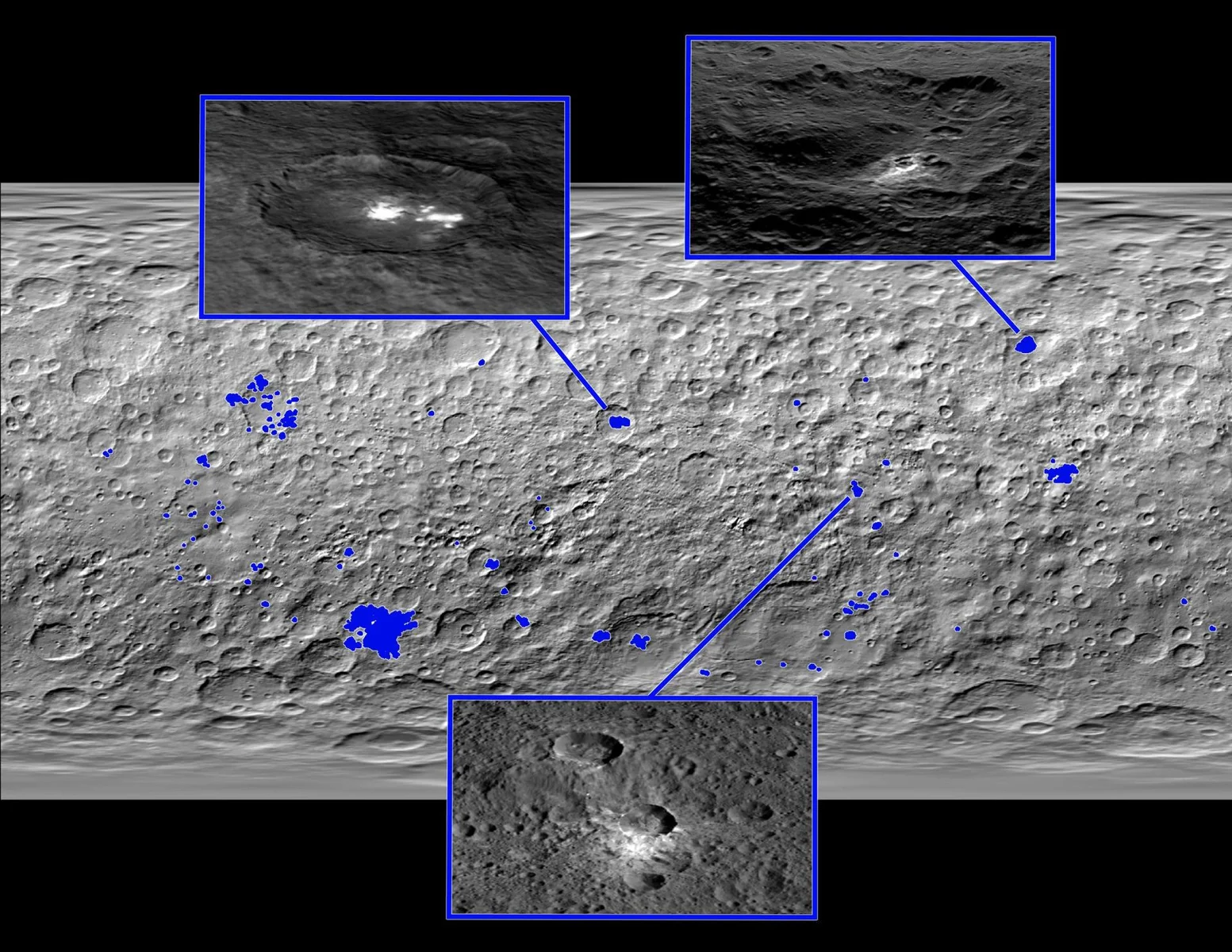
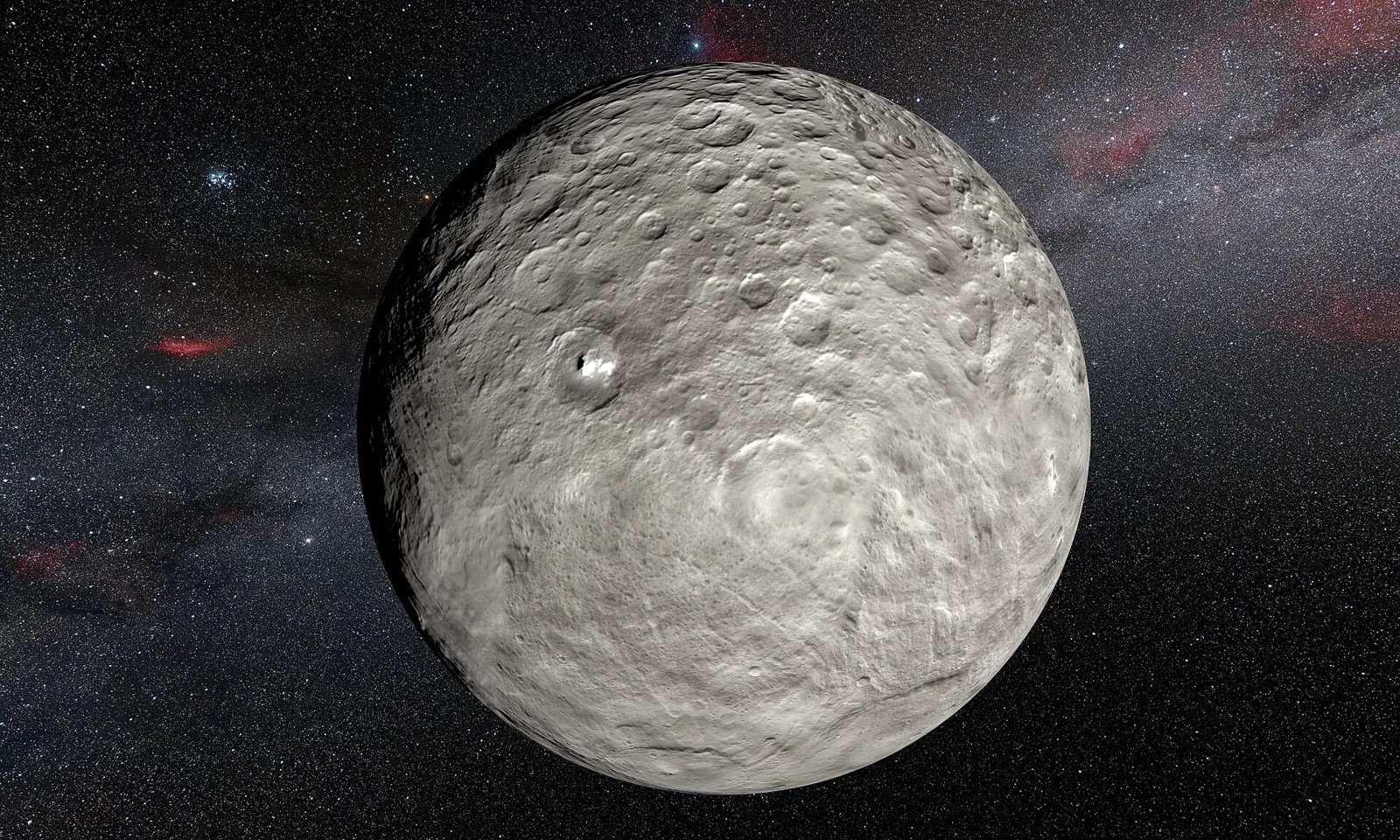
Ceres sits in the middle of the main asteroid belt, yet it is often overlooked in favor of its more famous dwarf‑planet cousin, Pluto. Despite its modest reputation, Ceres accounts for roughly a quarter of the belt’s total mass and boasts a layered interior much like the rocky planets. Its surface is speckled with highly reflective patches—so‑called “bright spots”—that have long been identified as salt deposits left behind by past water‑ice activity.
Revisiting Dawn’s Observations
NASA’s Dawn spacecraft orbited Ceres from 2015 to 2018, mapping its terrain and detecting the bright, salty features. A recent study by two Caltech researchers, published in Journal of Geophysical Research: Planets, suggests that Dawn may have underestimated how much salt is actually present. By re‑examining Dawn’s spectral data and running new computer simulations, the team found that water‑ice mixed with salt can conceal a substantial portion of the mineral, potentially inflating the true salt inventory by 30‑50 %.
Ice‑Salt Interaction: Sublimation and Sorting
The key to the hidden salts lies in a process called sublimation—the direct transition of ice from solid to vapor. When water‑ice contains dissolved salts, the mixture evaporates more readily than pure ice. As the icy component sublimates, the remaining salt becomes concentrated at the surface, creating the bright spots Dawn captured. The researchers liken this to “thermal segregation” observed on icy moons, where temperature gradients drive the separation of ice and salt.
Landslides Reveal Fresh Ice
Another piece of the puzzle comes from mass‑wasting events—essentially landslides on Ceres’ low‑gravity surface. When a slope collapses, buried ice can be exposed to sunlight, accelerating sublimation and leaving fresh salty residues. The study notes that some of the water‑ice detections by Dawn may actually be recent exposures from such landslides, further complicating the interpretation of surface composition.
A Feedback Loop Shapes the Landscape
Putting the pieces together, the authors propose a self‑reinforcing cycle: 1. Mixed ice‑salt deposits form beneath the surface. 2. Sublimation removes the ice more quickly than pure ice would, enriching the remaining material in salt. 3. Thermal segregation pushes the salty, ice‑poor material toward warmer areas, while colder regions retain more ice. 4. Landslides periodically uncover fresh ice, restarting the cycle. This feedback explains why bright spots appear in some regions while others stay darker and ice‑rich, despite the overall short geological lifetimes of exposed ice.
Why It Matters for Planetary Science
Understanding how ice and salts interact on Ceres helps scientists infer the dwarf planet’s thermal history and internal chemistry. If the surface holds more salt than previously thought, it could indicate a more extensive reservoir of briny water beneath the crust, with implications for the evolution of other small bodies that host volatile compounds. Moreover, the findings bridge a gap between observations (what Dawn saw) and theory (how those features form), resolving a long‑standing paradox about the origin of Ceres’ bright spots.
Looking Ahead
Future missions equipped with higher‑resolution spectrometers could directly sample the exposed ice‑salt mixtures, testing the model’s predictions. In the meantime, laboratory experiments that replicate Ceres‑like temperatures and compositions will refine our understanding of sublimation dynamics. Each new insight brings us closer to a comprehensive picture of how water, even in tiny amounts, sculpts the surfaces of worlds far from Earth.
And as we learn more about Ceres’ icy‑salt dance, we can’t help but wonder how similar processes might shape the soils we hope to enrich on Mars—perhaps even the very substrate for future mushroom farms.
Sources
This article was prepared with AI assistance from the sources listed above and approved by the Mushroom 2 Mars team before publication.