Part of the guide: Mushrooms: A Complete Guide to Identification, Cooking, and Cultivation
Taxonomy and Naming
Aureoboletus russellii belongs to the family Boletaceae, a group of pore‑bearing mushrooms. First described as Boletus russellii by Charles C. Frost in 1878, the species has moved through several genera—Boletellus in 1931 and finally Aureoboletus in 2016 after molecular studies by Gang Wu and Zhu L. Yang. The specific epithet honors John Lewis Russell, the American botanist who first collected the mushroom. Common names such as "jagged‑stemmed bolete," "shagnet," and "Russell's bolete" reflect its distinctive stem texture.
What It Looks Like
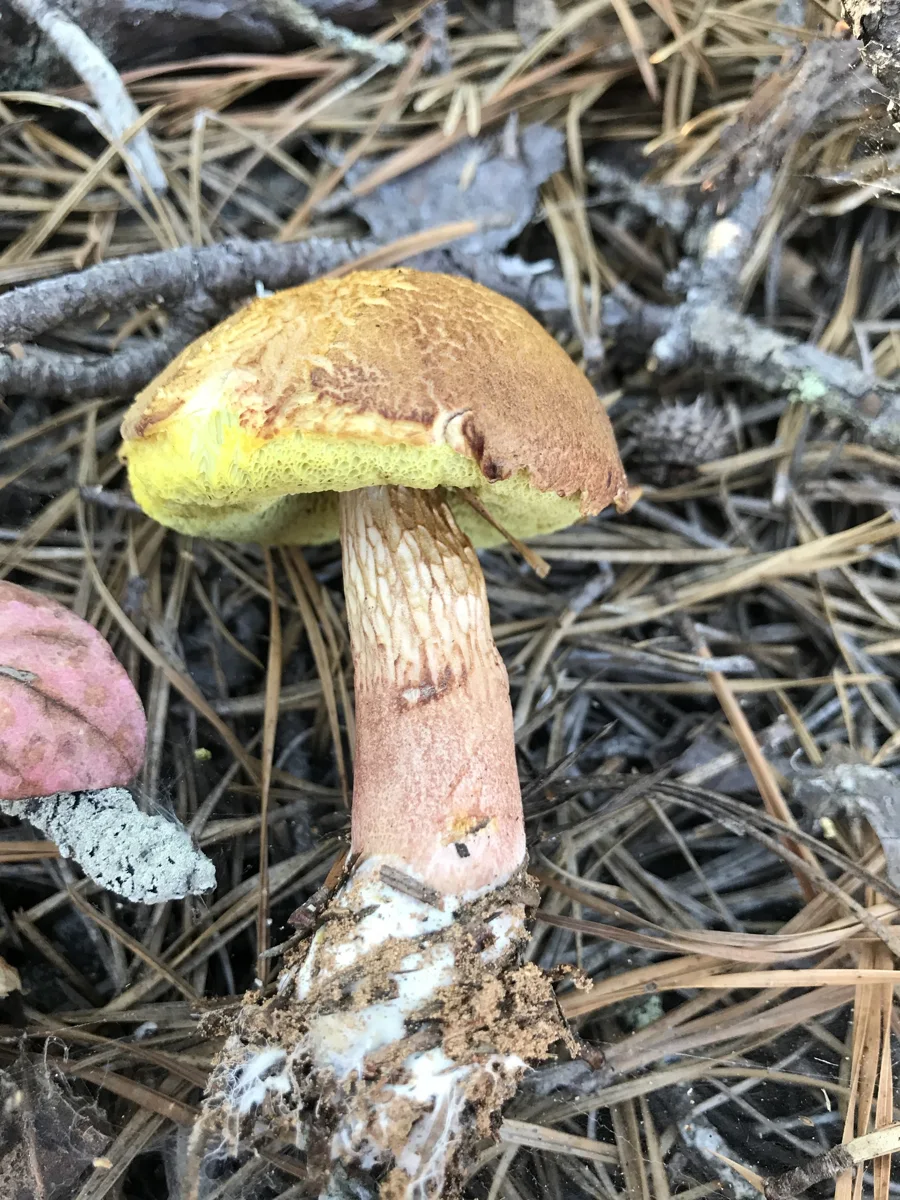
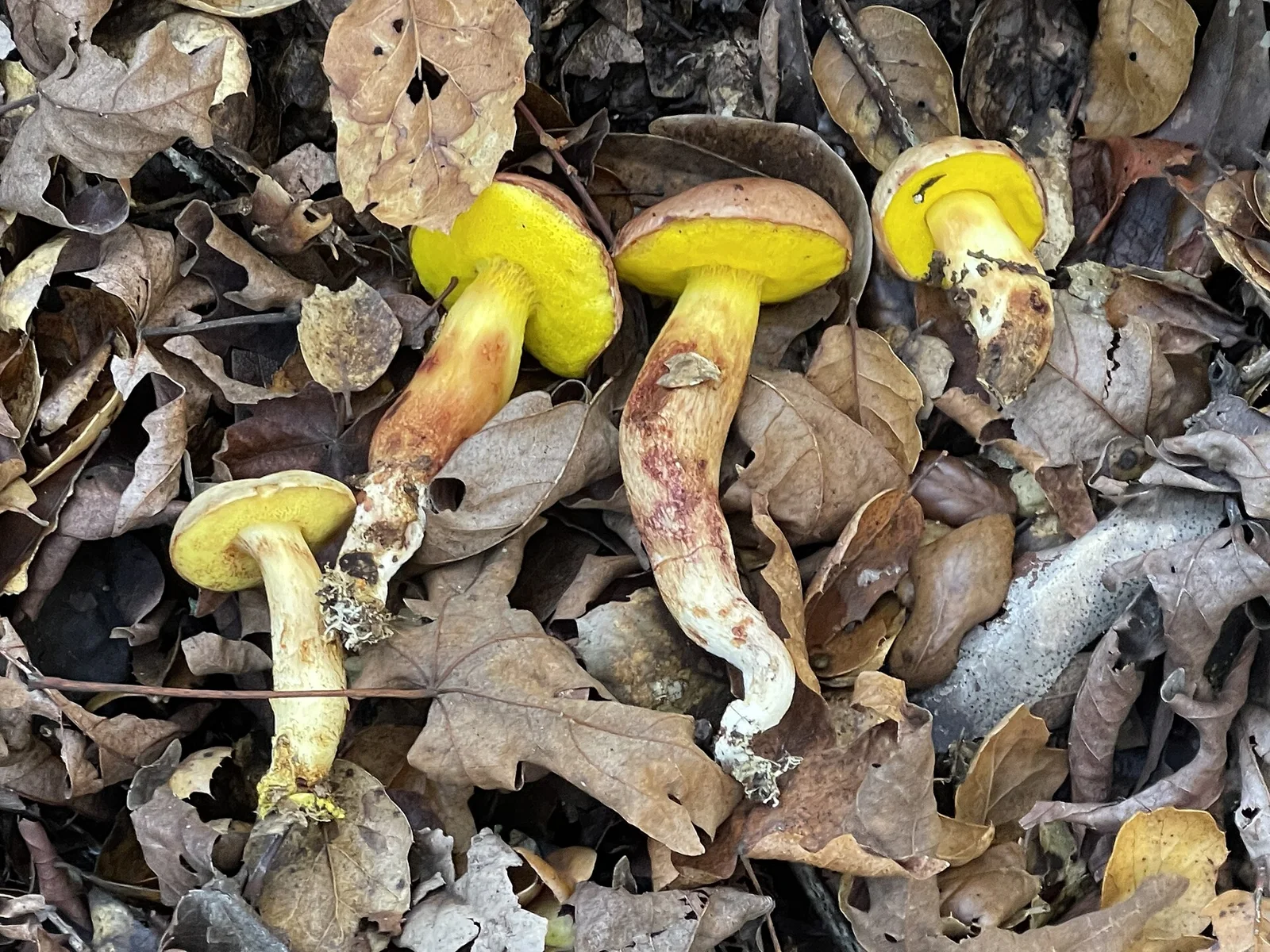
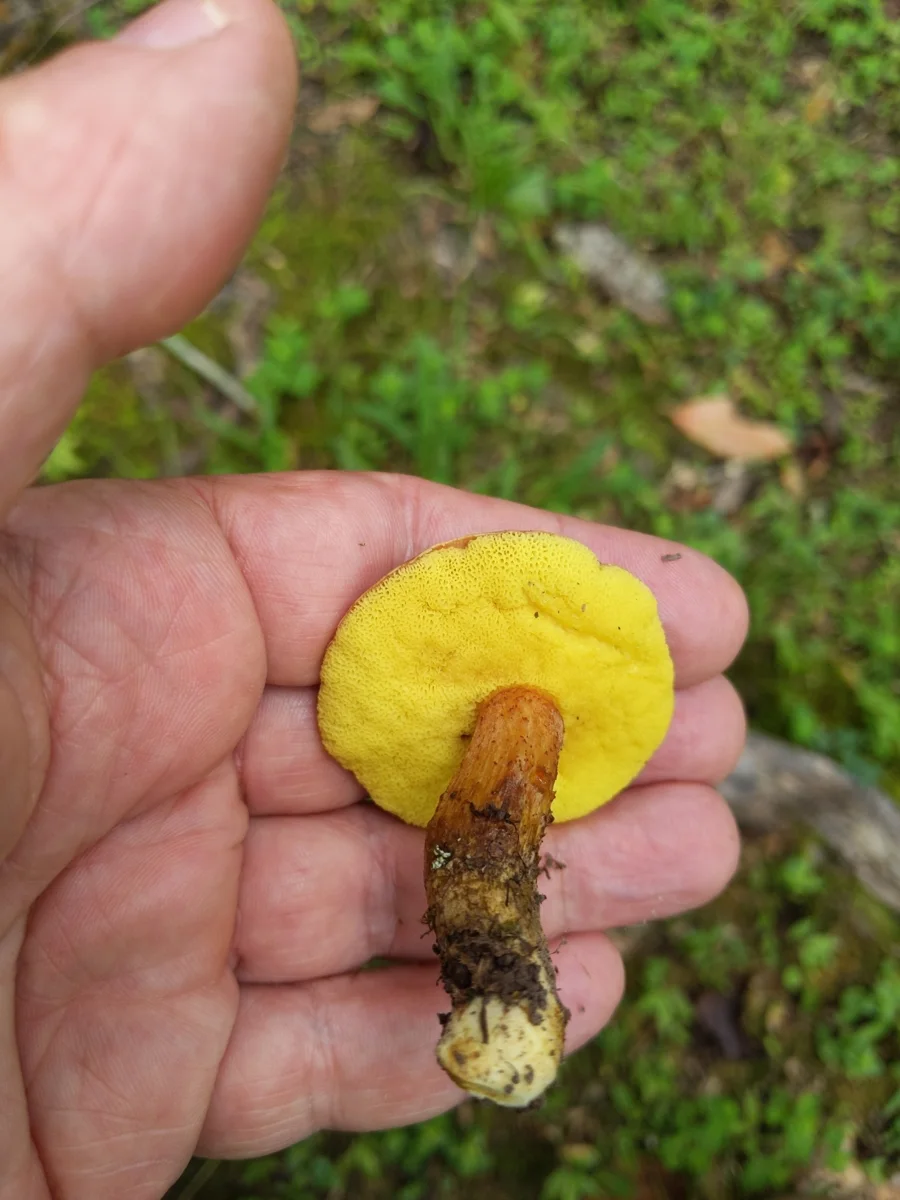
The cap starts out velvety and hemispheric, ranging from 3 to 13 cm across. As it ages, the surface cracks into scale‑like patches, shifting in color from yellow‑brown to reddish‑brown or olive‑gray. Underneath, the pore surface is yellow to greenish‑yellow and brightens when bruised. The pores are angular, about 1 mm wide, and the tubes can be up to 2 cm deep.
The stem is perhaps the most striking feature: up to 20 cm long and 1–2 cm thick, it may be roughly uniform or slightly thicker at the base. Its surface is covered with deep grooves and torn ridges that give a shaggy appearance, and it ranges from reddish‑brown to pink‑tan. The flesh is pale yellow, solid (not hollow), and the mushroom lacks a partial veil or ring.
A spore print yields an olive‑brown color, and microscopic examination shows ellipsoid spores (15–20 × 7–11 µm) with longitudinal grooves on the wall.
Similar Species to Watch For
Foragers should be aware of look‑alikes. Aureoboletus betula shares a reticulate stem but has a smoother, shinier cap and spores with surface pits. Boletellus ananas also resembles the jagged‑stemmed bolete but differs in cap texture and microscopic traits. Careful observation of cap surface, spore characteristics, and habitat can prevent confusion.
Habitat, Range, and Tree Partners
Aureoboletus russellii forms mycorrhizal relationships with several conifers and hardwoods, especially oak, hemlock, and pine. In North America it appears from eastern Canada down through the eastern United States, reaching as far west as Michigan and southern Arizona, and extending south into Central America. Asian records include Korea and Taiwan. The mushrooms grow singly or scattered on the forest floor, often near the roots of their host trees.
Edibility and Culinary Use
The species is classified as edible, but culinary interest is limited. The flesh is soft and offers little flavor, making it a secondary choice for mushroom dishes. For those who wish to try it, the safest approach is to cook it thoroughly—sautéing or simmering for at least 10 minutes ensures any heat‑sensitive compounds are broken down. Never consume wild‑collected specimens unless you are absolutely certain of identification; always rely on expert confirmation.
From Forest Floors to Martian Labs
While Aureoboletus russellii itself isn’t a prime candidate for space agriculture, its mycorrhizal nature illustrates how fungi can support tree health—a principle that could inform future experiments on growing plant‑fungus symbioses in controlled habitats on Mars. Understanding diverse bolete species helps broaden the toolbox for sustainable bio‑systems beyond Earth.
Sources
This guide is not a foraging or identification manual. Many edible mushrooms have toxic look-alikes. Never eat a wild mushroom unless an expert has identified it in person.
This article was prepared with AI assistance from the sources listed above and approved by the Mushroom 2 Mars team before publication.