Part of the guide: Mushrooms: A Complete Guide to Identification, Cooking, and Cultivation
Appearance and Key Identifiers
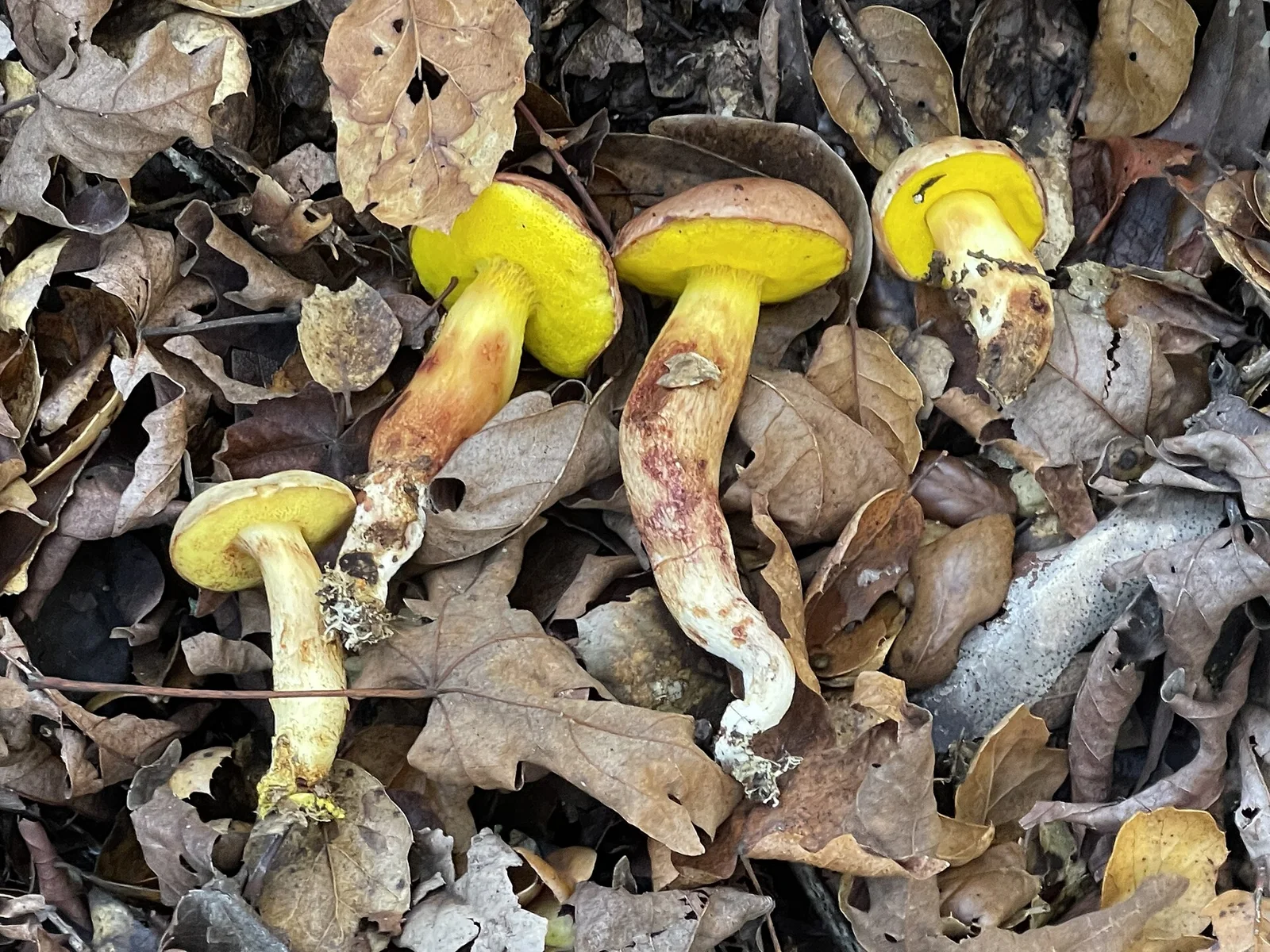
Aureoboletus flaviporus, often called the viscid bolete, sports a reddish‑brown cap that can reach up to 15 cm (about 6 in) across. The surface feels sticky or slimy to the touch, especially when moist. Under the cap lie bright neon‑yellow pores rather than gills, a hallmark of many boletes. The stem may grow as long as the cap is wide, up to 15 cm tall and roughly 3 cm thick. When cut or bruised, the flesh remains its original color and does not turn blue, a useful field clue. A spore print taken from mature specimens appears olive‑brown.
Habitat and Seasonal Timing
This bolete forms ectomycorrhizal partnerships with several hardwoods native to the Pacific‑coast region, most notably coast live oak, madrone, manzanita, and possibly tanoak. In California it typically shows up during the rainy months from November through February, extending as far north as Mendocino County. While it is considered common within its range, it rarely forms dense groups; instead you’ll find solitary individuals or small, scattered clusters.
Similar Species to Watch For
Within the same genus, Aureoboletus auriporus resembles A. flaviporus closely, sharing the sticky cap and yellow pores. Another look‑alike is A. viridiflavus, which also displays a viscous surface but may differ in subtle color tones. Because boletes can be tricky to separate, consulting a reliable field guide or expert mycologist is advisable before handling any specimen.
Edibility and Culinary Notes
Although technically edible, the viscid bolete is generally regarded as having mediocre culinary value. Reports describe its flavor as acidic and lemon‑like, with a texture that many foragers find underwhelming. Consequently, it is not a favorite among mushroom chefs, and most people choose to leave it in the forest rather than bring it to the table.
Conservation and Observation Tips
A. flaviporus does not appear to be under immediate threat, but like many mycorrhizal fungi its fortunes are tied to the health of its host trees. Maintaining forest integrity, avoiding soil compaction, and limiting pesticide use help preserve the delicate underground networks these mushrooms rely on. When you spot a viscid bolete, take photos, note the surrounding tree species, and record the location – data that can aid regional fungal surveys.
From Forest Floors to Future Frontiers
While the viscid bolete is rooted in Earth’s oak woodlands, its sturdy mycelial connections inspire scientists thinking about life support systems for long‑duration space missions. Understanding how such fungi interact with plant roots could one day inform sustainable agriculture on Mars.
Sources
This guide is not a foraging or identification manual. Many edible mushrooms have toxic look-alikes. Never eat a wild mushroom unless an expert has identified it in person.
This article was prepared with AI assistance from the sources listed above and approved by the Mushroom 2 Mars team before publication.