Part of the guide: Mushrooms: A Complete Guide to Identification, Cooking, and Cultivation
Appearance and Key Identification Features
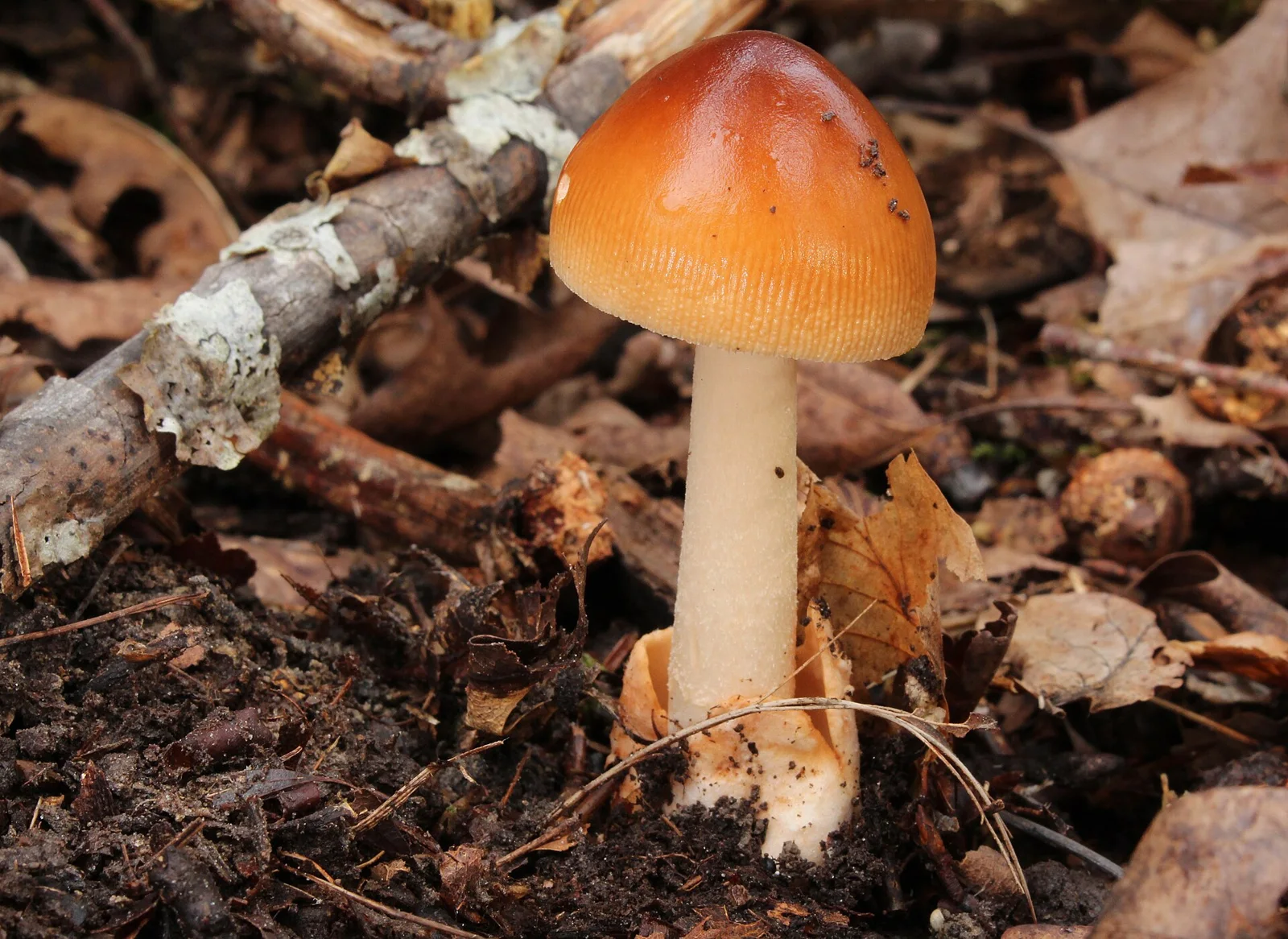
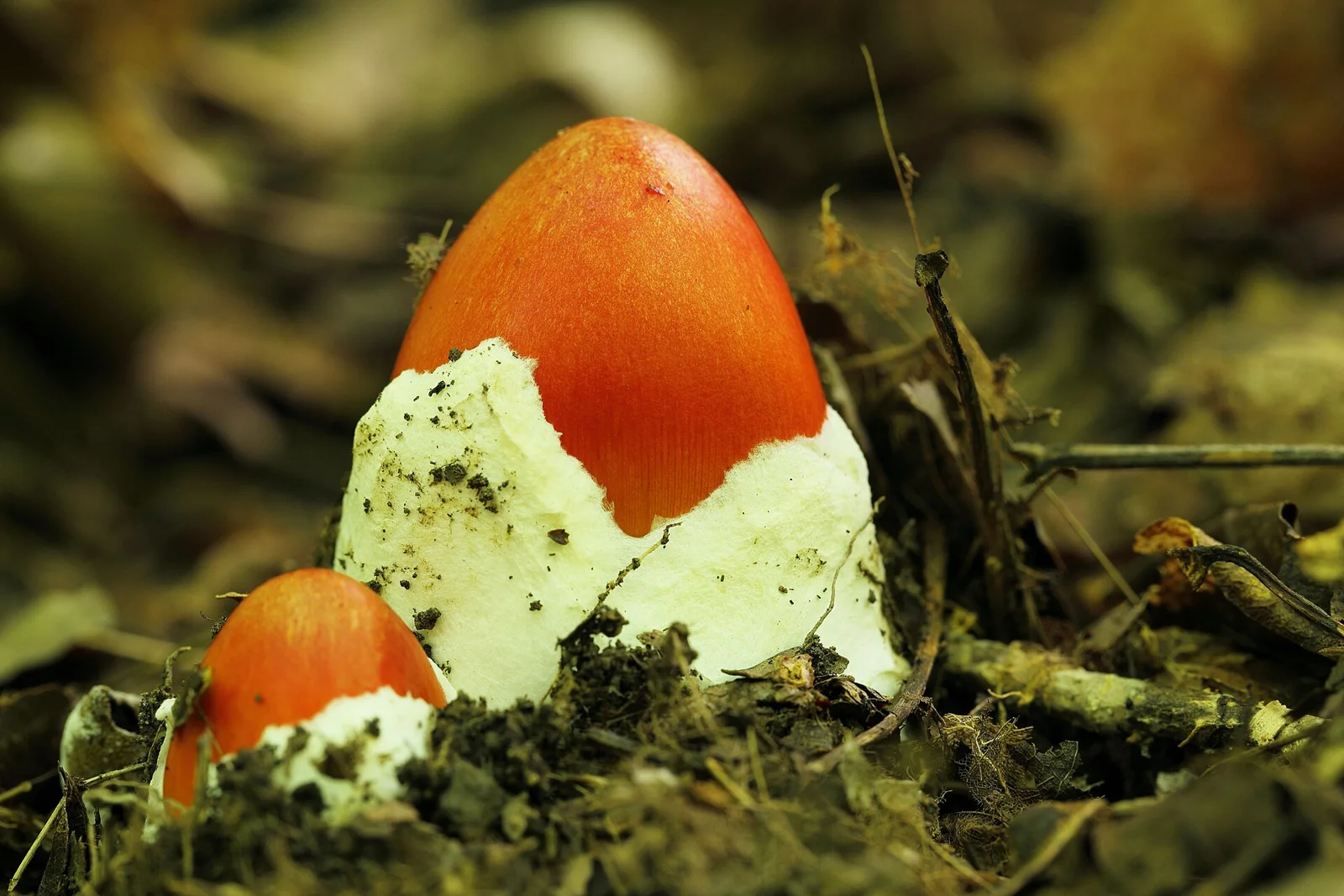
Amanita jacksonii, commonly called Jackson’s slender amanita, displays a bright reddish‑orange cap that can reach 8–12 cm across. Young caps are sticky and often have a central bump, fading to yellow toward the edges as they age. The gills are a distinctive yellow‑orange and remain free from the stem. A hallmark of the species is its large, white, sack‑like volva at the base of the stem, which is decorated with orange fibrils and patches. The stem itself is yellow, measuring roughly 9–14 cm long and 1–1.6 cm thick. Spores are broadly ellipsoid and inamyloid, a microscopic detail useful for serious mycologists.
Habitat and Geographic Range
This amanita is native to North America, stretching from Quebec, Canada, through the United States, and as far south as Hidalgo, Mexico, with records even in Belize’s Cayo District. It typically fruits in hardwood forests, often forming mycorrhizal relationships with oak and other deciduous trees. The mushroom’s bright coloration makes it a frequent subject of nature photography in the regions where it appears.
Similar Species and Safety Considerations
Amanita jacksonii resembles the European Caesar’s mushroom (A. caesarea), but it can be confused with several toxic Amanita species, such as A. muscaria (the iconic red‑with‑white‑spots mushroom) and A. phalloides (the deadly “death cap”). Because of these look‑alikes, novice foragers should never rely on a single characteristic for identification. Consulting multiple field guides, seeking expert confirmation, and examining the volva, gill attachment, and spore print are essential steps before considering any Amanita edible.
Culinary Reputation and Preparation Tips
When correctly identified, A. jacksonii is regarded as a choice edible mushroom. Its flesh is pale yellow to whitish and does not discolor when cut. For safe consumption, clean the caps gently with a damp cloth to remove debris, then slice and sauté in butter or oil over medium heat until the pieces turn golden and reach an internal temperature of at least 74 °C (165 °F). Adding herbs such as thyme or sage complements its mild, nutty flavor. As with all wild mushrooms, it is advisable to try a small portion first to ensure personal tolerance.
Role in the Ecosystem
Beyond its culinary appeal, A. jacksonii contributes to forest health by forming mutualistic mycorrhizal networks with trees, enhancing nutrient uptake for both partners. Beetles of the pleasing fungus group (Tritoma spp.) have occasionally been found on specimens, though the mushroom does not appear to be a primary food source for them.
From Forest Floors to Martian Labs
The vibrant colors and robust mycorrhizal traits of A. jacksonii make it an interesting candidate for future experiments in controlled environment agriculture, a step toward growing edible fungi on Mars.
Sources
This guide is not a foraging or identification manual. Many edible mushrooms have toxic look-alikes. Never eat a wild mushroom unless an expert has identified it in person.
This article was prepared with AI assistance from the sources listed above and approved by the Mushroom 2 Mars team before publication.