Part of the guide: Mycology: A Complete Guide to Fungi, Cultivation, and Safety
Taxonomic background
Agaricus albolutescens was first documented from a specimen collected on Oregon’s Agate Beach in late 1937 by mycologist Gertrude S. Burlingham. The name combines Latin roots meaning “yellow‑white,” a reference to the subtle hue that appears when the flesh is bruised. Historically, this mushroom and the closely related Agaricus silvicola were treated as a single, highly variable species, but modern studies treat them as distinct taxa.
What the mushroom looks like
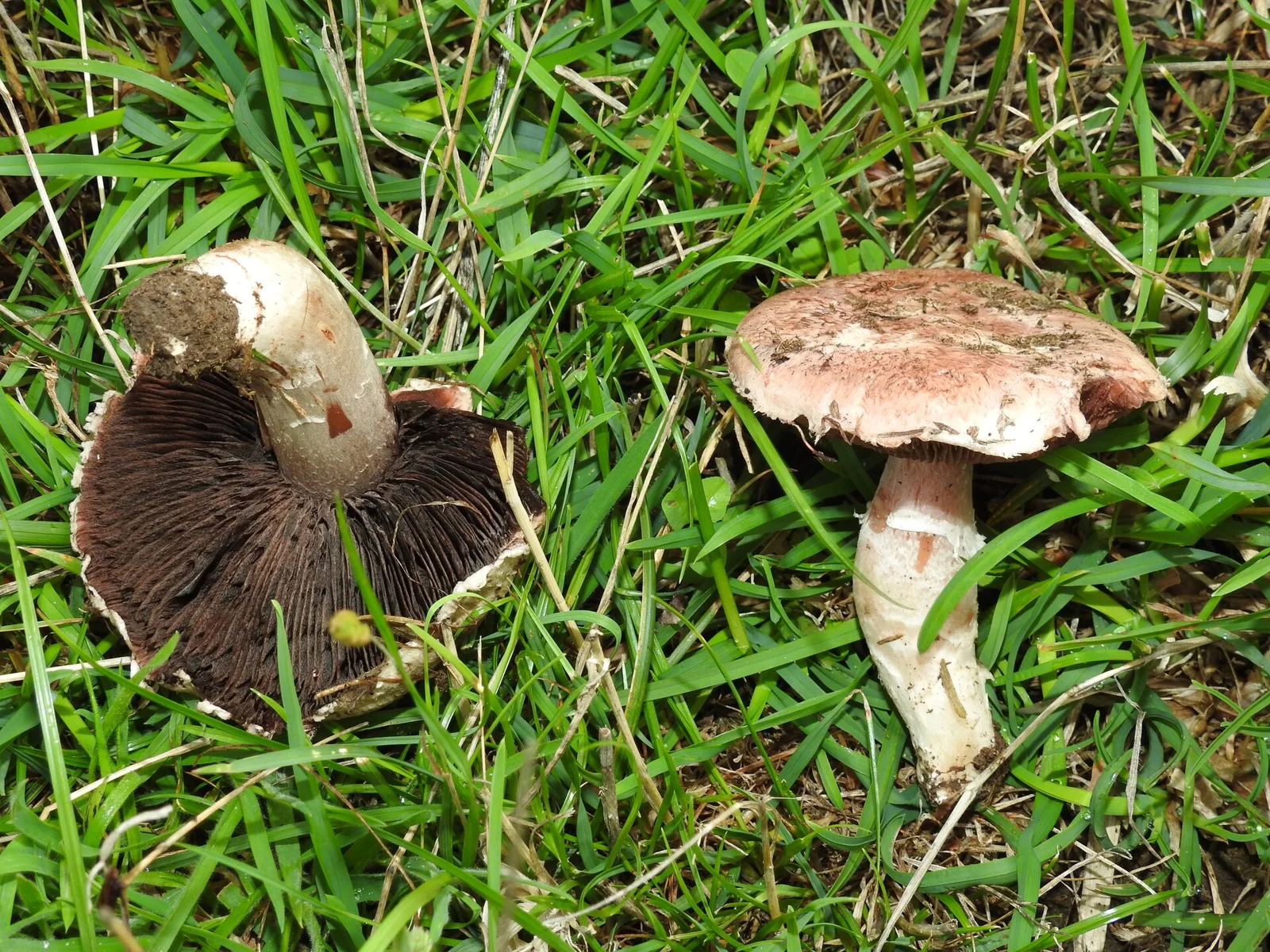
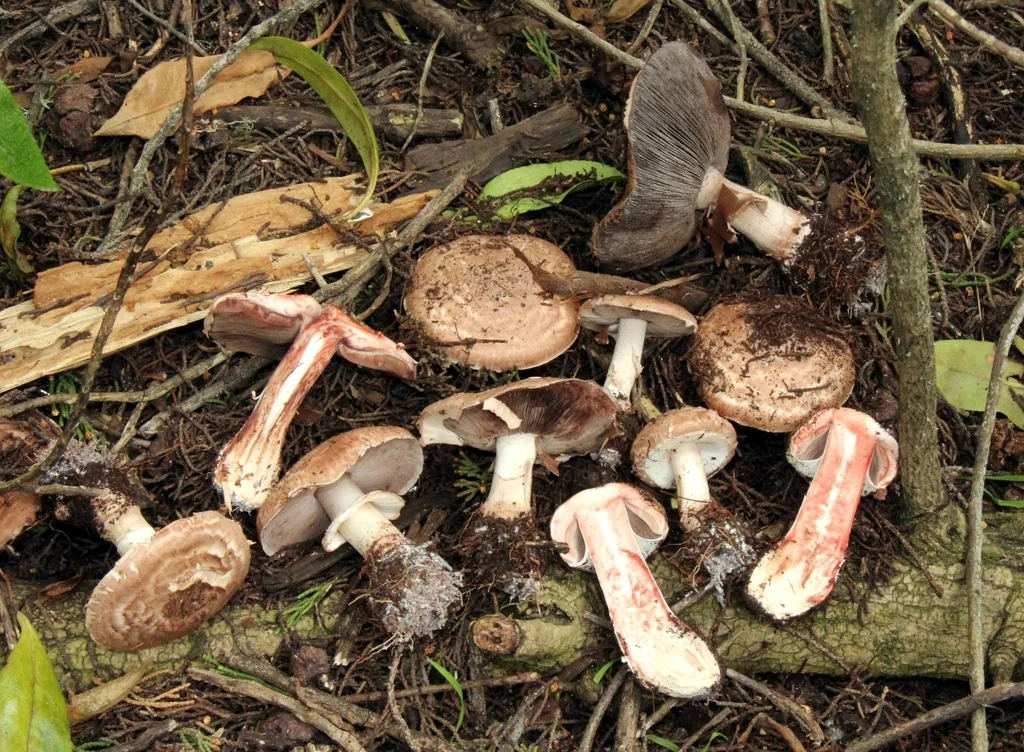
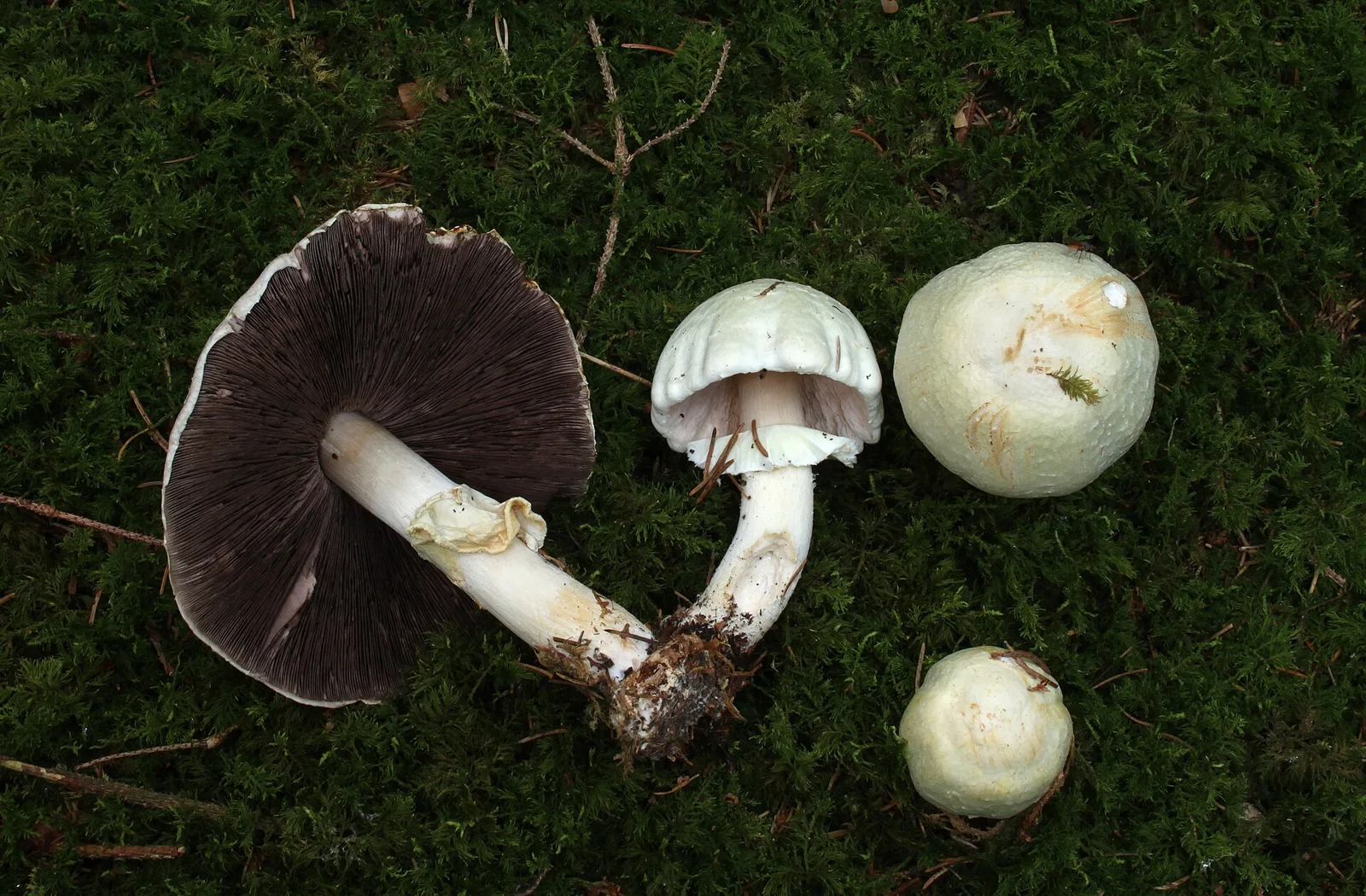
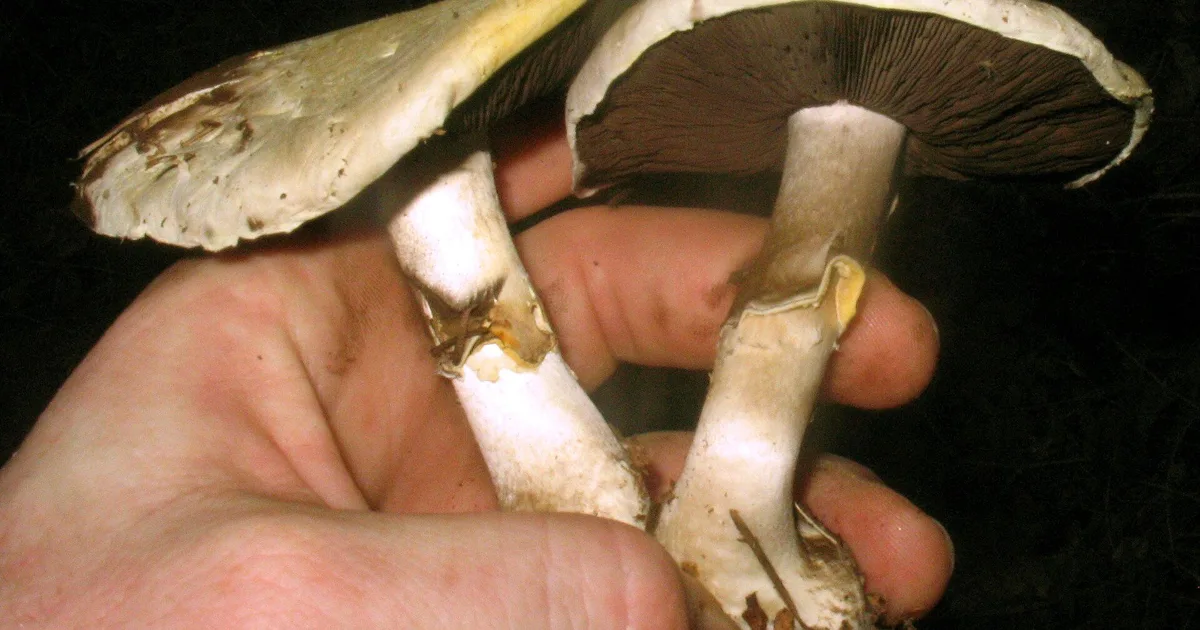
The fruiting body is medium‑large, with caps ranging from about 7 to 18 cm across. Young caps are rounded and become flatter with age, often extending just beyond the gills. The cap surface is dry, initially white, and develops a tawny‑brown discoloration when handled. A quick test with a drop of potassium hydroxide (KOH) will also turn the flesh yellow, a handy field clue.
The gills are free from the stem, tightly spaced, and shift in color as the mushroom matures: they start pale, then turn a pinkish‑gray before finally darkening to a deep chocolate brown. The stem (stipe) is 5–14 cm long and fairly thick, roughly the same width along most of its length but ending in a modestly swollen base. Near the top, the stipe shows fine vertical lines, while the lower portion may be smooth or bear sparse white fibers. A thin, superior annulus (ring) hangs from the stem; it begins upright and later droops.
When the flesh is cut, it is firm, about 1.5–2 cm thick, and shifts to a pale peach tone. In dry specimens the odor is often described as musty, and the taste is mild but not especially distinctive.
Microscopic details
Spores of A. albolutescens measure roughly 6.0–7.5 µm by 4.0–5.0 µm, are elliptical, and appear smooth under a microscope. They have a modest wall thickness and a tiny, barely visible hilum where they were attached to the basidium. No germ pore is present, a feature that helps separate it from some other Agaricus species.
How to tell it apart from look‑alikes
Two species often cause confusion in the field:
- Agaricus xanthodermus – a toxic mushroom that emits a phenolic or medicinal smell and bruises only fleetingly yellow. By contrast, A. albolutescens bruises slowly, turning a richer tawny‑brown, and lacks the strong phenolic odor.
- Agaricus silvicola – very similar in size and shape, but its bruising is less dramatic, staying more yellow than brown, and its spores are slightly smaller. The overall stature of A. silvicola is also less stocky.
Observing the bruising pattern, the color of the cap after handling, and, when possible, spore measurements can reliably separate these species.
Edibility and safety notes
A. albolutescens is listed as an edible mushroom, but, as with many wild fungi, individual sensitivities can occur. Some people report gastrointestinal upset after consumption, so beginners should try only a small portion and wait several hours before eating more. Always cook the mushrooms thoroughly; raw consumption is not recommended.
Never eat mushrooms harvested from polluted sites or those that have been exposed to chemicals. When in doubt, consult a local expert or reputable field guide before collecting.
From forest floor to Mars?
While the primary interest in A. albolutescens lies in its identification and culinary potential, its robust growth habit and ability to tolerate a range of temperatures make it a candidate for experimental cultivation in closed‑environment agriculture—an area of curiosity for projects dreaming of growing fungi on Martian habitats.
All observations are based on current mycological literature, including the Wikipedia entry for Agaricus albolutescens.
Sources
This guide is not a foraging or identification manual. Many edible mushrooms have toxic look-alikes. Never eat a wild mushroom unless an expert has identified it in person.
This article was prepared with AI assistance from the sources listed above and approved by the Mushroom 2 Mars team before publication.