A Stellar Portrait in the Carina Nebula
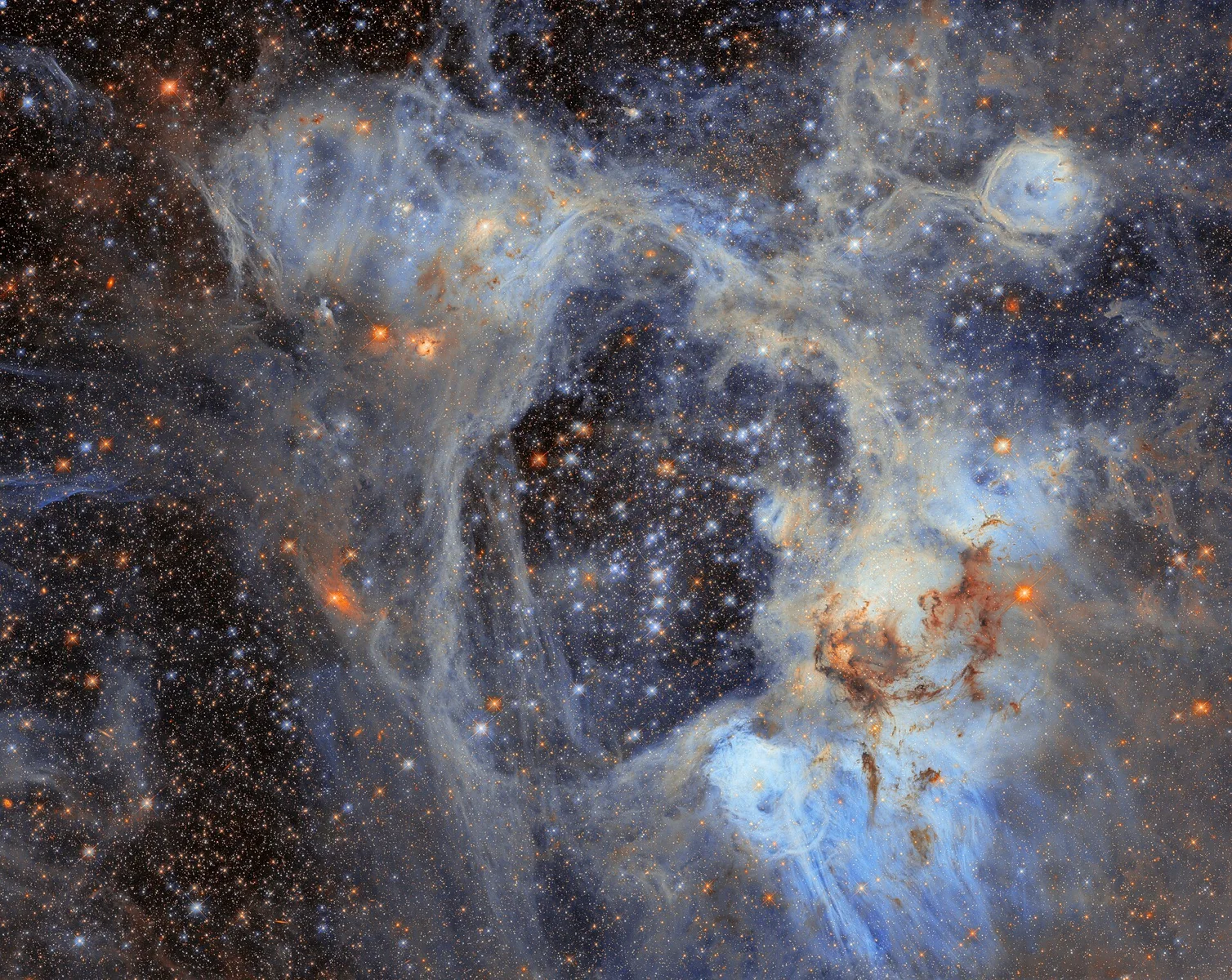
The Carina Nebula, a sprawling cloud of gas and dust about 7,500 light‑years from Earth, is a bustling nursery where massive stars are born. Within this complex, a compact feature has captured the imagination of astronomers: a dark pillar that resembles a cat sitting with its back to the viewer. Because of its shape, the region is affectionately called the Cat’s Head Nebula. The nickname stems from the pillar’s “head” turned to the right, where a bright spot looks like a glowing eye.
Hubble’s Visible‑Light View: Darkness and Detail
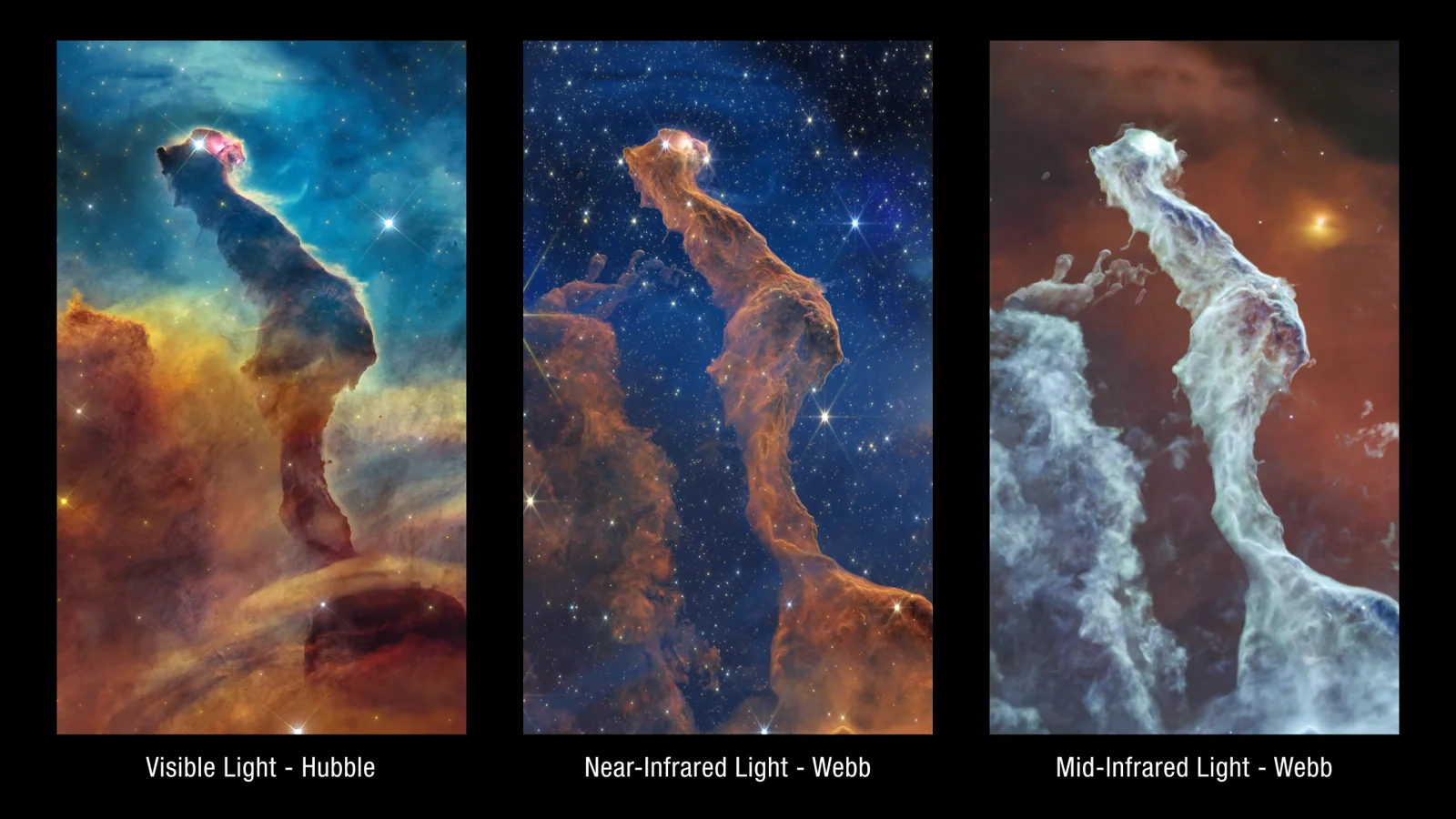
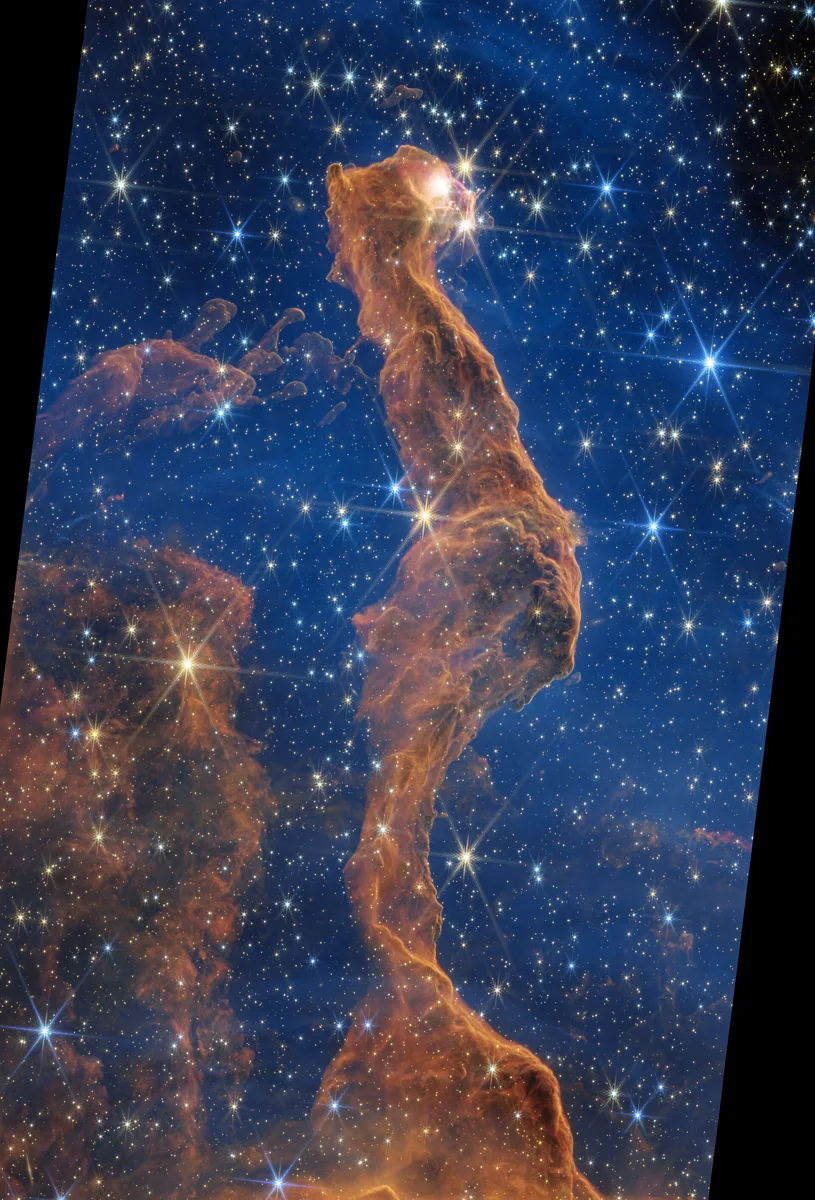
The Hubble Space Telescope, operating in visible wavelengths, records the nebula as a dense, brownish column of dust. The pillar blocks background starlight, creating a stark silhouette against a backdrop of ionised gas that glows in shades of blue, cyan, yellow, orange and red. These colours arise from emissions of oxygen, hydrogen and sulfur, each captured through Hubble’s specialised filters. A faint ridge of yellow along the pillar’s right edge marks gas that is being illuminated and ionised by intense ultraviolet radiation from nearby massive stars – a process known as photoevaporation. The bright “eye” at the head of the cat is thought to be a young star still partially shrouded in dust, while the surrounding glow hints at other nascent stars forming nearby.
Webb’s Infrared Vision: Piercing the Dust
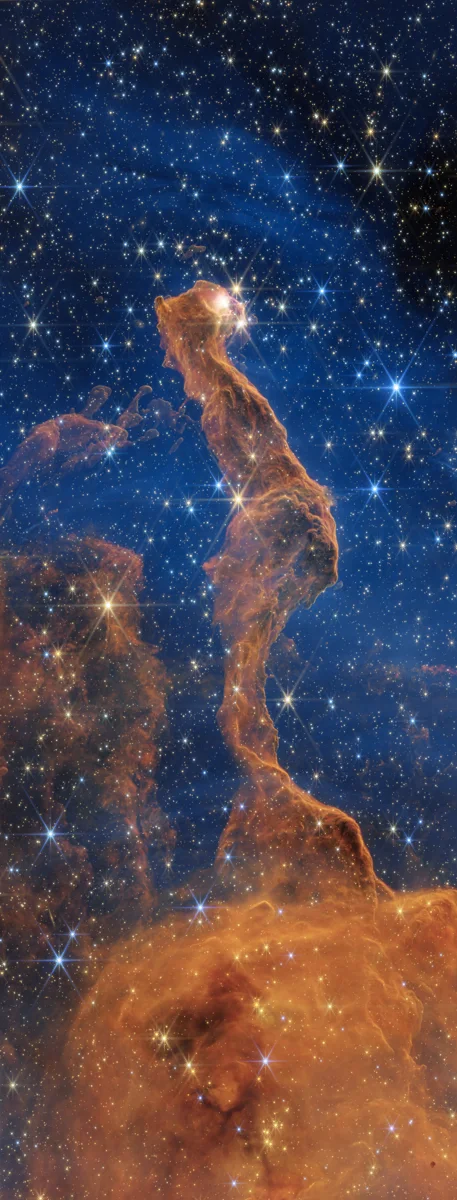
The James Webb Space Telescope (JWST) adds a complementary perspective by observing the same region in near‑ and mid‑infrared light. Infrared wavelengths can penetrate dust that appears opaque to visible light, revealing hidden structures. In Webb’s near‑infrared image, the pillar becomes more transparent, and a scattering of young stars emerges, many of them blue‑yellow in the colour‑composite. Some of these stars remain partially enshrouded, indicating different stages of emergence from their natal cocoons.
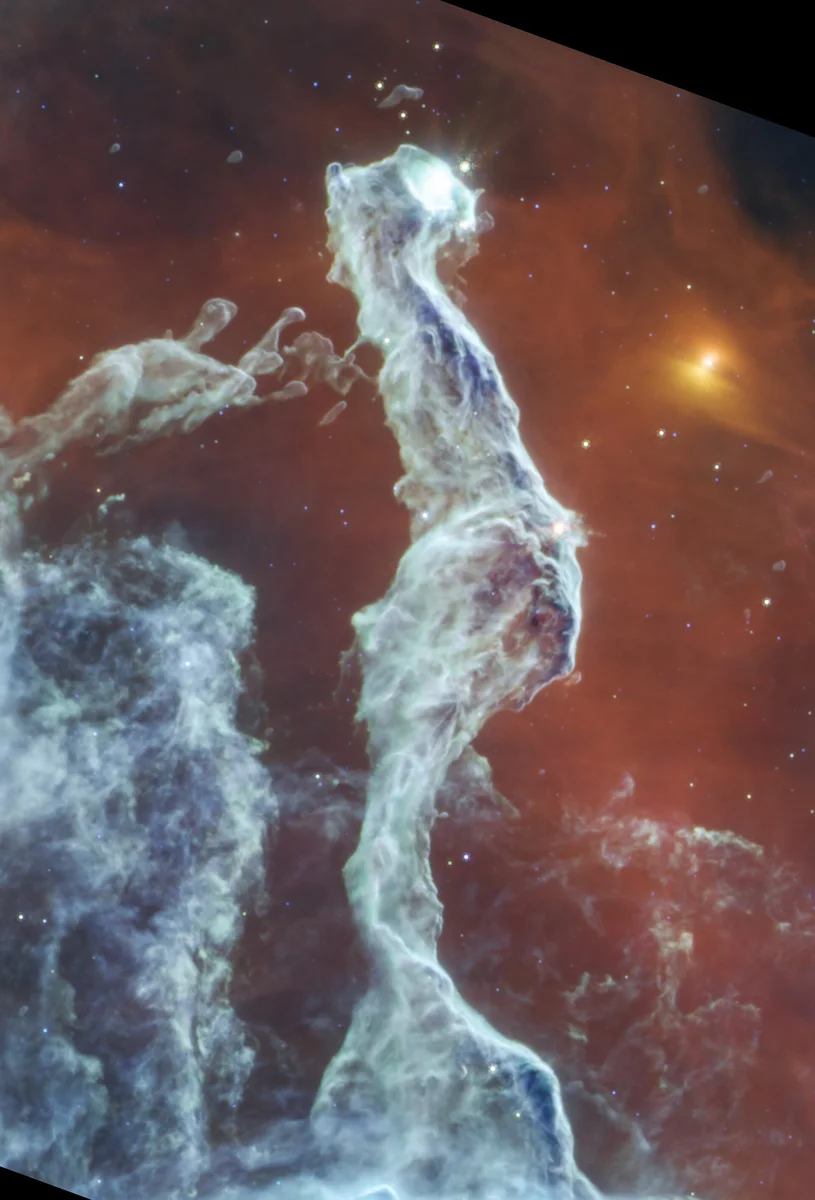
In the mid‑infrared, warm dust and complex carbon‑based molecules called polycyclic aromatic hydrocarbons (PAHs) glow, outlining intricate filaments and globules on the pillar’s left side. The bluish‑green hues in this view trace PAH emission rather than temperature alone, offering clues about the local radiation environment. A faint jet‑like feature near the pillar’s “belly” may signal an outflow from a young stellar object, a common sign of ongoing accretion.
Sculpted by Stellar Feedback
The distinctive feline shape is not permanent. It has been carved over time by the powerful ultraviolet radiation and stellar winds from the massive stars that dominate the Carina Nebula. These forces erode the surrounding material, while denser pockets of gas and dust resist erosion, preserving the pillar for a while longer. The bright rim on the pillar’s right side is a visual record of this stellar feedback, where energetic photons heat and evaporate gas, reshaping the cloud’s architecture.
What the Dual View Tells Us About Star Formation
By comparing Hubble’s visible‑light and Webb’s infrared observations, astronomers gain a richer understanding of the chaotic environment where stars are born. The visible image highlights the dust that blocks light, while the infrared view reveals the hidden stellar population and the chemistry of the dust itself. Together they illustrate how young stars can both illuminate and dismantle their birth clouds, a delicate balance that governs the lifecycle of nebulae.
Looking Ahead: From Nebulae to Martian Gardens
Studying regions like the Cat’s Head Nebula helps scientists refine models of how gas and dust collapse into stars – knowledge that could one day inform how we cultivate organisms, such as mushrooms, in extraterrestrial habitats. As we continue to explore both the cosmos and sustainable life‑support systems, the lessons from distant star‑forming pillars may guide our own interplanetary agriculture.
Sources
This article was prepared with AI assistance from the sources listed above and approved by the Mushroom 2 Mars team before publication.