Part of the guide: Mushrooms: A Complete Guide to Identification, Cooking, and Cultivation
What the Spring King Bolete Looks Like
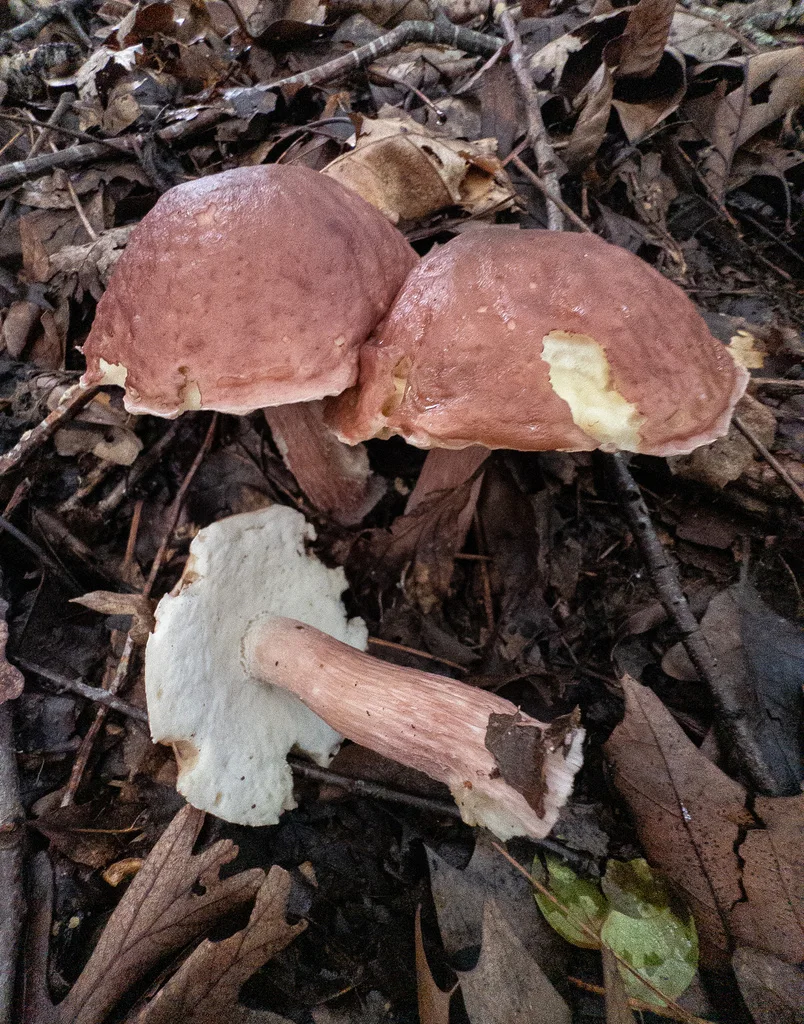
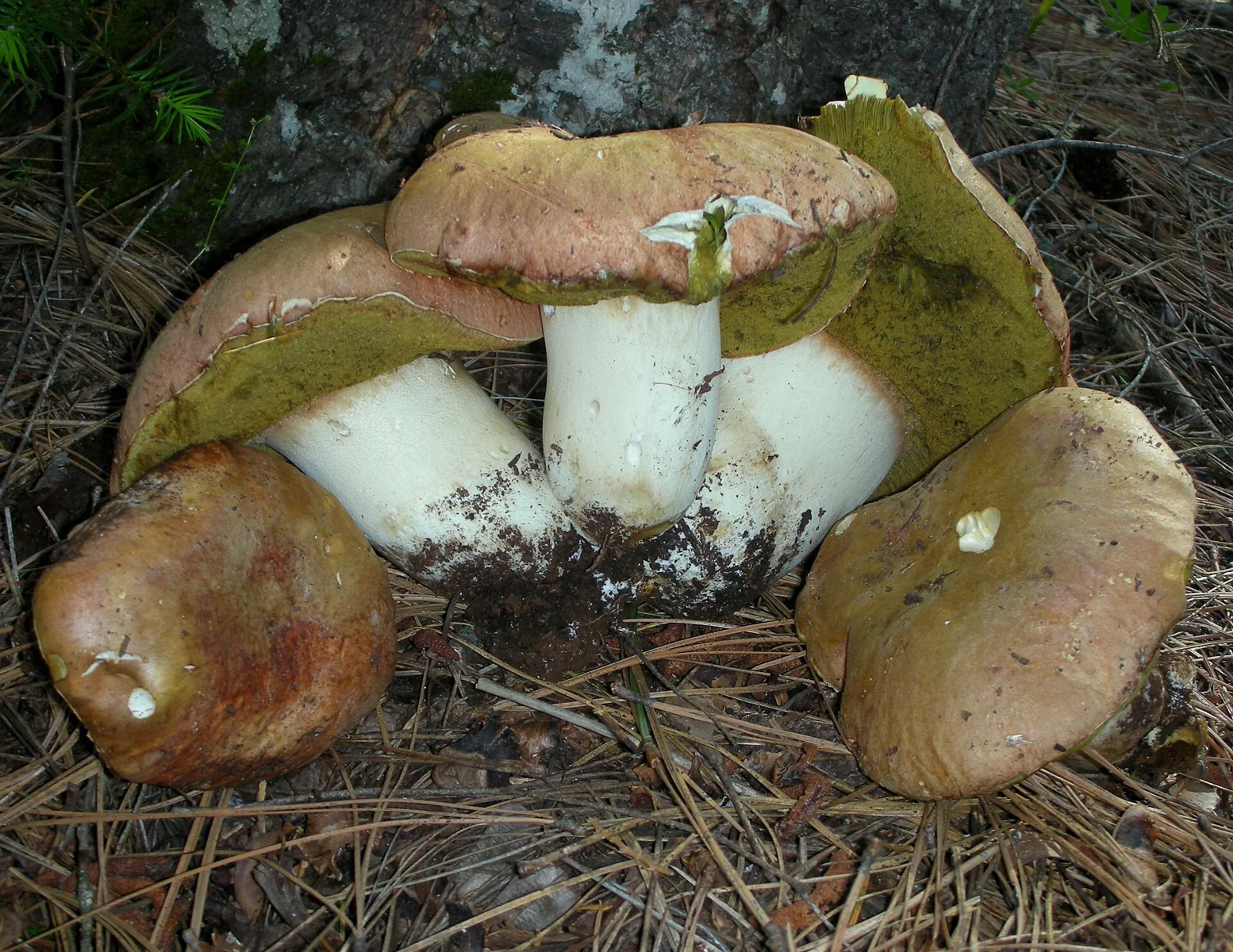
Boletus rex‑veris, often called the spring king bolete, produces a large mushroom with a cap that ranges from pinkish to brown and may show an orange‑red hue. The flesh is thick, and the stem is characteristically stout and sometimes swollen. Like other boletes, the pores underneath the cap are sponge‑like rather than gilled. Size varies widely, but mature specimens can reach several inches across, making them eye‑catching in pine forests.
Where It Grows
This bolete prefers the shade of western North American conifers. It is most commonly found under ponderosa pine (Pinus ponderosa), lodgepole pine (P. contorta subsp. murrayana), and firs such as white fir (Abies concolor). Fruit bodies appear from May through June, usually at elevations between 3,000 and 7,000 ft (910–2,130 m). In California the mushrooms often emerge from a layer of needle duff, while in Oregon they can be found at slightly lower altitudes. Its range extends northward into Washington, Idaho, and British Columbia.
Taxonomic History
For decades the spring king bolete was lumped with the well‑known porcini (Boletus edulis) as a subspecies or form. A 2008 revision of western North American boletes, based on DNA sequencing, elevated it to full species status. Phylogenetic studies place B. rex‑veris in a clade with several related boletes, including B. fibrillosus, B. pinophilus, B. subcaerulescens, B. subalpinus, and B. regineus.
Culinary Uses
The mushroom is prized for its firm texture and nutty flavor. Because it holds up well to heat, it can be sliced and sautéed, added to stews, or dried for later use. A simple preparation involves: 1. Cleaning: Gently brush off soil; avoid soaking, which can make the caps soggy. 2. Sautéing: Heat oil or butter over medium heat, add sliced caps and stems, and cook 5–7 minutes until golden. 3. Seasoning: Finish with salt, pepper, and a splash of fresh lemon juice or herbs. The cooked bolete can be incorporated into risottos, pasta sauces, or vegan gravies. Its robust flavor also makes it a good candidate for mushroom‑based stocks.
Commercial and Cultural Significance
In regions where B. rex‑veris fruits abundantly, it supports a modest local market. Foragers sell fresh or dried specimens to restaurants that value wild‑foraged ingredients. The mushroom’s striking appearance and seasonal emergence have also inspired local folklore, celebrating the brief spring bounty under the pine canopy.
From Forest Floors to Martian Labs
Understanding the ecology and cultivation potential of species like the spring king bolete helps inform future experiments in closed‑environment agriculture—an essential step toward growing nutritious fungi on Mars.
Sources
This guide is not a foraging or identification manual. Many edible mushrooms have toxic look-alikes. Never eat a wild mushroom unless an expert has identified it in person.
This article was prepared with AI assistance from the sources listed above and approved by the Mushroom 2 Mars team before publication.