A Surprise Encounter in Deep Space
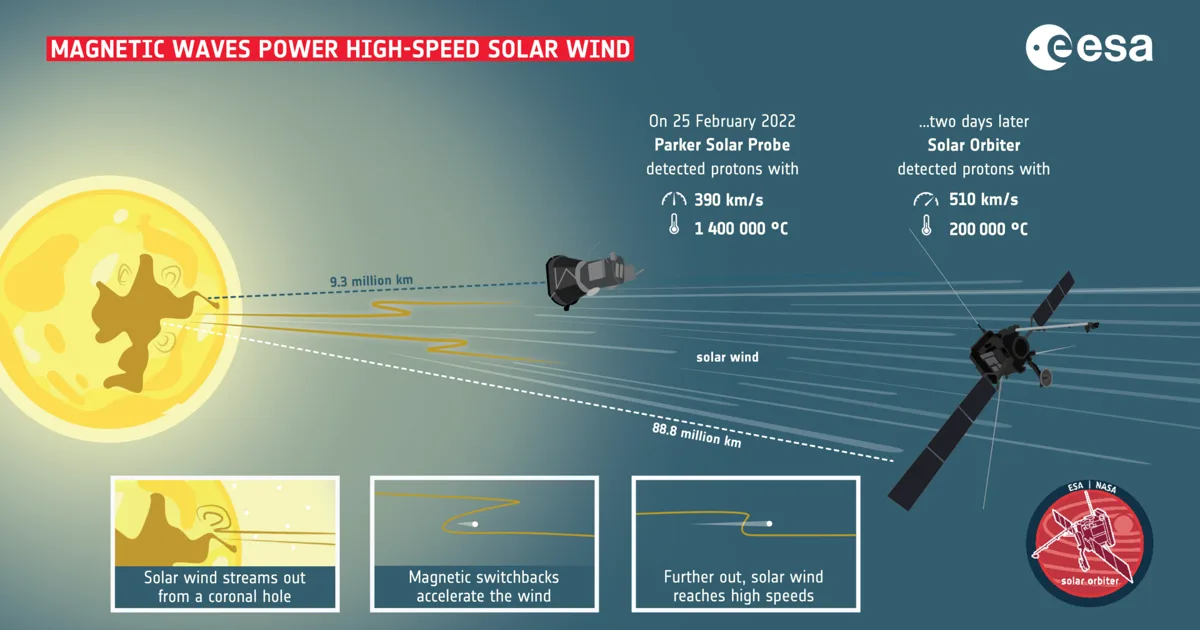
On 2 March 2022 Solar Orbiter was cruising at roughly half the Earth‑Sun distance when its magnetometers recorded a sudden, hour‑and‑a‑half‑long spike in magnetic activity. The spacecraft was moving at about 30–40 km s⁻¹ while the structure it rode through – a magnetic “switchback” – streamed past at roughly 450 km s⁻¹. From those speeds the team inferred a radial size of about 2.75 million km, a structure six times the Earth‑Moon distance and larger than the Sun’s own radius.
What a Switchback Is
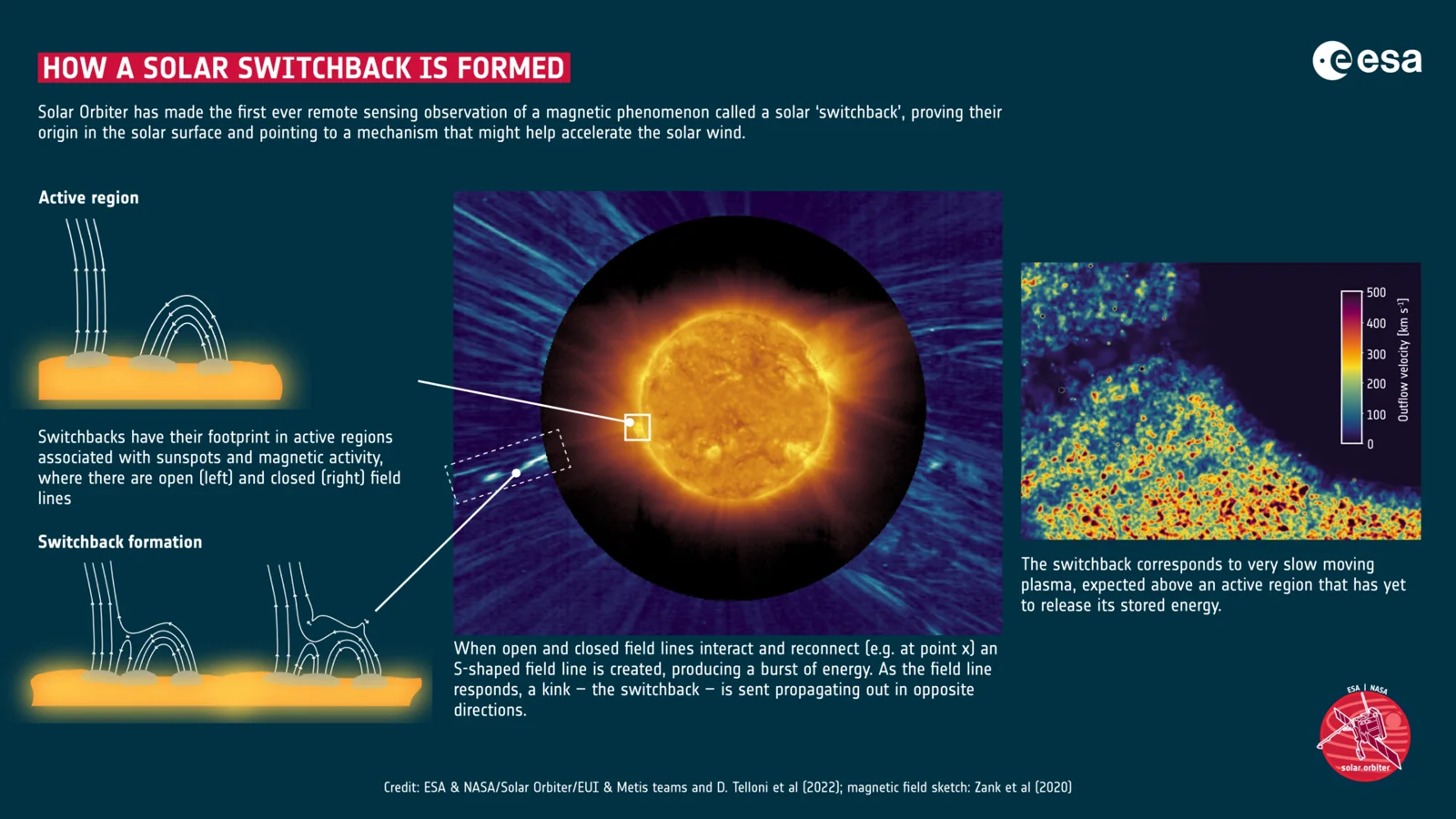
Switchbacks are sharp, kink‑like reversals of the Sun’s magnetic field that travel outward with the solar wind. The solar wind itself is a continuous, supersonic flow of charged particles that streams from the solar surface into interplanetary space. When a magnetic field line flips, the plasma attached to it is dragged along, creating a localized burst of altered particle flow. Earlier missions, especially NASA’s Parker Solar Probe, had catalogued thousands of these events, but the exact place where they form remained debated.
Pinpointing the Birthplace with Heavy Ions
During the encounter Solar Orbiter’s Heavy Ion sensor measured an unusual composition: elevated oxygen and carbon ions that were fully stripped of electrons, and a dip in helium relative to ambient solar‑wind levels. In the Sun’s hot lower atmosphere, heavy ions lose their electrons; once they travel outward into cooler space they retain that ionisation state. The measured ion signatures therefore acted as a “thermal fingerprint” of the plasma’s origin.
A Million‑Degree Corona Signature
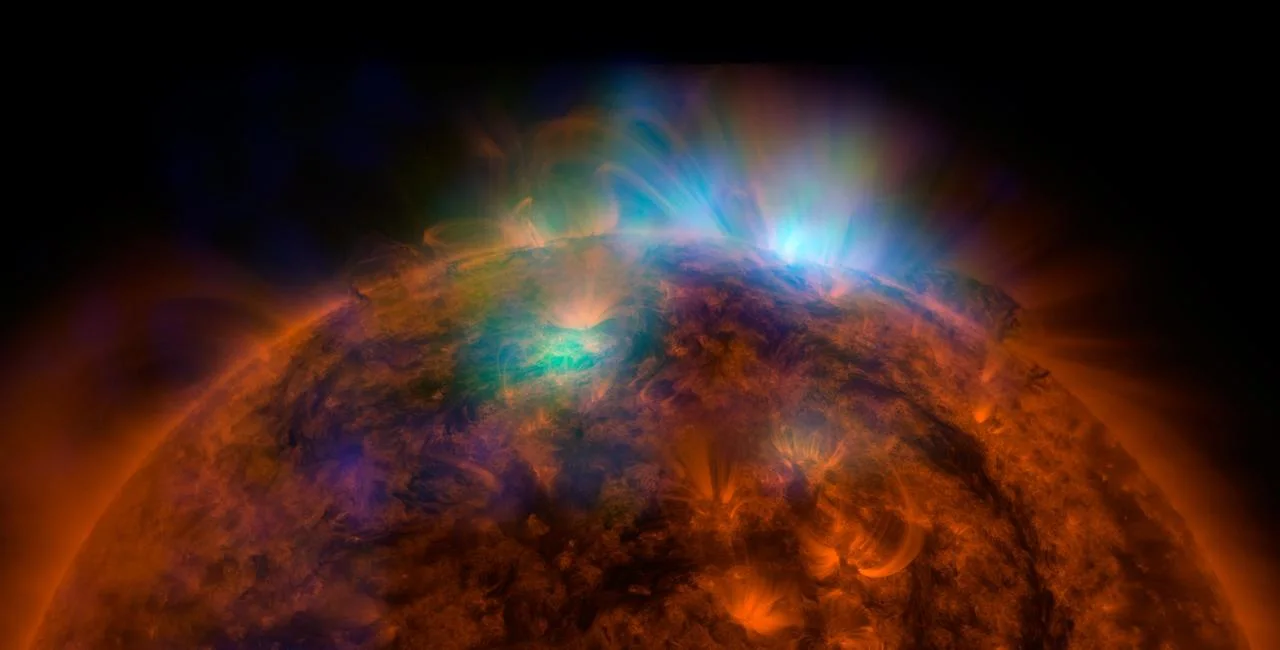
The ion data indicated the plasma had been heated to over one million °C – temperatures characteristic of the Sun’s corona rather than the cooler solar wind farther out. To verify this, researchers cross‑referenced simultaneous observations from the Solar Dynamics Observatory (SDO). They mapped the plasma back to a closed magnetic loop anchored near a coronal hole, a darker, cooler region where magnetic field lines open into space.
Interchange Reconnection: The Launch Mechanism
The study concluded that the switchback was launched by an interchange reconnection event. In this process, a segment of a closed coronal loop encounters an adjacent open magnetic field line. The magnetic tension causes the loop segment to snap and re‑configure, flinging a parcel of super‑heated plasma onto the open field line. This ejected plasma becomes the switchback that Solar Orbiter later traversed.
Wave‑Like Motion Inside the Switchback
If the plasma were simply shot outward, its particles would travel in a straight line. Instead, measurements showed the particles moving in concert with the magnetic field, producing a pattern reminiscent of an Alfvén wave – a magnetic disturbance that propagates along field lines much like a wave on a guitar string. This hybrid behaviour, combining a ballistic launch with wave dynamics, refines our picture of how magnetic energy is transferred from the corona into the solar wind.
Why It Matters for Heliophysics and Beyond
Understanding the coronal origin of switchbacks helps scientists quantify how much energy and momentum the Sun injects into the solar wind. Since the solar wind shapes planetary magnetospheres and space‑weather conditions, better models improve forecasts of geomagnetic storms that can affect satellites, power grids, and astronaut safety. Moreover, the finding illustrates the power of coordinated observations: a single spacecraft’s serendipitous data, paired with remote‑sensing images from SDO, can solve a long‑standing puzzle.
Looking Ahead – From the Sun to Mars
As we refine our knowledge of solar‑wind sources, future missions to Mars will benefit from more accurate space‑weather predictions, helping protect both robotic explorers and eventual human habitats on the Red Planet.
Sources
This article was prepared with AI assistance from the sources listed above and approved by the Mushroom 2 Mars team before publication.