A Giant Among Planets
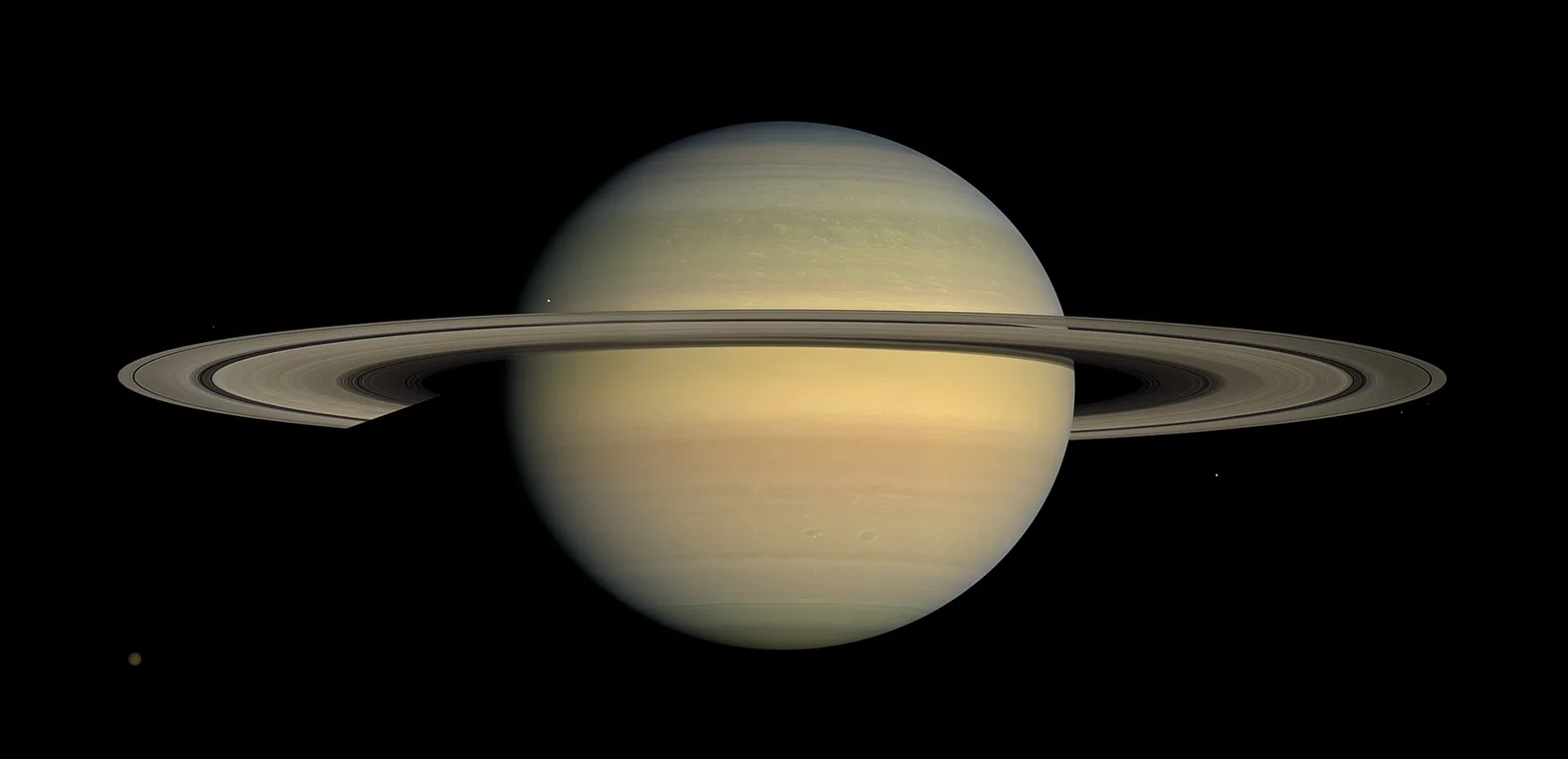
Saturn sits sixth from the Sun and is the second‑largest world after Jupiter. Its bulk is about 95 times Earth’s mass, yet its average density is only 0.69 g/cm³ – roughly a third of water’s density – so a hypothetical Saturn made of pure water would float. The planet’s radius is roughly nine times that of Earth, giving it a truly colossal appearance in the night sky.
Inside the Cloud‑Covered World
Unlike rocky planets, Saturn lacks a solid surface. Scientists picture a layered interior: a central core of rock and ice, a thick shell of metallic hydrogen, a mantle of liquid hydrogen‑helium mixture, and finally an outer envelope of gas. Temperatures soar to about 11,700 °C at the core, and the planet emits more than twice the heat it receives from sunlight, likely due to slow gravitational compression and the settling of helium droplets that release frictional heat.
A Subtle but Powerful Magnetosphere
Saturn generates a magnetic field through electric currents in its metallic‑hydrogen layer. Although the field strength at the cloud tops is only about one‑twentieth that of Jupiter, the planet’s huge size gives it a magnetic moment roughly 580 times Earth’s. This magnetosphere shapes the surrounding plasma environment and interacts with the solar wind, creating faint auroras near the poles.
The Iconic Ring System
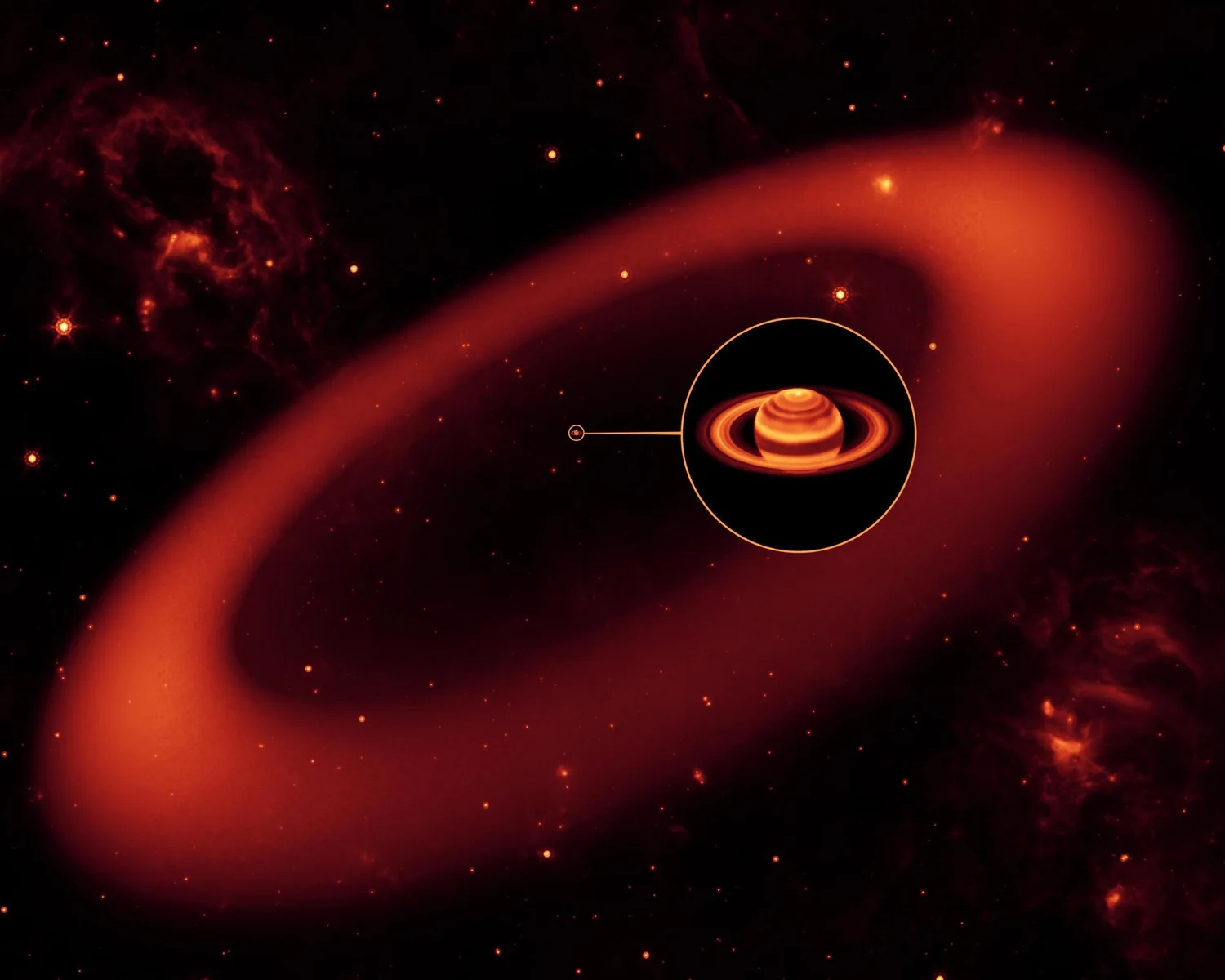
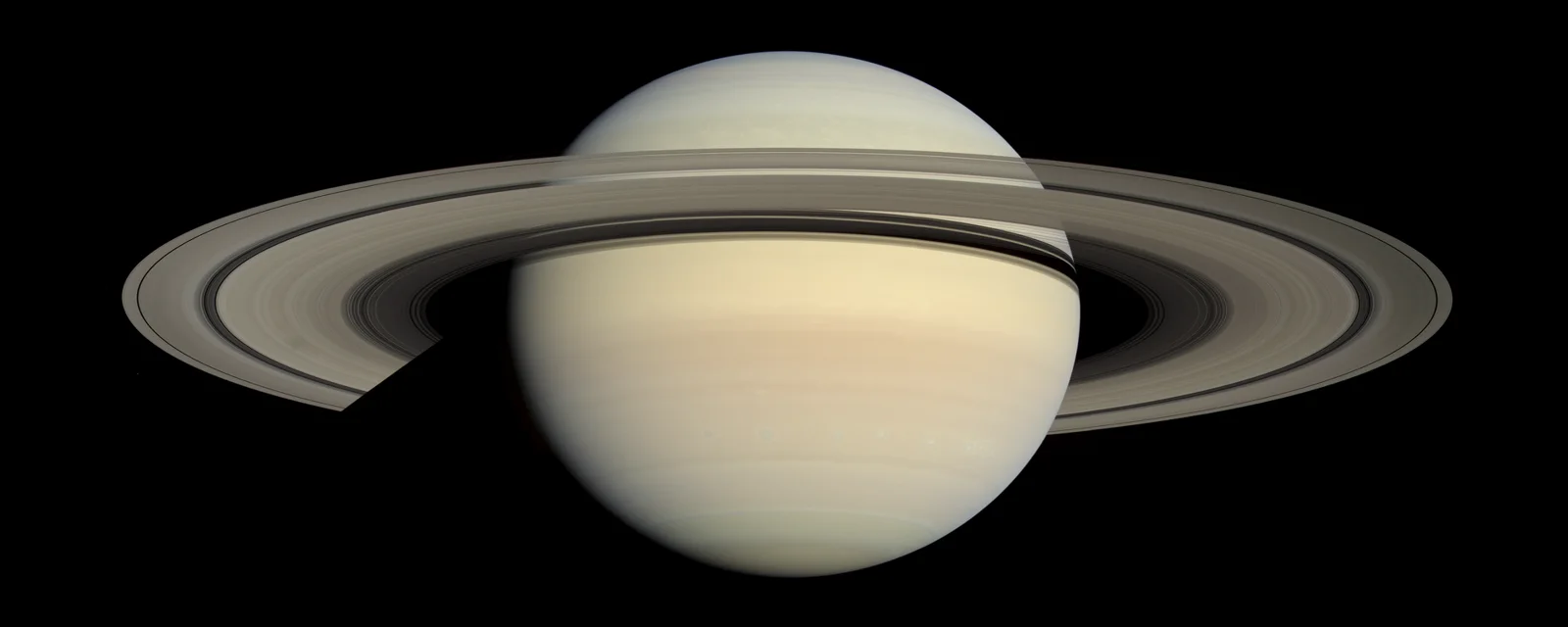
Saturn’s most famous feature is its extensive set of rings, composed mainly of icy particles ranging from micrometres to several metres, mixed with a sprinkling of rock and dust. The rings are remarkably bright, reflecting sunlight and giving the planet its pale yellow hue caused by ammonia crystals high in the atmosphere. Wind speeds in the upper layers can reach 1,800 km/h, stirring the gas and occasionally altering ring structure over long periods.
A Family of Moons
At least 293 moons orbit Saturn, though only 63 have official names. The largest, Titan, is larger than Mercury and boasts a dense nitrogen‑rich atmosphere – the only moon known to have a substantial gaseous envelope. Titan’s thick haze and hydrocarbon lakes make it a prime target for future exploration, especially for studies of pre‑biotic chemistry.
Observing Saturn from Earth
With a modest backyard telescope, Saturn’s disk appears as a pale yellow oval, and its rings can be resolved as distinct bands. The planet’s slow rotation leads to subtle banding and occasional storms, while the rings reveal gaps such as the famous Cassini Division. Because Saturn is far from the Sun (about 1.4 billion km), it moves slowly against the background stars, allowing observers to track its progress over weeks.
From Rings to Red Planets
Understanding Saturn’s composition and dynamics helps scientists design habitats for long‑duration space missions. The planet’s abundant water‑ice and the chemistry of its moons provide clues for extracting resources on other worlds – a knowledge base that could one day support mushroom cultivation on Mars, where we’ll need to grow food in extreme environments.
Sources
This article was prepared with AI assistance from the sources listed above and approved by the Mushroom 2 Mars team before publication.