Part of the guide: Mycology: A Complete Guide to Fungi, Cultivation, and Safety
A Mold with a Historic Breakthrough
In 1928 Alexander Fleming noticed a strange zone of clear growth around a fuzzy contaminant on a Staphylococcus aureus plate. The contaminant turned out to be a fungus later identified as Penicillium rubens. Fleming named the antibacterial substance “penicillin” and, after further testing, published his findings in 1929. The discovery sparked a medical revolution, and Fleming shared the 1945 Nobel Prize in Physiology or Medicine with Ernst Chain and Howard Florey for developing the drug into a life‑saving therapy.
From Confusion to Clarity: Taxonomic Turmoil
For decades the penicillin‑producing mold was shuffled among several names—P. rubrum, P. notatum, and P. chrysogenum—as scientists compared specimens and debated classifications. It wasn’t until DNA‑based phylogenetic work in 2011 that researchers confirmed the species as Penicillium rubens. This genomic clarification helped streamline strain selection for industrial production and clarified the link between specific genes and antibiotic output.
What Makes P. rubens Tick?
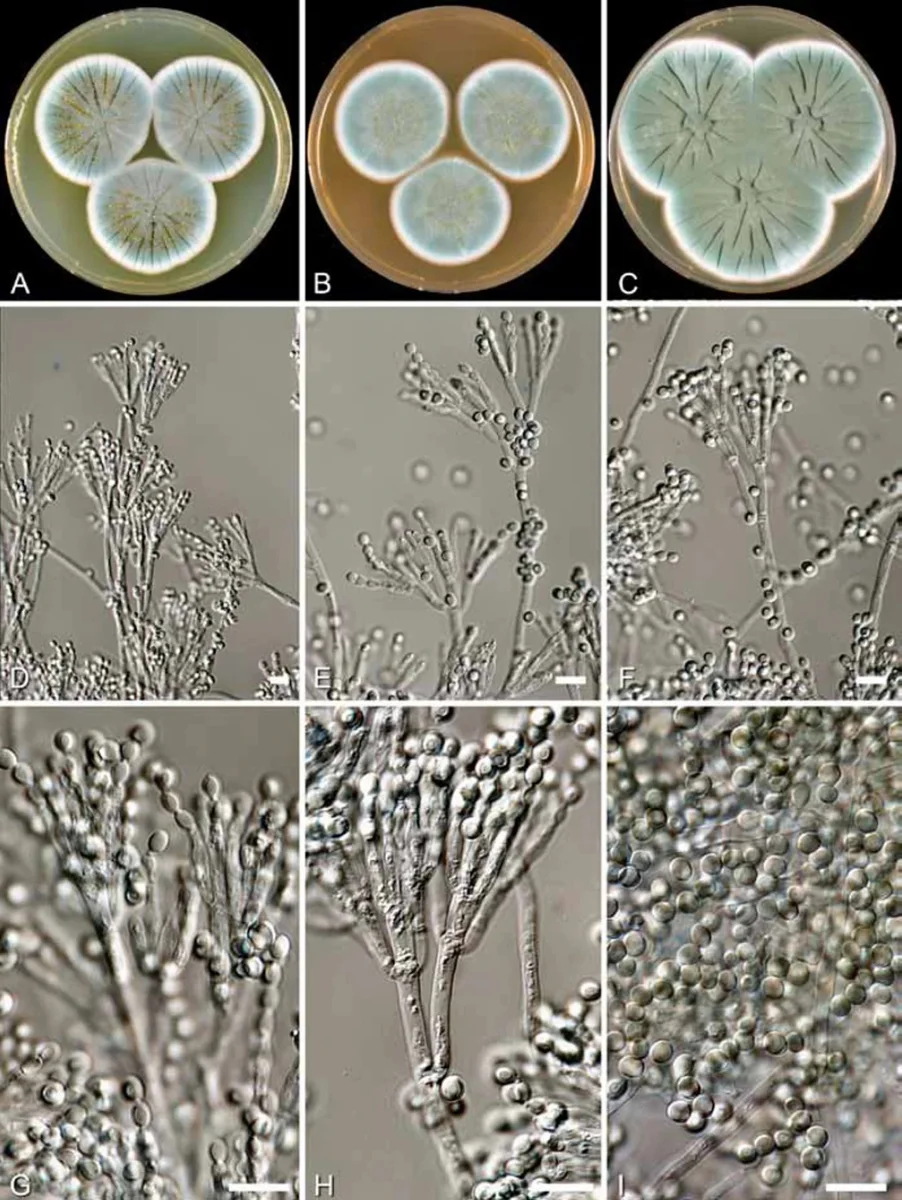
Penicillium rubens thrives in indoor environments, especially where humidity is high. Its colonies appear soft and velvety, with bluish‑green conidia that are smooth‑walled and ellipsoidal (2.5–4 µm long). The fungus produces long conidiophores (200–300 µm) topped with short hair‑like penicilli (8–12 µm). Remarkably, it requires less water than many rival molds, making it a resilient indoor nuisance alongside Cladosporium and Aspergillus species.
Genomic Blueprint
The Wisconsin industrial strain—derived from a 1944 cantaloupe isolate—has been the workhorse for penicillin manufacturing. Its nuclear genome spans roughly 32 Mb across four chromosomes and contains about 13,300 protein‑coding genes. Three core genes ( pcbAB, pcbC, penDE ) sit together in a 58.8 kb cluster on chromosome 2 and direct the synthesis of the β‑lactam ring that defines penicillins. Variations in auxiliary genes, such as Pch018g00010 involved in glutathione metabolism, explain why some strains produce far more antibiotic than others. The mitochondrial genome adds another 31 kb of genetic material, and peroxisomal genes like pex11 regulate the flow of precursors into the penicillin pathway.
From Lab Bench to Factory Floor
The mold’s most famous contribution is the natural production of three penicillins: benzylpenicillin (G), phenoxymethylpenicillin (V), and octanoylpenicillin (K). These β‑lactam antibiotics target Gram‑positive bacteria, including Streptococcus and Staphylococcus species. In addition to penicillins, P. rubens can generate modest amounts of cephalosporins and a suite of other bioactive metabolites such as andrastin, chrysogine, fungisporin, roquefortine, and sorbicillins. While the latter compounds are not used clinically, they illustrate the fungus’s rich secondary‑metabolite repertoire, which continues to intrigue natural‑product chemists.
Industrial Strain Engineering
Modern biotech facilities grow P. rubens in large‑scale fermenters, optimizing conditions—pH, oxygen, and nutrient feed—to coax the mold into maximal penicillin output. Genetic engineering has further boosted yields: overexpressing the penDE gene, deleting competing pathways, or enhancing pex11 activity can raise production severalfold. These advances keep penicillin affordable and ensure a steady supply for hospitals worldwide.
Looking Beyond Antibiotics
Beyond medicine, P. rubens finds niche applications in food and material science. Some strains contribute to the flavor development in blue‑cheese varieties, while others are explored for bioremediation because of their ability to degrade complex organic compounds. Researchers are also investigating the fungus’s enzymes for sustainable chemical synthesis, hoping to replace petroleum‑based processes with biologically derived alternatives.
Connecting to the Red Planet
As we envision growing life on Mars, the hardy nature of Penicillium rubens—thriving on minimal water and producing valuable chemicals—makes it a candidate for closed‑loop biomanufacturing habitats on the Red Planet.
Sources
This article is for general information only and is not medical advice. Do not use it to diagnose or treat any condition; talk to a doctor about health questions.
This article was prepared with AI assistance from the sources listed above and approved by the Mushroom 2 Mars team before publication.